Rabbit Hole Crawl

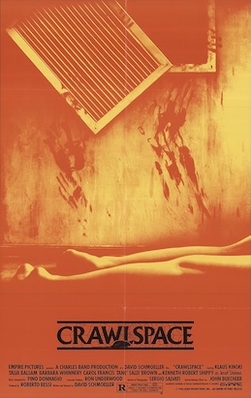
Rabbit holes can be fun.  They can also leave you scratching your head.  David Schmoeller directed some third or fourth drawer horror films, among which is Crawlspace.  Having fallen down the Schmoeller rabbit hole, I found it streaming at the cost of frequent commercials.  Hey, that’s how I watched movies as a kid, so why not?  I was drawn to the movie by Klaus Kinski.  He is arresting on camera and directors knew it.  He was also famously difficult to work with.  Schmoeller apparently tried to get Kinski fired from Crawlspace, but without him it would’ve been a nearly complete waste of time.  That’s because Schmoeller’s story (he also wrote it) doesn’t make a ton of sense, even if it introduces some fascinating themes.  So Gunther (Kinski’s character) is a landlord.  He rents rooms in his house to young women that he murders, after spying on them through the eponymous crawl space.

Why does he murder?  Because his father was a literal Nazi and Gunther has tendencies in that direction.  He’s conflicted, though.  A medical doctor, he saved lives.  He also killed.  Caught up with the God-like power of determining life and death, he explores it at the expense of young women.  And their erstwhile lovers.  And occasional visitors.  Kinski pulls off this double life persona, making him believable.  Even so, the story doesn’t have much other depth.  There’s a lot of crawling around HVAC vents and inventing of insidious ways of murdering and tormenting people.  When Gunther finally loses it and puts on make-up and dresses as a Nazi it’s clear that this is the endgame.  I won’t spoil the ending, but I can say there’s a bit of irony there.

I first became aware of Klaus Kinski through his mesmerizing performance in Werner Herzog’s Nosferatu the Vampyre.  His is one of the best vampire portrayals in all of cinema, in my opinion.  I wonder at the confidence of someone so difficult to work with and yet who appeared in more than 130 films.  I’ve been fired for doing a good job at least three times.  But then, I’m not a professional actor.  At least two of the directors Kinski worked with (Herzog and Schmoeller) made documentaries about how difficult he was.  There were rumors that both wanted him killed.  And yet he made a living acting.  (He was also married, and divorced, thrice.)  I’ve seen him in a handful of films and he does, in what makes it through to the final cut, command attention.  Without him Crawlspace would simply be a hole in the ground.


Scientific Monsters

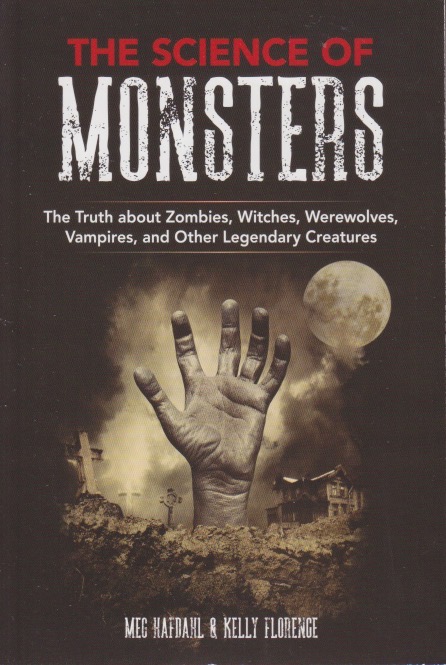
The rule is simple.  If you buy something in the gift shop, you can get into A Nightmare in New Hope for free.  So I naturally gravitated towards the books.  I picked up Meg Hafdahl and Kelly Florence’s The Science of Monsters: The Truth about Zombies, Witches, Werewolves, Vampires, and Other Legendary Creatures.  I noticed that the authors weren’t scientists, so I wasn’t expecting anything hard core.  In fact, I mostly wanted it for fun.  And also, I’m fascinated by anyone who can manage to get published by a trade press, the kind that publish books for under twenty bucks.  (Lest you think that’s a random amount, I’ve been invited to events where I was told $22—the then price of Weathering the Psalms, my least expensive book—was too much for most of the audience.)  The science in this particular book is akin to the science of various ghost hunters—the use of science as a framework, but not really being actual science.

Still, it’s a fun read.  Divided into ten sections of three chapters each, it covers a range of horror movies and asks various questions about aspects of “could it happen?”  Of course, in the sections featuring serial killers, we already know the answer.  Sometimes the authors shift to the “why” question when something obviously does happen in real life.  Now, I bought this book as a horror consumer and I have to say that it made me feel a sense of accomplishment that of the thirty chapters I’d seen all but one of the featured films.  The one I haven’t seen is Cujo, but I’ve read the book.  What I’ve noticed about other horror aficionados is that seldom have we all seen all the same movies.  Since the advent of VHS and watching movies at home, and the various technologies that came after, those of us with an appetite can be starved for choice.

While I wouldn’t turn to this book for any actual science, I did get a few ideas for horror stories from reading it.  One of them I’ve been working on since the chapter on The Tingler.  Both for fiction and non, I often think about publishers and how to break into that below twenty market.  This book is classified, in its BISAC code (the topic on the back of a book that tells you its genre) as science.  The publisher doesn’t publish in pop culture, which is what horror movies are.  There must be a science to getting publishers to buy into a good book idea like this.  Maybe there’s a science to it.


Fear of Puppets

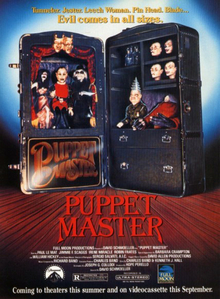
David Schmoeller is a horror director I discovered only in the last several months.  I watched his first film, Tourist Trap, after having found Netherworld streaming for free.  Perhaps his most famous film is Puppet Master.  Although intended for a theatrical release, it was ultimately shifted to direct to video.  That didn’t stop it from becoming a cult film and from spawning sequels and spin offs.  Like other Schmoeller films, it’s a bit disjointed.  But it’s also fun to watch.  Since this is a film from the eighties, I won’t be too worried about spoilers—fair warning.  So, the puppet master lives in a hotel and brings puppets to life, literally.  He does this using ancient Egyptian magic.  About half a century after his death, four colleagues of Neil Gallagher receive a psychic message from him.  They travel to the hotel only to find he’s dead.

The puppets, released from their hiding place, begin killing the guests.  This is one of the many things never explained.  The puppets don’t appear to be evil, but they are murderous.  Three of the four colleagues become their victims in typical horror fashion.  The last surviving friend, an anthropology professor from Yale, and Gallagher’s widow, discover Neil has brought himself back to life, using the puppet master’s Egyptian magic.  He plans to live forever, but apparently he has to kill his former friends to do so.  As he explains this, and beats the professor and his wife, the puppets realize that he’s a bad man.  They attack and kill Neil when he’s trapped in an old elevator.  The ending reveals that his widow can also reanimate the dead.

Child’s Play had been released the previous year, but the trope of haunted or cursed puppets had been in the horror tradition already for decades.  Dolls and puppets are often residents of the uncanny valley and yet people can’t stop making them.  We often learn to draw by representing our families with crayons.  The fascination of replicating ourselves artistically provides low hanging fruit for horror films.  Fabricated things that look human—and we can add mannikins here—starting to move, or coming to life, scares us.  So much so that even less-than-great movies such as Puppet Master can become their own franchise.  As a horror movie, it isn’t terrible.  It’s also not likely to keep you up at night.  At least one other David Schmoeller film is on my to see list, and I have a fair idea of what to expect.  I watch them duly warned.


X-Rayed

If you’re of a certain age, you’ll remember the comic book ads for x-ray specs.  That’s the idea behind a Roger Corman film that Stephen King thought one of the scariest he’d seen.  X, subtitled The Man with X-Ray Eyes, came out in 1963.  Not to be confused with the X of the modern trilogy, this X follows a Doctor Xavier who develops a formula that allows him to see inside people so that he can accurately diagnose and cure them.  This formula may affect his sanity, however, and he kills a friend who is trying to take the ability from him.  A wanted man, he finds a carnival barker who exploits his gift as a trick.  It was a bit jarring to see Don Rickles in a horror movie, but stranger things have happened.  In the midst of this exploitation, an old friend finds him and drives him to safety.

Then to Las Vegas, where his sight allows him to win unabated.  When the police are called he steals a car and increasingly sees through the fabric of the universe.  He stumbles into a road-side revival where the preacher encourages him to take Matthew 5 literally and he does so as the congregation chants “pluck it out!”  What makes this final scene so arresting, apart from qualifying it for Holy Sequel, is that before the minister tells him to mutilate himself, the doctor says he sees through the darkness to the eye that “sees us all.”  He sees God.  The minister interprets this as the Devil, confusing the most elemental entities that exist one for the other.

The movie has some lighthearted moments, some even apart from Don Rickles.  When the doctor begins to see through everybody’s clothes, it’s presented in a humorous way.  But for the most part, the film is played straight and it manages to raise some serious issues for those who think through the implications.  Our senses evolved to help us survive.  Accessing abilities beyond that is a catalyst for disaster.  Indeed, Dr. Xavier early on notes that he’s approaching godhood because of this newly won ability.  It also means that an individual might know too much.  It seems that at the end he does.  The movie is remarkable even today in several ways.  Technology has made special effects more believable, but the human side of this story remains unaltered.  A doctor wanting to help patients becomes more of a monster than a man, in some respects.  And perhaps the most remarkable aspect is that this is a serious horror film made by Roger Corman for AIP. Scary even to a young Stephen King.


Breakage

Glass makes me wonder; can any member of a trilogy really stand alone?  As someone who consumes fiction, the question always arises as to who really controls the meaning of individual units.  Scholars have given us reader-response theory that posits meaning rests with the reader (viewer, listener, etc.) rather than with the creator.  Being on an M. Night Shyamalan kick—I was brought in through his horror movies—I watched Unbreakable.  I vaguely knew it was a trilogy, but when I saw Split I was caught off guard.  Unbreakable was a super-hero movie.  Split was a horror film.  I knew Glass brought them together, but I wasn’t sure which way it would break.  It turns out the trilogy is a horror sandwich on super-hero bread.  It’s also surprisingly thoughtful.  And over two hours long.  There are horror elements, but it made me wonder since Split is horror, could it stand alone without the other two.

Having read about the development of this a little bit, Unbreakable could have stood alone.  It did for sixteen years.  Split could also, but for the reveal in the last few minutes.  And Glass manages to pull the whole thing off with a characteristic Shyamalan twist ending.  I’ve written about the other two movies in their own posts, but I really don’t want to give any spoilers for the last one.  I can say it ends with a message that is worthy of the Matrix.  It shows what movies can do.  Or at least it was taken that way by this viewer.

Given what movies are, and what they represent, I have to wonder if there’s not a good dose of racism in the criticism of Shyamalan’s work.  His movies are intriguing, without fail.  I haven’t seen all his films, but I have watched eleven of them now.  Some multiple times.  Here’s a guy with stories to tell.  I know, as a fiction writer who has trouble selling anyone on my vision, that a story can take over your life.  And you want to tell that story and see if it resonates with anyone else.  Those of us who make up tales generally recognize when something we write isn’t good.  My list of unfinished or unpursued stories dwarfs the stack of those I’ve had published, or tried to.  When you release a story out there in the world, you hope that others will get it.  I trust certain auteurs.  Even if not all of their films appeal to me, I like to think I see what they’re getting at.  This trilogy is well worth watching through to the end, even if it isn’t horror.


Not Just a Visit

I’ve been on a bit of an M. Night Shyamalan kick lately.  When The Visit showed up on a streaming service I could access, and it was a rainy afternoon when yard work was impossible, I decided to give it a try.  I first became aware of Shyamalan as a horror auteur.  The Village was his first movie I saw, followed by Signs and The Sixth Sense.  (I knew about The Sixth Sense because of the press around the trailer accidentally being shown to underage audiences in theaters.)  I’ve seen some of his movies that aren’t that scary: The Happening, Unbreakable, The Lady in the Water, for example, and others that are.  Knock at the Cabin, Split, and now, The VisitThe Visit has a twist ending and I’m pretty sure that spoilers will make their way into paragraphs below, so if you’re holding off seeing it, you might want to wait before reading further.

The set-up is innocent enough.  A mother estranged from her parents is letting her two children, both minors, visit their grandparents while she takes a cruise with her new boyfriend.  (The children’s father had left.)  Becca, the daughter, plans to make a documentary of the trip.  The movie is found footage.  Sending the kids off by train, they make it to the grandparents’ house in Chester Springs, completely remote from wifi, to stay for a week.  Initially the stay goes great.  The grandparents, however, have some strange issues.  The grandmother’s sundowning disturbs the two kids, and the grandfather also displays elements of dementia.  As the week goes on, these things grow more intense.  Once the mother returns home, they Skype her (there is ethernet at the house) and when she sees the grandparents she realizes (spoiler follows!)

that the people watching her kids aren’t her parents.  They are a couple escaped from a mental institution.  Not only that, but they have also killed the actual grandparents and one of the visitors to the house.  The mother calls the police, but the insane couple makes their move to take care of the kids.  The youngsters are more resourceful than it seems, and are able to get out of the house just in time.  The police and their mother arrive, shuttling them to safety.  As with Split, the fear derives from a situation of mental illness.  There are some disturbing scenes in this film and it manages to bring in some legitimate scary stuff as well as a few effective jump-startles.  I guess I still see M. Night Shyamalan as a horror auteur.


Big Bites

Although Jaws takes place on or near the fourth of July, it’s not holiday horror.  Holiday horror draws its source of fear from the day, and although Mayor Vaughn—like many politicians—insists holiday income is more important than a few lives lost, the fear derives from the shark.  I can’t remember when I first saw Jaws.  It couldn’t have been during its initial theatrical release (I was too young), I do know that I read the book first.  I wasn’t expecting Hooper (then my favorite character) to survive.  I was also surprised when I heard people starting to refer to Jaws as horror.  When I first saw it, whenever that was, I wouldn’t have called it horror—it’s just a movie about a shark.  Since thriller and horror bleed into each other I’m more open to the designation now.  Besides, animal attack horror is its own well-established category these days.  Jaws, half-a-century old this year, is experiencing a comeback but the shark never left.

JAWS, 1975

My wife surprised me by suggesting we watch it last weekend.  We’d seen it together on television many years ago.  A number of analyses have been appearing in the media, highlighting the importance of the movie, and I noticed a few things watching it again.  Probably the most obvious shift, for me, was finding Quint the most engaging character.  I don’t know how many times I’ve read Melville’s Moby-Dick, but it’s been at least two times since seeing Jaws the last time.  The connection was much clearer with this viewing.  Quint is after sharks because of their attacks on crewmen of USS Indianapolis in World War II.  Quint was a survivor but his life’s mission is revenge on sharks.  So much so that he smashes the radio to prevent Brody from radioing in an SOS.

So here was a confluence.  I watch horror movies.  My favorite novel is Moby-DickJaws falls somewhere between the two.  The mainstream success of the latter may have been an early contributing factor to the grudging admission that horror can be good cinema.  Just in the past two or three years standard media outlets have been valorizing some horror and in this summer’s movie season, eyes have turned back to Amity and its local Captain Ahab and great white.  The great white shark, mainly feared because of this movie, is considered a vulnerable species.  As with Moby Dick, I felt sorry for the animal, watching the movie.  Both seem to have revenge on their minds as well, whether it’s a holiday or not.


Dark Lovecraft

There is no shortage of Lovecraftian horror movies out there.  I watched The Unnamable because I found it on a list of dark academia movies.  And also, well, it’s horror.  I’ve most likely read Lovecraft’s original story at some point in time, but I didn’t remember it at all.  The dark academia part comes in because it involves college students and a haunted house.  A low-budget offering, this is hardly great cinema.  It’s not sloppy enough to qualify as a bad movie.  That puts it somewhere around “meh.”  The film opens with Joshua Winthrop being killed by the monstrous daughter that he keeps locked in a closet of his house.  Then, in the present day (the movie is from 1988) three college guys talk about it and the skeptic decides to spend the night in the house to disprove the monster tale.  He is, of course, killed.  Although his two companions don’t go looking for him, others end up in the house.

A couple of upperclassmen looking to score with freshmen coeds, talk two women into going to the house with them.  As they start to enact their plan, the monster kills them one-by-one, leaving the virginal final girl alive.  Meanwhile, the other two students whose friend was killed, also come to the house.  They manage to rescue the final girl and escape the creature by invoking the Necronomicon’s spells.  The music cues are often comical, suggesting that this isn’t to be taken seriously.  They also spoil the dark academia atmosphere.  For me, a horror film works best if it’s either clearly horror or clearly comedy horror.

It did, however, raise a question in my mind.  Dark academia and horror do have some crossover.  H. P. Lovecraft often had professorial types as his protagonists.  Was he writing a form of dark academia?  It’s difficult to say.  Lovecraft’s work was known as “weird fiction” in his time, and it has become its own kind of genre.  (Just try to publish in the rebooted Weird Fiction without your Lovecraft cap on and see how you fare.)  I’ve been pondering genres for quite some time, and since I watch movies because they’re free or cheap, often, I see some unconventional fare.  There’s no question that The Unnamable is horror.  When the movie ended I was sad for the monster.  She’d been living according to her nature, and really didn’t deserve the treatment she received from a bunch of trespassers.  Not a great movie, it nevertheless made me think.


Meeting Buffy

I have a confession to make.  I had never, before just recently, seen any of Buffy the Vampire Slayer.  This is kind of embarrassing because it was being talked about even as I was just starting to teach at Nashotah House.  And it has been discussed in religion and horror books quite often.  I understood that the television series was considered better than the original movie, but I felt that it was important to go to the source, at least to start.  Joss Whedon, it is reported, distanced himself from the film he wrote because it began taking a different direction than he’d envisioned.  The television series, which was praised among any number of critics, was more what he had in mind.  Still, the film isn’t terrible.  The concept of a ditzy blonde being an unwitting vampire hunter is entertaining and Kristy Swanson plays a pretty good Buffy and Donald Sutherland a great Merrick.

Having not seen the series to compare, the movie stands fairly well on its own.  Vampire comedy horrors can be quite entertaining.  The plot here is a bit overwrought and the love story feels tacked on to the vampire narrative.  It lacks the strong through line characteristic of Joss Whedon movies.  So, Buffy doesn’t realize that she’s a slayer, a kind of reincarnated vampire hunter.  Merrick convinces her by telling her what her dreams have been.  And Buffy has preternatural abilities—reflexes beyond human reach.  And the vampires have been awaking in Los Angeles.  The story just doesn’t hold together as well as it should.  I was a bit surprised, however, to find the Bible quoted a time or two.

The charm, which also led me to read about Abraham Lincoln as a vampire slayer, is the unexpected juxtaposition.  A cheerleader, or the best president we’ve managed to elect in this divided country, and vampires?  Even more, vampire slayers?  Vampires, although monsters, are often symbolic and sometimes sympathetic ones.  Buffy’s vampires aren’t charming.  Sometimes funny, yes, but they aren’t the tormented souls that elicit human sympathy.  And Buffy adds its own backstory mythology.  In Dracula Van Helsing was a mortal aware of vampire habits.  Buffy sees this as a predetermined role, specifically female in nature.  I’m not sure if I’ll be able to carve out the time to watch the television series.  But at least, at this point, I have been able to put a bit more flesh on the character of an unlikely vampire foe.  It only took me thirty-three years.


Dead, Not Sleeping

A Nightmare in New Hope is a fairly intimate space.  The owner told us that the collection will change and grow, given that he’s still collecting.  Having a particular interest in Tim Burton’s Legend of Sleepy Hollow—having a book (ahem) on the subject coming out soon (cough)—I was particularly anxious to see what props they had.  To make sense of this it helps to have seen the movie, but you’ll catch on, even if you only know the Disney version of the story.  There were three main items from the movie that they have on display.  One is the wax seal used for the Van Garrett will, used as the movie opens.  The seal is quite large.  Of course, movies substitute props from time to time, blended by celluloid magic.  CGI doesn’t leave as many tracks.

The second artifact is one that wouldn’t have occurred to me to have even existed.  This was the animatronic horse’s head for Daredevil, the Headless Horseman’s mount.  There are a couple scenes in the film involving horse acting, and I’d just assumed that trained animals were used.  Being up close and personal with this artificial head, a couple thoughts came to mind.  One is that right next to it, it’s quite obvious that it’s artificial.  The second thought was just how much thought and effort goes into a big-budget movie.  For a few seconds of a close-up horse head, this model had to be constructed and used and then set aside.  I asked the owner about how such things were acquired, and he noted that production companies don’t keep everything.  He also noted that movie artifact prices have skyrocketed.  Both because horror is now popular and because CGI, as noted, doesn’t leave tracks.

The third, and most proudly displayed Sleepy Hollow piece is the Headless Horseman’s sword.  This appears in the movie far more often than either Daredevil’s head or the wax seal.  One of the aspects of Washington Irving’s story I discuss in Sleepy Hollow as American Myth is that the Horseman’s weaponry changes over time.  I won’t say more since, like museum owners, those who write books hope that they well sell a few copies.  I’ll be revisiting A Nightmare in New Hope from time to time.  For the items on display, I’d seen probably 90 percent of the movies, and a few of them I’d discussed in some detail in either Holy Horror or Nightmares with the Bible.  Of course, the Sleepy Hollow book is forthcoming (ahem).


Addams Family Research

After having binged on Wednesday earlier this year, and wanting something lighter to watch, we finally saw The Addams Family.  Neither my wife nor I watched the television series too much when we were kids, but it’s probably no surprise that I watched it more.  As with Wednesday, if you didn’t see the television show, or read Charles Addams’ cartoons, you can still enjoy the movie.  After all, some of the salient aspects of the eponymous family are never explained.  Why are they so wealthy?  Things like that.  Although the movie, which is family friendly, can’t be called horror, it is a dark humor piece that scratches a certain itch.  For several years I’ve been pondering how horror has become such an amorphous genre that it really tells us little about a movie.  Taken literally, this one would be horror.

Not having grown up as a particular fan, I never really attempted to research the Addams family, but the basic idea was that they were people who lived as they liked, not caring what others thought of them.  They remain happy and cheerful in their macabre tastes.  The humor in such a situation is obvious.  The ultimate non-conformists, they are wealthy enough not to have to worry about fitting in.  Also, they tend to have some supernatural abilities.  Watching the show growing up, the character that never seemed to fit  the macabre image was Pugsley.  Often a partner in crime for Wednesday, his “monstrous” nature seldom seemed obvious to me.  Maybe it was his outfit.  In any case, not fitting in is what the show is all about.  Not fitting in and not worrying about it.

The plot of the movie is surely well known by now.  Gomez’s brother Fester is missing and a criminally minded Abigail Craven sends her lookalike son Gordon to take Fester’s place to get access to their riches.  The humor, apart from the madcap plot, often comes from subverted expectations.  A character points out a gloomy, macabre, or scary situation followed by a comment of how much they enjoy it.  As I’ve noted, taken literally such things define horror.  Horror and comedy can work well together.  In fact, I’ve reviewed many horror comedies on this blog.  I would have never thought to have watched this movie, however, without the prompting of Tim Burton’s Wednesday.  She’s an underplayed character in the series since the focus tended to be on the bizarre adults, as far as I can recall.  As Christina Ricci’s second feature film, her Wednesday laid the groundwork for the Burton series.  Maybe it’s time to do a little more research into family history.


Split Decision

Sometimes advertising and packaging can make you ill-prepared for a movie.  I know that M. Night Shyamalan’s Unbreakable, Split, and Glass are considered a trilogy.  Without knowing the story, I saw the first film and discovered it was a superhero movie.  That’s fine, of course.  It’s not really horror much at all.  That’s maybe the reason Split caught me off guard.  It is brought into sequel territory right at the very end, but the story is tense and scary.  Kevin Crumb is a man with DID, dissociative identity disorder—what used to be called a split personality.  Quite apart from the inherently fascinating phenomenon (and the criticism the movie received for misrepresenting it), the idea that a person shifts and you don’t know who s/he is, is frightening.  A couple of those personalities have teamed up and become criminal.  Kevin abducts three teenage girls for a purpose that only becomes clear later.  Their efforts to escape create a great deal of the tension, and the quick shifting of identities that Kevin displays makes any kind of reasoning with him impossible.  

There are any number of avenues to discuss here.  One is that Kevin’s disorder stems from how his mother treated him as a child.  (Unintentionally I’ve been watching movies that trigger me that way lately.)  He developed personalities to protect himself from the pain and they continue to multiply.  Meanwhile, the kidnapped girls can’t figure out what’s going on but Casey (Anya Taylor-Joy—my first clue that this was horror instead of a superhero movie—)realizes that she has to treat the different identities in different ways.  Another avenue is to consider what “the beast” (one of the personalities) asserts: only those who’ve been broken are truly evolved.  Some children make it through difficult childhoods by becoming resilient while others don’t.  Casey, it turns out, also had an abusive relationship in her childhood.  Movies like this always make me reflect on how difficult being a good parent can be.

The person not in control of their own actions (ahem) is among the most frightening of human monsters.  Those with mental illness, however, seldom fall into this category.  I understand why mental health providers found this film problematic, but it showcases Shyamalan’s horror chops.  It was the scariest movie that I’ve seen in quite some time.  After I ejected the disc I felt bothered (and trapped) for quite a few minutes.  And I realized that if this is a trilogy then superhero and horror combined await in the third part.  We shall see.


Deadly Seven

Seven, styled Se7en, shades more toward the thriller end of the stick than horror.  The two are very closely related, of course, but as a gritty cop drama, the main horror element is the gore.  And the serial killer.  Indeed, it’s often compared to The Silence of the Lambs, a card-carrying horror club member.  My main complaint is that much of the movie is shot so dark that you can’t see what’s going on.  The unnamed city is about as cheerless as Bladerunner, and even when people aren’t being stalked by the serial killer they’re being murdered anyway.  So this dark setting brings together two detectives, one retiring (played by Morgan Freeman) and one with anger issues (Brad Pitt) set to take over.  The two are only supposed to overlap seven days, but the seven in the title refers also to the seven deadly sins.  

A literate cop drama—Freeman knows his literature (Milton, Chaucer, Dante, and even Thomas Aquinas)—it is a step above the standard crime drama.  The fact that Freeman spends his nights in the library may be the reason some people consider this dark academia.  The academic part is otherwise absent.  In any case, it is Freeman who recognizes that victims are being killed for their embrace of one of the seven deadly sins.  An obese man is fed to death, a greedy lawyer has to cut off a pound of his own flesh (in a hat-tip to Shakespeare).  When Freeman’s character tells Pitt’s that it’s from the Merchant of Venice, the later says “I’ve never seen it.”  Not read it, but watched it.  It’s Freeman who recognizes the endgame that the serial killer is playing and tries to warn Pitt.  But Pitt’s wrath is also a deadly sin.

The seven deadly sins aren’t biblical.  They emerge in early Christianity, taking shape through such writers as Tertullian, Evagrius, and Pope Gregory I.  They have remained in Catholicism as  pride, greed, wrath, envy, lust, gluttony, and sloth (which sounds like the profile of some narcissists in the news).  They’ve been used in proper horror films as well as in thrillers, giving a convenient number of infractions to pursue.  Seven is one of those films that has become more highly regarded over time.  One might say that a prophet is without honor in their own time.  In any case, the movie is gripping and sad and a bit bloody.  It doesn’t unfold exactly as you might expect.  And no matter its genre, it can leave you thinking.


Not Fragile

One of the problems with auteur theory is that you cast directors into an expected genre in your mind.  Or at least I do, and that is unfair to directors since they, like those of us who write, sometimes explore different genres.  My first exposure to M. Night Shyamalan was The Village.  Next was Signs.  And finally, The Sixth Sense.   (I was one of those creeped out by the “I see dead people” of the trailer for the latter, and it took several years for me to get over that.)  These were enough to solidify Shyamalan as a horror auteur in my mind.  I think the other films of his that I’ve watched, The Happening, Knock at the Cabin, have all been horror as well.  While some have classified it that way, many consider Unbreakable to be a thriller instead.  These two genres are very closely related, in any case, and I’d been wanting to see it.

Unbreakable is a movie to get you thinking.  It’s old enough that I’m not going to worry about spoilers here, so be warned.  David Dunn, after surviving a train wreck that killed everyone else, runs into Elijah Price, an art dealer and comic book aficionado, who is, literally fragile.  A rare disease renders his bones weak and since his childhood love of comic books informed his outlook, he wants to find a hero.  Dunn seems to be the man.  Never sick in his life, he survived a car crash with no injuries and his only weakness seems to be water (he nearly drowned as a child).  Price tries to convince him that he is indeed a superhuman, but his partially estranged wife disagrees.  Their son, however, believes.  The twist ending has us realize that Price has been conducting terrorist activities in order to find a hero and he “confesses” once he’s certain Dunn is real.

There are definitely some very tense moments in the film.  There aren’t any monsters, and Shyamalan wanted this to be known as a comic book hero movie (which it is).  He has directed some others in this genre as well, none of which I’ve seen.  I watch hero movies now and again, but they often lack the depth of good horror.  Unbreakable, however, does have depth.  At least it makes you think.  Is the good of convincing a hero that he can help people worth the hundreds of deaths it took to find him?  Price’s motivation seems pure, but his methods are evil.  These kinds of dilemmas are inherently thought-provoking.  But I will still probably continue to think of Shyamalan as a horror director.  Maybe that’s just wishful thinking.


Horror Time

In case anyone’s wondering (ha!), I haven’t lost interest in horror.  I’ve been discussing quite a few dark academia movies lately since that’s where I seem to be, but what’s really lost is time.  I’m no great consumer of social media.  I spend literally five minutes on Facebook daily.  Less than that on Bluesky and Twitter.  I don’t have time.  I love watching movies, but they take time.  I often discuss this with family—I’m not sure where the time goes.  In my case it’s not social media.  Much of it—the lion’s share—is work.  When a three-day weekend starts to feel like just enough time to get everything done before starting it all over again, I think there’s an elephant in the room.  If I can just squeeze past your trunk (pardon me) I would note that I spend as much time as I can writing and reading, but even that drains too quickly.

I read a lot.  And I read about writing.  Those who do it best have time to put into their craft.  If they’re working long hours, have a family, and weeds that love all the rain we get around here, they’re better than I am.  Home ownership (if you can’t afford to hire groundskeepers) is itself a full-time occupation.  As is writing.  And, of course, work.  What’s been suffering lately has been my time for watching horror.  Part of that’s money too.  I’m not sure if anybody else has noticed, but prices haven’t exactly gone down since January, and movies aren’t always free.  I have a long list of horror films I want to see (quite a long list), but tide, time, and money wait for no-one.  I even had a four-day weekend not long ago during which I had no time to watch horror.  Horrific, isn’t it?

I’m at a stage of life where the shortness of it all stares me in the face.  I was a late bloomer and my career never really took off.  It ended up taking time and not rewarding that time at the usual exchange rate.  I’m watching friends and family retire and some finding too much time on their hands.  Hey, brother, can you spare an hour?  I think of my farming ancestors where every minute was filled trying to stay alive in a world where leisure time really is a luxury.  I have no right to complain, but I do wonder where the time goes.  I suppose if I didn’t blog I’d have a little more time for horror, but I just can’t face giving up all this fame.