Non-Believer

Heretic may be the ultimate horror and religion movie.  It’s also a film you may need to see multiple times to follow the all-important dialogue.  It’s a movie that would’ve been front and center in Holy Horror.  And it’s deceptively simple.  As I’ve written many times before, I try to know very little about a film before I watch it.  This if often difficult with the internet and people wanting to tell you about the latest cinematic marvel.  I managed to watch Heretic knowing only that it was about two Mormon missionaries visiting a potential convert.  If you want to leave your level of knowledge at that point before seeing the movie you might not want to read on.  You have been warned.

e two women in on an inclement evening, assuring them his wife is in the next room.  He then, ever so innocently, questions them about their beliefs and about religion in general.  The missionaries grow increasingly concerned that there is no wife and that Mr. Reed (Grant) has been toying with them.  They find themselves locked in his house as he unrelentingly questions them and asking them what, and why, they really believe.  Charmingly he assures them they can leave at any time, but they have to pick a door—the lady and the tiger-like—marked either belief or disbelief.  (Both lead to the same place, and it’s not out.)  Using a trick he attempts to get them to die by suicide.  When they refuse, he kills one of them but the other discovers the truth, “the one true religion.”  I won’t tell you what it is.

The film is remarkable in that there is no horror without religion.  I made a similar argument about The Wicker Man, in my book on the movie.  When we ask ourselves what makes a horror film scary, seldom is the answer overtly “religion.”  Usually it’s a monster of some description.  Or the threat of annihilation.  Or plain old death.  Religion can be scary.  In fact, it has historically been the nepenthe for death and sorrow in this life.  Some would trace the origin of religion to that very phenomenon.  I’ve been writing for years on this blog that religion and horror belong together.  They overlap.  They blend.  They, on occasion, may be the same thing.  Heretic displays that clearly.  If I haven’t spoiled it for you, I highly recommend it.  I can honestly say it’s the first movie that has literally given me nightmares, in many, many years.


Dusk’s Early Dark

It may be the strangest vampire movie ever, and that’s saying something.  To understand this, you have to realize that I read as little as possible about a movie before seeing it.  I try to avoid trailers, and recommendations from well-wishers play a big part in my choices.  I came across From Dusk till Dawn in a couple of online lists and when I saw it was Quentin Tarantino and George Clooney, I doubted the vampire part.  Indeed, for the first twenty minutes to half hour I was convinced I’d stepped into Pulp Fiction 2.  (Tarantino wrote it, after all.)  Those kinds of movies unnerve me, and just when I was wondering if I’d made a mistake, it became a monster movie.  An action horror film.  Lots of vampires and, surprisingly lots of talk about God.

In case you haven’t seen it, Clooney and Tarantino are brothers out on a crime spree.  Harvey Keitel is an ex-minister out on a road trip with his teenage kids.  After his wife’s death, he lost his faith although he still believes in God.  (Classic theodicy.)  The criminals abduct the family to get them into Mexico where they’ve made a deal with a guy.  They meet at about the most salacious strip club you can imagine, one that caters only to truckers and bikers.  It turns out that the staff and strippers are all vampires and they prey on the patrons.  Okay, so the story doesn’t hold together.  Clooney’s character, which is hardly the sort you’d want anywhere near you, tells Keitel’s that unless he re-finds his faith none of them will make it out alive.

There’s quite a bit of humor packed into the over-the-top fight scene, including dialogue about how to defeat vampires.  A couple of the patrons, it turns out, are pretty adept at that sort of thing, but the human holdouts keep getting bitten and have to be killed.  Finally, the titular dawn arrives, leaving just Clooney and the minister’s daughter alive.  I couldn’t help but to be reminded of Willy’s Wonderworld, in overall story arc, but the two are completely different in tone.  The fact that the movie is 28 years old and that I’d only heard of it recently really surprised me.  Especially since religion is so heavily involved in the story.  Not only that, but the message about religion, in service of the story, is that belief is good.  And this from a murderer and a thief.  Strange indeed, but not easily forgotten.


Worse Seed

Not too long ago I watched The Bad Seed.  In the 1950s it probably wasn’t considered horror, but it is quite a scary movie.  I’d classify it as horror—not all fifties horror was guys in rubbery suits.  When reading about the movie afterwards, I learned the novel had a darker ending (the movie was pretty dark as it was).  So I decided to read the book by William March.  The movie’s fairly faithful, up to the ending.  As usual, the novel adds more detail and reveals some things rather differently.  For example, Christine Penmark, the mother of Rhoda, can’t ask her father if she’s adopted.  She “learns” this through inference.  Indeed, the book leaves you wondering if she’s actually mentally unstable.  The proof that she’s the daughter of a serial killer is strong but not definitive.  And her father is already dead when the story opens.

The school outing, where Rhoda claims her second victim, is where the movie opens.  Rhoda is expelled from the school because the women who run it can’t abide Rhoda’s dishonesty.  The character of Leroy is very well portrayed in the movie, but he too seems to have some kind of mental illness.  Monica Breedlove is accurately presented as a busybody, but she too spends a lot of time analyzing people, including herself.  Rhoda is, of course, a literal sociopath.  It’s fair to say the novel is an extended exploration of mental illness of various sorts.  I remember from growing up in the sixties that many conditions that are now regularly diagnosed simply weren’t recognized.  Kids were blamed for bad behaviors that were, in all likelihood, caused by being somewhere on the spectrum.

Much water has passed under the bridge since the fifties.  This book was a bestseller then, but I only learned about it last year.  Indeed, it’s been adapted to film three times and was a Broadway play before all that.  There was a sequel released a couple years back.  Rhoda Penmark is herself a trope of the narcissist who lacks empathy.  Hmm, where else do we see that?  It’s still analyzed as primarily a “nature verses nurture” novel, but I suspect there’s something more going on.  We’ve moved beyond Freud and this novel probes what goes on in the minds of those who spend too much time alone, as well as who happen to be the mothers of pathological child murderers.  And the ending is different, but the movie’s is equally as bleak.  The Bad Seed a good book for this particular January.


Old Movies

Something strange is happening.  (“How’s that new?” you might well ask.)  There seems to be a bifurcation taking place in my brain, what techies might call “partitioning.”  Specifically it regards what I think of as “old movies.”  By this I don’t mean movies from the sixties or before.  No, I mean movies I saw some time ago, often on DVD or even VHS, sometimes in theaters, that became part of my standard repertoire.  I imagine most cinephiles have certain films to which they keep coming back.  But for me, the “old movies” are those I haven’t blogged about.  Also, they predate streaming so, in that sense, they are “old.”  You see, I’m not a very internet-savvy thinker.  It took me quite a few years to figure out I could link my posts with other posts on my own blog so that in the rare event that someone might want to read more they could click on the links like you do on Wikipedia.  (Now that you’re here, stay a while!)

Photo by Denise Jans on Unsplash

This blog was started in 2009.  For most of its history it has been daily.  I didn’t automatically start blogging about movies, though.  For a few years I tried to tie all my posts into religion, widely conceived.  Then, kind of establishing my own “brand,” I started writing about less ethereal topics.  Including movies that don’t have religion in them.  By far most of the movies I discuss on this blog are first-time films for me.  Occasionally I’ll go back and address one of my “old movies.”  This occurred to me the other day when I went to link to Tim Burton’s Corpse Bride.  I thought I’d posted about it, but it’s one of my oldies, so I hadn’t.  I don’t even remember when I first saw it.  If feeling nostalgic, I’ll look backward, as an historian is wont to do, but it doesn’t happen often.

Since we can’t see ahead in our lives with any real clarity, I didn’t anticipate this blog focusing on darker themes. When I started, finding a position back in academia seemed like a possibility.  For me this blog is therapy, but this is as good a place as any to talk about movies, and most of mine fall into an ill-fitting genre called “horror.”  Even among these, my “old movies,” like The Exorcist, The Amityville Horror, Sleepy Hollow, or even Paranormal Activity, which now more or less define my research, were missed out for having been too old (having been seen too long ago).  Most of the movies discussed in the past few years here have been streamed.  Many of them are easily forgotten.  But the old ones, they’re stuck, apparently for good. Such is the power of old movies.


Light Shadows

I often do things backwards.  It’s not really intentional.  You see, I’m busy with my day job and something most people may not realize is that researching and writing are also a full-time job.  Only they don’t pay well, unless you’re a professor.  In any case, I find out about things in odd ways.  A friend got me watching What We Do in the Shadows, the current FX television show.  I then realized it was based on a movie so I decided I should see that before going any further.  The movie is funny, but the television show develops some of the same bits so really, it is best to see the movie first.  It turns out that while I’ve been busy working, and writing books on other types of horror movies, this franchise has been developing.  So what’s it about?  Vampires unliving together.

One of the contradictions about vampires, as the undead, is that they live by certain rules that make them distinct.  Going back to Bram Stoker’s Dracula, they don’t always live alone.  In fact, three female vampires live in Castle Dracula (although the Count moves to England without them).  What We Do in the Shadows is based on the premise of vampire roommates in contemporary housing.  How would they get along as roommates?  Many of us have experienced roommates and we know the kinds of conflicts that normally arise.  Would the undead have some other complications?  In case you haven’t gathered so already, this is comedy.  There are a few vampire chase scenes and a hilarious interaction with werewolves, all filmed as a mockumentary.  It’s pretty funny stuff.

There’s nothing too serious here, but there is bloodshed, of course.  And the developing of different characters for the undead and putting them together in one house does lead to all kinds of situations, some of them adult.  The television show is binge-worthy, if you’ve got the time and if you like vampires.  If you want to start from the beginning, the movie sets the premise well.  Vampires are so well established culturally that there’s plenty of room to fly.  Comedy horror has really come into its own.  Vampires have been culturally ascendant for quite some time now.  They are yet another thing I was fascinated by as a child that later became cool.  I wrote one of my senior term papers on vampires in high school, before college convinced me such things were puerile.  Now I’m finding that the culture has gone after them.  As I say, sometimes I do things backwards, even on a large scale.  


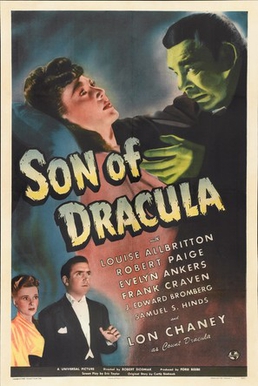
Old Dracula

Francis Ford Coppola’s Bram Stoker’s Dracula is one of the “old movies” about which I posted some time back.  I’ve seen it at least a couple of times, and I wrote a previous blog post about it (October 11 2009).  This is a film about which I have conflicted feelings.  It has immense visual appeal and it influenced a tremendous number of followers.  It also did exceptionally well at the box office.  Since 1992 was a year in which I’m pretty sure I saw no movies in the theater (finishing a doctorate, moving back to America, and commuting weekly from Champaign-Urbana to Nashotah House drained my time and energy.  Besides, still being fairly newly married, I had not transitioned to horror movies again (that’s a different story, also involving Nashotah).)  Being a former literalist, when I first saw it I resisted the title since it takes significant liberties with Stoker, but the overall story is probably the closest of any vampire movie I’ve seen.

The strengths of the movie include its interaction with religion.  Vlad begins by renouncing God and becoming an agent of evil, stabbing a cross, and drinking the literal blood that pours out.  A number of Stoker’s own religious elements are also portrayed, and the ending brings God back into the picture, implying a kind of redemption for the defeated vampire.  The stylishness and opulence of the movie also make for engaging viewing.  It doesn’t have the gothic feel that it might—there seem to be some almost Burtonesque elements to it and some of the casting decisions feel ill fitting.  Anthony Hopkins just doesn’t do it for me as Van Helsing.  His one-liners feel out of place, and his interpretation of Van Helsing as a whole doesn’t resonate with me.

I do like Gary Oldman’s Dracula, however.  He’s right up there with Lugosi (but not quite at that level).  The conflicted vampire is an appealing character—much more intriguing than the pure evil kind.  This Dracula forsakes God because church rules about suicide keep his Elisabeta out of Heaven.  Even now the rulings seem not to allow for much nuance.  At heart, the vampire is a religious monster.  Fear of the crucifix may go back to Bram Stoker, but this movie tries to give it a backstory.  It’s a question of theodicy—why bad things happen to good people, essentially.  This is probably the biggest reason people end up turning away from religion, and it’s something theologians ponder.  While it isn’t my favorite vampire movie, Bram Stoker’s Dracula is stylish and accurate to a degree.  But it also turns back the pages a bit further than Stoker’s book does.


Car Talk

Body horror isn’t my favorite sub-genre, but Titane (French for titanium) had been recommended in several places.  Body horror directed by women takes on a particular cast, especially since pregnancy is, I imagine, kind of scary.  Certainly from a male perspective it can be, so I suspect such major body changes must involve some psychological adjustments for women as well.  The story is strange.  Alexia, after a childhood car accident, has a titanium plate in her skull.  After being released from the hospital, she starts to really love cars.  I mean, really love.  She works as a car model and ends up making love to her showroom car one night.  After that she becomes pregnant.  Emotionally distant from most people, including her parents, she becomes a serial killer.  She’s not a complete sociopath, however, because she realizes this is wrong.

Wanted by the authorities after killing everyone at a house party, she tries to change her identity by cutting her hair, breaking her nose, and wrapping her torso in body tape to pass herself off as a man.  A firefighter chief whose son has been missing for a decade, believes Alexia is his son and he takes her in.  She won’t speak, which he supposes is part of the trauma.  He gives Alexia work among the other firefighters, who are generally sexist and not a little suspicious.  Especially since the chief gives Alexia preferential treatment even though she doesn’t know what she’s doing.  In one scene he tells the firefighters he is God to them and Alexia is his son.  One of the firefighters quips later, that Jesus is white and gay.  (Alexia is pretty and the broken nose only makes her appear androgynous.)

Her painful pregnancy, which involves motor oil, eventually forces her father to acknowledge that she’s not his son, but the lonely man still vows to care for her.  When it’s time to give birth the baby is part titanium (as is Alexia’s distended belly).  She dies in childbirth but her “father” accepts the hybrid baby as his own.  This art-house Euro-horror won several awards.  Exploring issues of both sexism and women’s body changes during pregnancy—particularly an unwanted one—the movie has something to say.  And it’s something that a male writer-director simply couldn’t do.  There are no jump-startles here, and the horror is a slow dread as the viewers’ sympathies tend to be with Alexia.  The first murder we’re shown is when a fan attempts to make love to her (it doesn’t go as far as rape), despite her lack of interest.  She has a motivation and it doesn’t seem evil.  And, of course, there’s a good deal of fantasy at play.  Like most Euro-horror, it leaves you thoughtful.


Meanwhile, on Earth

Low budget doesn’t always translate to cinematic disaster, but in The Crater Lake Monster, it unfortunately does.  I have a soft spot for those who attempt to make movies but don’t succeed the way that they’d hoped.  The Crater Lake Monster is poignant in that respect as the production company, Crown International, apparently messed up the financials and insisted on cutting scenes that helped to make a bit more sense of the story.  The actors are certainly not those at the top of their game, but the stop-motion plesiosaur isn’t half bad.  The story itself doesn’t seem to support its tonnage, however.  A meteor crashes into Crater Lake (not the famous one).  Some months later a monster begins attacking people after it eats up all the fish.  There are a handful of characters who are concerned, and some just casually passing through.

The sheriff, at first skeptical, becomes a believer after seeing with his own eyes.  The doctor, who examines a victim’s body, thinks there’s something in the lake.  A couple passing through on their way to Vegas see the monster up close and survive, but their trauma is so great that they can’t talk about it.  A pair of guys who rent out boats to fishers are having trouble because there’s no fish left.  And a pair of archaeologists from “University Extension” insist that the creature should be kept alive since, well, you don’t often come across dinosaurs.  They also figure out that the hot meteorite incubated a fertile plesiosaur egg that had been at the bottom of the lake for millions of years.  There’s even a story of a liquor-store robber thrown in.  The robber’s only tied to the plot by getting eaten by the monster.  The monster is finally killed by the sheriff with a bulldozer.

Some of the people that worked on this film, especially the stop-motion crew, had some recognizable chops in the biz.  One of them had worked on that childhood Christian kids’ show Davey and Goliath, and another was concurrently working on Star Wars and went on to work on Jurassic Park.  Meanwhile, Crater Lake is so bad that it’s a bit surprising that it hasn’t really become a cult classic.  Creature features are a guilty pleasure.  With a bit of coaxing, and financing, this one might’ve been made passable.  Who doesn’t like to see the underdog achieve some success?  Of course, it did come out the same year as Star Wars, with its budget, and clearly couldn’t compete down here on Earth.


Re-untold

In retrospect, Universal’s Dark Universe, itself a shadowy concept, could have been a thing.  With the budget behind it, Dracula Untold could’ve been spectacular.  As so often happens, however, poor writing seems to have brought Vlad the Impaler to his knees.  I suppose it was rather tacky of me to fall asleep during it when a friend showed it to me shortly after it was available on streaming.  My excuse was that we started late and I’m a very early riser.  Finding it on a network to which I have access, and on a free weekend, I decided to give it another try.  I didn’t fall asleep the second time, but I did end up disappointed.  Action-horror is a tough sub-genre to pull off well.  As some critics pointed out, if Dracula could defeat 1,000 men singlehandedly (which he does shortly after being turned), then why does he not do so when it’s crucial?

What I did find intriguing is the older vampire that lives in Broken Tooth Mountain.  What is his backstory?  And why, if Dracula can just die, does the older vampire not do so himself, when he clearly wishes to?  He just has to step out on a sunny day.  The menace of the classic vampire isn’t on the battlefield, but in the one-on-one situations.  At night, when you’re sleeping.  Or otherwise unable to protect yourself.  The movie does have some good moments—and with a budget like that, it should have—but overall it struggles.  

Part of the difficulty is understanding Vlad the Impaler being, at heart, a nice guy.  Although he impaled thousands of people, he really just wants peace and a domestic life with his wife and son.  He’s reluctant to challenge the Turks until one taunts him upon taking his son hostage.  He tries to protect his people, but when they help save him (as vampires that he personally has turned), he destroys them all when it’s over.  The question of motivation hangs unanswered over the whole thing.  Dracula is never evil, not even when he declares himself the son of the Devil.  He attacks only in self-defense and although he does shed unnecessary blood, it is only in the fog of war.  And the motivation issues also apply to his pre-vampiric allies.  They don’t seem to be able to make up their minds whether Vlad is a good guy or not.  They try to kill him then they fight next to him.  There’s a lot going on here—maybe too much—and it seems that the story wasn’t thought out well enough to make it all work.  Vampires, it seems, don’t always cooperate.


LA Story

David Lynch movies aren’t always easy to understand.  Last year we watched Twin Peaks, including the movie Fire Walk with Me.  Some time before that I’d watched Eraserhead.  My earliest, and unwitting, experience with one of his movies was Dune, which I saw in a theater in 1984.  I had no idea of who Lynch was at that time, however.  As I began exploring the horror genre I found a contingent strongly denying that Lynch directs horror.  Still, there were enough elements in Twin Peaks and Eraserhead that some viewers do move in that direction.  Now, I’d heard of Mulholland Drive many times over the years and I’d seen it classified as horror a time or two, but mostly as a thriller.  Over the holidays I actually had time to sit down and watch it.  And I’m still not sure how to classify it.

I’m not even sure that I can say what it’s about.  Since I watch movies alone most of the time, I turn to the internet to have “discussion” about them.  IMDb and Wikipedia are often good starting points.  There is a tremendously long article in the latter on this film.  Quite often Wikipedia provides not a ton of information about films, but here’s a case where contributors simply can’t say enough.  And none of them know for sure what it’s about either.  I suspect that’s why David Lynch is so highly regarded as a film maker.  He’s an artist.  What artist can explain what their work really means?  Lynch has been notably tight-lipped about what he intended this movie to say, but if you’ve watched Twin Peaks through, you get an idea of what you might expect.  It’s certainly an intellectual experience, and a surreal one.  But is it horror?

One of the terms often used to describe the movie is “nightmare.”  That seems like a horror-laden word, doesn’t it?  It’s often a matter of the characters not knowing who they really are (and the viewers don’t know either).  The thing that ties most of them together is that they’re involved in a movie in some way.  I’ve come to believe that things like books and movies and songs—things we mentally “consume”—become part of our minds, just like food becomes part of our bodies.  Some of the films we see are like junk food—fun, but all fluff.  A David Lynch movie will give you something of substance to chew on.  And finally having seen Mulholland Drive, I’d say it’s a much horror as Lynch’s earlier work has been, however you interpret that.


Going Below

Indiana Jones in National Treasure, in found-footage horror format.  That’s the feel of As Above, So Below.  Only Jones is a woman.  There’s plenty of religious imagery in this movie, but the story’s not that great.  One of the reasons is that it’s too difficult to swallow, although it does score serious points on the claustrophobia scale.  At the beginning I wondered if I was going to make it through since Dr. Dr. Scarlett Marlowe’s cell phone is constantly moving as she continues her father’s search for the philosopher’s stone.  Surviving the situation in Iran, the remainder of the film takes place in Paris, especially the catacombs.  My level of impressedness went up when I learned that the movie really was shot in the catacombs.  Unfortunately it didn’t really help the story.

Alchemy, as part of esoterica, is purposefully difficult to understand.  Marlowe is continuing her dead father’s search for the philosopher’s stone that can change things into gold.  Her friend George (who repairs the clockwork for the bells at Notre Dame) is forced into the catacombs with her and her cameraman Benji.  They’re led by three Parisian cataphiles and some shots look like they were lifted directly from Indiana Jones and the Last Crusade, including the use of her father’s notebook.  Instead, the group enters the gates of Hell.  There are lots of scary things down there, many of them unexplained.  Some reflection reveals that they are all having to confront their pasts—or at least some of them are.  One of the cataphiles is killed before we learn her secrets.  And one of the survivors has no real backstory.  Six go in and three come out.

The movie plays with some interesting ideas, but it’s hard to swallow that an actual bona fide archaeologist would go on an illegal treasure hunt.  And that she knows of a secret chamber in the catacombs that has remained undetected by specialists.  I began scratching my head.  And when the group (or some of them, anyway) begin finding artifacts from their personal pasts in the catacombs, credibility is strained even further.  The idea that it’s important to come to terms with your past is a good one.  But once the young people begin dying and the rest have to keep going deeper and deeper to get out, the illusion is broken by Marlowe just dashing back to get a different stone to save George.  If it were just a matter of popping back, wouldn’t they have tried that earlier?  There are some Bible quotes, making this a candidate for the also unlikely Holy Sequel.


Bottoming Out?

It was an honest mistake, I swear!  I had remembered reading in Stephen King’s Danse Macabre that The Creeping Unknown was worth seeing.  I’d known about this movie under the title The Quatermass Xperiment since I was a tween.  The problem when you grow up with no money in a small town is that you don’t have access to such things.  Then a friend gave me a DVD of The Creeping Terror.  I thought it was The Creeping Unknown.  The disc hadn’t spun too many revolutions before I realized I was watching what may be the worst movie ever made.  Many reserve that for Plan 9 from Outer Space, but believe me, this is much worse.  The story of a couple of aliens sent to eat people to transmit to their superiors what our weaknesses are, it seemed to me that the main weakness is nobody thought to run from this slow-moving monster, except one guy who just abandoned his girlfriend to it. (Apparently girls don’t run.)

Like that other baddie, The Beast of Yucca Flats, the audio was not preserved so nearly all of the film is a voice-over by an authoritative-sounding announcer.  There are a few dubs, but they aren’t well done.  And then extended scenes of young people at a dance (have you ever heard of just filling up time?) are intercut with perhaps the slowest monster attack in history.  There’s so much not to like here.  The poor acting.  The plot nearly as dimwitted as Trump.  The stock footage of a rocket launch run backwards to make it look as if it’s landing.  The sheriff making out with his wife in the patrol car while “on a break” from looking for the monster.  The instrument panels from beyond our galaxy with Arabic numerals and Latin letters.  You find yourself hoping for the Apocalypse so you won’t have to watch the rest, and it’s only 74 minutes long.

Somehow it comes as little surprise that the director (also producer, editor, and star), under the name Vic Savage, disappeared never to be heard of again.  The film’s main financier, had to try to put the movie together for release.  (He also had a role in the movie.)  There is, as I’ve mentioned often before, an aesthetic to watching bad movies.  I’ve ended up seeing many of “the worst of all time” in my spate of movie viewing over the past three or four years.  This is the first time it has happened by mistake.  I do have to say that it’s easier to appreciate a bad movie when you can see that it’s coming and prepare yourself accordingly.  The Creeping Unknown remains elusive.


Vampire Lovers

Stylish, gothic, dramatic.  If it weren’t for the vampires you might not know that Only Lovers Left Alive is a horror movie.  Indeed, some say it’s not.  You can have movies about vampires that aren’t horror films, right?  Still, vampires defined horror, at the earliest stages.  There’s no on-screen violence in Only Lovers.  No, it’s about a pair of vampires named Adam and Eve, who are many hundreds of years old, that have developed different outlooks on undeath.  She reads and lives in exotic Tangier, enjoying herself.  He’s a depressed musician who lives in Detroit—there must be a book in horror movies set in post-industrial Detroit, wondering what’s the point.  In any case, they decide to get together in Michigan where they revel in each other’s company.  But then Ava, Eve’s troublesome sister pops in, unannounced.  Not refined or cultured like her sister and brother-in-law, she leads to trouble.

Eve and Adam move back to Tangier where whey have difficulty locating a good source of blood.  As cultured vampires, they do not attack people—zombies, as they call them—but procure it from doctors willing to sell.  When the supply runs out, they do what they must to survive.  This gentle story is art-house quality and it brings a different angle to the aristocratic vampire.  These vampires are the creators of culture.  The mortals sometimes appreciate it, but are generally too busy destroying the world to pay much mind to the superior creations all around them.  There’s not a hint of evil about these undead, subverting the usual narrative of such beings.

Vampire movies offer some complex possibilities.  They’re also a reminder why “horror” isn’t the best movie label ever invented.  Monsters by definition, vampires are portrayed in many ways—from animalistic, sometimes even with wings, to European nobility with great politeness and decorum, even as they bite your neck.  Then there are those who don’t attack people unless absolutely necessary.  They’re symbols of capitalism, with its greedy sucking of the blood of others.  They’re also symbols of evil, at times barely distinguishable from demons.  They seem endlessly adaptable.  In Only Lovers they are folks you’d be okay with, if they lived next door.  As long as Adam didn’t play his music too loud.  Since horror is a slippery term anyway, I opt for counting this in that genre.  In fact, I learned about it from a website listing stylish horror movies, so I’d say it counts.  Even if it’s just a bit out of the ordinary.


Historic Vampires

Vampire movies have always been a guilty pleasure.  The thing is, there are so many of them that watching them all would be the task of a lifetime (and a substantial budget).  Those of us who are constantly looking for, shall we say, new blood, can find that our lack of knowledge extends back for years, particularly if a movie didn’t make it big in our home country.  Daughters of Darkness is an early Euro-horror about Elizabeth Báthory.  A stylish, almost art house movie, what particularly struck me about it is that it was very well written.  The use of blood is restrained, given the topic, but verbal descriptions of Báthory’s excesses makes for a particularly gruesome scene.  So, about the story.  (This is from 1971, so I won’t worry about spoilers too much.)

A young couple (his backstory is inadequately explained in the movie, apart from being aristocratic), newlyweds, are headed to introduce her to his family.  Stefan (he) isn’t exactly the ideal husband (played convincingly by John Karlen), but Valerie (she) really wants to meet “mother.”  Stefan stalls the trip, and, in the off season, the couple have a luxury hotel to themselves.  Then Elizabeth Báthory shows up with her “secretary.”  Stefan is a little too interested in violence, as a string of murders make the headlines.  Meanwhile, Elizabeth begins making moves on Valerie.  We come to understand fairly early on that she’s a vampire, but no fangs appear and she’s always impeccably dressed and sophisticated.  Her secretary, who is having second thoughts, is accidentally killed while setting up Stefan as an unfaithful husband—again, the writing here is quite good—and Valerie becomes Elizabeth’s new secretary.

There’s a strong feminist aspect to this film, perhaps because Delphine Seyrig (Báthory) was a prominent feminist and would be attracted to such roles, it would seem.  The daughter of an archaeologist in Beirut, she supported women’s rights and there appear to be elements of this in the movie, although it was written by four men.  I was a bit too young for this movie when it came out, and art movies wouldn’t have stood a chance where I grew up, at least not in circles my family knew, so although Dark Shadows mainstay Karlen took a rare male lead role in the movie I’d been completely unaware of it.  But then, vampires are that way, aren’t they?  They tend to be old and well-hidden in the shadows.  Then they come at you with a bite when you least expect it.


Feeling Gothic

Gothic is an odd movie.  I first saw it while in seminary and have come back to it now and again.  I had been thinking of Frankenstein, so I decided to refresh my memory.  A pastiche of opium-fueled images and hedonism it nevertheless brings some religion into the horror.  In case you aren’t familiar with this Ken Russell piece, it’s a movie version of the stay of the Shelleys with Lord Byron, his physician John Polidori, and Mary’s stepsister Claire, in the summer of 1816.  During that visit, the basic ideas for Frankenstein emerged, and Polidori wrote an early vampire story that later inspired Dracula.  The religion comes in the form of Polidori’s Catholicism and his fear of condemnation for being a homosexual.  At one point, when the friends are about to read ghost stories, Percy Shelley says they’re more fun than any Bible.

Of course, in actual life Shelley and Byron were atheists, but the movie portrays the five raising some kind of entity during a seance.  They then spend the remainder of that stormy night trying to drive the entity back into their minds from the physical reality they gave it.  It’s a weird movie with lots of incongruous shots and some gross-out moments.  Ken Russell was known for his flamboyant style, and this movie is a good example of that.  It’s not great but it is moody and I come back to it when I want something, well, gothic.  The year 1816 was called “the year without a summer,” because of the volcanic winter caused by an eruption of Mount Tambora, and some have speculated that the bad weather of that year may have led to the creation of Frankenstein.

Every time I watch it, I wonder what the appeal is.  There’s a lot of God and Devil talk, and Byron was a fascinating character.  Julian Sands’ overacting in every scene makes me wonder what Shelley was like in real life.  I’ve occasionally read about his relationship with Byron and each seems to have had at least a supporting role in the iconic pair of monsters, Frankenstein and Dracula.  The two would be forever associated with the Universal release of movies named after them in 1931.  Gothic never made it big—I only found out about it because a seminary friend invited me over to watch it on VHS one weekend.  Still, it made enough of an impression to bring me back when the mood is right.  Even if it’s strange.