Don’t Tank It

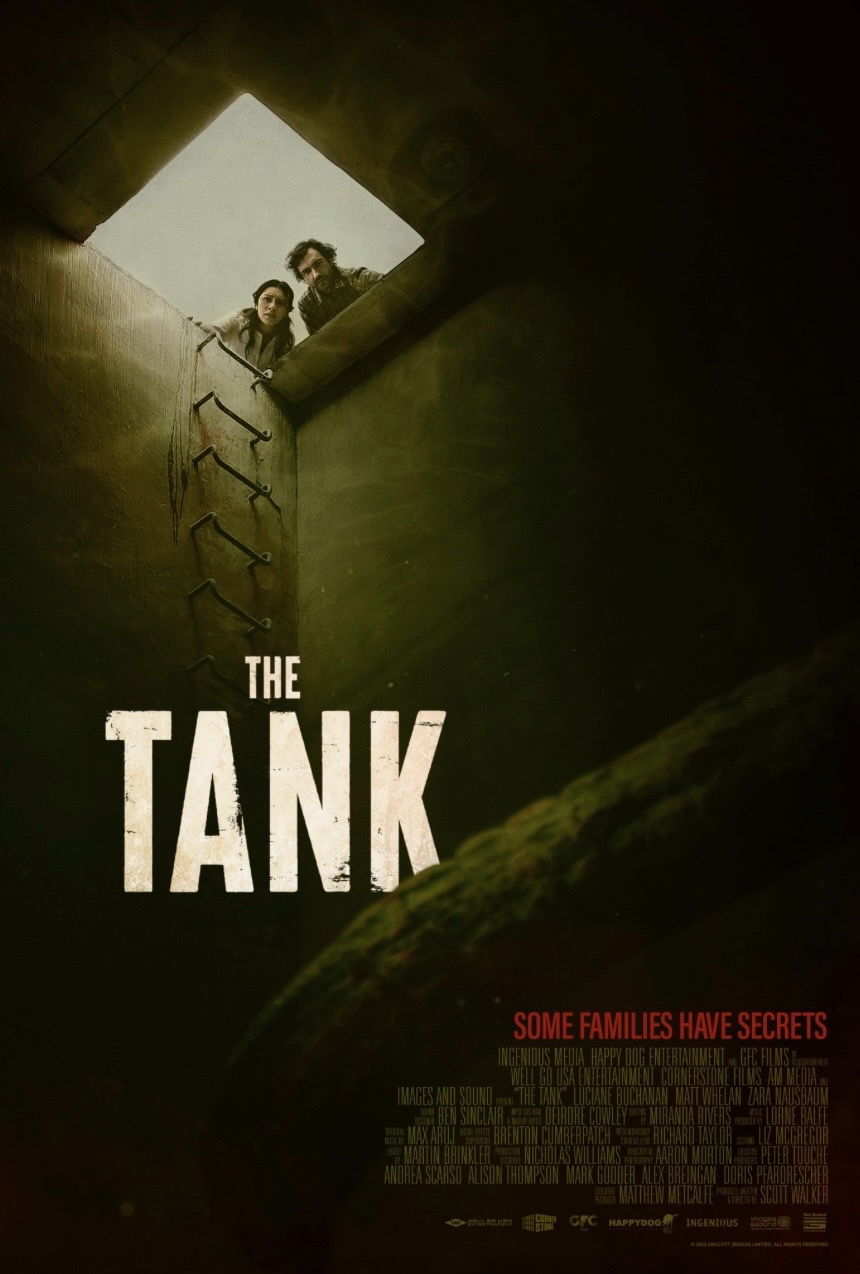
The Tank is a reasonably well done monster movie.  It isn’t great, but monsters are monsters and they can be appreciated in their own right.  The main problem of the movie is that it’s not terribly well written.  The premise is scary enough.  A family of three goea to inspect a property they inherited but which nobody in the previous generation had ever mentioned.  The house is in a remote cove on the Pacific, in rural Oregon.  They arrive to find it boarded up and in poor repair.  Ben, the father, begins making basic repairs while his wife Jules and daughter Reia try not to become too creeped out.  The water supply comes from an underground, eponymous tank that brings spring water into a reservoir.  There’s no electricity.  That night something tries to get into the house.  Ben assures his family it’s only a raccoon or some other woodland animal.

The tank, where the monster comes from, is certainly creepy in its own regard.  When they become convinced something may indeed be wrong with the property a realtor shows up with a generous offer from a buyer.  She is, unfortunately and predictably killed as she tries to leave and we see the monster for the first time.  This is a dilemma for all monster movie makers—when and how much of the monster to show.  We’ve seen monsters of every description and seeing a new one invites comparison with others.  This monster, a toothed amphibian, troglomorphic from having evolved in a deep cave, has some resemblance to the Demogorgon from Stranger Things.  It attacks by sound (A Quiet Place) and perhaps simply by sensing movement.  There are a lot of “why?” moments in the film; why didn’t they do this or that obvious choice of action.  But still, there’s a new monster.

Eventually Ben is able to contact police but the police officer (why did he not pull his gun when he first saw the monster?) is killed.  All three members of the family are attacked with Jules ultimately getting them to safety.  Part of what makes this a mediocre offering is that there is nothing profound about it.  The monster was released—actually it’s a family of monsters—when the tank cut into its sealed cave.  It attacks people, it’s implied, the way an axolotl defends its territory.  This isn’t explored in any detail.  There’s also the backstory of Ben’s family; his father and older sister were killed by the monsters, but his mother was deemed insane and responsible for the deaths.  So there’s a lot going on in the movie but no real resolution to the many ideas that are started by the story.  It’s a meh horror movie, but it does have a monster.


That House

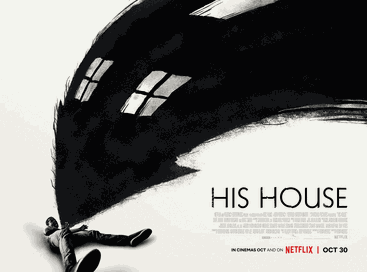
In this season of deportations, thinking about what it means to be a refugee couldn’t be more important.  The horror film His House makes you do just that.  Bol and Rial are fleeing war-torn South Sudan with their daughter.  After a mishap on the overcrowded boat from France to England, their daughter drowns.  Kept in a refugee camp for months, they are finally allotted a council house in poor repair and a meager income.  If they violate any of the rules, which include living anywhere else or trying to earn their own money, they will be deported.  Bol tries to assimilate quickly while Rial is more tied to her traditional ways.  Then the ghost of their daughter, and other dead from the war and the crossing, begin to haunt them.  All the while they face the threat of deportation.  Some spoilers follow.

Rial recognizes the ghosts come from an apeth, a kind of witch that demands repayment for the crossing.  Bol sees the ghosts too, but denies it.  They will not go back, he insists.  When the social workers come to inspect the house, after Bol asks for a different place, Rial tells them a witch is causing the problems, causing the Englishmen to roll their eyes.  When Rial tries to escape, an alternative reality back in Africa shows that when Bol was denied a place on the overcrowded refugee bus, he grabs a random girl—their “daughter”—to get a place on board as the soldiers begin shooting.  The girl’s mother is left behind, screaming for her child.  The apeth is demanding Bol’s life for that of the girl he used to gain his freedom.  Rial, realizing that Bol will die for trying to make their life better, attacks the apeth and lets go of the image of their daughter.

This is a sad and thoughtful kind of film.  We seldom stop to think that refugees, in culture shock already, are stripped of everything familiar and made to feel as if continuing to live is itself a special favor.  They have their own ghosts too.  The real horror here comes through seeing the world through the eyes of someone who has experienced a high level of trauma.  To do so while Trump’s storm troopers are once again separating families, killing people at will, and deporting refugees, is not an easy thing to do.  Horror can be an instructive genre, and although the threat here is supernatural, as it often is in folk-horror, the real fear is all too human.


Hinge Years

I recently read about “hinge years.”  Some historians use this as a kind of shorthand for a particularly tumultuous year in the history of the world, or of a country.  Curious, a brief search brought up the year 1968 as one of these hinge years for the United States.  No doubt, a lot was taking place at the time.  Since I spent most of that year enjoying my last year before Kindergarten, my political awareness was pretty dim.  I found a website of an historian arguing that this was indeed a foundational period in US culture.  The hallmarks cited were political events (assassinations and their aftermaths, Vietnam, Democratic Convention in Chicago), science (circling the moon in preparation for landing on it), and music (Hair, the Beatle’s White Album).  Now, years are convenient hooks on which to hang events, but many of these events had earlier roots or later consequences.  The Vietnam War began in the fifties, we would actually land on the moon the following year, etc.  But 1968 was a pivotal year for horror movies.

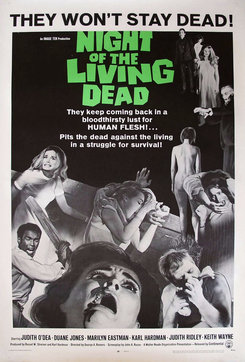
Two game-changing films were released that year.  The unexpectedly influential Night of the Living Dead, by George Romero, changed the horror genre forever.  Low budget, shot in black-and-white, with no famous actors, that movie not only introduced the modern concept of the zombie, its political and social commentary rang through loud and clear, intentional or not.  Today it is considered essential viewing for anyone who wants to claim street cred as a horror fan.  An early “splatter” film, the use of gore was new (even if they used chocolate syrup for blood), and the action took place in rural America—not terribly far from Pittsburgh, but certainly not suburbia.  These departures showed what could be done.  Its success was record-breaking.

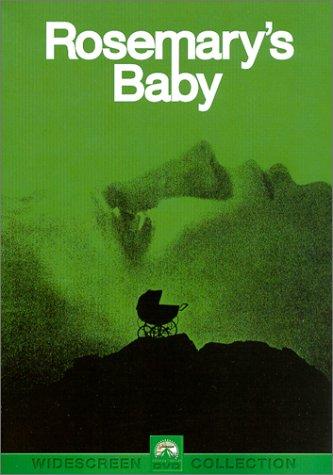
That same year Roman Polanski’s adaptation of Ira Levin’s novel Rosemary’s Baby was also released.  This movie brought religion directly in front of the camera to share space with horror.  To some extent this had been done before, but the seriousness with which satanism was played off against Christianity was unprecedented.   Okay, so The Devil Rides Out also appeared in 1968, but it wasn’t exactly a blockbuster.   Rosemary’s Baby was itself decried as satanic in some circles and it opened the door for The Exorcist some five years later.  Horror cinema would never be the same.  1968 was an eventful year, no doubt.  I’m skeptical that it was any more of a hinge than 1967 or 1969, but it sure did change the horror scene forever.


Uncomfortable Truths

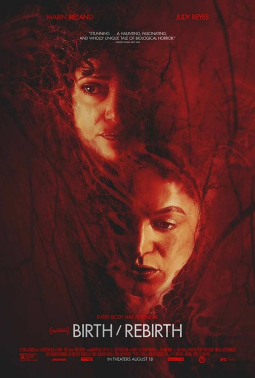
Horror makes us confront uncomfortable truths.  I suspect Birth/Rebirth might be the kind of movie to contain triggers for some folks.  I’ve watched enough body horror to be somewhat desensitized, but I was uncomfortable at a point or two.  The movie follows two female medical professionals—Morales, a maternity nurse, and Dr. Casper, a pathologist.  Overworked, Morales feels she’s not spending adequate time with her five-year-old daughter, Lila.  Then the unthinkable happens; her daughter suddenly dies from meningitis while she’s at work.  Casper, who works in the same hospital, handles the corpse of the young girl, but Morales learns the doctor has taken her home and, more than that, brought her back from the dead.  Horror fans know that reanimation is always problematic.  In order to discuss this, however, I may need to resort to spoilers.

Casper, ever since her own youth, has been working on regeneration.  She’s somewhat emotionally disconnected from others, doing this work for the sake of science.  Morales, however, refuses to leave Casper’s house once she learns her daughter is there and alive.  The two work together to supply the serum needed to maintain Lila.  She begins to speak and walk again, but the serum, derived from stem cells, requires a very specific profile that Casper has.  When an infection prevents Casper from conceiving (and providing the necessary tissue) Morales has to start taking amniotic fluid from another woman with the rare profile that matches Lila.  Until the other woman decides to change hospitals.  The story, which drew inspiration from Frankenstein, is sad, just as that book is.  A woman has to lose the same daughter twice, but that’s not the end of the story.

I think I’ll leave it there.  The tale raises ethical issues and probes the lengths we will reach not to let go of those we love.  The maternal bond may go as far as, if not murder, manslaughter.  The bond is emotional and Casper works it for the science of regeneration.  If life can be introduced to apparently dead tissue, why shouldn’t it be?  But the result is never satisfying.  There is a permanent line between life and death that can’t be crossed, no matter the emotional need or scientific curiosity.  And yet.  And yet.  Birth/Rebirth takes us to this juncture and forces us to look.  And it makes the viewer wonder just how far they might go.  The answer might make a person squeamish.  But then, uncomfortable truths are like that.


Not Again!

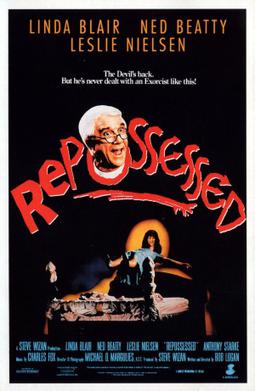
The only reason I heard of Repossessed is because my wife read about it in a local newspaper.  This is true although I’d written a book about the Bible in horror movies and a book about possession movies.  This one’s been buried deep.  Although not a straightforward parody of The Exorcist, it travels the same territory with Linda Blair reprising her role as the possessed girl—now a mom with two adolescent kids.  The movie was critically panned, but I have a soft spot for bad movies and it was much better than The Exorcist II.  What saves the film is the acting on the part of Blair and of Leslie Nielsen, as the exorcist.  Nielsen is pretty funny most of the time, but the gags fall short here time and again.  The humor tends toward the sophomoric, but some jokes are good; the Chappaquiddick one was unexpectedly funny.  And having a false Donald Trump show up to try an exorcism was an added bonus.  These horror tropes classify this as a comedy horror, and it has a kind of cuteness to it that make it worth seeing.

So Nancy Aglet (Blair), after being exorcised by a young Father Mayii (Nielsen), settles down with a family until a televangelist pair—a clear send-up of Jim and Tammy Faye Bakker—actually cause a demon to come through the television.  It  possesses, or repossesses, Nancy.  Since the original movie spends a lot of time in the hospital, she goes to the doctors who can’t figure out what’s wrong.  Nancy knows she’s possessed, however, and tries to find a priest to help, Father Mayii having retired.  The world’s religious leaders gather as the televangelists fail to cast the demon out on national television, but it’s only when Mayii joins the crew that the Devil is driven out.  Not through the rite, but because he can’t stand rock-n-roll, which the religious leaders perform.  It’s rather silly, of course.

There is an aesthetic to bad movies and Repossessed is a good example of that.  Despite its failings, it’s one of those movies that you’re (mostly) glad to have watched.  At least in my experience.  Largely, as I say, because of the performances of the leads.  Although some people today find The Exorcist itself funny, and although some aspects do open themselves to parody, it takes talent to make fun of it.  This film doesn’t do it particularly well.  Ironically, Ted Kennedy couldn’t run for president because of Chappaquiddick but Donald Trump, despite having a much more sordid past, could and did.  Those two moments in this 1990 movie give me pause.  And the fate of the televangelists in it gives me hope.


Beautiful Reality

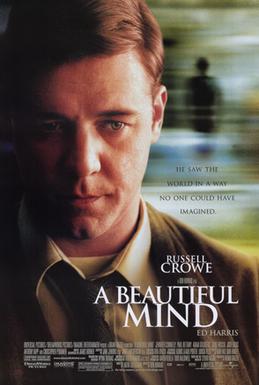
Although it is central to understanding all human experience, we are far from comprehending consciousness.  It’s clear to me, based on the fact that our senses are limited, that rationality alone can’t provide us with all the answers.  And brilliance often comes at a cost.  These were my thoughts after watching A Beautiful Mind.  Having hung around Princeton quite a bit when living in New Jersey, it was nice to see it in a film.  The movie is, of course, a somewhat fictionalized account of the mathematician John Nash’s life.  Although extraordinary in his grasp of math, Nash suffered from mental illness as well.  A Beautiful Mind takes liberties, but then, most biopics do.  The film is well done from a cinematic point of view, and for those of us without any real knowledge of Nash (although we only lived about 15 miles away) it effectively fools you into mistaking reality.

I wanted to see the movie because it’s often cited as an example of dark academia.  Clearly the mental illness—called schizophrenia here—is the source of the darkness.  Academia is obvious.  This biopic genre of dark academia includes a number of films and many of them explore the disjunction between deep thinkers and social life.  It seems that we may be only in the early stages of mapping the intricacies of the human mind.  I was recently reading that psychology is still, after all these years, struggling to be considered a “real” science.  The human mind is a slippery place and emotion and intuition play into making someone really stand out from the rest of us.  And also, their stories have to be noticed by someone.  In Nash’s case, a book that was later made into a movie.

Academics in general aren’t given much notice.  Many operate in the rarified world of extended study.  Those who, like myself, are expelled, often have difficulty fitting in to other lines of work.  Thinkers often have trouble not thinking.  That can get you into trouble on the job.  Movies like A Beautiful Mind have some triggers for me because I often question what reality is.  I always have.  Please don’t take it personally, dear reader, when I say I’m not sure you’re real.  (You may think the same of me.) It’s just the way I look at the world.  I’m no mathematician, though, nor a scientist.  Not even a philosopher, according to the guild.  Academia, however, was my home and seems to have been what my mind was made to do.  At this point, I’ll settle for watching movies about dark academia.


Hearing White

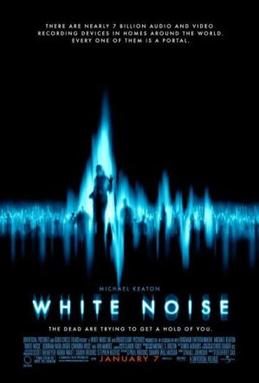
I really do need to start writing down either the year of movie recommendations or the year of the film.  Many movies share names and I found White Noise on my list and couldn’t remember who or where or when.  I watched the 2005 version knowing in advance that it was panned by critics but it did well at the box office.  Now, I tend to like ghost stories—I’m not much of a slasher fan—but this one was a bit convoluted.  Too much is stuffed in.  So Jon Rivers’ wife dies and he’s contacted by Raymond, who’s been receiving EVP (electronic voice phenomenon) messages from her.  So far, so good.  But then things spiral (including the camera; please, people, hold the camera still!).  Raymond is killed by unseen entities.  Jon finds another client of Raymond and decides to set up his own electronic superstation to hear and see messages from the dead.

A psychic warns him this is dangerous.  He persists, learning that his dead wife is, always cryptically, telling him to go to places where people are about to die.  He’s able to save a baby’s life that way, but he’s getting messages about an abducted woman and wants to save her.  All the while, on the computer monitors three shadowy figures keep appearing—evil spirits, presumably.  Jon discovers that a serial killer has been receiving messages, through a similar tech setup, from these evil spirits and has been torturing and killing people.  The spirits directly attack Jon, killing him, but the police follow the clues Jon has left and catch the killer.  But not, presumably, the three evil spirits responsible for inspiring said killer.  There’s some good ideas here but they aren’t handled very well.  The story is too complicated to really fit into the time allowed.

It is a good example of religion and horror, however.  There are lots of clergy around—there are a few funerals in the movie.  I found a few potential Bible uses, but nothing definitive.  I’m not sure Holy Sequel will ever be written, but the list of potential movies is growing long.  White Noise isn’t a horribly bad movie.  The 2005 version is at least worth watching for the spooky ideas.  The movie’s main claim to fame, at least according to Wikipedia, is that it made studio executives realize that early January was a good release period for horror movies.  If they’d read some history they’d know winter has always been a time for horror films and stories.  As the genre gains some respectability, perhaps those who produce horror will realize that it’s an all season phenomenon.  Even if it tries to base them on electronic voice phenomenon.


Togetherness

Over the holiday break I watched three very good movies and I noticed that Domain Entertainment was one of the production companies for each of them.  The final one I saw (after Sinners and Weapons) was Companion.  I’m going to have to look into Domain a bit more.  In any case, Companion is sci-fi-ish horror with a somewhat comedic twist.  I say sci-fi-ish because we are rapidly approaching the point where this is possible.  What is this?  A sexbot that functions like Siri but who’s better in bed.  Josh and Kat have been planning to murder Kat’s very wealthy boyfriend and to blame it on Josh’s bot Iris.  Iris doesn’t know she’s a robot.  Viewers learn that Josh has tampered with her programing a little, allowing her, for example, to attack a person in self-defense (violating Asimov’s rules for robots).  When Kat’s boyfriend tries to rape Iris, she kills him.

Josh and Kat will blame the robot, with their friends Eli and Patrick as witnesses to corroborate their story.  Since the deceased boyfriend has 12 million dollars in cash lying about his house, it won’t be missed.  But Iris, it turns out, has a conscience.  She escapes.  It turns out that Patrick is Eli’s sex bot, and he is sent to bring back Iris after she kills Eli, also in self-defense.  A police officer who finds Iris is killed by Patrick, complicating matters.  Then, Josh changes Patrick’s programming and he accidentally kills Kat.  Planning to blame all of this on Iris, Josh calls the robot’s maker to have Iris returned.  The technicians see the holes in Josh’s story and one of them restores Iris after Josh shoots her.  Iris then confronts Josh.

This will give you a taste of the story without giving away the ending.  This is a smart, sympathetic treatment of technology, including AI.  From the beginning, before it’s revealed that Iris is a robot, the viewers’ sympathy is with her.  She seems to be the wronged party and Josh is slowly revealed to be pretty much an all-round scumbag.  While not the most profound film of this genre, Companion nevertheless raises many of the issues that merit discussion when technology outraces ethics.  We see this unfolding in real time with artificial intelligence companies deciding on profits over any sense of what is good for society, or people in general.  What makes the movie so interesting is that the robots seem to be far more morally concerned than the humans are.  Although I turn this around the other way, I do wonder if sometimes that may be the case. Especially in the context of a movie that’s barely science fiction.


Interiors

I first started reading Stephen Graham Jones after hearing him do a reading on YouTube.  I’ve always had a great deal of respect for Native Americans and his style was so sincere and down to earth that I was immediately drawn in.  Jones is now a well-established horror writer.  I’ve read a couple of his books and I have a couple more on my shelf, waiting.  Mapping the Interior is an early novella that has recently been repackaged and re-released.  You get the sense that even established authors have to prove themselves and then people will go back and read what they wrote before becoming somewhat famous.  In any case, it’s a haunting story about loss, growing up, and belonging.  At least that’s the way I read it.

Junior, the narrator, lives with his mother and younger brother in a modular house, off the reservation.  They are just barely getting by, Junior’s father having died and leaving them to live on one modest income.  But then Junior, who sleepwalks, sees his dead father in their house.  He becomes convinced that his father is victimizing his younger brother, Dino, who has a disability, in order to gain a body again.  Meanwhile, the kids at school all pick on Dino and the next door neighbor doesn’t like having Indians living so close.  He has mean dogs and an attitude.  Tension grows throughout the story as Junior has second thoughts about his father, whose death was never really explained to him.  There are some frightening scenes in this short book.  And a kind of matter-of-fact sadness.

Jones is a compelling writer.  He reminds us that American Indians know very well that they were wronged, but also have little or no recourse to justice.  The characters here keep on keeping on because that’s all you can do.  The end of the story does have a twist that is wrenching, especially after reading all that Junior has done to help his brother.  I read a fair amount about and by indigenous writers—the kinds of things many of those in power would like to ban and deny.  The experience of those whose heritage includes being colonized or/and enslaved is very important to know and to hear.  These are people who’ve been victimized and their stories need to be told.  I’m glad to have discovered this particular book, even as I’m awaiting the time to take on his longer, more recent work.  His is a voice worth listening to.


Being Saved

Historians of media will have much to contend with now that streaming services, such as Hulu, Netflix, and Amazon are producing their own feature-length films.  There are movies I’m still waiting to catch up on, but freebies on services already available are enticing, economically.  So it was that I watched Hulu’s No One Will Save You.  It’s an unusual horror film that has, as many recent ones do, a message.  Personally, I find home invasion films and alien films particularly frightening and this one does scare pretty consistently for the first half or so.  For me, anyway, at that point questions start to arise and curiosity about what’s going on starts to overcome the fright.  The movie is heavy on symbolism, almost to the point of being a parable.  The main character speaks fewer than ten words of dialogue in the film, another unusual feature.  The story, with spoilers, goes like this.

In chronological order (not as presented in the film) Brynn accidentally killed her childhood best friend in an argument.  She has remained in the area, living in an isolated house, and making a living as a seamstress.  Then the aliens come.  Brynn, among those in the rural area, is the only one to have successfully fought them off.  The alien home invasion is about as scary as that in Signs.  As the title already warns viewers, nobody is going to save Brynn.  She manages to kill three of the aliens, but they want to explore her mind.  They do so, finding the isolation and sadness because of killing her best friend.  She forgives herself and the remainder of the townsfolk, controlled by the aliens, welcome her back into society.

One of the features that stood out to me was that when the police chief—his daughter was the girl Brynn killed—refuses to help, Brynn goes to the church.  For all its problems, Christianity is based on the principle of forgiveness.  The problem is that the church is locked and Brynn can find no salvation there.  When forgiveness does come, it is through the manipulations of the aliens.  In the end, the people of the town are the ones who have to change their behavior and accept the one who has learned to forgive herself.  This is why it feels like a parable.  At the same time, it works as a horror movie.  It was better than I had anticipated it might be.  Even though it wasn’t on my list of films I need to watch, I’m glad I did so.


In the Yard

The search for “free” horror has a few more reasonable offerings, it seems, if you follow the reviews.  I try not to read about movies in advance, and I avoid trailers.  The Woman in the Yard had higher scores than several movies streaming on the services I use.  It’s Blumhouse horror, so it has a bit of substance.  Substance but also some confusion.  Trying to make sense of it will involve spoilers.  Here goes: Ramona and David have moved into the country because Ramona found the city suffocating.  Once there, however, she doesn’t take to farm living and becomes depressed.  She tells her husband this and on their way home from a restaurant, he dies in an accident while she’s driving.  Ramona, herself injured, tells Taylor and Annie, her son and daughter, that their father was driving.  She lives with the guilt and is still struggling with depression.

A mysterious woman shows up in the yard.  Draped in black, including her face, she tells Ramona “Today’s the day.”  Feeling threatened, Ramona tells the kids to stay inside, but it becomes clear that this woman is supernatural.  The power is out and no phones work.  The car won’t start and the nearest neighbors are a couple miles away.  The family, alone, grows frightened and the woman’s shadow begins to manipulate items in the house, threatening them all.  Ramona confesses to Taylor that she was responsible for his father’s death.  When the woman’s shadow attacks they have to get into the dark where her shadow is powerless.  Ramona is drawn through a mirror where David is still alive, but frees herself to get back to her children.  The woman tells her that if she kills herself, which she’s been praying for the courage to do, her children will thrive.  Without showing the death, the family is back together and the power comes on, only it is the mirror world.

A few things to note.  There are a few scary moments but the movie as a whole isn’t that frightening.  It is, however, dealing with suicide—it actually has, in the final credits, a note urging anyone contemplating suicide to seek help.  There’s no clear indication of what happens but the ending might be interpreted rather darkly.  Depression is difficult for those of us who struggle with it.  The movie seems to indicate that the woman in the yard is the flip, pro-suicide version of Ramona.  She appears to resist and overcome the depression, but it’s really left open at the end.  Still, this isn’t bad for “free” horror.  It’s thoughtful, if not exactly cheering.  And it gives viewers something to think about.


House of Catherine

A blend of horror and dark academia.  That’s how I’d classify Catherine House by Elisabeth Thomas.  For some time I’ve been pondering the connection between the two genres, and this novel is one of slow-building dread.  I’ll attempt to avoid spoilers, but I will say there’s a somewhat optimistic ending to the tale.  The eponymous Catherine House is a three-year college.  Well, not exactly a college.  It is a highly selective school that works with something called plasm.  Only the most select of those admitted are permitted to work in the department that handles plasm.  The others pursue different academic fields.  When they’re done, they’ll be connected for life and will succeed because of the many Catherine graduates who’ve shared their intensive program and reached positions of power.  The novel follows Ines, a girl who had a rough upbringing and who isn’t sure how she ended up at such a school in the first place.

The tip off to the unsavory part of the House is the secrecy.  Students cannot leave campus for their three years.  Their families are not permitted to be in touch and the students are encouraged to forget about their past lives.  Their thought process is influenced by plasm pins.  They are given a freedom many college students would crave—alcohol is freely available and sex is encouraged.  They also have a very rigorous course of studies.  Students do fail out.  Ines, finding close friends for the first time in her life, has trouble believing that she belongs here.  She’s not bright enough to work with plasm, but her boyfriend is.  And then Ines discovers a dark secret.  One that forces her to a very difficult decision.

The dark academia aspect is more pronounced than the horror one.  In fact, the horror is more by implication than by direct narration.  We’ve got an academic setting where something has clearly gone wrong.  We don’t ever really learn what plasm is, but it becomes the ultimate concern, to borrow language from Paul Tillich, for those who research and work with it.  It seems to have supernatural attributes.  Catherine House explores what it means to be young and learning about relationships, and love, and the harder lessons life gives.  At first Catherine House seems like a noble academy, but soon suspicions begin to build into a quiet horror.  An existential variety of horror more than the kind induced by monsters or people that are purely evil.  The characters are likable but flawed.  It’s the system, however, that introduces the darkness at the House.


Weaponry

For all of its problems, 2025 was a great year for horror films.  And they’re beginning to gain the respect they deserve.  I found an affordable copy of Weapons and discovered that it was as good as the hype.  The haunting image of the children running is, in itself, distinctly creepy.  The film does a great job of obscuring what is happening until the right moment, not making it feel over two hours long.  Weapons never really explains what the monster is, but gives hints that allow viewers to draw their own conclusions.  I’ll try to explain a bit more without spoilers, but the intricate plot may mean that some information might inadvertently be revealed.  The movie begins with a mystery.  One night seventeen children—all but one in Justine Gandy’s third-grade class—disappear simultaneously.  Some doorbell cameras catch them leaving their houses and running into the night.

The people of the fictional Maybrook, Pennsylvania, suspect Justine, their teacher.  Some of the parents, especially Archer Graff, are vocal about their suspicions, going as far as to paint the word “witch” across the doors of her car.  Graff decides to confront her during his own investigations—he thinks the police aren’t pursuing this actively enough.  As he accosts her, the principal of her school, running like the children, attacks and tries to kill her.  This convinces Archer that Justine isn’t responsible, and between them they identify the house of the one remaining student to be at the center of the mysterious disappearance.  The story is told from the point of view of six of the characters’ experience, ending with Alex, the one boy remaining.  His house is the focal point.

We learn that his great aunt came to stay shortly before the children disappeared.  I shouldn’t say any more, I suppose, for fear of giving away the ending.  The story is effectively told with memorable images in the service of the story.  Although it has a kind of justice in the end, the resolution is not a cheerful one.  Like some of the other acclaimed horror of 2025, it makes you think.  Interestingly, while not filmed here, this is another horror film set in Pennsylvania.  Having grown up in this state I’ve always known that odd things tend to happen around here.  Maybe word has gotten out.  In any case, Weapons is a haunting film, well worth seeing.  And while some are reluctant to call it horror, the critics agree that this movie is worthy of note.  Perhaps, someday, horror will be treated with a bit more respect and the critical weapons relaxed a little.


Sinning

What can I say about Sinners in five hundred words or less?  This movie requires a book.  I’ll try anyway.  First of all, I’m not one to jump on the bandwagon.  But everyone was saying Sinners was one of the best horror movies of 2025 and it racked up enough awards to prove it.  Still I was blown away.  Fronting and centering religion and horror, this film asks viewers to think about good and evil and to think about it closely.  Twin brothers, “Smoke” and “Stack,” served in the army, left Mississippi to make it big as gangsters in Chicago, then return to Mississippi to open a club for the Black community.  They bring their nephew Sammie and hire their supporters to help a grand opening of their blues bar.  Their pasts won’t let them go, however,  and they become entangled with former lovers.  Then the vampires come.

The brothers’ two lovers, Hailee and Wunmi, come to the opening but Hailee falls victim to the vampires.  Wunmi, who’s Smoke’s estranged wife, practices Hoodoo and make him promise that if she is bit he will kill her with a stake.  The vampires can’t come into the club without an invitation, and one of the bartenders, Grace, decides they need to kill the whole crowd of vampires and invites them in.  Only Smoke and Sammie survive.  The vampires die with sunrise, but Smoke stays around to kill the Klan members who planned to murder the brothers after the grand opening was over.  Smoke gets them all but he’s shot and as he dies, he sees Wunmi and their dead child in an earthly heaven and joins them.  Sammie goes on to become a famous blues player and when he’s very aged, Stack and Hailee, still young vampires come in.  They all agree that the day of the grand opening was the best of their lives.

Both Smoke and Stack end up with their loves in an eternal life.  And this is only scratching the surface of the film.  The movie is about freedom and how African Americans never really have it.  Even in Chicago the system is stacked against them.  The vampires try to convince Smoke and Sammie that they will offer them community.  Freedom and belonging.  Both brothers, however, end up in a kind of paradise, one of them as a vampire, the other as a man who earns salvation by killing the Klan.  Wow.  On a more pedestrian note, the movie seemed to blend From Dusk till Dawn with the more serious elements of O Brother, Where Art Thou?.  Including the close attention to music.  But even that sounds facile.  There’s more to say, lots more.  Sammie is the son of a preacher.  The Bible is used and quoted.  Salvation comes, however, by Hoodoo and vampirism.  No, Sinners requires a book to begin to work it all out.


Scary Christmas

A few days ago I mentioned the connection between Christmas and Halloween.  I’m apparently not the only one to be interested in this because Tim Rayborn wrote Scary Book of Christmas Lore.  This little, holiday-themed book is a gathering of (mostly) scary creatures associated with the winter holidays.  Each creature, or tradition, is treated in less than two pages and the book is generous with color illustrations.  While not a research book (it’s set out as an impulse buy in some Barnes & Nobles at least), nevertheless Rayborn, like yours truly, holds a doctorate from a university in the UK and spends at least part of his time writing books on spooky topics.  (More successfully than yt.) In the process of researching Sleepy Hollow as American Myth I gathered stories of scary Christmas creatures, but didn’t include most of them in the book.

Apart from the obvious Halloween connection, a few things stood out to me about this book.  One is that the majority of these tales come from Germanic cultures.  If these branch up into Scandinavia, almost all of the creatures in the book are covered.  There are a few from other regions as well, but this suggests that winters in Northern Europe used to be seriously scary.  Some of the darker visitors around the winter holidays are clearly local variations of others.  Krampus, for example, is having a day and there are other local versions of a monstrous companion to the “good cop” Santa who comes along to dole out punishment.  Some of the other beings associated with the season are a variety of other monsters—some human, others less so.

The long, dark winter suggests itself as a season for scary stories.  It’s unlikely that this book will send anyone shrieking into the closet or under the bed, but it helpfully brings to the light that people have long found both the fear and entertainment value of telling of frightening creatures.  The Teutonic imagination gave us many of our nighttime fears.  The British, inspired by such tales, tended to codify them into the monster stories that gave the modern horror genre its tentative start.  Although, as I discussed with my daughter on Christmas morning, horror stories began in the pre-biblical era (something I wrote about in an article a couple years back).  And, of course, religion and horror have naturally gone hand in glove for longer than anyone has really traced in any level of detail.  So a little book of monsters around Christmas?  Why not?