Horse Senses

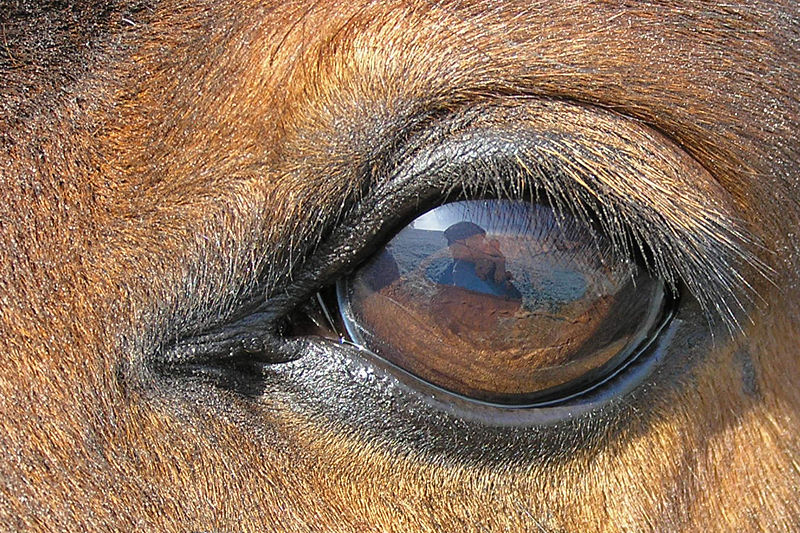
Chief was a smart horse.  The horse camp instructor told us that horses sometimes distended their midsections when a rider was strapping on the billet because they knew the strap would be tight.  The billet goes underneath the horse and is essentially what holds the saddle on.  The instructor told us to be firm about this—we weren’t going to hurt the horse by tightening the strap as much as possible.  Now, this was United Methodist Church camp, and I am someone who tries hard not to hurt anyone.  Besides, I’m not one of the larger specimens of the species and Chief was quite a large horse.  I can swear he had a knowing, laughing look in his eye that day as I pulled the billet tight.  Or so I thought.

As a camp counselor in the Western Pennsylvania Conference, you were assigned to a set of camps with no say in the matter, and I had been assigned four weeks of horse camp.  I wasn’t a kid who grew up wanting to ride or own a pony.  I was just doing my job.  Sitting atop a horse, I felt like some combination of John Wesley and Edgar Allan Poe heading for the house of Usher.  It was the first day of the first week of camp and my first time riding.  It was going fine until the instructor told us to canter, the speed between a trot and a gallop.  It was then that I felt the saddle starting to slip and I knew that Chief had used the old horse trick of distending his middle while I’d tightened the strap.  I felt the saddle begin to slip to the right (the wrong side for mounting or dismounting).  So I fell off a cantering horse.

Although the instructor yelled at me for not putting the reins over the pommel before I hit the ground, what stayed with me was how smart that horse was.  Chief, knowing the disparity of our relative sizes and weights, once stepped on my foot.  He was an intimidating horse with an attitude.  After the end of four weeks I’d gone on to the point where we spent an overnight in tents with our horses curried and tethered outside for the night.  What those days taught me was just how intelligent animals are.  I was reassigned from Chief to a more gentle horse for the remaining three weeks when the instructor realized she was stuck with me for a while.  But the horses, they knew me even better.

Horse Sense

In an article in last month’s Federalist, Tom Nichols lamented the death of expertise. Well, not exactly. Expertise is not so much dead as lost in the wash. In the days of internet reality, it is difficult not to feel an expert after half an hour on Wikipedia and with a glance at a few headlines. What concerns Nichols, however, is that those who have done the hard work of going through educational programs and heavy research to learn materials minutely and intimately, are no longer considered any more qualified to speak the truth about their subject than anyone else. The web is full of self-proclaimed experts, and even I was always a little alarmed at student papers that took online resources at face value (I warned students about us bloggers). We have truly entered democracy—intellectual democracy—and it is scarier than anyone might have imagined.

I’m not a snob. I grew up in a blue collar home and I generally trust blue collar people more than my more educated colleagues. In the working class, at least in my experience, if someone intends to harm you there is usually some warning shot fired across your bow. In the world of business and finance the unseen and surgical strike is carried out with far more finesse. Experts can make brutally efficient killers. It was only after years and thousands of dollars I had not yet earned that I could claim to be an expert on ancient religion. From the first day in the classroom (particularly at Nashotah House) I found myself face-to-face with self-acknowledged experts who put up with my instruction only by dint of ecclesiastical command. Being an expert meant I was to be mistrusted. I was the one who might lead astray. The internet was already out there, but it was only lurking in the background. In religion, expertise had been dead long before Jesus showed up on the scene.

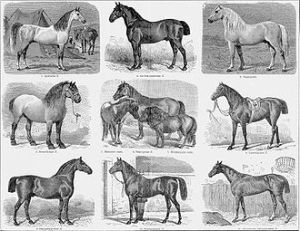
The problem with religion is that nobody can have the whole truth. I used to show my students a photograph of the silhouette of a horse against a sunset/sunrise. You can’t tell which way the horse is facing—toward the camera or away. When I asked them which way the beast faced, some would say away, but most said, predictably, towards them. Then I would reveal that not one of us in the room knew the answer. Religion is like that. The photographer who stood near the horse knows, but the person behind the camera may as well be in heaven for all it helps us. I was an expert because I’d spent years learning arcane languages and looking at texts in as close to the original format as we had available. All I had learned is that no one knows the direction that horse is facing. Tom Nichols is right: we face a crisis of expertise. But for me the only source of truth may be found astride a noble steed.

Photo credit: Waugsberg, WikiCommons

Photo credit: Waugsberg, WikiCommons