Thinking about Feeling

There’s a scene in Shrek where Lord Farquaad tells Princess Fiona “You don’t have to waste good manners on the ogre. It’s not like it has feelings.” That scene came to mind recently as I was pondering how we often use feelings—emotions—to claim superiority over others. During a course on Howard Thurman in seminary, we watched a video where he retold a story that appears in his autobiography With Head and Heart, where a young white girl was sticking an African American with pins because she believed they didn’t have feelings. Although it may be dangerous to attribute motive—let me call it interpretation then—Shrek is a movie about prejudice. Ogres are misunderstood. It’s a parable, if you will. Unfortunately there are people who still believe those not like themselves lack feelings.

This is a particularly disturbing idea for many reasons. Not only does it keep alive the unacceptable social situation where African Americans are shot when unarmed, and frequently in non-criminal situations, it perpetuates the idea that others are different in a way that makes them less than human. We can take this even further since one of the mainstays of science has been to deny feelings to animals, claiming that you need rationality to experience pain. Or at least suffering. Ironically, it’s the “reptilian brain” that provides us with emotions, and rationalists are quick to downplay emotions as a form of thinking. It’s easier just to kill a snake and ask questions later.

We deny others feelings as an excuse to mistreat them. Then we deny that feelings are important at all. Even Mr. Spock got angry once in a while. In a society that regiments an economic system that really benefits only a very few, we daily bask in the midst of this paradox. It’s clear that all it takes to have presidential aspirations threaten reality is money. Spend enough and anyone will believe whatever lies you happen to trumpet. After all, that feeling of superiority that fascism promotes is exactly the way to win a mass following. You’ll have to excuse me if I’m feeling just a bit out of sorts. It’s only a feeling, and it will pass. Unless we pay close attention to our emotions, however, we will never realize justice. We know that Shrek does indeed have feelings. It’s just that we’ve forgotten how to interpret parables.
Think about it.
Think about it.


Fashions to Slaves

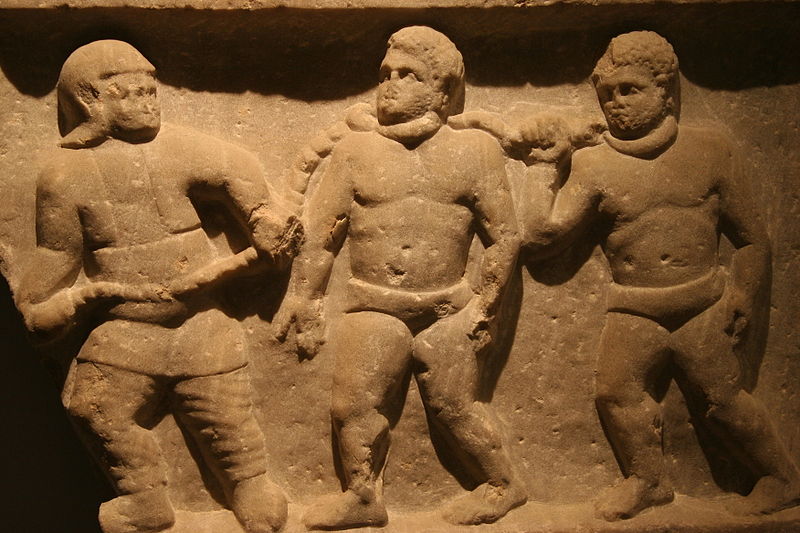
Howard Thurman was a theologian who held saintly status in my days at Boston University. As an African-American he’d experienced episodes while growing up that nobody should have to face. I remember him writing about being stuck with a pin in the hand by a caucasian girl who declared, “you don’t feel pain.” That image has stayed with me for decades. Unfortunately, that image hasn’t remained alone. I’ve been reading about slavery in the ancient world. No matter your race, slavery was considered a kind of ontological state. The color of your skin didn’t matter; your social status did. Slaves, you see, were less than human. When the slave trade began its hideous trans-Atlantic business ventures, essentially an entire race was classed as subhuman, because it is easier to feel good about mistreating a subhuman than it is a fellow being with a soul just like yours, if only purer.

This is not to deny the very real and troubling, criminal mistreatment that African-Americans experienced during the colonial period. The deeper problem with slaves was that of social status. If you look closely enough, you can always make someone “the other.” Heck, we’ve done it for millennia with those of the female gender. Something that has always bothered me has been how sociologists, political scientists, and historians constantly overlook the concomitant issue of class. In the new world we like to image we’re a classless society, but we’re not. The plight of many African-Americans today is economic. If you prevent people from having access to education and good jobs, they become much more easy to repress. It doesn’t take a genius to figure that out, just someone with the will to look. Those who write the history are those comfortably ensconced in offices and with research assistants, and people who empty the departmental garbage for them after hours.

Photo credit: Jun, Wikimedia Commons

Photo credit: Jun, Wikimedia Commons

How easy it is to suppose that the other is not the same as me! Most people do not like to challenge their preconceived notions. This is one of the real values of an education in religious studies. Take that intimate belief and put it under a microscope. Many would leave the lab screaming. Those who remain, patiently probing, learn uncomfortable truths. If the biologists are right—and there seems to be no reason to doubt it—all people evolved from common ancestors and we have more in common than we have that separates us. Skin color is only skin deep. Gender differentiation is merely in the service of species reproduction. What really makes us different is culture. And culture always requires classes. As even the ancients knew, some tasks are odious, and it is far more pleasant if we can compel someone else to do them. First, however, we must use our religion to explain why they can be made our slaves. If anyone doubts this, read Howard Thurman and see if he can’t change your mind.