Berrying Perspective

Two people looking at the same thing see something different. Since we’re living with a government of distorted perspective this truth appears refreshed daily. I was reminded of this while picking huckleberries. Huckleberries, according to the local edible berry guide, are called many different things. In this part of the country you know them when you see them. And if you see them you pick them. They appeal to the frustrated hunter-gatherer left in us city-dwellers. As I was trying my best to fill my bucket, I kept thinking of those who only see nature’s bounty as a means of turning a profit. In my mind they’re meanies—those who take all the fun out of the few freedoms we have left—although I realize that it’s a matter of perspective. Consider the huckleberry.
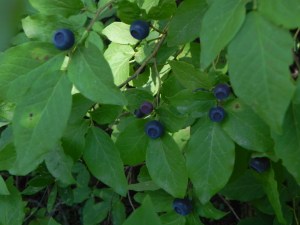
I’m a mere seasonal visitor to these parts. Since not too many of my own species make this location their permanent domicile, that’s perfectly natural. Many of the berry pickers I’ve encountered have been seasonal guests as well. There are the more “industrial” pickers, though. In a good year huckleberries can command fifty dollars a gallon on the local market. Unless you know an unfrequented secret site, a gallon can take several hours to pick even in a promising location. Overall, you need to arrive before anyone else and get the most productive bushes so that you don’t have to wander around the mountainside in search of a more lucrative locale. Not to mention that, like most berries, they have a limited shelf life. Nature prefers sharers to hoarders.

While I’m picking I generally think of bears. Unlike my species they don’t have the grocery store option. These berries are their survival, I suppose. Nature does provide. That’s how evolution works—we form symbiotic relationships with our environment. The meanies, however, can’t see beyond the self. What nature provides must be accumulated for my own benefit and not that of others. There are never enough huckleberries to go around, the industrial mind thinks, and so I’d better control the availability and set my price. You don’t even have to like huckleberries to do it. Ironically we call this having a gift. Standing here on this isolated mountainside, bent over a bush offering nature’s abundance, I believe that I’ve found a gift. I have to remind myself, however, that this too is a matter of perspective. It is a perspective that tastes right to me.
Eternal Huckleberries

It began as a quest for immortality. Sometimes, however, you don’t recognize something even when it’s all around you. As an historian of religion, the quest for immortality is a familiar one. Certainly the ancient Egyptians believed they had found the keys, at least for royalty, and most religions haven’t given up trying since then. Some clonal plants have achieved extreme longevity. Since they grow by extending their roots, rather than by sexual reproduction, a single plant can remain alive as long at, at least 8,000 years. The specific plant to which I’m referring is the box huckleberry. I first learned to pick huckleberries for food in the Pacific Northwest. In that part of the country, I’ve learned to identify the plant from a distance and have spent many contented hours picking berries. Time, however, is something always endangered for those of us aware of its passing.

The box huckleberry colony in the Hoverter and Sholl Box Huckleberry Natural Area in Pennsylvania is about 1,300 years old. Summer is waning and my family wanted to see it. Indeed, for this particular colony, development probably destroyed parts of the system and so it has to be preserved. With that strange east-coast worldview, “just over there in Pennsylvania” comes to mean things are closer together in the imagination than they really are. Driving three hours just to see a huckleberry colony became more appealing when we combined it with the idea of visiting the National Watch and Clock Museum in Columbia, Pennsylvania. Both concepts were obviously related to the theme of time. They aren’t quite as close together as they look on a map. Map, after all, we are told, is not territory. The museum exists in a fixed location marked by a street address, so we went there first. There will be plenty to write about that later. As, ironically, we didn’t allow as much time as we should have for the museum, we had to head out further west and north to find the elusive huckleberry. All we had were the GSP coordinates and the name of a local town.

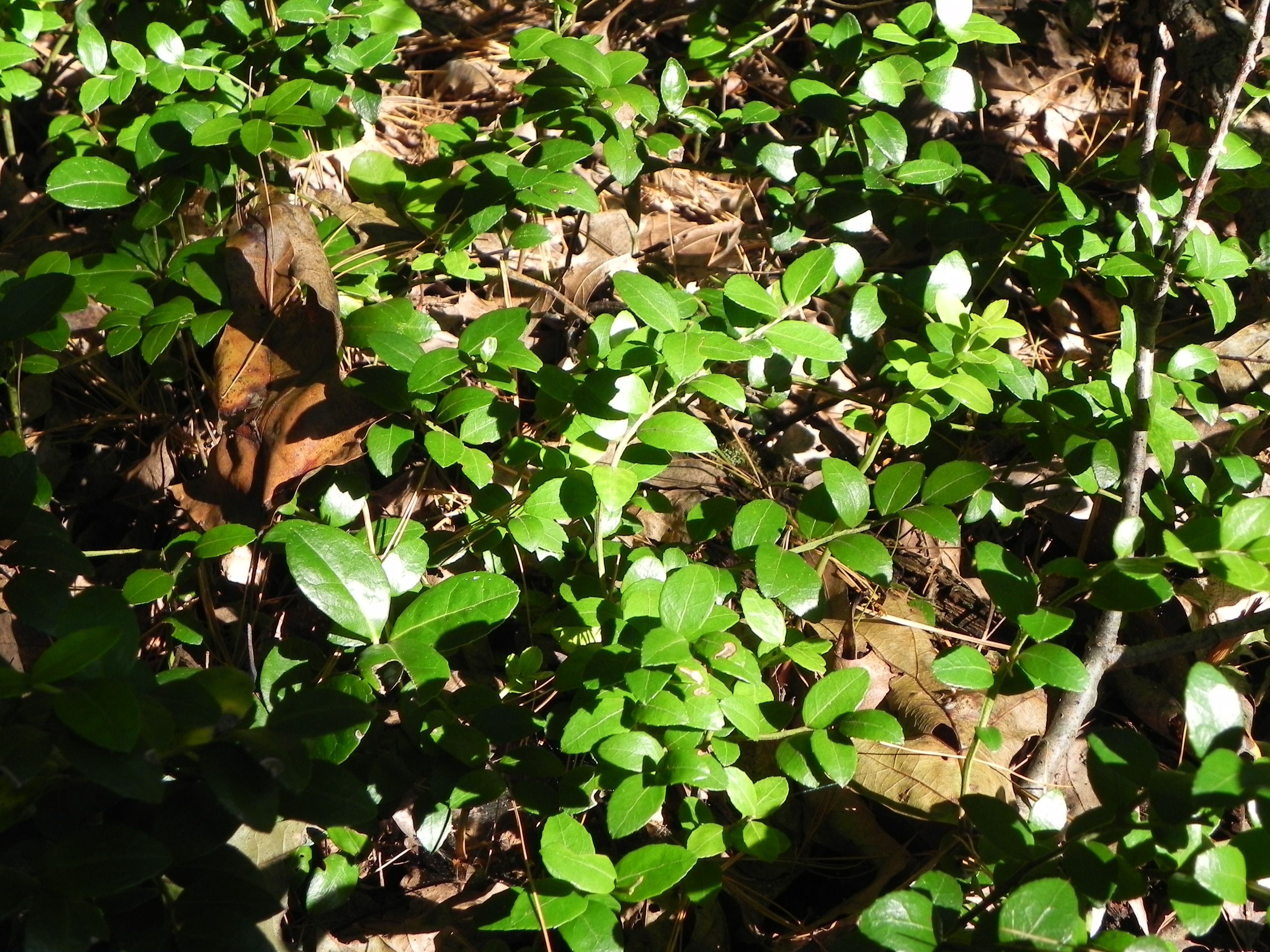
From the length of the line of cars behind me, the locals preferred to travel faster. Knowing only the relative direction and an approximate mile count, we stumbled upon Huckleberry Road and knew we must be close. Off into the woods we drove. As onetime manic geocachers, we had learned to both trust and distrust a GPS, but there was a trail head out here and a single parking spot. No one else was around. The signed indicated we were in the right place, but where were these ancient huckleberries? The ones we generally harvest grow knee-to-waste high with distinctive leaves. We walked the entire nature trail in frustration. How could a 1,300 year-old plant hide so well? Frustrated, we went back to the start. Fortunately, there were brochures. We found the box huckleberries. Indeed, they had been all along the trail, but we didn’t know what we were seeking. Just a few inches high, they cover the ground like a carpet. A few ripe berries poked through. We were in the presence of an entity that was older than Beowulf. Indeed, in the Middle Ages, this plant had been alive. Without the guide we’d never have realized we were standing in the midst of a kind of immortality.

DSCN5969


Strawberry Fields Forever

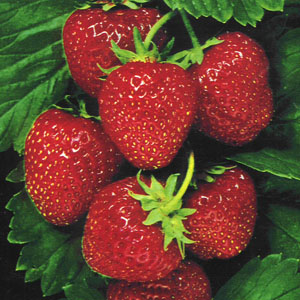
For beings dwelling on the surface of our planet, we tend to live far from the earth. I was reminded of this yesterday when my family went on our annual strawberry-picking venture. Each year we drive out to a remote farm that has pick-your-own strawberries and fill too many baskets because we just can’t stop ourselves when nature offers such obvious bounty. On the years when I can visit the northwest with my in-laws, one of my favorite pastimes is huckleberry picking. The two berry experiences differ vastly; one is a cultivated, planned layout of particular strains of red berries, the other is a forage-and-hunt search for wild purple berries that haven’t been stripped by the grizzlies. Both, however, put me intimately in touch with the earth. Trousers muddy from direct contact with the ground, fingers stained from the delicate fruit juices newly plucked from the plant – it is an earthy enterprise.

At such times it is evident how religions began. I don’t pretend to comprehend the whole complex phenomenon of the psychology of religion, but in those rare moments I share in the ancient art of survival. Finding your own food, body pressing directly on the earth with no cushion or blanket or furniture between. These moments must reflect our earliest ancestors’ daily life. When times of hardship came and food could not be found, they could only watch as members of their group died an agonizing death from hunger. Would they not call out to the powers beyond themselves, the unseen providers who alone could assure a steady supply of food?

In is no surprise that the first instances we find of religion in any developed form are strongly agricultural. Gods of rain and “fertility” abound. The ancient voices can distinctly be heard: we truly are helpless to create our own food. It is an echo that fades with each passing triumph of human control over our environment. When we can force nature to do our bidding – irrigating huge tracts of waterless land, feeding pesticides and growth enhancers into the very soil, even starting to create life itself in the laboratory – where are the gods? They have stiff competition indeed. So when I hold that strawberry in my hand, organically connected to the very planet that gave birth to us all, I feel that I have tapped into the roots of religion itself.