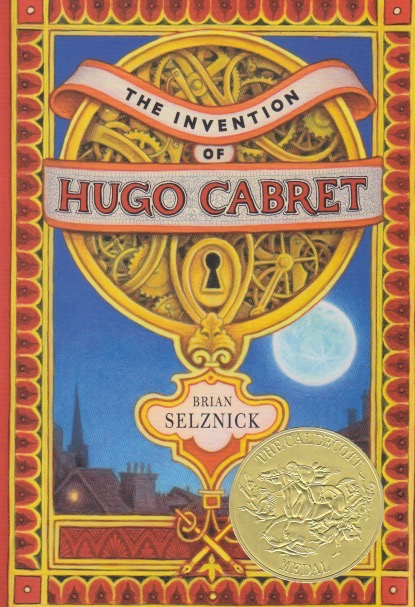
Hugo’s Invention

After watching Hugo, and wishing that the story were history, I found a copy of Brian Selznick’s The Invention of Hugo Cabret.  Martin Scorsese’s adaptation is fairly close to the book but there are, of course, additions and omissions.  One key character is left out and some subtleties to the book didn’t find their way obviously into the movie, or at least not until having read the book.  The story of Georges Méliès’ life in the book is largely accurate.  Hugo, however, and Isabelle, are fictional.  As is the automaton around which the story is based.  The lovable train station vendors in the movie are quite a bit less lovable in the book.  And the station inspector isn’t shown until late in the story and he doesn’t have the leg brace that lends a kind of steampunishish vibe to the film.

Apart from being a tale of redemption—in real life Méliès’ rediscovery didn’t lead to an end of his poverty—the story is an exploration in psychology.  Méliès lost his dream job due to competition after the First World War.  The book makes clear that the clicking of heels drives him to rage because his films were reputedly melted down to make shoe heels.  The story in the book goes so far as to say that ghosts follow those who clack their heels loudly.  The ghosts, of course, are those of Méliès’ lost success as a filmmaker.  One of the reasons this story appeals to me is that I too lost a job that gave my life a sense of purpose.  My writing largely does that now, even if it doesn’t sell.  I can relate to a man who is ready to retire but can’t, daily reminded that he once had a satisfying job but now has to sit behind a desk all day.

The Invention of Hugo Cabret is a book for younger readers.  About half of the book’s 500-plus pages are illustrations.  The images include stills from Méliès’ surviving films, but mostly drawings by Selznick.  The focus on the young people makes this a children’s book, but the truths it tells of adults with lost dreams are especially appropriate for those who’ve learned that life isn’t always kind to dreamers.  The book, like the movie, inspires me to seek out the surviving films of Georges Méliès and think of what can indeed happen to those who dare to dream, even when the world has already discarded them as irrelevant.
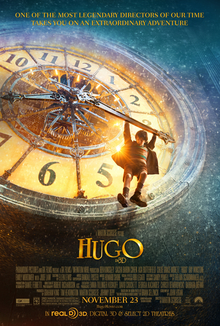

Don’t Let Go

We watched Hugo, as a family, over a decade ago and quite enjoyed it.  At that time I only really blogged about horror movies or those with a religion element that I could spot.  Over the years, I’ve taken to reflecting on movies themselves and so, since we rewatched Hugo recently, I thought it might be time to talk about it.  This is one of those movies that was critically acclaimed but a box office flop.  It’s still a wonderful film.  As a side note, working in any media (including academic publishing) introduces you to familiarity with the project, such as a book or movie, that becomes widely praised but just doesn’t sell.  Public taste is very difficult to predict (note who’s in the White House) and sometimes a book, movie, record album, or any media hit, becomes highly acclaimed while losing money.  Hugo is worth re-watching and, despite the financial hit, is quite good.

Hugo is based on a children’s book, Brian Selznick’s The Invention of Hugo Cabret (which I would like to read).  The movie is a paean to early filmmaking and involves some real history, especially around the life of George Méliès.  Watching the film a second time, I was struck with how Hugo ends up reenacting several scenes from early films in his own life.  The film also captures how movies are more than simply entertainment.  They have become an integral part of life in some cultures, and, for some of us, a source of meaning.  That’s why I wanted to see Hugo again.  It struck me as a compelling story—a redemption story—bringing a sense of meaning to a life where George Méliès went from fame to obscurity because his contribution to film was unrecognized since movies hadn’t yet become a major industry.  Look at Disney today and wonder, dear reader.

Or consider Hugo itself.  With a gross profit of “only” about 15 million dollars over the budget, it barely covered its costs.  Lots of people are involved in making a movie and this is quite an expensive venture.  Anyone who earns a paycheck knows that the net is always disappointingly lower than the gross earnings.  Cinema in general struggles with the need to adapt to streaming culture where profits are parsed out in small bits rather than drawing large crowds to fill seats.  And yet, movies act in many ways like the modern mythology.  They tell important stories.  They provide touch-points for society.  Unfortunately, however, this is often only the case when they make a lot of money.