Do I Know You?

How do you know someone without ever seeing them?  How do you know they are who they say they are?  I’ve been spending a lot of time on the phone, much of it trying to establish my identity with people who don’t know me.  This has happened so much that I’m beginning to wonder how many of the people I’m talking to are who they say they are.  I never was a very good dater.  Going out, you’re constantly assessing how much to reveal and how much to conceal.  And your date is doing the same.  We can never fully know another person.  I tend to be quite honest and most of the coeds in college said I was too intense.  I suppose that it’s a good thing my wife and I had only one date in our three-year relationship before deciding to get married.

Electronic life makes it very difficult to know other people for sure.  I don’t really trust the guardrails that have been put up.  Sometimes the entire web-world feels false.  But can we ever go back to the time before?  Printing out manuscripts and sending them by mail to a publisher, waiting weeks to hear that it was even received?  Planning trips with a map and dead reckoning?  Looking telephone numbers up in an unwieldy, cheaply printed book?  You could assess who it is you were talking to, not always accurately, of course, but if you saw the same person again you might well recognize them.  Anthropologists and sociologists tell us the ideal human community has about 150 members.  The problem is, when such communities come into contact with other communities, war is a likely outcome.  So we have to learn to trust those we can’t see.  That we’ll never see.  That will only be voices on a phone or words in an email or text.
I occasionally get people emailing me about my academic work.  Sometimes these turn out to be someone who’s hacked someone else’s account.  I wonder why they could possibly have any interest in emailing an obscure ex-academic unfluencer like me.  What’s their endgame?  Who are they?  There’s something to be said for the in-person gathering where you see the same faces week after week.  You get to know a bit about a person and what their motivations might be.  Ours is an uncertain cyber-world.  I have come to know genuine friends this way.  But I’ve also “met” plenty of people who’re not who they claim to be.  Knowing who they really are is merely a dream.

APB

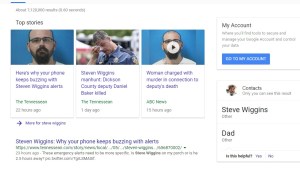
It’s disconcerting. Being mistaken for somebody else. I suspect I’m not alone in having shown up somewhere I’ve never been before only to have people mistake me for a local. It’s happened to me a couple of times, and what with the recent Steve Wiggins incident in Tennessee, it’s enough to make me question my uniqueness. I’ve also had the unfortunate experience of undergoing identity theft some years back, and floating myself out here on the internet is something the wisdom of which I sometimes question. If I’ve got enough doppelgängers running around out there, perhaps I should be careful of revealing too much online. Such problems my grandparents never had.

A long time ago I turned off the warning alerts on my phone. It’s not that I don’t care, but rather it’s that I keep odd hours. Without revealing too much, I think I can say that I’m awoken somewhat often by those who don’t go to bed so early, or who don’t think about timezone changes before hitting “send.” We here in the American orient awake earlier than others. So I switched off my alerts. Then I started reading that other people were getting “Steve Wiggins alerts.” Was fame passing me by in the night? While this wasn’t the kind of fame I’d hoped to attain, a few stray visitors to this blog couldn’t hurt. When I searched Google for information on “Steve Wiggins” I found myself listed in the Google box on the right as “other.”

Some people who’ve written only two books are listed as “author” on Google. In my case it seems Google can’t figure out why anybody would be searching for me. “Other.” They say Google knows everything. It certainly knows how to flatter the self-seeker, at least most of the time. What does it mean to be an “other?” The unclassifiable? My work, indeed, falls into the “other” column, like that of many people who’ve made plans only to run into the cold reality that fate has laid out for them. Not being a professor any longer is a source of constant confusion to me. Books I read state that x or y knows about a subject because university z or w has hired them. There are those kinds of experts, then there are the “others.” And because of recent events, there are those instantly famous for killing another man and running away. Who am I? I’m not legend; I am other. What exactly that means I still haven’t sorted out.


Recycle This

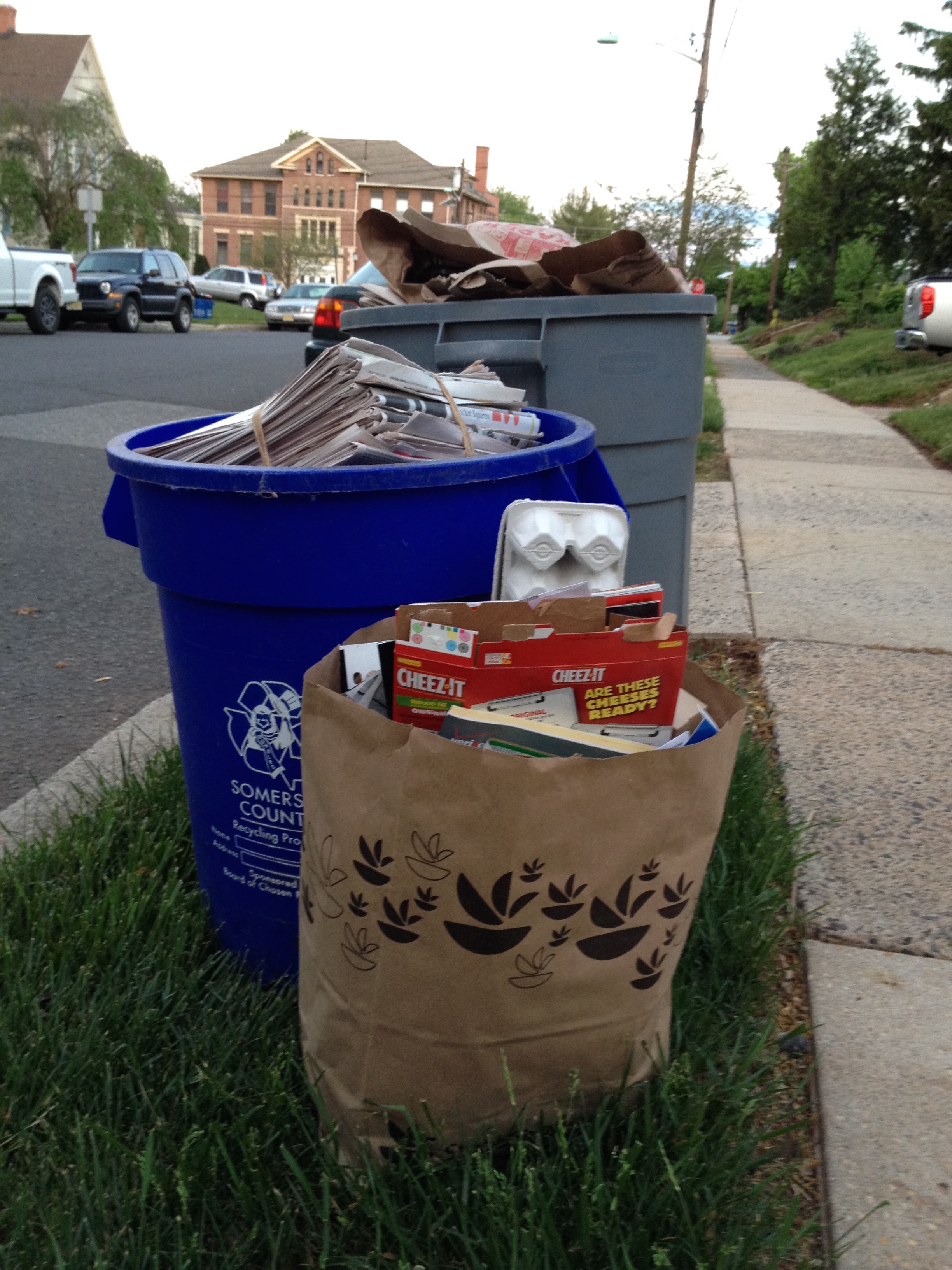
Like nearly all unfortunate white collar workers, the computer provided for me at my job is a PC. I don’t know the brand—that’s not important. When I want to delete a document, I’m asked if I want to move it to the “recycle bin.” Okay, I’ve been an environmentalist since I was a teenager. Growing up in a small town, recycling was a foreign concept, vaguely communistic even, but I could understand that limited resources would run out. Living paycheck to paycheck, that was perfectly clear. The town where I grew up still doesn’t offer recycling, but having a recycling bin on a computer screen? Are the electrons from my documents indeed being recycled, or is this just a way to make me feel good about throwing away something somebody spent hours putting together? It seems such a tautology to me.

This recycled world can be a scary place. I was a victim of identity theft once. Thankfully I hardly have enough to steal that the thief got away with very little before the credit card company found him. It meant having to go a few weeks without purchasing power, and a possible stain on my ratings. One merchant didn’t want to refund the charges, although it was clear that they were illegally made. So we recycle our sensitive material with the greatest care. It has to be shredded first. We had one of those home shredders that took hours of time to feed in “up to six sheets” at a time (two was the actual limit), and before you knew it the weekend was over and you had bags full of bird nesting and you still had to take them to the recycling place. So our local community, we learned, participates in a shredding drive. My wife and I went a few weekends ago and it was so popular that we were turned away at the gate. The line was too long and the trucks were almost full.

This past weekend I tried again. I had to drive to a new location where, I kid you not, the traffic pattern had to be changed to accommodate all the shredders. I was kind of glad in an impatient sort of way. I’d brought a book to read, anticipating such a wait. I was a bit anxious, however, with a police officer watching. I mean I had a book to my face in traffic, after all. At least it wasn’t a cell phone. The line crept along until I was finally admitted. I had six bags of confidential stuff in the trunk, and I was glad to have the chance to have my personal life obliterated by the huge, roaring trucks. As I inched to the front of the line, the check-in lady asked me what town I was from, and in response gave me a handful of papers that I would only have to recycle. I thought of my recycle bin on my desktop at work. There seems to be no end to disposing of the information that defines our lives. Some would call it a tautology.

C58E576D-BA75-4991-AA88-B095BBED4E1C copy