Of Ewes and Groundhogs

I need more time to prepare for Imbolc.  Or Groundhog Day, whichever you prefer.  Candlemas for you Catholic holdouts.  February 2 has the trappings of a major holiday, but it lacks the commercial potential.  Too many people are still working their way out from under Christmas overspending and tax season is just around the corner.  Still, I think it should be a national holiday.  My reasoning goes like this: since the pandemic our bosses now have our constant attention.  They’re in our bedrooms, our living rooms, our kitchens.  I see those midnight email time stamps!  We’re giving them a lot more time than we used to and seriously, can they not think about giving us a few more days off?  Some companies strictly limit holidays to ten.  

Can’t recall where I found this one…

Others, more progressive, have simply dropped the limits on paid time off.  And guess what?  The work still gets done.  I could use a day to curl up with a groundhog, or to go milk my ewes.  (Being a vegan, perhaps I could just pet them instead.)  What’s wrong with maybe two holidays a month?  (We don’t even average out to one per month, currently.)  I always look at that long stretch from March, April, and nearly all of May with some trepidation.  That’s an awful lot of “on” time.  (Our UK colleagues, of course, get Easter-related days and a variety of bank holidays.  Their bosses, I understand, would rather go with the more heartless American model, but tradition is tradition, you know.)  What if I see my shadow and get scared?  What am I to do then?

Imbolc is part of an old system for dividing the year into quarters that fall roughly half-way between equinoxes and solstices.  I go into this a bit in my book, The Wicker Man, due out in September.  That movie, of course, focuses on Beltane, or May Day, but the point is the same.  Look at what happens when you deny your people their holidays!  You’d think that the message that showing employees that you value them makes them more loyal might actually get through.  Businesses, however, have trouble thinking outside the box.  Take as much as you can and then ask for more.  What have they got to lose by giving out a few more holidays?  Otherwise each day becomes a repetition of a dulling sense of sameness.  Rather like another movie that focuses on this most peculiar holiday.

Relinquishing Control

Controlling the weather is a dream as old as humanity itself.  Once when I was fervently praying for a rain-free day as a child, my mother pointed out that other people could be praying for rain.  I realized then that weather was a personalized preference and that, on some level, prayers cancel each other out.  Well, it’s Groundhog Day and we’re all wondering whether those who love winter and want more or those who are ready for spring will prevail.  For this we’ll rely on a woodchuck.  The observation of animals for signs of spring seems to have been a germanic practice, and it could also involve badgers (which I’ve never, ever seen in the wild) or bears as well as groundhogs.  The idea is that the majority are looking forward to spring when they can plant and grow food, hopefully enough to last through the next winter.  And so the cycle goes.

We hear a lot about January as a month of transitions.  It is, but so are they all.  February, both the dead of winter and start of spring, provides variety as we continue the cycle.  I’ve already seen my first robin of the year and I’ve been hearing sporadic bird song.  The mating season, after all, comes around the middle of the month.  According to some renditions of the Celtic calendar, Imbolc, which was yesterday, is the start of spring.  Celebrated with fires to encourage the light and warmth, we know that cold and snow and wind chill still lie ahead.  We are reminded, however, that this wheel is still turning.  Slowly, slowly, but ever turning.

I’m writing this post before Punxsutawney Phil even awakes.  The sky is dark and it’s cold outside.  Like Phil Connors I’m thinking about how we want things to stay the same, but when they do they quickly haunt us.  Time forever moves and all seasons are mere transitions to the next.  In this endless cycle we have to come to appreciate where we are at the moment.  There’s a stark beauty to winter.  A snowy landscape can become a transport of rapture.  We have to heat our houses, however, and pay the bills to do so.  We keep our house cool enough that some days I just don’t have the heart to venture outside at all.  Still, I wouldn’t change it.  These cycles are old friends now.  I’ll glance to the west and wonder what Phil might see, but I’ll be praying that we will never control the weather.


All Day Long

The summer solstice is always a bittersweet day.  The longest day of the year.  From now on the days will begin, almost imperceptibly at first, to get shorter.  The wheel begins its six-month roll toward the cold, dark days of winter.  Although the year whiplashes through these extremes in the temperate zones, I wouldn’t have it any other way.  The changes are slow right now.  In fact, the celebration of Midsummer doesn’t usually come until about the 24th.  These long, languorous days can be like that.  

I’ve been studying holidays for well over a decade by now.  Some have origins that are obvious, such as the solstices and equinoxes.  Although ancient peoples were quite capable of observing and marking these days, it seems their perceptions of the seasons were somewhat different than ours.  Midsummer, to us, is the official beginning of summer.  We all know, however, that we’ve had days that’ve felt like summer already.  They start to come, often in May.  “Meteorological summer” is actually June through August while “astronomical summer” begins today.  Our calendars are a matter of convention.  Not only that, but the motivation to mark special days began as a religious impulse.  Otherwise we’d have no particular reason to tell one day from another.

But think of the ancients again.  People were generally illiterate, and although the elites could mark and know the actual solstice, Midsummer marks what the weather feels like on the ground.  Seasons, in antiquity, were understood by what was happening on the ground.  For example, in Ireland February 1, the festival of Imbolc, was considered the start of spring.  Ewes were lambing and that was a sure sign winter was beginning to end.  With such and outlook, folk wisdom reckoned that summer began on May Day, or Beltane.  In such a perspective, the longest day marks midsummer.  Yes, the heat and humidity have really yet to set in, but the climate in Ireland and the British Isles is tempered by the Gulf Stream and doesn’t reach, say, Midwestern extremes.

Those of us raised in scientific worldviews have been taught from youth that summer begins today.  People haven’t always seen it that way.  Not everyone experiences the extremes of weather that temperate regions of the United States do.    In the northern hemisphere—for the global south experiences its shortest day of the year today—the days get no longer than this.  Wheels by their very nature spin.  Our round planet now gives us shorter days until the other extreme is reached.


One Day or Another

Although normally a time for celebration, Mardi Gras, I’m told, was subdued this year.  Today is Ash Wednesday but many of us feel like we’ve been living a year of Lent already.  I once told a fellow office worker on Ash Wednesday, “I think about death every day, I don’t need a yearly reminder.”  Looking out at the old snow, melting, freezing, refreshed with occasional flurries, I’m reminded of the cycles of nature.  I’ve been watching the turn of the year’s wheel.  Over the solstice I looked into Yule, and just a few days ago considered Imbolc.  The wheel of the year is a symbol for modern earth-based religions seeking to be kept in sync with nature.  It is a cycle, slowly turning.  Death, in this way of thinking, is part of a larger system.  It seems appropriate to consider it this Ash Wednesday.

I say it’s Ash Wednesday but it would be more correct to say “for many Christians it’s Ash Wednesday.”  Cultural imperialism is difficult to shake.  With the pandemic still embracing us tight we haven’t had much reprieve from thoughts of death these many months.  Thinking of the wheel of the year, however, may bring hope.  A wheel in motion spins around to a new beginning that, in the nature of circles, is equally at every point.  New beginnings are offered every day.  While we’ve never been in a year of isolation before, there is nothing that hasn’t been before.  Self-aggrandizing dictators, world-wide pandemics, calls for social justice and fairness, have all come around before this.  They may come around again.  The main thing is to keep it moving.

It moves, in fact, without us.  One of our human foibles is being species-centric.  When we discuss, in a pique of teenage angst, of “destroying life on earth” we really mean destroying humankind and perhaps many other species as well.  Not all.  With a kind of collective insanity we go about warring against our own kind, exploiting all other species we deem valuable, and talk as if that’s all that matters.  Today, for some, it is Ash Wednesday.  For others it is World Human Spirit Day.  For many of us it’s just another workday among many very similar, cut from the fabric of a year that has no even spokes to keep it rolling.  Beneath our feet this orb spins on, regardless.  The cycles continue, with or without us.  How wonderful it would be if we could actively contribute to their progress.

Photo by Ameen Fahmy on Unsplash


February Festivities

One of the more commonly overlooked holiday complexes comes around Groundhog Day.  It may seem strange to be thinking about spring right now, but it’s on everyone’s mind.  (In this hemisphere anyway.)  When seasons actually begin is a matter of perspective, and that’s not just a north-south hemisphere divide.  With our scientific outlook, we take the path of equinoxes and solstices.  If you look closely, however, there is a set of seasonal holidays that falls midway between them, dividing the year into eight spokes.  These cross-quarter days were recognized in some cultures as the early inklings of a new season beginning.  If Halloween (Samhain) marks the start of winter, this holiday, Imbolc, is the beginning of spring.  The day had many associations, one of which was watching a groundhog (or other animal) to see if the weather would begin changing sooner or later.  Spring itself is inevitable.

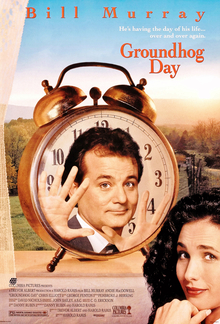
The popularity of Groundhog Day owes quite a bit to the movie of that name.  The film is more complex than its classification as a comedy might suggest.  Although the day itself does deal with the cyclical nature of, well, nature, repetition isn’t an inherent theme in the holiday.  Neither is it part of the related Christian celebration of Candlemas.  Indeed, I tend to think Groundhog Day has the makings of a horror story.  Being stuck in time could represent a terrible fate for many.  Interestingly, Phil Conners (Bill Murray), after having been stuck in this same day for a considerable amount of time, suggests to Rita Hanson (Andie MacDowell) that he might be a god.  He is immortal and he knows everything that is to be known in Punxsutawney.  He can predict things before they happen (of course, he has become Punxsutawney Phil, in a manner of speaking).

A philosophically rich movie, the story has appealed to adherents of several religions.  That, in itself, is amazing.  The endless repetition could represent samsara to those of south and east Asian religious inclination.  The learning to be kind, and even forgiveness aspects, appeal to those who want to find a Christian message in it.  Not bad for a holiday nobody gets off of work, and which frequently falls in the middle of the week.  The holiday complex of Imbolc, Candlemas, and Groundhog Day represents what had once been a more prominent season than we currently recognize.  Revivals of the more ancient celebrations have begun to appear, but the endless repetition so valued by capitalistic systems has nearly captured us all.


Symmetry Synergy

Symmetry.  It’s pleasing to the eye.  And significant dates are often the basis for holidays.  Today is one of those extremely rare palindrome days.  As my wife pointed out to me 02-02-2020 is a configuration that hasn’t occurred since 01-01-1010, or over a millennium ago.  The next one will be after we’re all long gone, on 03-03-3030.  Not only that, but today is part of a holiday cluster.  It’s Groundhog Day.  Yesterday was Imbolc, the Celtic cross-quarter day initiating spring.  Imbolc is also known as St. Brigid’s Day.  Today is called Candlemas, by liturgical Christian tradition.  We are living through a truly unique day.  Every day, I suppose, is unique, but the spirits are afoot today.

I’ve written about Groundhog Day before.  With its prognosticating rodent, it tells us if spring is on the way or if it’s going to be delayed.  Imbolc falls about halfway between the winter solstice and the vernal equinox.  In Celtic cultures this was a cross-quarter day, a time of uncanniness.  Spirits cross between worlds on days such as this.  In days of yore, it was also the feast of the goddess Brigid.  Christianity has always been an opportunistic religion.  When missionaries to places like Scotland and Ireland couldn’t convince the locals to give up their deities, they made saints of them.  St. Brigid is a fabrication of a Celtic goddess, not an actual saint.  For similar reasons in the quarter-year counterpart to Imbolic, Samhain, the church moved All Saints Day to November 1 and All Souls to November 2.  The Celts continued using the trappings of their cross-quarter day and eventually gave us Halloween.  Imbolc never caught on in quite the same way.

The early Christians didn’t know when Jesus was born.  Christmas was established on December 25 because of all of the solstice celebrations at that time of year.  All that pagan jubilation had to be subsumed under a more solemn occasion.  Building on that mythical date, New Year’s Day was January 1 because that’s when Jesus would have been circumcised, eight days later.  Thirty-three days after a male child’s circumcision, a woman was to make an offering for purification in the temple.  According to Luke, Mary did this, and 33 days after January 1, in keeping with our fictional date-keeping, is February 2.  A tradition grew that Christians would bring their candles to church to be blessed that day (Jesus being the light of the world).  This blessing of candles was named Candlemas.  I first encountered it at Nashotah House, where it was still celebrated even as a sleepy woodchuck in Punxsutawney was rubbing his eyes.  Not exactly a palindrome, but there’s a remarkable symmetry to it, no?


Invoking Imbolc

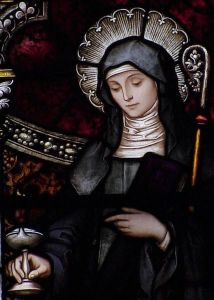
As the year continues her eternal circle, we find ourselves once again at Imbolc, the cross-quarter day between the winter solstice and the vernal equinox. Imbolc is an ancient fire festival, and given how chilly our apartment has been these last few weeks, I think I could be downright pagan about it. Dividing the year into eighths, the pre-Christian calendar emphasizes the seasonal aspect of nature. The festival was originally dedicated to the goddess Brighid who became, in her later years, St. Brighid. Naturally, when the Celtic lands were converted, Imbolc was supplanted, somewhat, by the following day—not yet Groundhog Day—Candlemas, or the feast of Mary of the Candles. Diametrically apposed to Samhain, or Halloween, Imbolc celebrates the rekindling of light in a dark time of year. Some have suggested that the festival has roots as early as the Neolithic Period.

One feature of the old religions that was lost with the more transcendent interests of monotheism is the dedication to the earth. Religion, in its earliest forms, grew out of a profound awareness of human connections to the planet that was their home. Without our planet we do not thrive. Even though we’ve learned to catapult ourselves into space, our bodies don’t work so efficiently in zero gravity. (Read Mary Roach’s Packing for Mars for the gory details.) We evolved on and are part of the earth. Early peoples knew that instinctively. Their religion reflects that implicitly. Kindling a fire in winter is a small way of encouraging the light and warmth to return.

Stbrigid

Brighid, a goddess who represents the return to fertility with the earliest beginnings of spring, may also represent the earth. It will be at least another month or two before many of us will begin to see the hints of crocuses breaking through the wan grass, but Imbolc is all about turning that corner. The earth that seems to have forsaken us in the desolate winter is now about to welcome us back into the growing time. It is no wonder that, despite efforts of the missionaries, elements of the old religion remained. Whether with candles or bonfires, the pagan goddess Brighid, or the Christian Saint Brighid, ushers in February, our last full month of winter. And tomorrow, the groundhog will remind us once again that we are merely part of the earth.


Darkest Night

One of the more endearing of human weaknesses is our fear of the dark. For those who live north of the equator, we have just experienced our longest night. It is no coincidence that the religious holidays that occur in winter feature light. In our helplessness against the encroaching darkness, we light our Christmas trees and Hanukkah candles, adding just a bit more light to the world. Among the oldest of all holidays is the day that marks the birth of light’s resurrection. One need not be a pagan to appreciate the solstice and the inherent hope it bears for the return of the sun.

In this season we often see signs and hear laments about the absence of Christ from Christmas. Jesus was not born in winter, according to our best reckoning. One of the carols that drives me mad with distraction is “In the Bleak Midwinter” with its maudlin description of “snow on snow on snow”—clearly written by someone with limited experience of winters in Israel. Christmas falls near the solstice because people have from earliest memory recognized the sacredness of this season. When Jesus was born nobody knew he was to become so famous as to have one of the most popular Facebook pages ever, and so nobody thought to write it down. Even the Gospels the disciples never give a rousing chorus of “Happy Birthday” while on the dusty highway. What we’re celebrating is that night will not reign forever.

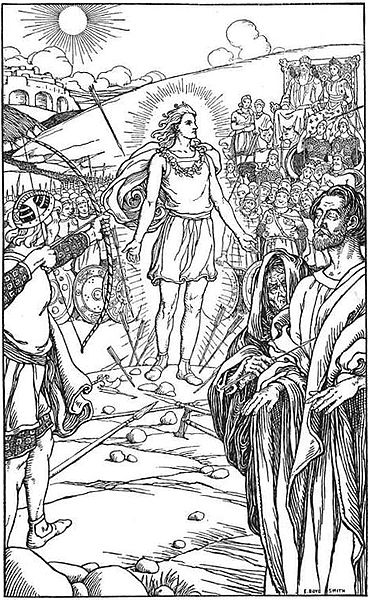
Having evolved to favor our eyesight, but lacking the standard mammalian nocturnal nature, we feel vulnerable in the dark. Even if Jesus hadn’t been born we’d be celebrating at this time of year. It might have been the re-living of the mythic Golden Age of humanity under Saturn that the Romans called Saturnalia, or it might have been the rejoicing over the resurrection of the beloved god Balder among the Norse. We might have had to wait until the days were noticeably longer to fete the goddess Brigid with the Celts at Imbolc, but we would have marked the occasion. Instead of cursing the pagan darkness, as the saying goes, we would light our feeble candles as a sign of hope. The reason for the season is the fact that the longest night is over and once more our days will slowly return light to our lives.

Here comes the sun


Inter-species Prognostication

Groundhog Day is a holiday easily forgotten by all but Bill Murray fans and residents of Punxsutawney, Pennsylvania. The day, however, has a role deep in European folk religion that was reflected in the “cross-quarter days.” From ancient times, the four days of the year that fall precisely between the solstices and equinoxes were known as cross-quarter days, based on the day of the month that rent was due in England (“quarter days”). The Celts recognized this cross-quarter day in early February as Imbolc (later Christianized as Candlemas). Part of the folk religion held that animals had special powers on cross-quarter days, and that fair weather on Imbolc meant that more wintry weather was on the way.

In America, where Groundhog Day has its original burrow, the tradition began among German immigrants. The first historical reference to Groundhog Day was made in 1841 in Morgantown, Pennsylvania. By 1886 Punxsutawney had its groundhog Phil and the tradition has continued ever since.

Although it is a lighthearted holiday, I always tell my Hebrew Prophets class (which begins near Groundhog Day) that this is a form of socially accepted prognostication. Few believe that a marmot can predict the weather, but we like to believe that winter is on its way out when the cold starts to feel old and stubborn and we are ready for a few sunny days. The old tradition states that if Phil doesn’t see his shadow he won’t dash fearfully into his den and spring is on its way. Fact is, spring falls six weeks from Groundhog Day, so no matter what the rodent says, spring is on its way. Ancient religions always stress the hope that nature will continue as it has in the past and that spring will follow winter as it should. It is nevertheless a fun day to watch the largest member of the squirrel family amble out of his heated burrow, no doubt confused by all the furless bipeds standing around with cameras, and play the prophet for his fifteen minutes of national fame.

The world's hairiest prophet?