Night Terrors

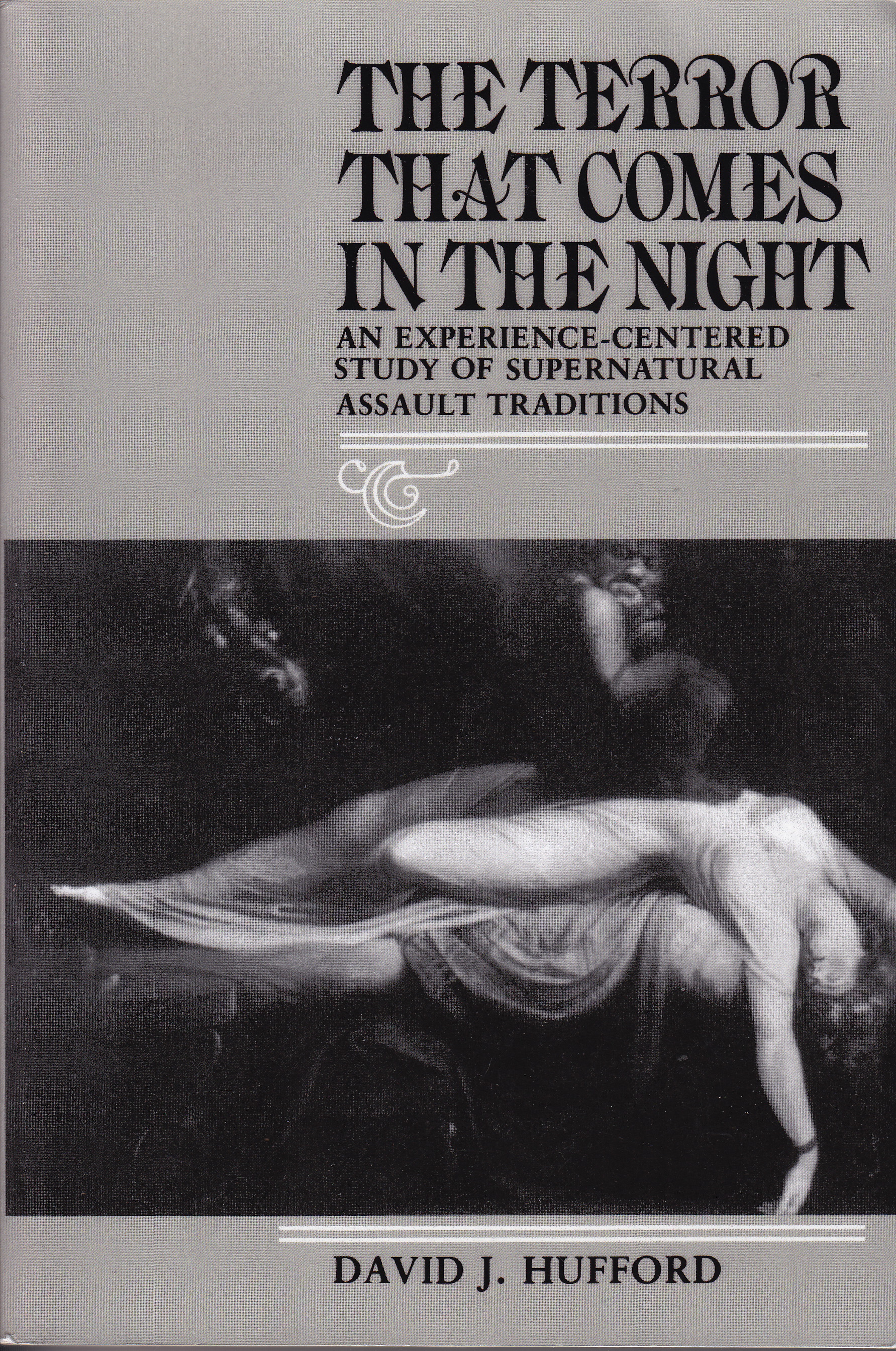
TerrorInTheNightNightmares are the stuff dreams are made of. Or maybe I’ve got that the wrong way around. Having grown up subject to frequent nightmares, I still occasionally have them. I suppose it is easy enough to assume someone who reads about monsters and watches horror films should not find this unexpected, however, I’m not sure they’re related. My nightmares visit issues that horror films avoid, and most of my monster reading is, well, academic. Surely the scientific study of nightmares has advanced since David J. Hufford’s The Terror That Comes in the Night: An Experience-Centered Study of Supernatural Assault Traditions, but it remains a very important book. As someone familiar with the phenomenon, I found Hufford’s study somewhat therapeutic, and it certainly does raise some interesting questions.

Apart from the unfortunately, inherently sexist, folk-title “the old hag,” Hufford is addressing a universal experience of people of all ages. Using his original setting in remote Newfoundland where his work began, Hufford collected tales of what might technically be called sleep paralysis with a specific hypnogogic hallucination of being attacked. A designation, he acknowledges, that is quite awkward for repeated use. Back in the early 1980’s, when the book was published, these accounts of nighttime attacks—a person waking up, or not having yet fallen asleep, sensing a presence in the room, finding her- or himself unable to move, and sometimes seeing or hearing an entity and feeling it on his or her chest—were rarely discussed. Especially in scientific literature. They seem a kind of embarrassing medievalism related to the ancient concepts of incubi and succubi, and even vampires. Having “the old hag” (a moniker relating to witches) is what the experience is known as in Newfoundland. Hufford, taking these accounts seriously, investigated what the sufferers had experienced. Unwilling to judge whether the event “actually happened,” Hufford’s scientific objectivity is truly admirable. Since the time of his book, the concept has become widely known and the argument is often made that having heard of sleep paralysis episodes feeds those with hypnogogic hallucinations the idea of a supernatural oppressor. In other words, now that we know about it, we don’t have to take it seriously.

Hufford is one of a small number of academics that is willing to engage with the supernatural on its own terms. Religion scholars do, of course, but we are generally dismissed from the starting block anyway. Most scientists disregard the possibility of anything beyond deluded brains and say nightmares are normal. Just deal with it. Those who’ve experienced the nighttime attack know that it feels very different than a garden variety nightmare. You can tell when you’re awake. Of course, we’re of the generation who’ve seen The Matrix and Inception, and we know that, at least in popular thought, reality has become negotiable. Nobody is much surprised any more by the idea of such an attack in the night. Waking nightmares have become as common as the headlines. If only more scholars would take human experience as more than just “old wives tales” we might all be surprised at how just rolling over can change everything for the better.

‘S No Day in New York

“You’re waiting for a train. A train that’ll take you far away. You know where you hope this train will take you. But you can’t know for sure.” Yet you’ve been standing on the windy platform in Newark for twenty minutes and they’ve announced the next train to New York will be an hour late.  A man you don’t know says the PATH train will take you to New York, but New York is a big city, and you only go there to work.  It must be a snow day.  Well, almost.  I work for a company that only closes when New York City Public Schools close for weather.  Today, kids, school’s open; but all is not lost—field trips are cancelled.  And so, the constellation of companies who take their cue from NYPS truck (sometimes literally) their New Jersey-based employees across or under the river, into a city where slush half a foot deep awaits them on every street corner, and that doesn’t slow those muck-flinging cabs down at all. 

With the weather we’ve been experiencing this year, I hear a lot of people saying that Mother Nature is still in charge.  Allow me to differ.  You see, I’ve been researching the weather and the Bible for years now and I’ve come to a slightly different conclusion.  In the Psalms, anyway, it is clear that God is in charge of the weather.  Given that New York is such a sinful place, I guess none of us should be surprised.  Still, I’m not sure the Bible has got this one quite right either.  After all, I’ve walked through ice-crusted snow up to my knees for a good part of my walk to the station, and I have my coat open so the cold breeze will cool me down a little bit before I have to walk into work with crazy hair and a scowl frozen on my face.  Didn’t some great theologian once say “sin boldly?”  No, it is not Mother Nature in charge.  It is not even the deity.  It is something far more powerful than God—money.  Can’t lose a red cent when there are human resources to be utilized.

I’ve never been on a Port Authority Trans-Hudson train before, and I’m not sure where this one stops.  I heard someone say 33rd Street, and that sounds encouraging, so when the train stops I follow him across the platform.  Sheep, as any shepherd knows, will follow a random person who looks confident enough.  I emerge from the dark underground, not quite sure where I am, and I just can’t find a Psalm in my heart at the moment, unless it’s an imprecatory one.  I stepped out of my front door into freezing rain three hours ago.  My trousers are wet to the knees, and I’m a little sick from facing the wrong way on the PATH train for a lengthy ride.  The cars, I notice, are shaped like Krell.  Yes, this is a forbidden planet and I don’t know where I might end up.  Excuse me, Mr. Mayor, but I think you got it wrong.  Field trips are not cancelled after all.  And I’m not sure I’m even worshipping the right god.

Deceptively peaceful

Deceptively peaceful


Resurrinception

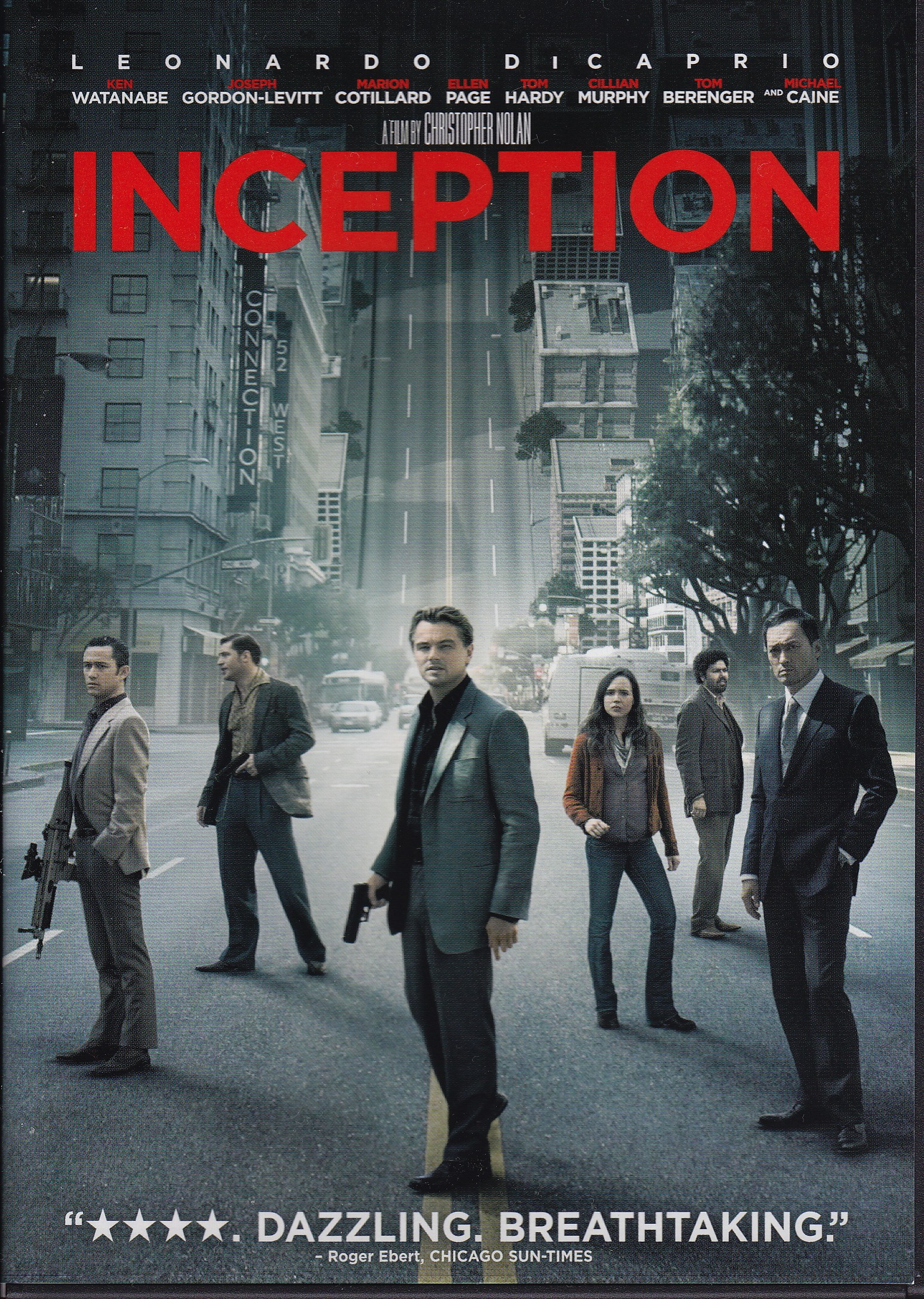
Inception_ver3Like most profound movies, Inception keeps me coming back repeatedly. I’ve already written a post on how the Theseus and minotaur myth lurk deep within the labyrinths of this film, but upon my most recent viewing a new angle caught my attention. In the first level down into Fischer’s dream, when Saito is unexpectedly shot, Eames asks Cobb, “What happens when we die?” It could be the question of a child faced with a dead pet for the first time. Of course, Eames refers to death in a dream under sedation, and limbo is the closest thing to spiritual death that a person can experience. The timing of that question, however, triggered in my head the number of resurrections that take place in the movie. I have frequently noted here that resurrection is a standard part of the tool kit for western movies, particularly American ones. We expect resurrection. So, finally, three layers down, a dream within a dream within a dream (even Poe would be proud), Saito dies. He is lost in limbo.

Limbo is a fuzzy theological construct thought up by the church for those who don’t deserve Heaven, or Hell, or even Purgatory. Some, it seems, end up in limbo. In Inception limbo is unconstructed sub-conscious, an area even Freud would fear to tread. Saito dies and goes to limbo. Fischer, meanwhile, also ends up in limbo because Mal shoots him dead in the third-level dream. Mal is already in limbo because she killed herself in real life—or was it a dream? Cobb, of course, must die to return to limbo to retrieve Saito so that he won’t be arrested when the plane lands. In limbo, three of the four escape, riding the kick back up to consciousness. Only after baptism in the first level dream, when the van plunges into the river, do the lost souls emerge. What happens after we die? Resurrection.

I’m not suggesting that Christopher Nolan planted a Christian idea in the viewers’ subconscious mind. Resurrection is part and parcel of our culture. Perhaps, however, this helps to explain the durability of some religious concepts. We long for resurrection on such a deep—maybe subconscious—level that we want to see it on the big screen. Even ghosts, we’re told, haunt because of unfinished business. It is Saito, the Japanese business mogul, however, who undergoes the most resurrections. He dies in the van underwater, in the fortified mountain hospital, and in limbo (perhaps in the elevator as well, but this is uncertain). His is a regular reincarnation of resurrections. Inception, I’m sure, will keep me coming back for more. One of the questions that none of us escapes while alive, is that uttered at the level of the dream.


Beyond Science

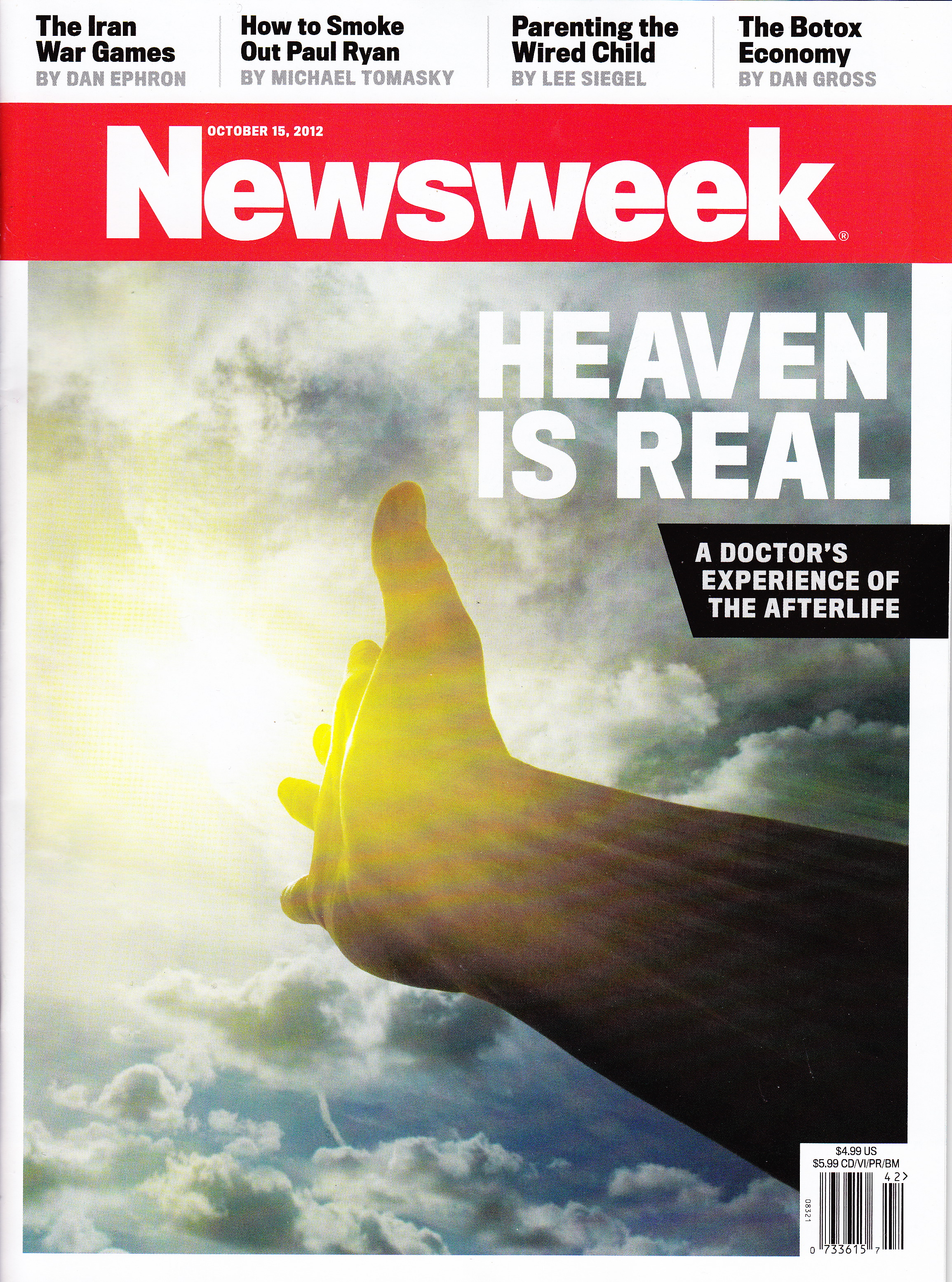
The nature of reality is not easily parsed. As a society we are still under the spell of rationalism, that wonderful left-brain system that seems to explain everything. Until we break down in tears and don’t know why. Like the proverbial chicken-and-egg, reductionists say it all comes down to electro-chemical reactions in the brain, to which non-reductionists reply “believe that if you want to.” Knowledge and belief, belief and knowledge. The truth is nobody knows. So when I see Heaven on the cover of Newsweek, I can’t resist wondering what’s inside. Dr. Eben Alexander, a Harvard-educated neurosurgeon, has just written a book called Proof of Heaven. In the Newsweek article he explains how during a week-long coma he had the most vivid experience of his life. While his brain was shut down. It might be more accurate to say he had the most vivid experience of his afterlife.

The classic debate for Near Death Experiences—so common they have their own acronym, NDEs—revolves around timing. Reductionists say the thought could have happened very, very quickly, just as the brain was shutting down. We all know how dreams can feel like they last far longer than we’re asleep, and how vivid they are. Those who accept the reality of an afterlife argue that many of the classic symptoms such as seeing your own body from above, or being able to describe in detail what was happening in another room at the time, count as evidence. It is the problem of the occasional phenomenon again. This is something no lab can measure, but it happens just often enough to make you wonder. The shaman might say, along with Inception, that the dream is the reality. That might explain why so much of “real life” is unpleasant.

As comfortable as the belief that reality is solid, material, quantifiable, may be, it does not count for the totality of human experience. Alexander’s heaven may not be the same as mine. Reality may not be one. Maybe Occam was wrong. Reading about shamans over the past couple of weeks, it became clear that some believe humans have more than one soul. (I can hear the reductionists rumbling—one soul is already too many!) Some cultures recognize as many as seven souls in a single individual. These, they suggest, account for the uncanny experiences of human life. Why do some people see ghosts and why are dreams so vivid and how does faith healing work? Reductionism calls them all illusions, tricks of the brain. Until his coma Dr. Alexander would have agreed. Now the newsstands suggest a different paradigm may be emerging. Dare we believe that the truth is out there?


The Reality of Movies

Inception was released on DVD this week, and having a weakness for struggling with reality, I knew I had to see it again. Now, people with a far sturdier grip on life than myself have been blogging about the movie since the summer, writing posts both profound and critical. I wrote an earlier post on the movie, toying with its retelling of the Theseus myth. This time, I am wrestling with the wonderful burden of having a subconscious mind. The crux of the movie is when Cobb has to decide which world is real: Mal’s or his own. The movie, of course, refuses to divulge the answer.

With a finesse that I had previously experienced with the original Matrix movie, Inception ups the ante on what we consider reality. “Reality” is a problematic concept, a bi-product, we are told, of consciousness itself. Reality is generally viewed in exclusive terms, and most of us spend our days in what I learned to denominate “naïve realism,” the concept that what we perceive is pure, unadulterated reality. Perhaps not as Inception or The Matrix, or even eXistenZ would have us believe, scientists today tend to agree that the world is not as it seems. The quantum world has opened up levels of reality undreamt of even by Einstein whose God did not play dice. This is perhaps one of the greatest challenges to traditional religions.

Although many religions gladly point out that there is a mythical reality behind what we experience every day, there is no hard evidence to back up these assertions. This is not the same as declaring they don’t tap into that reality, it is just that we have no final arbiter as to what that reality is. Having been in the business of religion all my life, I am absolutely certain that it isn’t what any fundamentalist group declares it is. They make claims about reality that would leave Jesus scratching his halo-encircled head. Is it Cobb’s, Neo’s, or Allegra’s reality or is it Hawking’s, Witten’s, or Greene’s? I simply don’t know. I just put the disc in an press the play button.


Alternate Realities

Shutter Island and Inception share more than just Leonardo DiCaprio. Both films blend the conscious and subconscious worlds in such a way as to question what reality is. To many this issue is answered by what some philosophers label “naïve realism;” the world that our senses perceive is the world as it really exists. During a guest lecture this past week, a student repeated raised the question of how we know what we know. More than simply an attempt to get the teacher off the subject, this seemed to be a legitimate existential angst. Religious studies has a way of doing this to people.

Even physicists of the twenty-first century are increasingly forced to what looks more like science fiction than apparent reality to explain our world. The quantum world is a surreal environment and as scientists close in on a theory of everything, those of us who live in the macro world wonder where reality begins and fantasy ends. Perhaps the concept of reality itself is flawed. We live with many ineluctable truths; we function biologically, live, grow, and die. Beyond that we have no way of knowing, but we believe. And during that lifespan we experience both conscious and subconscious input. The closer we look at reality the more it appears to fracture.

Perhaps that is why movies such as Shutter Island and Inception have been so popular. Scorsese and Nolan have widely differing styles, but both are relegated to a world where apparent reality doesn’t seem to be enough. Only so much of life fits in a laboratory. The vast majority of it is simply experienced, whether wakefully or while asleep. Each at the time feels like real reality. Inception seconds the question raised by Shutter Island: what is reality, and, perhaps more importantly, what will we choose to do with it?


Inception of Theseus

Never the first for new cultural memes, but often among the last, I finally took my family to see Inception over the holiday weekend. The Internet has been buzzing with comments about the movie for the last couple months, so it was difficult not to have preconceived notions of what to expect. Nevertheless, I found the film utterly engrossing. At one point I realized that I hadn’t blinked in so long that my eyes had begun to dry out. Having just finished Mark Danielewski’s House of Leaves at the end of June, and having begun my Mythology class on Friday, the Theseus myth has been on my mind anyway. Inception takes the hero’s journey through the labyrinth of the subconscious.

The first hint that Inception was the Theseus story, for me, was the introduction of Ariadne. The daughter of King Minos, Ariadne informs Theseus how to escape the labyrinth, and her first task in Inception is to draw a maze that takes a minute or longer to solve. Dom Cobb, like Theseus, is a deeply flawed hero. Part Theseus, part Daedalus, Cobb has trapped an unlikely Minotaur in the form of Mal, his wife, deep in his subconscious mind. She stalks him in his unsavory work, and when she threatens his very concept of reality, she is slain by Ariadne.

Coupled with classical mythology, the film also raises the unresolved question of the nature of reality. Is conscious existence any more real than the subconscious? This theme was explored in David Cronenberg’s eXistenZ back in 1999 with a similar ending that refuses to answer the question. Both films raise the troubling interference of technology with the most secret of human psychological repositories, the uninhibited subconscious. The closer the Internet comes to a global intelligence, the more the individual mind recoils into its own obscure and unexplored territory. Despite Freud and his disciples, we have not yet even begun to understand our own subconscious minds. Movies like Inception draw on classical sources to help us deal with the Minotaur that surely lurks there.

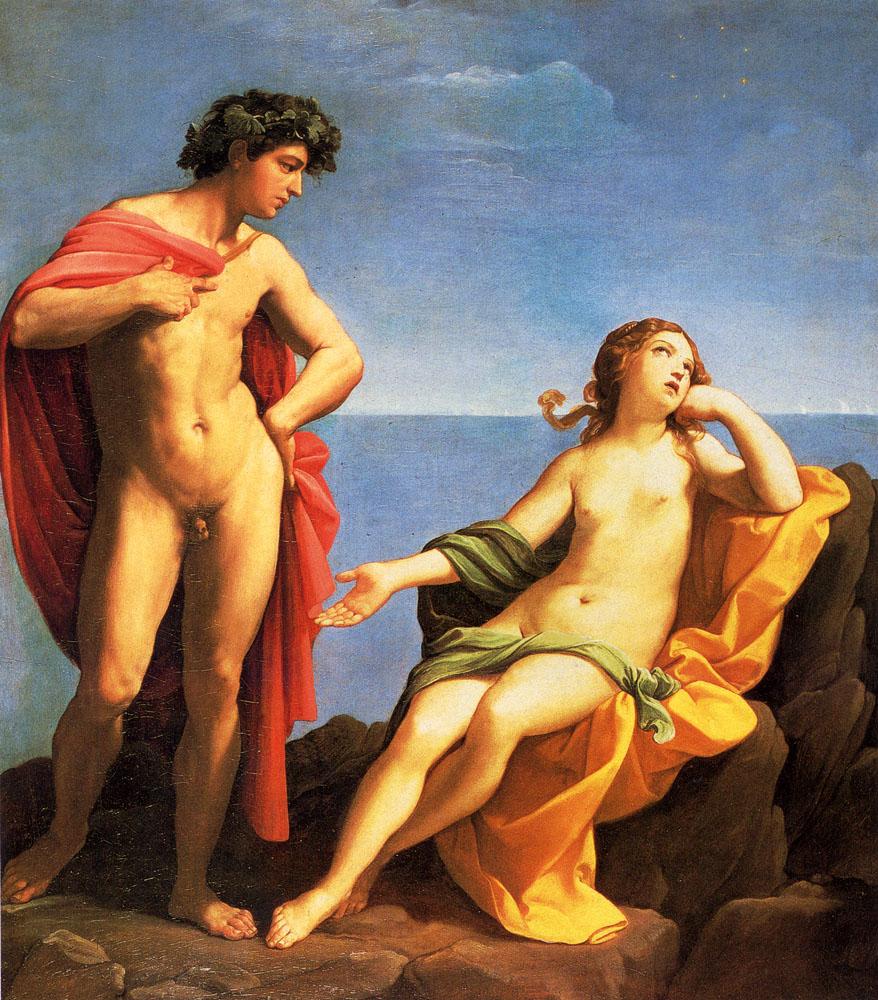
Ariadne explains her dream to Bacchus