Book Stories

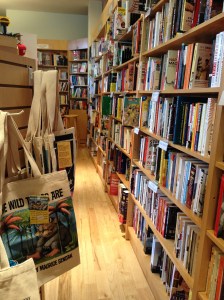
I’m a headline browser.  Sometimes a story will make me sit up straight and click.  I was browsing the headlines in Publisher’s Weekly’s daily updates earlier this week.  One of their regular sections is on independent bookstore news.  When I saw “Oil City” and “Pennsylvania” in the same headline, well, I sat up straight.  I grew up very near Oil City, and attended Oil City High School.  One thing I noticed, even as a child, is that the nearest bookstore we knew of was over in Meadville.  (Eventually a B. Dalton’s, or Waldens, I can’t remember which, opened in the local mall that is now a very sad superstructure to visit.)  I would work the summers and after buying my school clothes would beg mom to take me to Meadville so that I could visit the bookstore.  It was a place that made me happy.

I don’t remember a bookstore ever being in Oil City (or Franklin, except a Christian bookstore).  I wish Raven’s End very well.  If it weren’t six hours away I’d drive there this weekend just to support them.  In these times of challenging human intelligence, we need more bookstores.  We need more readers.  That’s one of the reasons, I suspect, that Publisher’s Weekly informs readers of new bookstores opening.  As a young person you tend to accept things the way that they are.  In one of my philosophy classes I learned that this was called “naive realism.”  I also learned along the way that our brains evolved to help us survive, not to discover reality.  We have to work at the latter, and that means reading.
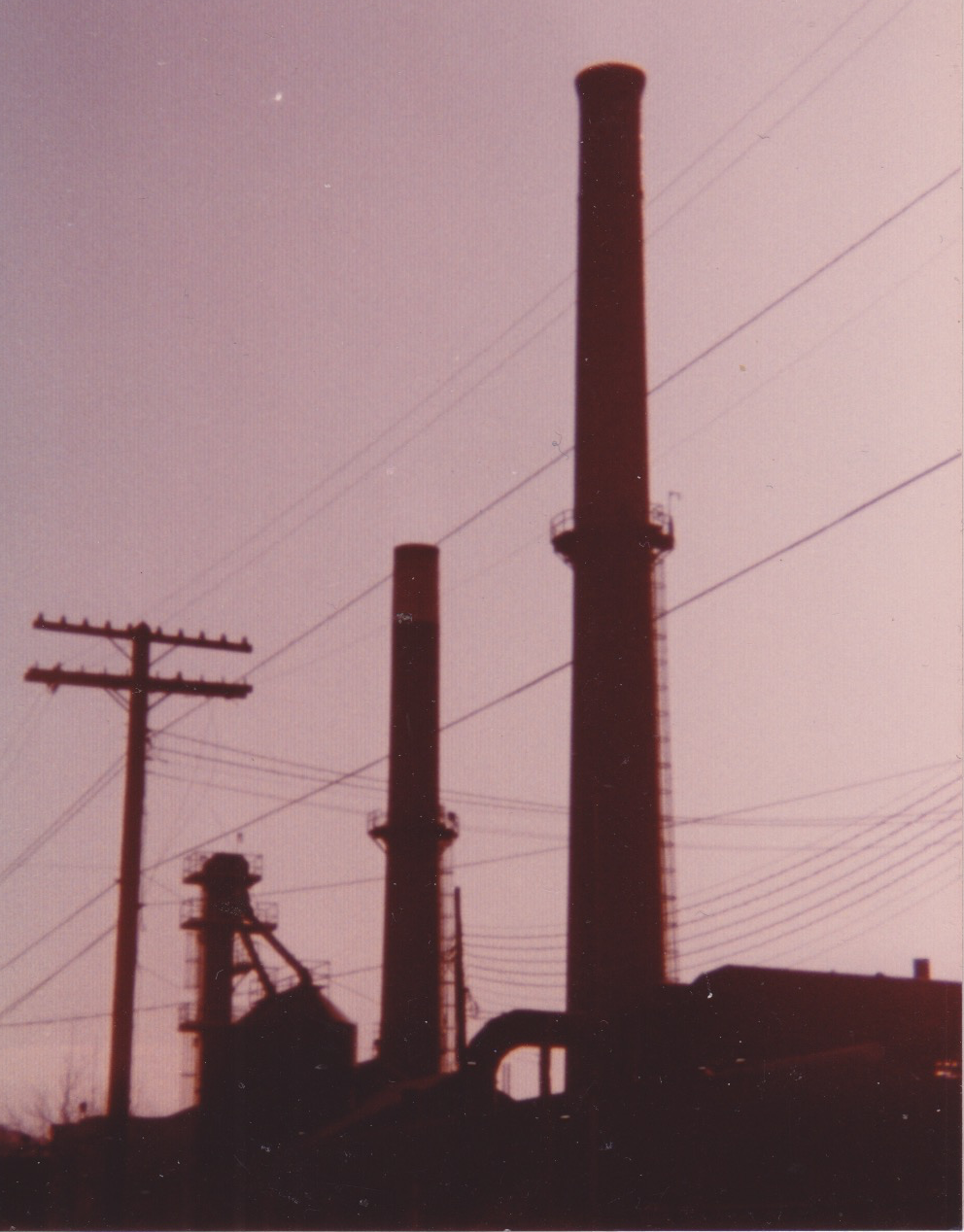
I live in the Lehigh Valley, a community that has had to remake itself after the closing of Bethlehem Steel.  I grew up in the Oil City and Franklin area which would eventually have to remake itself after the closing of Pennzoil and other large, heavy industries.  As I was growing up there I found books, but in department stores like Woolworths, or more commonly, secondhand at Goodwill.  People are changed by the books they read and, given their own devices, most won’t go online looking for books.  After work I tend to shut the computer down and pick up a book to read.  I also try to carve out reading time each morning.  I grew up without easy access to bookstores.  It gladdens me to see one opening in the small town where I began to realize the importance of picking up a book and learning about this ever-changing world.
New Hope Nightmare

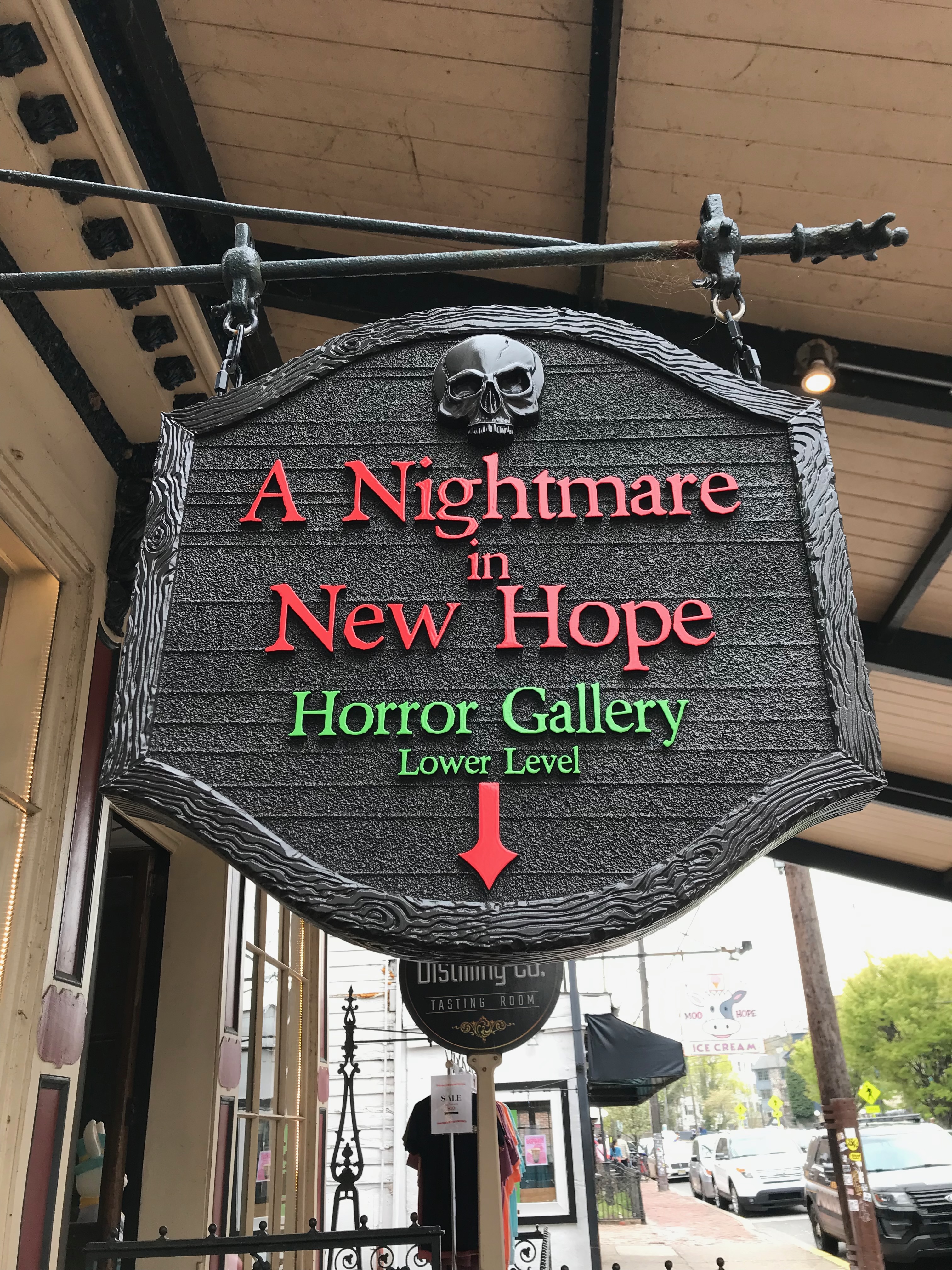
One of my favorite places along the Delaware River is the town of New Hope.  Across the river is the very nice town of Lambertville, New Jersey, but New Hope has a feel to it.  When I learned that a new horror museum had opened there—Nightmare in New Hope—we scrambled to change plans to get there right away.  We went the Saturday before Easter.  We’d planned to spend some time touring the rest of the town as well since it’d been years since we’d done so.  We managed to find parking and, since the museum opens at one, grabbed some lunch and went to Farley’s Bookshop.  Independent Bookstore Day was actually the following weekend, but bookstores need no special occasion.  Farley’s has changed a lot since our last visit.  It’s smaller (as has happened with many indies) and brighter.  I found plenty to like there, but I did miss the darker, dustier feel to the first incarnation of the store I’d known.

We made our way to Nightmare in New Hope.  And waited.  And waited.  Several people passed by, noting that they’d have gone in if it were open.  One of our party messaged the website since telephoning did nothing.  Eventually the owner indicated that he was closed for Easter.  Of all things.  A horror museum, open only on weekends, closed for the first nice weather we’d had on a weekend?  That was the main reason we’d driven an hour to get there.  We found a place with vegan ice cream and fed the ducks on the river.  I was sad that the main objective of the trip, the museum, hadn’t turned out.  And I knew it would be quite some time before we could try again.

My daughter, knowing my tendency to get depressed over such things, suggested we could go to Peddler’s Village instead.  My wife and daughter had visited it before, and so we decided to round out our Saturday trip there.  Peddler’s Village is a set of speciality shops that was born about the same time that I was.  These days there are about 60 shops with items that may or may not be strictly necessary.  Although we’d been to Farley’s, I couldn’t pass up the Lahaska Bookshop, part of the Village.  It was warm that day and we saw maybe only five or six shops.  At least one of them was an independent bookstore.  Not exactly the day we’d planned, but a day spent in and around New Hope is never wasted.  But really, closed for Easter without even putting a notice on the website?

(See updates here and here.)


Storming Fourth

Our founders picked a day of uncertain weather to declare independence.  One gets the sense that people were more stoic about the weather in those days.  Of course, we’ve increased global warming and made things more extreme.  Nevertheless, I can remember very few fourths of July when the possibility of storms was zero.  The weather around here has been odd this year with a suddenly hot June, with a dry spell that killed quite a few plants, followed by a cool start to July and some very intense storms.  And now, on the fourth, the possibility of rain in the forecast.  The grass hadn’t been growing in the dry spell, but I’m hoping the rain will hold off today long enough for me to get that job done.  In fact, on this secular holiday I’d been hoping to get quite a few outdoors chores checked off the list.

When I was younger and fireworks were the main draw to the day, I noticed that just about every year rain fell, or threatened to, on July fourth.  I’m sure it’s not that way everywhere, but here in Pennsylvania, where the declaration was signed, it’s a reality of life.  Of course, the modern Independence Day celebrations evolved over time to include the cookout and fireworks—outdoor activities both.  For me, apart from the outdoor chores on a day off work, a movie seems like an indoor celebratory alternative.  Perhaps Return of the Living Dead, set on the fourth.  Or I Know What You Did Last Summer.  Or Graveyard Shift.  Maybe something else.

Watching the political theater unfold—and my, what a dramatic election year it’s been—perhaps a comedy horror is just about right for today.  This is going to take some thought.  Something to occupy my mind while doing those outdoor chores.  Of course, I’ve got a book to get submitted as well.  If the weeds can hold off for another day or two—is it wise to paint the porch when rain’s in the forecast?—maybe I can finish up Sleepy Hollow.  It’s a good American ghost story.  That might be appropriate as well.  You see, holidays are so rare that too many things crowd in on them.  They’re breaks from the constant earning of more money, which is the American way.  Of course, our founders were largely restless gentry.  For me a day off work is always a busy day.  Especially when the rains have returned and the grass has grown.  It must be the fourth of July.


Buy Books

It’s funny how the bad guy can become the good guy in new circumstances.  I’m thinking in the bookstore context.  Now, I love independent bookstores.  I shop in them whenever I can.  Still, I had a genuine fondness for Borders.  My wife introduced me to Borders when I moved to Ann Arbor to be with her.  Borders was headquartered in Ann Arbor and it was our go-to for browsing.  (This was before Amazon, of course.)  Compared to Barnes & Noble it was intellectual and inviting.  B&N had gone for the corporate stodgy aesthetic that drives me frantic.  We literally mourned when Borders closed, spending hours in the New Jersey stores as they were selling off stock.  There was a long time when Amazon seemed the only game in town.  Our part of New Jersey had no indies, but the B&N sat on the hill.

Then B&N started having trouble.  By now I worked in publishing and seeing the only brick-and-mortar outlet crumbling was scary.  We need to fight the ebook invasion.  To do this we need bookstores!  (Fortunately we have a few good indies where we live in Pennsylvania, but even so, at least two of them have closed in the last five years.)  Then something happened.  James Daunt bought Barnes & Noble.  Daunt was known as an innovative British bookseller.  His stores (I’ve only seen pictures) are the thing of dreams.  Could he steer this corporate stodgy ship into open waters?  It seems to be working.

A piece in a recent New York Times praises the new B&N effort.  Instead of stamping “one size fits all” all over his business, Daunt wants his stores to take on local flavor.  Not look like every other B&N.  And it seems to be working.  I still prefer my indies, but the last time I was in the local B&N I noticed subtle changes that can come when a corporate overlord hands a local manager a bit of autonomy.  The stores are looking better.  And folks, let me be frank here.  Christmas is coming and books, real books, need your help.  Silicone Valley is trying to force us onto our screens for even more hours of the day.  I get off work and pick up a paper book to read.  To look at something real.  To connect with the actual world.  Support your indies, but don’t feel guilty about ducking into B&N.  It may not be the place you remember.


Yelp Me

Do you remember the Yellow Pages?  Or even phonebooks, for that matter?  (Or wall phones?)  They certainly weren’t perfect, but they tended to be updated yearly (at a great cost in trees).  That meant that they tended to be almost up-to-date.  You’d find the business you sought, and call them to ask for their hours, or directions.  Now we rely on the internet, of course, and the number of businesses that you can find has exploded.  And they open and close with bewildering rapidity.  It took me a couple years of googling to figure out that Yelp was a rebranding of the Yellow Pages.  I also feel sorry for any company that has to try to keep up with the current status of things.  It does seem, though, that Yelp could use some help.

Although it might seem impossible, many businesses still exist without websites.  And if you’re looking for a type of business in a specific city or town, you need to know, first of all, what’s there and what’s not.  The big boxes are never a problem, of course.  When I travel to a new location, however, I want to know what bookstores I’m likely to find.  I’ve done this a number of times recently.  Type in a city name and “bookstore.”  (In the case of Reading, the city name didn’t help at all.)  Yelp helpfully shows up at the top but it lists many establishments that have closed.  Even some of those that are open are virtual and don’t have a store you can wander around.  More than once I’ve come to a place only to discover there’s no longer anybody home.

Independent bookstores have been doing pretty well through the pandemic.  Many people have rediscovered reading.  Since they are seldom crowded, they feel like safe spaces during Covid.  And chances are that people who hang out in bookstores have been vaccinated and will likely be wearing a mask.  The problem is finding such places.  I have to say that Pennsylvania seems to have a healthy population of bookstores.  There are several in the Lehigh Valley and I’ve been pleased with the treasures I’ve discovered elsewhere as well.  Finding them hasn’t always been easy.  One of my favorite used bookstores here in the Valley folded during the pandemic.  Fortunately there are others.  Google maps sometimes work better than Yelp, but nothing beats getting out and exploring on your feet, except sitting at home later and reading what you’ve found.


Stay Safe

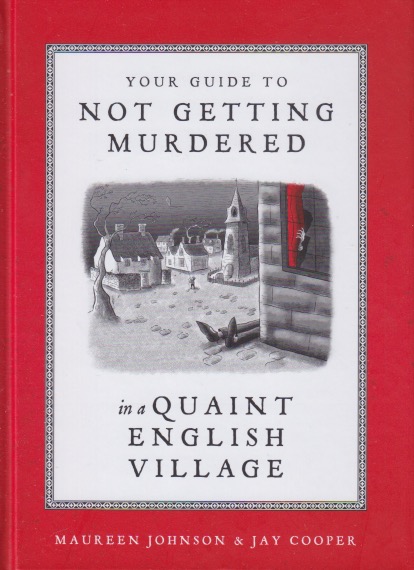
I’m not an impulse buyer.  Having grown up poor, I tend to walk into stores with a list firmly in hand and I don’t deviate from it.  Advertising has virtually no impact.  I don’t pay attention to ads unless they’re for things I know I need, and even then I shut them out most of the time.  I do let my guard down in independent bookstores, however.  So it was that I found in Aaron’s Books in Lititz, Your Guide To Not Getting Murdered in a Quaint English Village.  It was totally an impulse buy, easily read in a sunny afternoon in a caboose motel.  Or a rainy afternoon in an English manor house.  Maureen Johnson and Jay Cooper have produced a wonderfully witty illustrated guide here.  It helps to have lived in the United Kingdom for a few years.

Shelved face out in the thriller section, it’s a great opportunity for murder-mystery, gothic literature, horror movie fan types to laugh at themselves.  Some parts are snort out loud funny.  Okay, so I was on staycation and being a bit free with cash for a change, but I’m sure I will keep this one near my desk and turn back to it from time to time.  Maureen Johnson is known for her young adult novels and Jay Cooper is a children’s book illustrator.  Their talents, however, work together incredibly well for this slightly naughty guilty pleasure read.  The Wicker Man even gets a nod or two.  Something that those who disdain horror don’t often realize is that it quite frequently has its own sense of humor.  It’s an intelligent genre that doesn’t take itself too seriously.  At times it does, of course, but those of us who are fans can tell fantasy from real life.  Maybe.

Independent bookstores are starting to make a comeback.  A significant part of our population isn’t on board with retailers trying to convert everyday life to the metaverse.  We want to hear our music with the occasional pop and microphone hiss.  We want to drive our own cars.  We want to browse in actual bookstores.  Given my buying record online, I have to laugh every time I look at the recommendations.  The electronic world brain doesn’t know me very well at all.  It assumes it knows why I bought that ladder or that round blank four-inch stamped electrical cover.  Some of us play in nontraditional ways with such things.  And we get ideas from wandering into independent bookstores.  As long as they’re not in quaint English villages.


Time Well Spent

If you want a bookstore mostly to yourself, go on a fine, sunny summer weekend.  There will always be those with reading on their minds, of course, but since we’re still dealing with a pandemic, going when it’s quiet feels right.  Having to drop someone off for an event in rural New Jersey, I found myself with a couple of hours and the prospect of sitting in a hot car and trying to read or to find another way to use time productively.  It was a fine, sunny summer weekend day.  I realized the event wasn’t far from Frenchtown.  Now, I’d been through Frenchtown several times, often with my wife on her way to a weekend stint at work.  I’d noticed Frenchtown Bookshop, but since we were always on our way somewhere, we could never stop.

Public parking in Frenchtown is difficult on a fine, sunny summer weekend.  There is a bike and hike trail that passes near the Delaware there, and there’s also the river itself.  Kayaking and rafting on the border between New Jersey and Pennsylvania are popular pastimes.  The mercury was creeping up to 90, so people were out, either sweating on the trail or cooling their heels in the water.  Both public lots in town were full, as was all the on street parking I could find.  A bank tow-away lot—the bank was closed—seemed like the only option.  Independent bookstores are national treasures.  I always carry a list with me since it’s too easy to lose my head when surrounded by print.  If my specialized tastes aren’t represented, I can always find something.

Books are one of the great achievements of humankind.  Although circumstances may have prevented many women from making careers in writing early on—Enheduanna proved even among the Sumerians that women had wisdom to convey.  Once novels came to be written, the form was well populated with female sages.  Reading and writing were kept from slaves for fear of what might happen could they see what the knowledge of humanity really said.  The internet has, of course, become the great democratizer of writing, but has made it more difficult to get a publisher’s attention.  Apart from all that, books laid out on a table, or stacked neatly on shelves, are one of the simple, usually inexpensive, joys of life.  For about the price of a movie you can stretch that entertainment dollar out over several days.  Even when they’re fine, sunny summer weekend days.


Places and Books

I recently had the opportunity to travel to a new town and spend the night there.  This is a rarity in the days of pandemic and I’d forgotten the magic of waking early in a new place and looking out the windows at the deserted, artificially lit streets.  It’s so peaceful and full of wonder.  The place we were staying was next to a public library and I noticed that there was a light on in the cupola in the pre-dawn hours.  I like the idea of books watching over us in the night.  Often when I’ve traveled to conferences I’ll arise early and look out on that orangey, artificial light while most other people are still asleep.  Even the city in pre-dawn can be a peaceful place.  This is a pleasant displacement since it’s only temporary.

One of the things about the pandemic is that it has accustomed us to life just so.  The controlled environment of home.  There’s a comfort to routine, but there’s wonder in breaking it as well.  When it’s not a conference and still a new city, I begin to look for a bookstore.  One of the common misconceptions—perhaps bolstered by the cookie-cutter experience that has been Barnes and Noble—is that bookstores are all the same.  They aren’t.  Each reflects the minds of the owners.  They reflect their knowledge of their public.  New ways of looking at things.  I suppose this fascination with books has been enhanced by my starting to read some Jorge Luis Borges again.  Those of us who read for pleasure are in the minority and we find the open book to be open arms welcoming us in.  Welcoming us home.

I always travel with books.  My travel bag carries my laptop and my reading.  New technology having to learn to adjust to the old.  I’m not a particular fan of technocracy.  I’ve always preferred paper to plastic.  In a new town I look for authenticity.  We lived for many years in Somerville, New Jersey and one of my concerns was that it couldn’t seem able to support a bookstore in the shadow of that equalizing Barnes and Noble.  The new owner, James Daunt, believes that bookstores should reflect local interests.  His own stores in Britain are cathedrals to books.  Unlike other industries, bookselling isn’t all about the business.  Much of it is about the place.  We travel to see new places, and we read to visit them as well.  And perhaps to reflect in the artificial orange glow before the city awakes.


A Day with Books

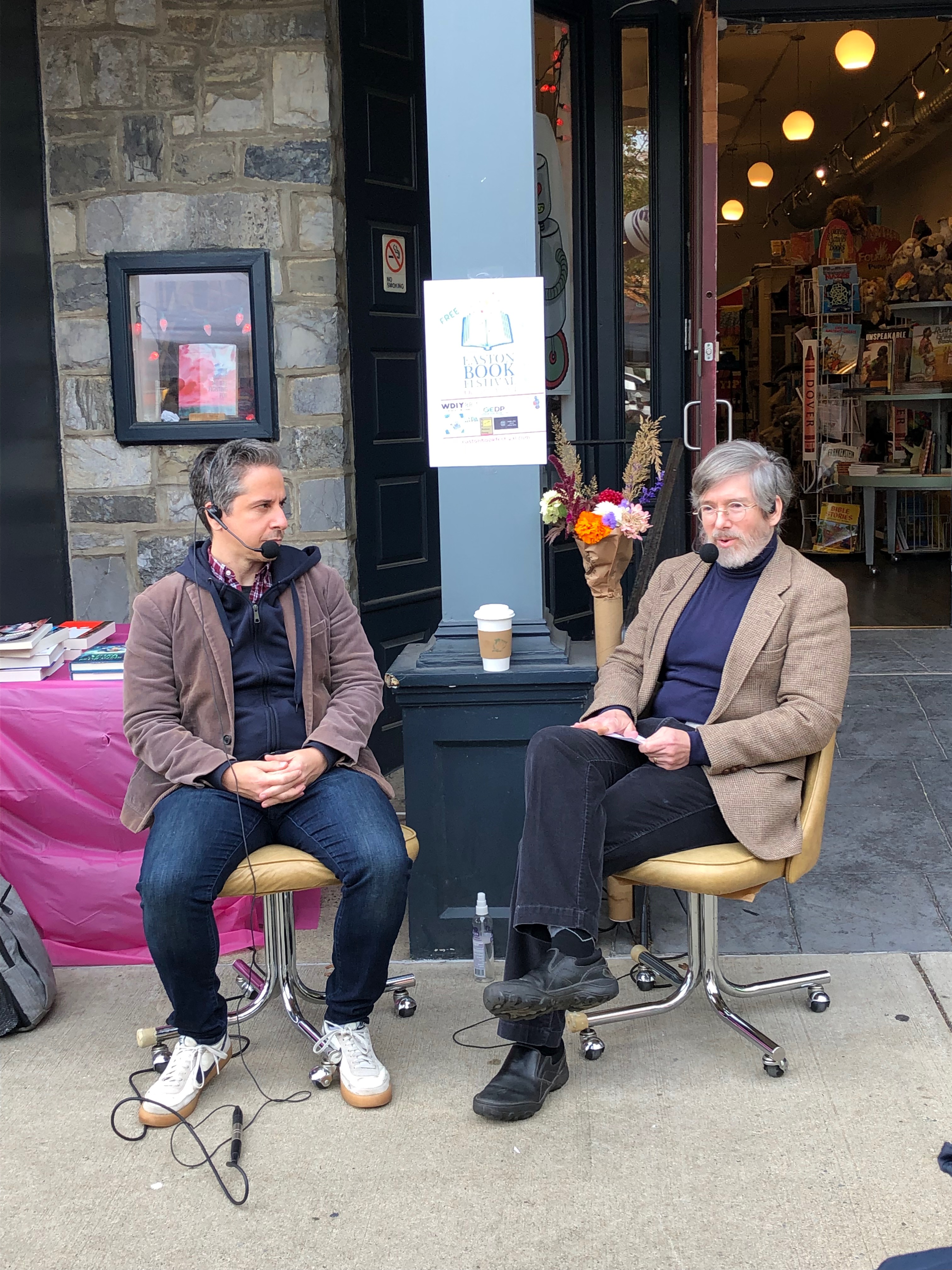
A day with books.  Is there any better kind of day?  Before I lapse into poetry I want to put in one more plug for the Easton Book Festival.  Today is the last day for this year, but keep an eye out for next October.  And you can still catch the videos from this year’s session on the Festival website.  Writers can be skittish creatures, you see.  We spend time alone and try to get our thoughts into words.  We don’t always have regular gatherings.  That’s what makes book festivals, well, festive.  I didn’t want to appear in person to plug Nightmares with the Bible—it’s too expensive.  As a friend said, “What’d you do to make it that expensive?”  I was glad, however, to be in person to interview my friend and colleague Robert Repino.  The interview will be posted on the Festival website.

An unexpected pleasure is finding acquaintances that you didn’t know were writers.  As I said, some of us spend most of our time alone.  And even for someone who spends so much time with words it’s difficult to describe the species of euphoria that talking about books evokes.  It makes me wonder why we don’t do it more often.  Since the pandemic is still with us—the pandemic that interrupted the natural progression of the Book Festival, which began in October 2019—in person events were held outdoors.  It was a bit on the cool side yesterday, with some sprinkles of rain, but few sensations match spending a day outdoors in October.  If you’re not in this area, please support your local book festival.  If you don’t have one, maybe talk with your independent bookstore owner.  It can happen.

As I’ve mentioned before, many of us who write make very little money at it.  When people ask why we do it, pointing to events like the Book Festival supply the reason.  Call it fellowship, or communion, or just a gathering of the hive mind, but finding the other book lovers in your community is a worthy way to spend a Saturday.  Book and Puppet has the distinction of hosting the event, with support from Lafayette College and a few local sponsors.  It’s also the only bookstore in which I’ve seen my actual books on the shelf.  I know it’s a sacrifice to order stock that moves slowly.  Halloween, however, is nearly here and that’s the crowd for whom I tend to write.  Why not spend a day with books?  It’s the best kind of day.


Festive Books

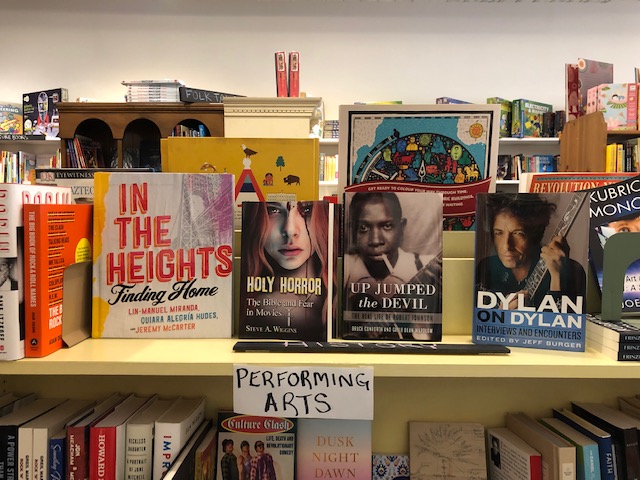
The Book and Puppet Company, a small independent bookstore in Easton, Pennsylvania is unique.  Other bookstores may have puppet shows and other forms of theater.  Others may have the obviously tasteful and intelligent selection of books.  Others offer items other than books.  Book and Puppet is unique in at least three ways.  First, and most (I promise) self-serving, it is the only bookstore in the world with Holy Horror on its shelves.  I know how it got there, which ties into the second unique feature—the Easton Book Festival.  The Easton Book Festival is the brainchild of the third unique element, the store’s owners—Andrew Laties and Rebecca Migdal.  

So let’s piece this all together.  The Easton Book Festival launched in 2019.  Being local to the event, I volunteered to present because Holy Horror had missed Halloween in 2018 when it came out, and it was still technically a front list book.  As with any event that wishes to grow, the Festival was extremely inclusive.  Despite its price point Andy had ordered copies to have on hand to sell.  He assigned me to a panel discussion and even gave me a time slot to talk about the book.  The event was one of the highlights of my true calling—being a writer of books.  Weathering the Psalms was less expensive but more technical.  Holy Horror is for a general readership, although the publisher sees it differently and prices it accordingly.  You have to start somewhere.  In any case,  it was part of a book festival that contains memories that still make me glow.

his year, like many events, the Easton Book Festival (October 16-24) is going hybrid.  As we start to regather, is there any better place to coalesce than around books?  Wouldn’t the world be a better place if that were true?  A recent visit to the shop led to a conversation that seems likely to result in a chance to plug Nightmares with the Bible, the more expensive sequel to Holy Horror.  Well into the writing of my next book, my attention has momentarily turned from demons to more human horrors.  Nevertheless, books are what my lifelong goal has always been.  I thought that I would be writing as a professor, but even editors can make some modest contributions, I hope.  Regardless, since much of the Festival will be online, it’s accessible from the comfort of your chair.  Why not tune in?   In any case, supporting your local bookstore will do nothing but improve society.


Bookshop

I still remember when I first heard of Amazon.  It was getting on in my years at Nashotah House and one of my students, a former university faculty member that I’d know prior to his decision to attend seminary, mentioned that’s where he ordered books.  I used the internet with caution in those days and I still ordered books by mail directly from publishers.  My library grew slowly back then, in part because faculty pay wasn’t exactly competitive.  Amazon quickly grew to the point that it became a household word, and, like Google, became an internet giant.  Publishers have felt the pressure from Amazon’s bargaining power and, arguably, its market dominance led to the downfall of Borders.  Despite my love of independent bookshops, I do miss Borders still.

I don’t have a similar, singular memory about Bookshop.org.  It may very well be because I found out about it online and studies have shown that online learning is less effective than the old fashioned way.  We put up with it because it’s convenient and we can cram more stuff in that way.  It’s all about getting more.  In any case, I do recall that I was impressed with what Bookshop was doing.  At a recent seminar I learned it was even better than I’d previously heard.  The organization supports independent bookstores so that when things become more normal again they’ll still be there.  The book industry is a rather strange one, and it operates a little differently than many others.  Places like Bookshop really do help when one vendor becomes too dominant.

Reading widely is a form of education, and the key, it seems to me, is to get books people find interesting to them.  I stopped by a local independent on a recent Saturday to find it quite full.  The weather was good, of course, and lots of people were out and about.  Still, nothing is quite as encouraging as finding a bookstore doing good business.  When that happens it’s clear society is improving itself.  I’m trying to make a habit of stopping by Bookshop before the default of ordering on Amazon.  Amazon clearly has the logistics of delivery down to a science, but the world is a less rich place for not having physical bookstores in it.  Making one’s name synonymous with the product on offer is a sign of success, at least on the business side.  Balance, however, is important too.  And that’s where the Bookshop story has to fit.


Is It Thursday?

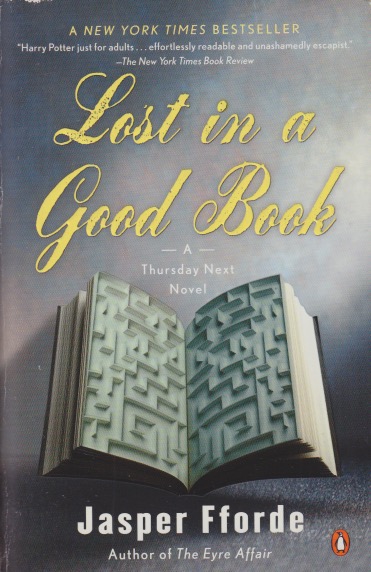
Jasper Fforde is an author I discovered because of a friend’s recommendation.  One of the more literate of fiction writers, he is clever and funny, but also difficult to find in many bookstores.  (Believe it or not, some of us prefer to shop in actual bookstores.)  I tend to pick his books up when I find them, whether used or new, and wait until I have time to indulge in a good book.  Well, I seldom have time to indulge, so I decided to go ahead and read Lost in a Good Book.  Now, this involves some mental gymnastics on my part.  Part of Fforde’s Thursday Next series, this is actually the second book after The Eyre Affair—not his first book that I read, but the first of this series I had.

I tend to find used copies of Fforde in certain used bookstores, and so my collection has grown through the years.  I’ve read four of the first seven novels in this series, but in this order: one, seven, six, and two.  Each is understandable on its own, but it occurs to me after finishing the second in the series that things might make better sense if read in order.  The good news is that the next one I have to find should fall in order after this one. Unless it’s one of the others.  That’s the nature of finding things in secondhand stores.  It’s not that I object to buying books new—do you even know me at all?—but that I have some authors that I can find in used stores from time to time and I read them when I do.  Fforde is one of them.

How I find the books probably impacts how I engage with them.  Perhaps because they’re funny I don’t consider the implications too seriously if things don’t always make sense.  I can see myself, if I ever get more time, coming back to the series.  Then I’ll do so in order.  The real pity is that I don’t have time to read all the books by authors I enjoy.  Nor all the money.  Libraries in small towns tend to have collections that reflect local tastes, and besides, I like to come back to my books at my own time, without having to wait for inter-library loan and somebody else finishing it up before I can get ahold of it.  All of which is to say I enjoyed Lost in a Good Book very much.  Thursday Next is a compelling character, and it’s always a pleasure to read an author who, like you, clearly reads a lot of classics.


Bookstore Odyssey

Work isn’t the best place to express yourself.  Once a marketer asked for input from everyone concerning their favorite independent bookshop.  Well, I might’ve gone a bit overboard, admittedly.  I listed several, each with their attributes.  I was living in New Jersey at the time so The Bookworm in Bernardsville and The Labyrinth in Princeton featured large.  But so did Farley’s in New Hope.  And the Clinton Book Shop in, well,  Clinton.  Then my mind roved to the unfortunately deceased River Front Books in Binghamton.  Then back to Wisconsin where we lived within walking distance from Books and Company.  Then to Illinois before that, where Pages for All Ages was a hangout.  We’re spoiled here in the Lehigh Valley with the Moravian Book Shop in Bethlehem,  Book and Puppet in Easton, Let’s Play books in Emmaus, and plenty of used bookstores about.  And the Montclair Bookshop back in New Jersey—okay, I told you I went a bit overboard.

Ithaca, New York, is the very definition of a college town.  Home to Cornell University and Ithaca College, it has a sizable student population.  It once boasted seventeen bookstores.  By the time we’d started visiting they were down to one indie new book store (Buffalo Street Books) and two used bookstores.  Since then one of the used stores has closed.  Like a phoenix, however, a new indie has opened: Odyssey.  On a recent trip to Ithaca we stopped in.  During a pandemic I feel compelled to make trips short, but there was a lot to see there.  Like most indies, it’s small.  As Andrew Laties notes in Rebel Bookseller, such shops thrive by becoming part of the community, and stocking books the community will buy.

Our visit, I suspect, proves his point.  If you set up shop in a university town you can stock intelligent books and make a living at it.  Despite the weather and the virus we weren’t the only customers in the store.  And we didn’t leave empty-handed.  The independent bookstore is a symbol of hope.  Books are not clutter.  Literacy is not dead!  As much as our beloved internet tries to tell us the future is digital, I like to open the door and step outside once in a while.  And leave my phone behind.  During this pandemic I’ve gone to four kinds of stores only: grocery, drug/necessity, hardware, and book stores.  The pandemic has been a shot in the arm for trade books—bored with staring at screens all day, people are starting to read actual books again.  I’m not naive enough to think it will last beyond Covid-19, but I just remembered Watchung Booksellers in Montclair and the Town Book Store in Westfield…


Open a Book

With all the talk of premature “reopening” one development does seem to bring cheery news.  Germany and Italy, it is reported, are considering experimenting with opening bookstores.  Bookstores, at least in the United States, tend not to be crowded except around the winter holidays.  More importantly, they are places to go to find printed knowledge—not the internet knowledge that shifts by the second.  This cheers me because it shows that people still trust books.  With all the talk of going digital, which is okay, we sometimes forget that the human experience of reading has, for the last several centuries, been book based.  I’m as guilty as the next guy for looking trivial stuff up on the internet.  I always feel uncertain, however, if I don’t check it against a book.

Nielsen, the people who used to bring you television ratings, also track books at point of sales.  One of their findings is that books have remained solid sellers throughout the pandemic.  Granted, a lot of them are children’s books—it’s one way to entertain the stay-at-home kids—but several categories have fared well.  Books on staying in shape, and survival, and how to do things we used to know how to do (planting a garden, or making bread) have boomed.  I suspect people have felt some comfort in reading.  Books are reassuring.  They’re a sign of normalcy.  Having said all that, I’m not sure I’m ready to go back into a physical bookstore just yet.  Infection rates have slowed down around here, but they’re still high.  And other people who miss bookstores as much as I do might form a crowd.

Bookshop.org has arisen to give back to independent bookstores.  Yes, the prices aren’t what you’ll find on Amazon, and yes, you’ll pay for shipping, but they support your local indies.  This doesn’t seem to be a bad idea during a crisis.  One of the more charming aspects of the Lehigh Valley is the number of bookstores in the area.  I am looking forward to an “all clear” when we can emerge like post-apocalyptic survivors and stand blinking in the sun.  In my vision of that day, there will be birds singing and trees leafed out.  The air will be clean.  We’ll stare at our neighbors, assured that if we accidentally brush against them, or stand too close in line, we won’t do so at the risk of exposure.  I’ll stand there for some time acclimating to the new reality.  And then I’ll head for a bookstore.


Better Places

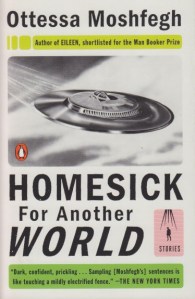
I have to confess that I’d never heard of Ottessa Moshfegh before.  Shame on me, I know.  As a wannabe writer, I feel compelled to know other writers’ names.  Hang in literary circles.  Etc.  The good news is, however, that I found Homesick for Another World in an indie bookstore.  I’d gone in for something else that they didn’t have, but I don’t like walking out with nothing, especially when it’s a small store.  Besides, I trust the taste of most independent store owners. 

I can’t remember the last time I read a book of short stories all the way through.  As with most writers some work appeals to you more than others.  In my mind the first and last stories stick the firmest.  The latter, “A Better Place,” is haunting, almost Shirley Jacksonesque.  Others make you uncomfortable in your own skin.  This is a rare talent.

Finding a writer who, using simple words and expressions, takes you to another place is a rare gift.  The short story (the only kind of fiction I’ve actually published) is a versatile and engaging form of literature.  Books collecting them are often good for picking up when you have a little time and putting down for a while again.  I felt compelled to go through this whole work, being drawn into the weird and somehow familiar worlds of characters who seem to have no purpose, no goals.  It’s almost as refreshing as Kafka or Camus.  To be a writer who requires only one name to evoke a genre must be glorious.  These stories are strange without recourse to the supernatural, and they defy easy genre assignment.  (This makes publishers crazy.)

There’s an earnestness and a longing in this collection.  A kind of nihilistic spiritualism.  A wanting with no particular object in mind.  I read a lot of fiction, some of it very good.  The kind that leaves you a little stunned and questioning what reality is.  This is that kind of book.  Had I not gone into that indie shop that Saturday morning I never would have found it.  I certainly didn’t know to look for Ottessa Moshfegh.  Here again I’m reminded of the value of the bookstore experience.  The ability to browse without clicking or scrolling feels like a luxury to me now.  I may have to pay more than Amazon’s competitive pricing, but then this is like a finder’s fee for being in the real world.  Even if the book makes you question that reality when you’re done.