Kind Animals

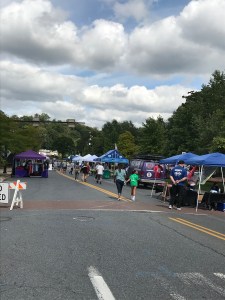
How many people could it be?  That’s the question a pandemic naturally raises.  Last weekend my wife and I ventured to a Vegan Festival in Easton.  Since we vegans are a rare bunch anyway, and since we tend to be socially conscious, there wasn’t likely to be any dangerous behavior.  That, and how many people would actually show up for what is often considered a somewhat wobbly crowd who don’t like to “rise, kill, and eat.”  It felt like a safe place to be with socially distanced kindred spirits.  Everyone was wearing masks and there was no Trump bravado going on.  For a moment it reminded me of the kind of accepting country the United States used to be.
Veganism, you see, isn’t just about not eating and not exploiting animals.  It’s about honoring the wonder of life in all creatures.  I realize some of the issues—believe me, I try to think things through thoroughly.  It’s all about consciousness.  We’re still a considerable distance from being able to define it, and some people, like philosopher Thomas Nagel, believe it might go all the way down and through the plant kingdom as well.  Consciousness is one of the great mysteries of science.  We hardly know what it is, and how are we to know where it stops?  If we assume other people are conscious (with a few notable exceptions) based on their words and actions, might we not suppose at least some of the “higher” animals are as well?  Or are you just being a fool when you talk to your dog?

You see how this naturally suggests consciousness may lessen by matters of degree, but then we learn that even some insects know how to count and can understand a concept of zero (beyond most Republicans).  We like to put insects down at the bottom because we’re bigger and therefore more important.  Veganism suggests that we stop and think about these things.  We don’t necessarily take everything for granted.  It is clear that the largest polluter and environmental problem is industrial animal farming.  Rainforests are cleared for grazing land.  Profits from big agra are staggering.  Wandering through the stalls, keeping our distance from others who perhaps think too much, we partook of the counterculture in our own quiet way.  The street festival was small this year, but I do have hopes that it might grow, along with some serious thinking about the consequences of our actions.  

Veg Out

It came to me vividly when I heard a speaker self-deferentially say he was crazy.  This was, I suspect, a way of defusing the fact that when vegans speak others often think they’re being judgmental or preachy.  I’m pretty sure this speaker wasn’t, and I try my best not to be.  It can be difficult when you’re passionate about something.  At the event, which included several people in age brackets more advanced than even mine, the question of “why” was predictably raised.  Apart from the rampant cruelty of industrial farming—some states even have laws preventing people from knowing what actually goes on in such places—there are other considerations.  One of them involves Greta Thunberg, Time magazine’s person of the year.

Global warming is no joke, no matter how much the Republican Church laughs it off.  Greta Thunberg has become the face of a generation with a conscience, but one fact few wish to know is that industrial farming is by far the largest environmental threat to our planet.  The amount of pollution it causes is staggering.  The rain forests are being cleared for grazing land because people will buy beef.  The largest methane emissions come from farms, not factories.  Our lifestyle of eating animals on an industrial scale is one of the many hidden costs to the modern way of living.  Or of dying.   There are doubters, to be sure.  It’s pretty clear, however, that the agriculture business is massive and it is just as powerful as the other great offender—the petroleum industry.

Making facts known isn’t being judgmental.  People’s eating choices are up to them.  I’ve only been a vegan for about two years now and I sometimes can’t comply with my own ethical standards when I go out to eat.  Or when other people give food.  Many places have no concept of dining without animal products.  I’m not trying to make everyone else accept my standards; I have beliefs about animals that are based both on personal experience and lots of reading about faunal consciousness.  I fully accept that many others don’t agree.  What I do hope, however, is that people like the speaker I recently heard will not have to jokingly call themselves crazy because they’re vegan.  The narrative must change.  We must be willing to look at the way we live on this planet, and accept the fact that just because major polluting industries hide behind large, brown cow eyes doesn’t mean we shouldn’t question what they feed us.  We need to look at our plates and count the cost.


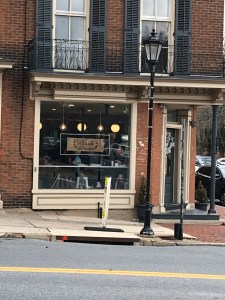
Why not try Veg Out, Bethlehem’s new vegan restaurant, if you’re in the Valley?