
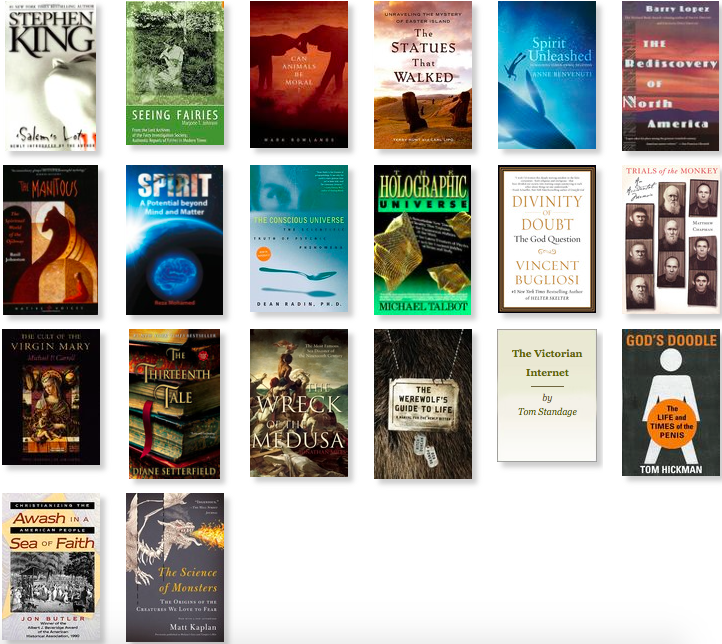
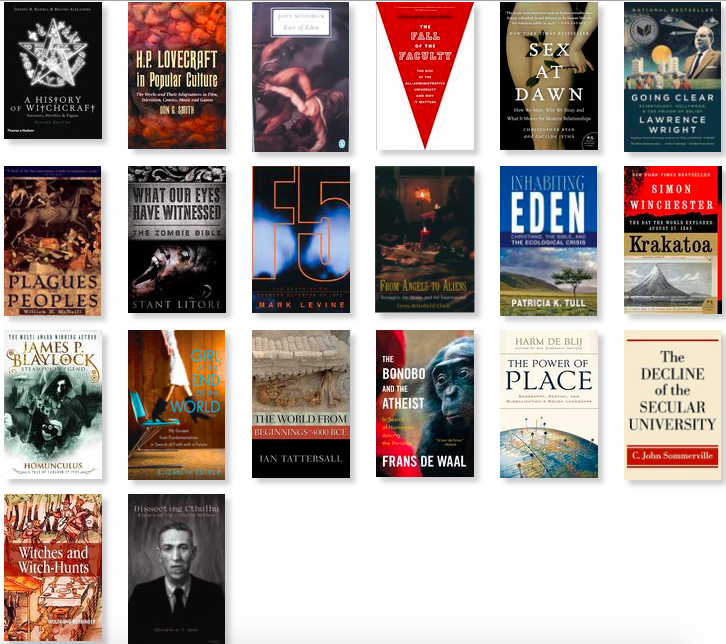
It’s the end of another year of reading. Since Goodreads keeps track of my booklist, I see by their accounting I finished 95 books in 2014. The final day of the year seems an appropriate time to reflect on those that made the greatest impact on me. Starting at the beginning, Jacques Berlinerblau’s The Secular Bible immediately struck me as a book of high importance. In an era when religion is constantly considered irrelevant, Berlinerblau gives this trite brushoff the lie. Likewise Jeff Kripal and Sudhir Kakar’s Seriously Strange opens questions that must be addressed if we ever hope to find the truth. Frans de Waal’s The Bonobo and the Atheist and Christopher Ryan and Cacilda Jethá’s Sex at Dawn both raise, in fundamental ways, the question of what it means to be human. Benjamin Ginsberg’s The Fall of the Faculty is essential to understanding the current crisis in higher education. Edward Ingebretsen’s Maps of Heaven, Maps of Hell is a roadmap through the genre of horror and its importance to society. The Miracle Detective by Randall Sullivan again highlights the question of what counts as reality. Nonbeliever Nation by David Niose shows the importance of separating politics from religion. Dean Radin’s The Conscious Universe brings science to bear on unanswered questions.
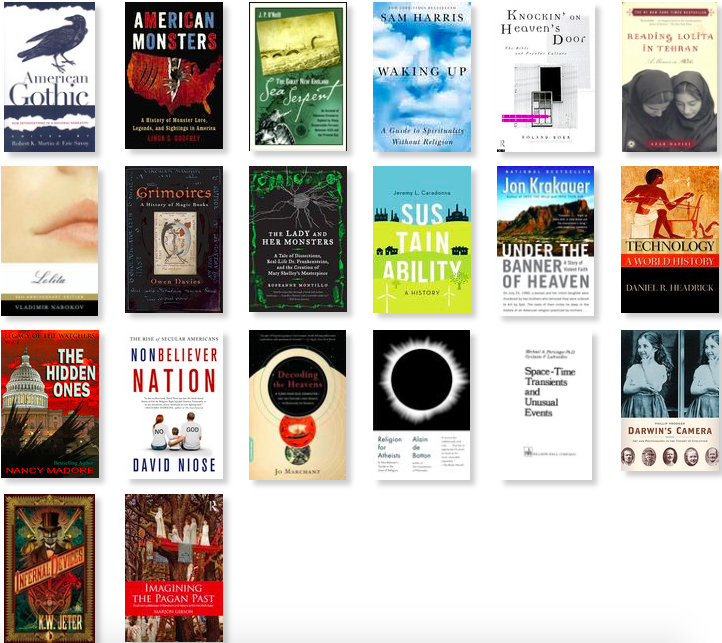
Books specifically concerning religion also deserve some highlighting. Karen McCarthy Brown’s Moma Lola is crucial for comprehending, in a sympathetic way, voudun in a major city. Patricia Tull’s Inhabiting Eden makes a clarion call for religions to pay attention to the needs of the environment. Going Clear by Lawrence Wright is a good introduction to Scientology, while Jon Krakauer’s Under the Banner of Heaven serves a similar function in regards to Mormonism. Sam Harris’s Waking Up shows the need even atheists have for spirituality, complicating the sharp divide we are offered most of the time. Religion for Atheists, by Alain de Botton, also demonstrates the continuing usefulness of religion in a secular age. Vincent Bugliosi’s Divinity of Doubt calls both theists and atheists to task. Spirit Unleashed by Anne Benvenuti allows animals to have souls.
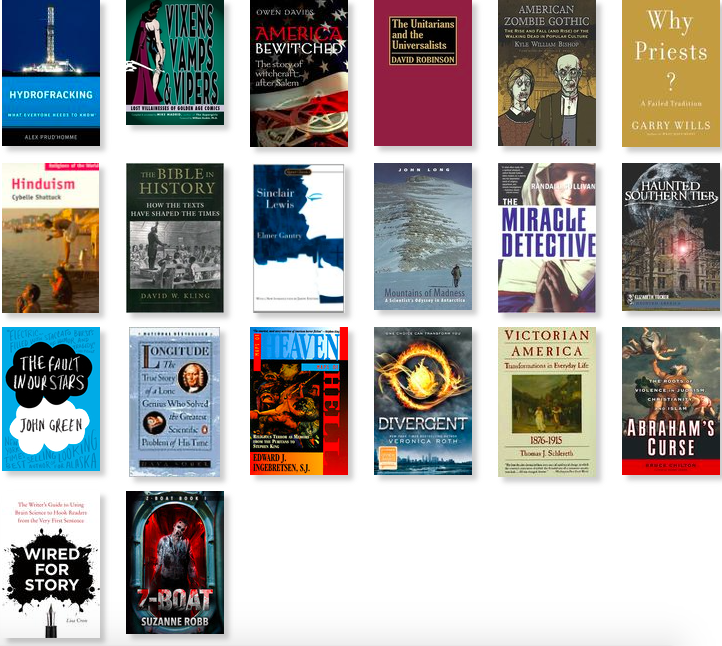
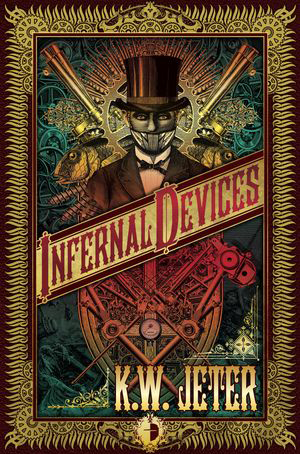
Fiction always makes a part of each year’s reading as well. This year found me reading several ponderous tomes, but I very much enjoyed the lighter fare by Ransom Riggs, in Hollow City. James P. Blaylock’s Homunculus and K. W. Jeter’s Infernal Devices slaked my steampunk thirst temporarily. John Green’s The Fault in Our Stars and Vladimir Nabokov’s Lolita were both difficult to read as a father, but important literature nevertheless. All of these books and more have individual posts dedicated to them on this blog. I always feel compelled to make clear that I find the books I read, whether highlighted here or not, one of the most rewarding aspects of my year. The long daily commute I normally endure would be torture without my books. Each year, each day I’m thankful for those who write them, and I look forward to an equally stimulating 2015 spent with my face buried in books.
 Steve A. Wiggins