Doing Without

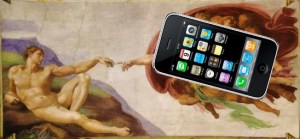
I’m a creature of habit.  Although I’m no internet junkie (I still read books made of paper), I’ve come to rely on it for how I start my day.  I get up early and do my writing and reading before work.  I generally check my email first thing, and that’s where something went wrong.  No internet.  We’ve been going through one of those popular heat waves, and a band of thunderstorms (tried to check on their progress so I could see if it’s okay to open the windows, but wait—I need the internet to do that) had rolled through three hours ago, at about midnight.  Maybe they’d knocked out power?  The phone was out too so I had to call our provider on my cell.  The robovoice cheerily told me there was a service outage and that for updates I could check their website.  Hmmm.

I can read and write without the internet.  I’m on Facebook for, literally, less than two minutes a day.  I stop long enough to post my blog entry and check my notices.  I hit what used to be Twitter a few times a day, but since people tend to communicate (if they do) via email, that’s how the day begins.  This morning I had no internet and I wondered how tech giants would live without it.  I’m no fan of AI.  I use technology and I believe it has many good points, but mistaking it for human—or thinking that human brains are biological computers—flies in the face of all the evidence.  Our brains evolved to help our biological bodies survive.  And more.  The older I get the more I’m certain that there’s a soul tucked in there somewhere too.  Call it a mind, a psyche, a spirit, a personality, or consciousness itself, it’s there.  And it’s not a computer.

Our brains rely on emotion as well as rationality.  How we feel affects our reality.  Our perspective can change a bad situation into a good one.  So I’m sitting here in my study, sweating since, well, heat wave.  It was storming just a few hours ago and I can’t check the radar to see if the system has cleared out or not.  What to do?  Open the windows.  I’ll feel better at any rate.  And in case the coffee hasn’t kicked in yet, “open the windows” is a metaphor as well as a literal act on my part.  And I don’t think AI gets metaphors.  At least not without being told directly.  And they call it “intelligence.”

Photo by Chris Barbalis on Unsplash

Fear of Big Books

I have to get over my fear of big books (I can’t find an official name for this and so I’ll coin machrysbibliophobia—and why did my autocorrect replace this with machrysbibliophobmia when there’s no such word?  It’s a scary world where my fears go unnamed—go, aporripsophobia!)  I’ve read many large novels with payoff (several by Stephen King and Neal Stephenson) and plenty of nonfiction from which I’ve learned a ton (perhaps literally).  But still, when a book I really want to read is big, I tremble.  I try to decide how to justify the time.  Now, I know I don’t have to justify time reading—that’s a constant activity.  I think it’s more a question of caesura, places to stop and perhaps claim credit for work done.  I’m not a fan of multiple volumes since that drives prices up.  Maybe just say it a bit more succinctly?

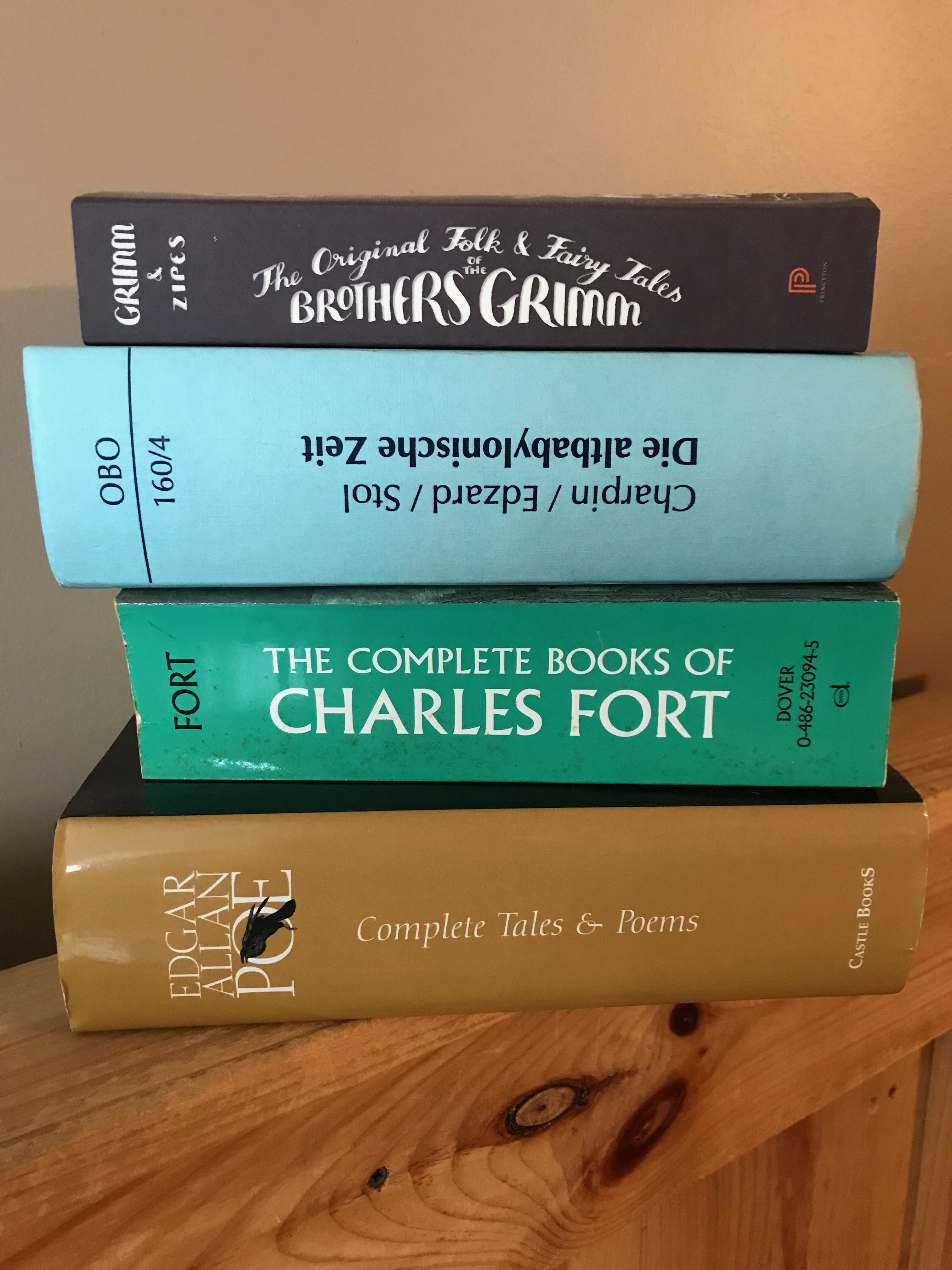
In my case—and I can only speak for myself—it’s all about a sense of accomplishment.  The distinct, discrete book that I’ve jammed into my gray matter along with its companions.  Some of us are driven by the shot of joy that accompanies completion.  I have a few compendia of authors/genres I really like.  I dip into them but never quite seem to have the time to finish them.  You see, recently watching the X-Files got me thinking about Charles Forte.  I have a compendium of his four books and I read Book of the Damned right through.  But I’ve got three more to go.  How are you supposed to count that on Goodreads, without its own ISBN?  Or the collected fiction and poetry of Poe.  It’s nice to have it all in one place, but will I ever read it cover-to-cover?  I tried once, really I did.

Scary books

As I write this I just started a big book.  It’s on a topic I really find fascinating but I’d been putting it off for some time because of my machrysbibliophobia.  I’ve been entrenched from before page 1.  I know it’s going to take me quite a long time to finish it—I have a job that takes its pound of flesh daily, and even when I do get a day off, well, mowing season is here.  And the porch needs painting again.  Maybe if non-Catholic monasteries were a thing I’d have time to devote to the reading I really must get done before my time’s up.  I like big books, but I’m also afraid of their ramifications.  Enough so even to name my fear.


A Year of Hope

The older I get the more I appreciate New Year’s Day as a holiday.  Part of the reason is that, although I saw no hint of religion in it as a child, I have come to realize that holidays are for reflecting.  As a self-critical individual, I don’t wait for any date to make resolutions, preferring to do that in real time as soon as I learn about my bad behavior.  Still, although it’s a somewhat artificial marker, January 1 is a time of hope.  It seems that since 2016 years have been something of a slump.  Trump certainly has something to do with it, but Covid has become a monster in its own right and it’s hard to know when we might be able to get back to feeling comfortable in large gatherings of people.  Even as an introvert I miss that from time to time.  Still, optimism comes out with the start of a new year.  Who doesn’t like new things?

Technology has made us hyper-aware of bad things happening elsewhere.  This evolution of a hive mind has caught us unaware, it seems.  We do have a desire to improve (with some exceptions, such as politicians only in it for themselves) and that focus makes our next steps optimistic.  What greater hope can there be that an entire year stretching out in front of us, yet to be written?  There’s the old saw about a blank sheet being a source of fear, but why not do our best to write our own futures on it?  Put our good intentions into the mix to try to balance out the negativity that some others seem intent on dragging the rest of us through.  New Year’s can become almost religious in that way.  We consciously reject the bad that has grown on us throughout the previous twelve months.  We can do better.  We can be smarter.  We only need to believe.

I know that I keep hoping every year that HR will see the wisdom of allocating holidays.  We work more efficiently now, and people smarter than the rest of us suggest that we should not be stressing ourselves so much over things like work.  My own outlook is that days given off work for reflection are increasingly important.  Capitalism with its worship of mammon is, hopefully, entering its late stages.  I can see a future that’s better than what we’ve managed so far.  Let’s hope the wisdom exists to make 2024 a year of avoiding disaster.  A year of hope.


The Gift

Each day, each hour is a gift.  With my mother’s passing two months ago, I’ve been struck by the sheer number of colleagues that have died this year.  Not all of them older than me.  I wrote some months back about Michael S. Heiser, a blogging buddy from days past.  An email about a potential author just yesterday sent me back to the Society of Biblical Literature necrology.  This author had died unexpectedly the day before.  Glancing over the top of the list, I saw that three people with whom I’d worked died in November.  This was quite a shock since two of them were younger than me and the other not much older.  The thing about professors is that you kind of expect them to grow old.  To be old.  Life is a gift, and it’s sometimes easy to forget that.

Both tenacious and tenuous, life is a mystery.  Perhaps it’s perverse, but this makes Shirley Jackson’s “The Lottery” seem like a metaphor.  In fact, those of us who read and watch horror generally do so with a purpose, consciously or not.  It helps us face difficult things.  Five colleagues in one year sounds like a lot.  Someone in my family, younger than me, had six funerals to attend this year.  Life can feel difficult at such times.  Horror can be a coping mechanism.  At least for some of us.  It can be profoundly hopeful.  The meaning of life can be elusive, which is why, the existentialists conclude, we must make our own.  Existence precedes essence, as they say.

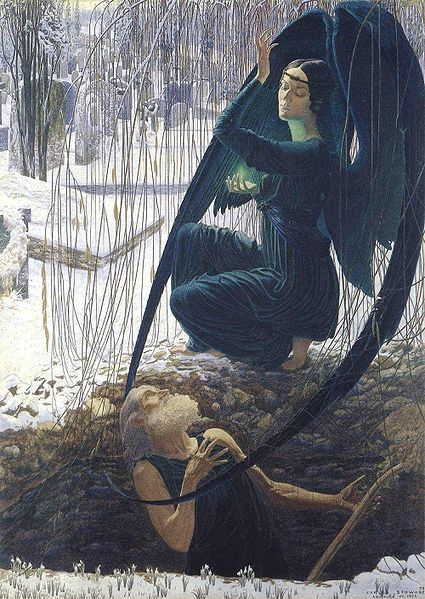
Carlos Schwabe, Death of the Undertaker; Wikimedia Commons

Other than profession, one of the few things these five fallen colleagues had in common was my perspective on them.  I don’t think they knew each other.  Had I not been an editor I likely wouldn’t have known three of them at all.  We live in a web of interconnection.  And I don’t mean the world-wide web (does anyone even use that term any more?).  Lives are gifts and gifts cross paths with other gifts.  Such information, all at once, can be difficult to process.  It makes me wonder why we allow wars.  Why we don’t think of consequences before we vote autocrats to power.  Instead, if we focus on that ephemeral gift we have, and how we might share it with others, appreciation rather than hatred grows.  To this lonely existentialist who watches horror for meaning, that just makes sense.


Epistle Writer

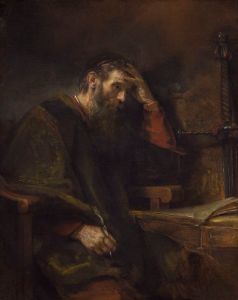
I’ve been reading about Paul.  You know, that Paul.  What has struck me from this reading is that if he weren’t in the Bible rational people would likely think Paul was writing nonsense.  Getting into the Good Book is a big score, for sure, but a close look at what this particular apostle wrote does raise eyebrows, as well as questions.  Over my editing years I’ve discovered quite a few methods of dealing with the saint from Tarsus, but what they really point to is the elephant in the room—we don’t really know what Paul was on about.  A few basic facts stand out: the Paul of Acts doesn’t match the Paul of the authentic letters, and although Paul never met Jesus he became the architect of much of Christianity.

There’s a reason that I focused my doctoral work on the Hebrew Bible rather than the New Testament.  Still, it remains fascinating to look closely at Paul’s claims.  At some points he sounds downright modern.  Like a Republican he declares that he can be tried by no human power.  Specially selected by God himself, he can’t be judged by the standards of normal people.  This is dangerous territory even for those who eventually end up in the Good Book, especially since it wasn’t written as an abstraction, but to a specific readership in a specific place dealing with specific issues.  Galatia wasn’t the same as Corinth.  The issues at Philippi weren’t the same as those in Rome.  Yet, being in Scripture makes all his musings equally inspired.

The more we learn about Scripture the more difficult it becomes.  Perceptions evolve over time, and we know nothing about how various books were selected.  There are no committee minutes.  We don’t even know the committee’s name or if it was ad hoc or standing.  With repeated and long-term use these books became Bible.  Take Paul’s letters—it’s virtually certain that we don’t have them all.  He makes reference to letters that we don’t have.  What might he have written therein?  Is part of divine revelation missing?  The discovery of other gospels and many contemporary religious texts to those that made the Bible cut raises questions that can only be resolved with the category “inspiration.”  Christianity isn’t unified enough to add any more books, although some sects do nevertheless.  Paul is very much like that—an example of not being subject to human trial.  For a founder of a major religion we know surprisingly little about him.


Refillable Ideas

Maybe I’m too slow of thumb, but this ought to be simple. For many years I kept a small slip of paper in my pocket, along with a pen. Eventually I upgraded the paper slips to Moleskine notebooks since they’re harder to lose and the covers mostly prevent the smudging of my ideas. When something strikes me I don’t reach for my phone—by the time I enter the passcode, select the app, and try to type with fat thumbs, the idea’s gone. Instead I pull out my Moleskine, battered and frayed by the final pages, and my pen. The problem is I’m still enough of a working-class guy to lose pens. If a cord comes disconnected beneath my desk, I’m down there on my back fixing it rather than calling IT. Pens fall out of my shirt pocket on planes, trains, and automobiles.

A lost pen shouldn’t be a problem, but finding a pen that writes right away is. Like most people I have scores of throw-away plastic pens handed out by vendors with their company name on them. I prefer a good quality pen—the kind a family member gives you for your birthday—but they hurt when you lose them. I finally settled on a happy medium. One of my kin gave me a heavy-weight, refillable pen that has a robust clasp so it doesn’t slip out of my pocket, down between the seats of public transit vehicles. Refills, however, are another story. Who would’ve thought that I’d spend my time reading reviews on Amazon just to find pen refills that write the moment inspiration strikes? Well, I do.

Unlike those who whip out their phones to write things down, I still pull out my notebook. Nothing is more frustrating that feeling an idea evaporate while waiting for the ink to flow. My most recent refill is on strike most of the time, while that cheap pen from the health fair at work never seems to have a problem until it runs out of ink and has to be tossed into the landfill. I wonder if the Bible would’ve ever been written had Moses to rely on the poor quality of pen refills available before the common era. Maybe he had less commuting time, although I’d say 40 years in the wilderness qualifies. His stone tablets may have been heavier than my Moleskine, but his chisel was sure and his words still adorn courthouse lawns everywhere. Perhaps I’m too modern after all.


Fundamental Fear

Something truly scary landed on my desk. Working for an organization that has many different departments, there’s no way to know everyone. So when something bible-ish arrives in the mail, it gets directed to me. Now, I don’t follow the afterlife of creepy religious people through prison, so it took a few minutes to remember who Warren Jeffs is. I knew I’d read about him but I couldn’t remember where. Then I remembered the Fundamentalist Church of Jesus Christ of Latter-Day Saints. Jeffs was once the head of this church before being put into prison for child sexual assault crimes. So why had he sent a copy of Jesus Christ Message to All Nations to my publishing house? It is already published, and it is rather modeled on the Bible, at least at a surface level. No letter, no instructions. Just a book that I felt I needed to wash my hands after touching.

IMG_2571

I’d not heard of this book before. The author is boldly listed as Jesus Christ. “President Warren S. Jeffs, Mouthpiece of God” it says, given credit for, I suppose, putting pen to paper. What’s to prevent me, I wondered, from claiming God wrote what I framed into words? It is far too easy a claim to make and the credulous follow where the bold lead. That’s the way human authority, unfortunately, often works. Someone with a surfeit of testosterone declares that he speaks with absolute authority—I think of angry atheists as well as televangelists here. Such sense of irrational conviction must feel god-like. I can only guess from the sidelines. And I wonder about those who wrote what are recognized as scriptures in other religions.

Did those who wrote the books of the Bible, for instance, ever feel that they were writing unquestioned truth? Might they not have been a bit more circumspect? Maybe they were writing in the heat of inspiration, but not with the confidence of claiming divinity. Somehow I doubt even that. Writing is a human activity. The creator of an entire universe shouldn’t need to use it. Still, religions are often built around written texts. Parts of the New Testament claim to come from Jesus of Nazareth, although he’s not the actual writer. I guess he must have been working on later works of which I’ve never heard. And I do wonder how the doctrine of the faulty vessel applies in cases like this. I know better than to ask a Fundamentalist of any stripe, because I already know the answer they would give.