Talking Sleepy Hollow

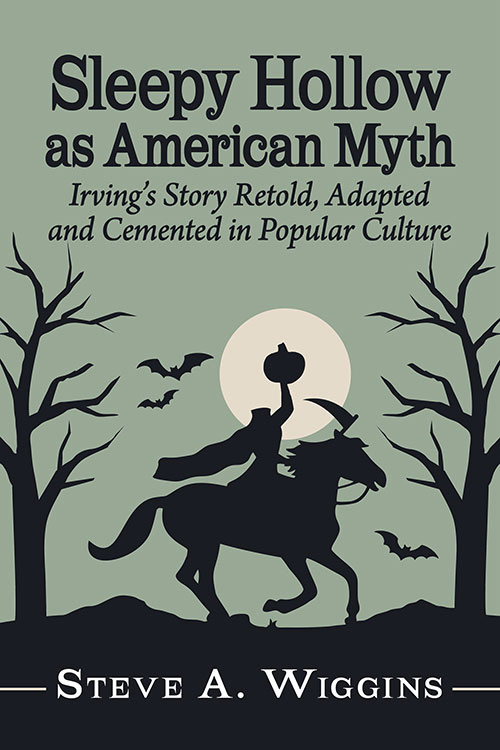
After writing a book comes talking about it.  I very aware that this blog has quite a limited reach, which is why I’m very grateful for friends who are willing to chat about my books.  John Morehead’s TheoFantastique is a blog I’ve known about, and appreciated, since I began this blog sixteen years ago.  John has always been very gracious and generous with his time and has interviewed me about each book since Holy Horror on.  Yesterday we had a chance to talk about Sleepy Hollow as American Myth.  The blog post with the recording is located here.  Please give it a watch if you have any interest.  To those of us not inclined to inflate opinions of ourselves, doing self-promotion feels awkward, and so it’s always good to have a friend willing to help us over the hurdle.  John has written and edited many books himself, and we’ve both published with McFarland. You might enjoy some time on his blog.
Writing a book on a subject may not automatically make you and expert, but it does give you a voice in the conversation.  Talking about a book helps you to think of aspects you might’ve missed or things that you really need other eyes to see.  Those fortunate enough to have academic posts sometimes have colleagues willing to read their nascent books and discuss them.  I never had colleagues who wanted to read what I was working on, but then, I was never really in a position where people paid much attention.  As a result, I work on my books alone.  This one had a peer reviewer when an agent took a temporary interest in it, and I received some feedback then, but otherwise it was me wondering what others might think of it once it was available.  The strange thing is, after writing a book you often feel like you could write another on the same subject, looking at different angles.

Since I’m trying to break into that rare sphere of getting a supplemental income from my books (free advice: academic writing really isn’t the way to do this), getting even a little buzz is immensely helpful.  I have contacted bookstore owners and museum shop holders in the Hudson Valley to tell them about my book.  I’m trying to arrange for a local book festival slot to talk about it.  But, of course, I have a 9-2-5 that doesn’t really make an allowance for time off to support your sideline job.  So I’m very grateful for John Morehead’s willingness to talk about my work.  If you’ve got some time, and interest, you can hear a bit more here.


Take the Tour

If you read my blog posts on Facebook, Twitter, or Goodreads (Hi, y’all!), you may not be aware of my actual website.  Now I have no kind of fame, no matter how modest, but the website does contain more than my blog posts.  I’ve been working on it lately to try to update the place a little.  There are separate pages for all my books, for example.  And links to the various interviews I’ve had, as well as links to my YouTube videos (thank you to my original 14 followers!).  If you know me personally you know that I’m not the self-promoting type.  I have a monster-sized inferiority complex (so it’s good that I don’t run for political office), and I’m a champion introvert.  I spend a lot of time by myself.  So why do I do all this web-based stuff?

Good question.  You see, I work in publishing and one of the things I hear constantly is marketing and publicity folks talking about an author’s platform (or lack thereof).  Believe it or not, my humble efforts here outstrip many authors—I do have a website and I tweet and book-face, no matter how infrequently.  In other words I do this to write. Call it being a modern writer.  The days are long gone when you wrote a manuscript and mailed it in and let the publisher do their thing.  To be a writer is to have to promote yourself, no matter how inferior or introverted you may feel or be.  If you’re a regular reader you know I miss the old way of doing things.

Photo by Rodion Kutsaiev on Unsplash

We learn lessons when we’re young.  Those lessons are difficult to unlearn.  I didn’t really know what it meant to be a writer—I grew up among laborers in a blue collar family—but I knew whatever my job might be it would involve writing.  As it turns out I’ve had more success (such as it is) in getting published as a nonfiction writer.  A great deal of that is due to learning how the system works—being in publishing helps—and figuring out how to place a book.  I wasn’t an English or even publishing major.  It didn’t seem to be rocket science back then, but it has become a more technological industry today.  Of course, time for doing this extra stuff is limited.  Indeed, if you work 925 you know that time to do anything outside of work is already rare enough.  If all of this looks like an amateur built it, it’s because that’s true.  The urge to write is, however, elemental.  Some of us are willing to work for words.


The Network

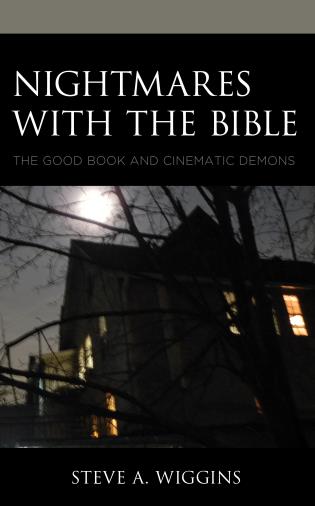
Although it’s not NBC, the New Books Network has quite a reach with academics.  That’s why I was glad they accepted my pitch for an interview about Nightmares with the Bible.  The interview is now live and can be heard here.  The experience of getting the interview made turned into quite a saga with my pitch going back to at least November, and acceptance coming early in January.  The actual interview was over a month ago and it was posted only yesterday.  I’m not naive enough to think it will boost the sales of a hundred-dollar book, but maybe a few more people will become aware of it.  Even in academia there are too many books published for all of them to get notice proportionate to the work that goes into writing them.

Some publishers are of the opinion that editors shouldn’t try to be authors.  Obviously I disagree on that particular point.  Author-editors share the ups and downs and know what it’s like to put in the work only to have a book disappear.  I haven’t received any royalties at all for Nightmares.  I have no idea how many copies have sold.  Many writers publishing into the teeth of a pandemic fall into the same category.  While trade books—including fiction—did remarkably well during the height of Covid-19, academic books languished.  Nightmares is, of course, its own kind of hybrid.  A monster, if you will.  Written for educated laity it’s packaged and priced for the academic monograph market.  That’s why I pitched it to NBN.  I’m glad to see the recording is now available.

Nobody writes this kind of book to get rich.  I’ve had friends ask me why I bother.  Believe me, that question occurs to me too.  Some of us have something to say but the auditorium’s empty.  The Bible’s at a low point outside a specific cross-section, and that cross-section generally doesn’t pay attention to horror.  Of course, that’s another reason I do this.  Bringing opposites together offers the world, even the staid academic world, something new.  Horror is at last being taken seriously by literary and cinematography scholars.  Some biblical scholars are realizing that apart from comforting words of love, and towering demands for justice, the Bible itself contains plenty of horror.  When unlike things mix, monsters are born.  I’m grateful to the NBN for taking a chance on my book.  If you’ve got some time, and the inclination, you can listen in here.


Not Really New

It’s called the New Books Network.  I have no idea what its stats are, but it is a place to get word out about your book that the academy has apparently overlooked.  I pitched Nightmares with the Bible to them some months ago and I recently had an interview about it.  I’ll keep you posted when it appears.  I suppose those who read this blog for the horror content sometimes think I may’ve forgotten about it.  The fact is I think of horror every day but there’s more to my psyche than just that.  This blog is a romp through part of what’s on my mind.  Sometimes it’s the quotidian horror of everyday.  At times it’s full of curiosity and wonder.  Sometimes I just trying to figure out how to work this thing.

So with the New Books Network.  I found out about it from an interview I heard with the guy who started it.  Funny—one interview leads to another.  He encouraged those listening to pitch their books.  I don’t have an institution to support mine, or students to have to buy a copy (and I’ve received zero royalties for it), so I figured what’ve I got to lose?  It was quite a nightmare (speaking of which) to arrange a time that worked for both interviewer and interviewee.  I think we rescheduled about half-a-dozen times, but then finally we both had a few free minutes together to chat.  Perhaps it’s a good thing I’ve been reading about the Devil.  

This was actually my third interview about this book.  Perhaps it’s a measure of how small the impact it’s had has been that I can recall each one so precisely.  You’ve got to start somewhere, so why not here?  The last question asked was about the next book.  I do hope I have a few more left in me.  I started writing early but publishing late.  Just because you write doesn’t mean people will read what you produce.  I find writing the most hopeful avocation ever.  Like a sower with his or her seeds, broadcasting them across the air, hoping they’ll land legible.  If there’s anything worth reading here there’s always the possibility it’ll be discovered someday.  That’s optimism with a glass half empty!  In any case, check out the New Books Network.  There are hundreds of books there to learn about.  And, I suspect, many authors who’d like the world to know what they’ve written.