
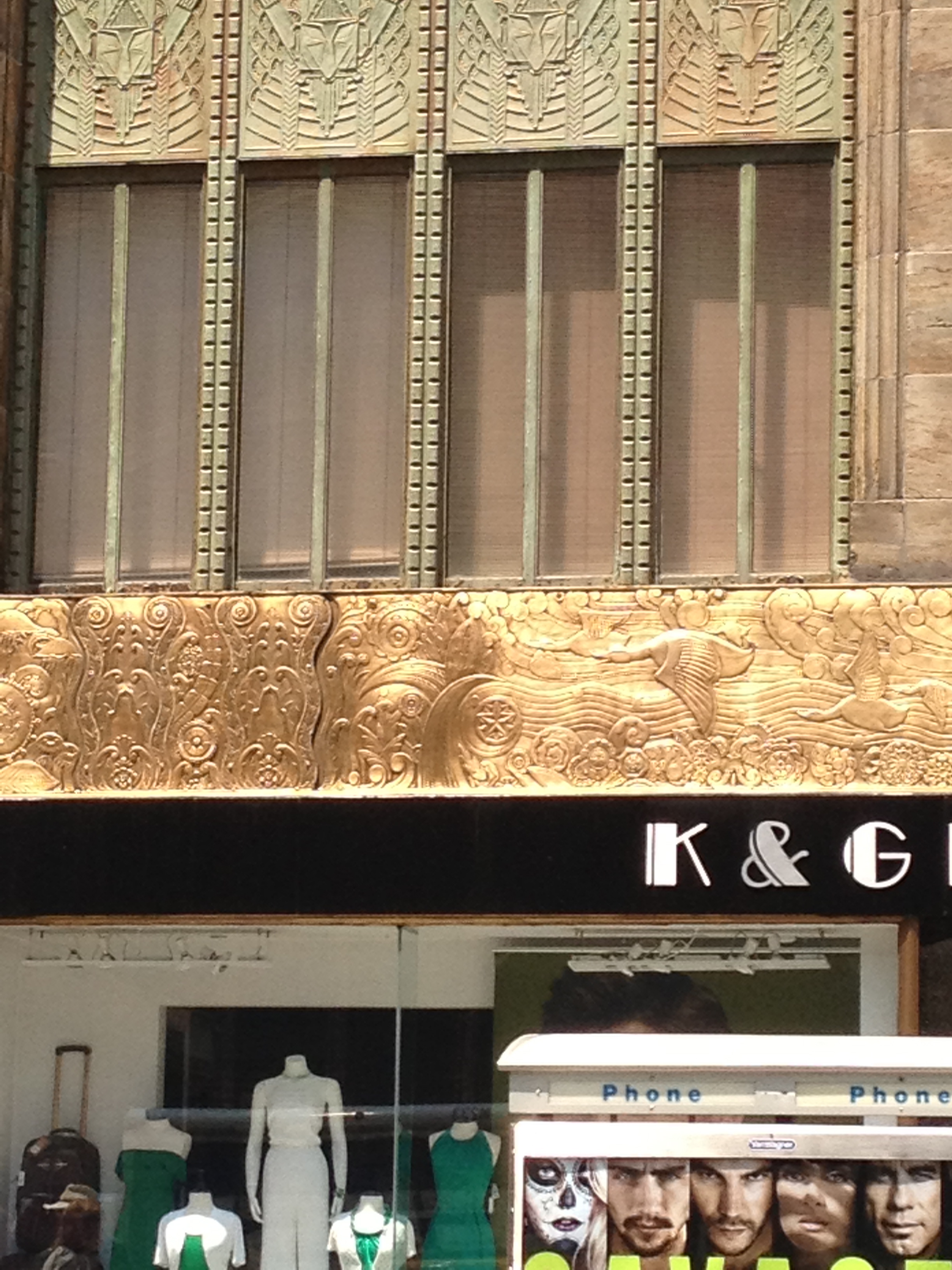
Across from Grand Central Terminal in Midtown Manhattan rises the Chanin Building. Named for Irving S. Chanin, the tower is no longer easily picked out among Manhattan’s dizzying skyline, but the building is a monument to the humanistic spirit that was beginning to flower in the 1920s between the harsh realities of the world wars. Outside the building, above the ground floor shops, runs a bronze frieze that still catches the breath of visitors who stop to stare for a moment or two. Interestingly, the frieze is a monument to evolution, showing the development of “lower” life forms among the water flourishing into birds and fish. Although prosperity gospelers would object to its inherent Darwinian message, they would appreciate a huge monument to the triumph of capitalism in Chanin’s dream, as much of Manhattan reflects.
Antipodes are a fact of geography and human understanding. It would seem that they are also a paradigm for those who “want it all.” Perhaps it is ironic in coming from a Disney movie, but I’ve always found Mary Poppins’ maxim apt: “enough is as good as a feast.” Indeed, leaving the table after eating more than I need I feel miserable and disgusted. There is only so much that people can have, and this is a matter of physics as well as biology. If God wanted us to be wealthy, why didn’t he make us that way? (Surely the God who promotes personal wealth must be male.) Evolution and capitalism could be a dangerous mix should we forget that evolution is not goal-oriented. Natural selection works by trial-and-error, only the trial isn’t planned or intelligent.
This dialectic reminds me of that old chestnut, Beneath the Planet of the Apes. Ursus, the gorilla warlord, gives a jingoistic speech concerning the Forbidden Zone. “It is therefore our holy duty to put our feet upon it, to enter it, to put the marks of our guns and our wheels and our flags upon it.” Of course, this second, lesser installment of the Planet of the Apes movies raises the entire specter of nuclear war to a disturbingly sacred level, but that’s a topic for another post. What I notice is the full circle of evolution here—not just human to ape, but human to capitalist ape. Apes that wish to own and control their entire world, including that region where, in the original movie, both ape and human fear to go. It should not surprise me to see talking apes in Manhattan, but then again, it might just be the bright sun reflecting off the bronze of Irving Chanin’s monument to economic growth.
 Steve A. Wiggins