Dirty Laundry

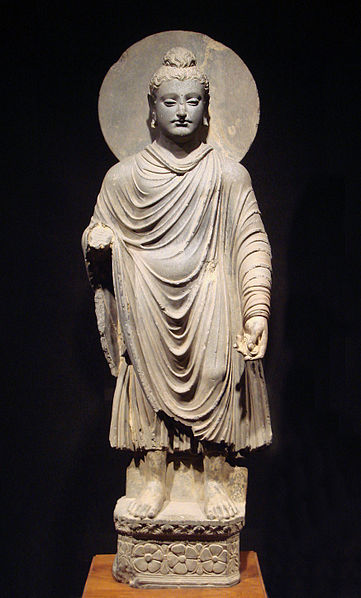
Wirathu may not be a household name, although Time magazine devoted an article to his teachings last week. The media has become fascinated with religiously motivated violence of late, although such violence is nothing new. Capitalizing on the fact that many of us in the western hemisphere see Buddhism as a religion of peace, Hannah Beech’s article, “The Face of Buddhist Terror,” reveals the growing conflict between some Buddhists and Muslims in Myanmar. The article took me back to my seminary days where, in a class in systematic theology, our professor was extolling the virtues of Buddhism as a religion of peace as opposed to Christianity with its history of warfare. Not denying that history, I raised my hand and asked how Christians then had come to know Jesus as the Prince of Peace. And Muslims, as any student of religion learns, also value peace. The ideals of most religions promote peace. The problem is that the practitioners of religions are humans.
Gandhara_Buddha_(tnm)

Like our chimpanzee cousins, we humans distrust those of other tribes. In one of the more disturbing aspects of chimpanzee research, encounters between especially a male isolated from his troop and another family group often end badly. Biology has programmed us to keep valued resources for ourselves. It’s as if nature knows there are limits to her bounty, and in order to survive and thrive, some will need to starve. Or be killed. Critics of religion—and there are many who are quite vocal—often overlook the aspect of religions that call for the reversal of our natural tendencies. Yes, I’m selfish. As a biological creature, I’m concerned that I get enough to eat, and have sufficient space. I want to stockpile money so that I may retire (unlikely to happen in reality), and spend my final years in peace and relative comfort. Yet, my religious upbringing has left the door open for others. What about those with even less than me? My empathy reaches out for them. Don’t they deserve what I deserve?

The problem is always at the friction point where belief systems rub passed each other like immense tectonic plates. The Buddhists of Myanmar say they just want to be left alone. The Muslims of Myanmar say they just want to survive. Their religions are pressure points building along fault lines. Still, I suspect that there are other sources of tension and violence in Myanmar, besides religion. I know there are in American society. In fact, most everyday violence, I suspect, has nothing to do with religion. Violence is part of human nature. Religion, at its best, urges us to fight this compelling biological message of self-preservation at any cost. Religious violence is a very real cause for concern, but to get to the root of the problem we must look past religion to biology. And sometimes—just sometimes—religion turns off the flame beneath the simmering pot.
Continental Religion

In the course of my duties as an editor of religious studies, I was pondering the origins of the world’s major religions. Now, agreeing on what the major religions are is an exercise fraught with political incorrectness. What does “major” mean, after all? In any case, when we count in terms of numbers, there are more Christians, at the moment, than any other single religion. They are followed by Muslims and Hindus. So far there is little upon which to disagree, at least according to self-professed affiliations. Buddhists are usually counted as the next largest group, followed by Sikhs. When religionists mention “the big five,” however, they usually mean Judaism, Christianity, Islam, Hinduism and Buddhism. There are likely far more followers of traditional Chinese folk religion, perhaps mixed with Confucianism and Taoism, than most accountings record—such beliefs aren’t neatly categorized. Jains make up a sizable population, and Shinto is often classed in with all those religions of the far east. Many of the more modern religions, such as Mormonism and Jehovah’s Witnesses, sprang from Christianity, and so can safely be classed as a form of that faith.

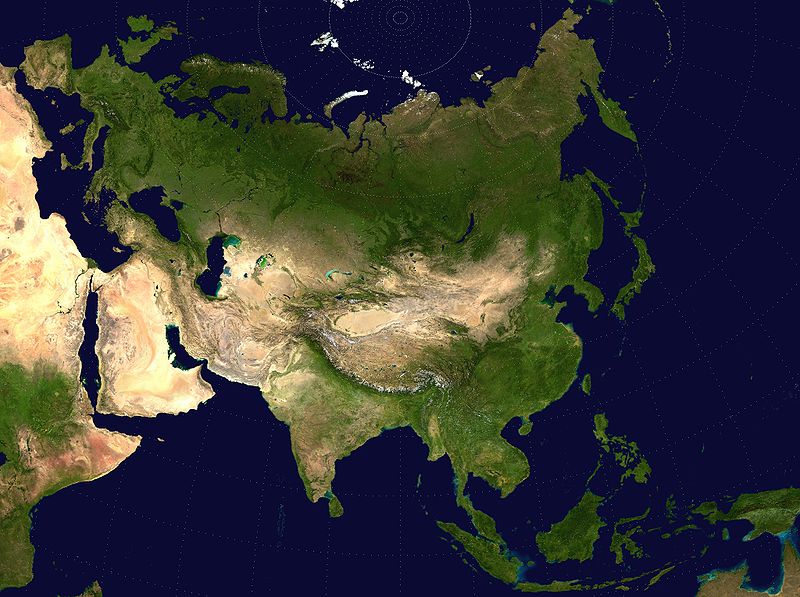
What occurred to me that day was that all the major religions of the present world began in Asia. Judaism and Christianity, with all their numerous progeny, started in Israel or Palestine. Islam, as we all know, began in Arabia. Hinduism, Buddhism, Sikhism, and Jainism all have their origins in India, the big winner for the seed-bed of religions. Traditional Chinese religions and Shinto trace themselves to the far east. Yes, there are indigenous religions throughout the world. Native American and African religions are not to be discounted, yet they never quite attain the level of public awareness to be qualified as “major” religions. In this spiritual accounting, “major” has nothing to do with importance. For the religions with the largest followings we must turn our eyes to the one-stop continent, Asia.

Where major religions begin

Where major religions begin

Considering this, the obvious question is why. Why Asia? Civilization itself began in Asia, and one of the marks of a civilized society, at least until the day of the New Atheists, has been religion. Religion may be abused, as might any human innovation, but it has also been a harbinger of a more civil world. Not only fear of the divine, but also a sense of gratitude toward whatever forces might be greater than humanity, allowing us to survive for another season, or through another storm. Even in the world of science, religion has been a motivator. Gregor Mendel, the scientist who gave us genetics, was a monk experimenting in a monastery. Sir Isaac Newton was an occultist. Francis Collins is an evangelical Christian. Religion is at least as old as civilization. Its forms may be morphing, but, I suspect something our Asian forebears knew: religion will never truly go away.


The Four “R”s

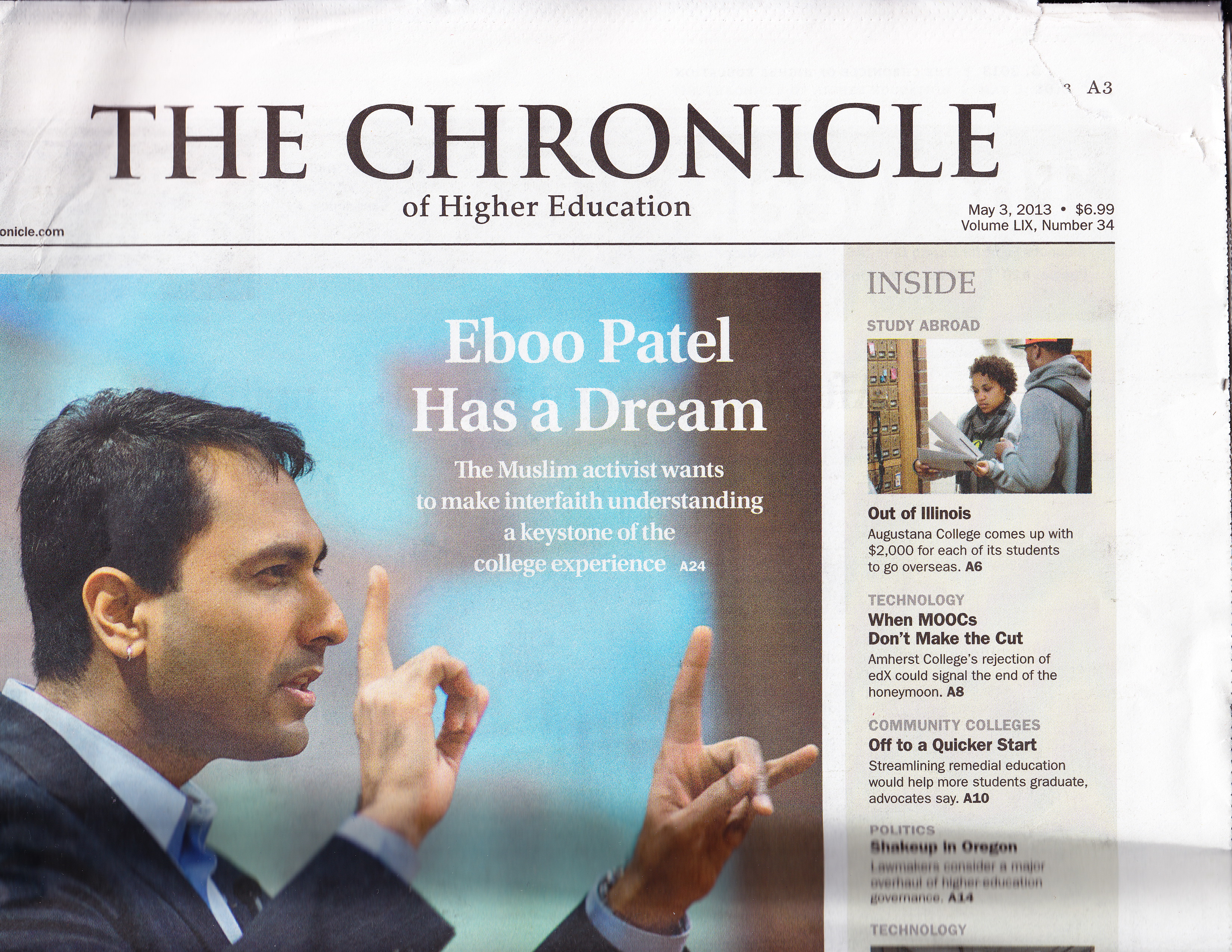
Last week the Chronicle of Higher Education feted Eboo Patel. As someone who has been on the receiving end of subtle religious violence, I appreciate what Patel is trying to do. He is a Muslim activist, the kind of which the world needs more. His last two books have been advocating for religious understanding to be considered a keystone of a college education. He’s right; religious understanding should stand right up there with the other three “r”s of education. The problem Patel faces is one I have personally faced, however; there is no money in religious studies.

Chronicle

That seems odd, even as I write it. We see lavish treasures owned by the Vatican. We see televangelists living in mansions that make Graceland seem tawdry. No huckster is more able than a skilled preacher at wheedling money out of people. Religious terrorist groups, our society conveniently ignores, are often well funded. We just don’t want to pay those professors of religion! We glory in our enlightened status and wonder why America consistently ranks among the most religious nations of the world. What department is first to receive the chop when the budget tightens? Well, it begins with an R.

What Eboo Patel is saying is what I’ve been preaching for all my adult life. We all think we know what religion is, but we actually have no idea. Universities, with rare exceptions, will do what they can to hide the study of religion like a zip on prom night. Patel is a Muslim and has good cause for wanting people to understand that his religion is not evil. He has written a couple of books advocating teaching our young about religious tolerance. It is a message America, especially, should be eager to embrace. Paradoxically, we don’t give a damn. We will cast caskets full of money into business and law departments. We will fund the research of medical and science students. Don’t ask for permission to hire a religion specialist of any description, however. Don’t you know that religion is dying out?

No doubt the electronic revolution has forever changed the way our young think about reading, writing, and yes, even arithmetic. If we had it the way our universities suggest, they would know as little as possible about the fourth, forgotten “r” that leads to much misery and meaning in our little world.


Fear of Religion

Two online articles have, in my limited reading, linked the bombing of the Boston Marathon by Tamerlan and Dzhokhar Tsarnaev to religion. Although the boys are/were not part of any radical sect, it was their belief that their Muslim faith, apparently, motivated the bombings. While such revelations will no doubt prompt Islamophobia in some, the true terror belongs to all exclusive religions. People want to be part of exclusive groups. Whether it is the ritziest country club or the most erudite book circle, we all want to be part of that group that is superior. I recall very clearly in my New Testament classes at Boston University how our professor explained that Christianity never grows as fast as when it excludes people. He claimed the writers of the Christian Scriptures knew that. Conversion is fine and good—it gives you a gold star when you save souls—but not too many. If everyone’s invited to the party, it loses its appeal. Here is the dilemma of proselytizing religions. We want to grow, but not too much.

Throughout history people have rejoiced at the troubles of the exclusive few. It does not explain fully or in any way excuse antisemitism, but the fact that Judaism doesn’t seek converts may raise the jealousy factor of those outside. Those religions most anxious to convert others are also the ones with the longest track records of violence. Nothing promotes hateful behavior like insecurity. Insecurity is frequently masked with evangelistic bravado. The fact is, even if one religion won out—especially if one religion won out—the violence would increase dramatically. This sounds rather crass, I know, but it reflects the state of world religions pretty well. Religions, after all, are made up of people.

Plenty of Muslims participate in sporting events like the Boston Marathon. Islam has contributed tremendously to western culture, laying the groundwork for much of our science and philosophy. It corners no market on religious terror. Religions are often outgrowths of human frustrations with our limited possibilities. We know we have to die, and we dream of gods but we can’t emulate their strength or majesty or immortality. We want the best for those we love. The world, however, doesn’t conform to the deep desires of humankind and religion, whatever its origin, helps us cope. Evolutionary psychologists are increasingly of the opinion that religion has utilitarian purposes in human development. Religions, however, also take their premises rather too seriously at times.

In the name of love

In the name of love


Bridge over Troubled

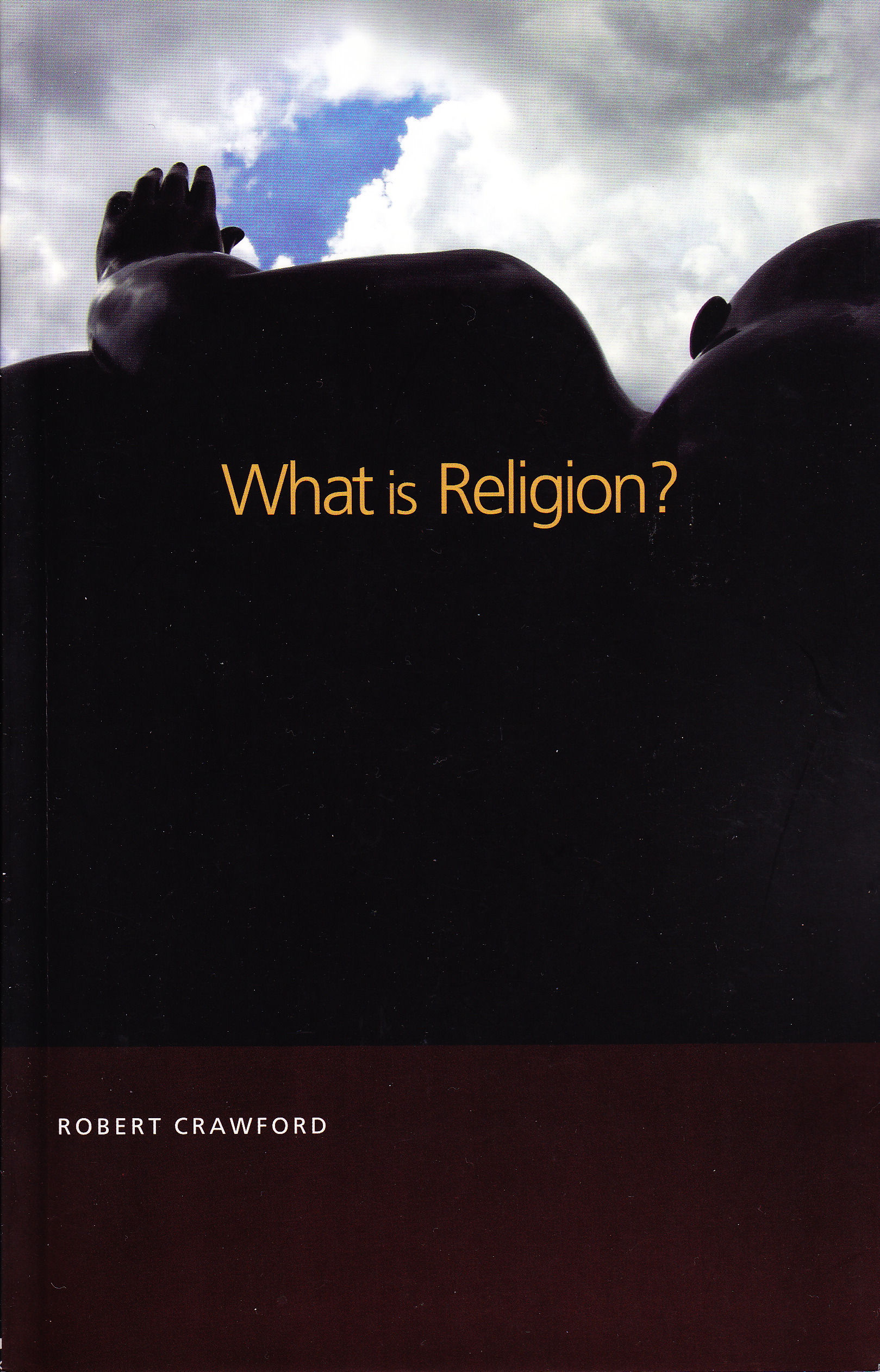
ReligionThe fundamental question of what counts as religion remains elusive. I read Robert Crawford’s What is Religion? hoping to find out. Crawford begins with the admirable assertion that in a pluralistic world all religions must learn to get along. Unfortunately, learning hasn’t always been one of religion’s strong suits. And we still don’t even know what religion is. As becomes clear within minutes of starting the book, consensus will be a stranger in this room. Nevertheless Crawford plows on, hoping against hope that comparison will reveal conformity. Religions aren’t really team players in that way.

Crawford keeps his focus on the “big six”: Judaism, Christianity, Islam, Hinduism, Buddhism, and Sikhism. Although these faiths contain the lion’s share of numbers, they in no way corner the market on religion. I wonder if Crawford’s net is really large enough. When trying to define religion, cutting corners gets you into trouble every time. No matter how we count it, religion is more than a matter of belief and broader than prescribed rituals. It must take seriously the attempts of even small knots of seekers in its preternatural accounting. Crawford sometimes gets bogged down in the details. Science plays a key role in his discussion but then the scope shifts to Christianity, a religion with more than its share of scientific troubles. Islam, for a while anyway, led the world in scientific thinking. What of Sikhs and science?

The more I read of What is Religion?, the more I got the feeling that all of these pieces don’t go to the same puzzle. Religions develop out of historical circumstances and needs. They, with a few exceptions, are not consciously devised by a bunch of eggheads shut up in ivory towers. Religions develop from people in difficult situations, whether physical or psychological. Think about it. If the Bible is to be believed Judaism grew out of slavery in Egypt (either that or Abraham’s childlessness). Christianity out of Roman oppression. Islam from Muhammad’s conviction that polytheism didn’t add up. Hinduism’s old enough to have lost its origins in deep antiquity, but Buddhism is clearly a reaction to pervasive suffering. Sikhism tried to steer between the clashes of Hinduism and Islam. We could go on, but I don’t wish to try your patience. I’m not suggesting I’ve finally done the impossible and defined religion. In fact, I may be suggesting the opposite. Religion encompasses many ways of being in the world. Crawford maybe got a start on the discussion, but it will go on as long as people have troubles.


Religion and Its Discontents

IMG_0575

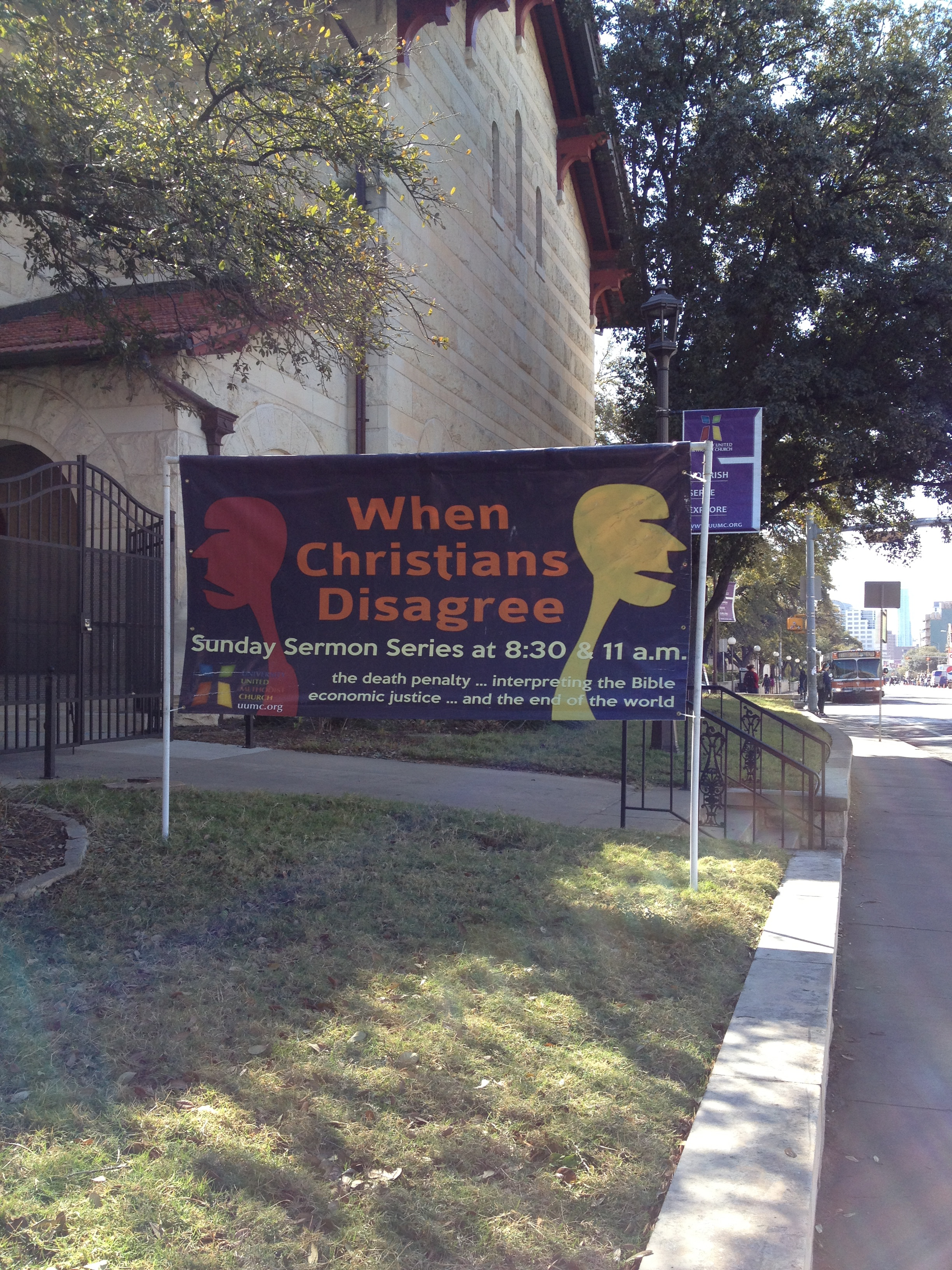
Travel broadens the mind. I’ve always felt that travel, for those who pay attention when they do it, is one of the best forms of education available. When I do campus visits for work, my time is spent talking to faculty, but on my walks between appointments I keep an eye out for my own education. This past week at the University of Texas in Austin, I couldn’t help but notice how much religion still plays into the lives of many people—even undergraduates. One of the first things I noticed as I approached campus was the sign outside a Methodist Church announcing a sermon series entitled “When Christians Disagree.” Anyone with experience within, let alone between, denominations knows that disagreement is endemic. It would be difficult to find a single point of Christian teaching that is universally held among Christians without at least one group of dissenters. In my own experience, disagreements run deeply within Christian denominations, and the hatred experienced is often more fierce than that between Christians and “heathens.”

IMG_0574

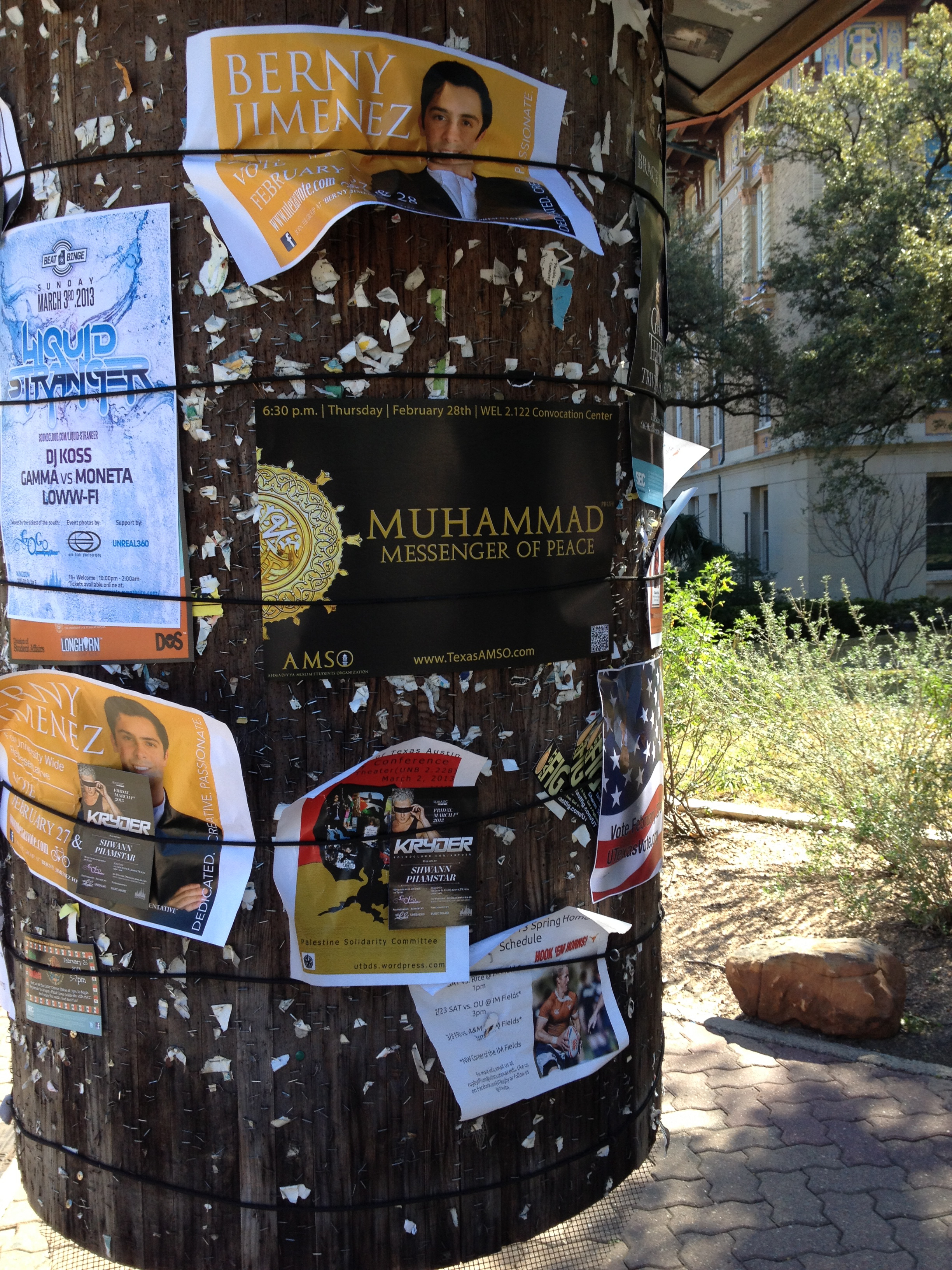
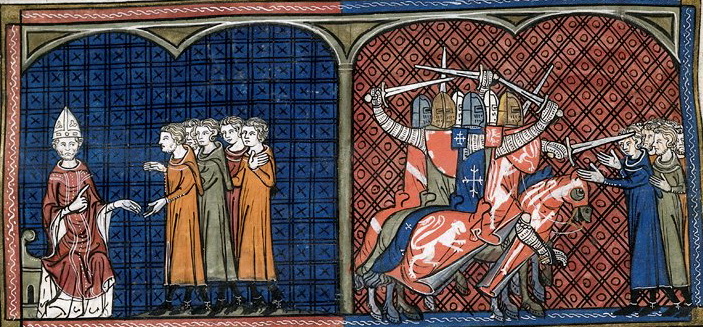
Well, maybe not between some Christians and Islam. So on a campus kiosk I found posters for a seminar entitled “Muhammad: Messenger of Peace.” In a largely Christian context, Muslim students have a difficult time with their religion being castigated in the media and in popular thought. Almost all religions are capable of violence (I was going to write “All religions” but I couldn’t think of any instances where Jains have incited violence), but most highly value and promote peace as the ideal. Few religions are actually founded on violence. I’ve heard many Christians make the claim that Islam is about conquest, pointing to the rapid expansion of Islam following the time of Muhammad. They often overlook the Crusades, one of the most violent Christian reactions to another religion in history. Is Christianity all about violence? Who is “the prince of peace” anyway?

IMG_0579

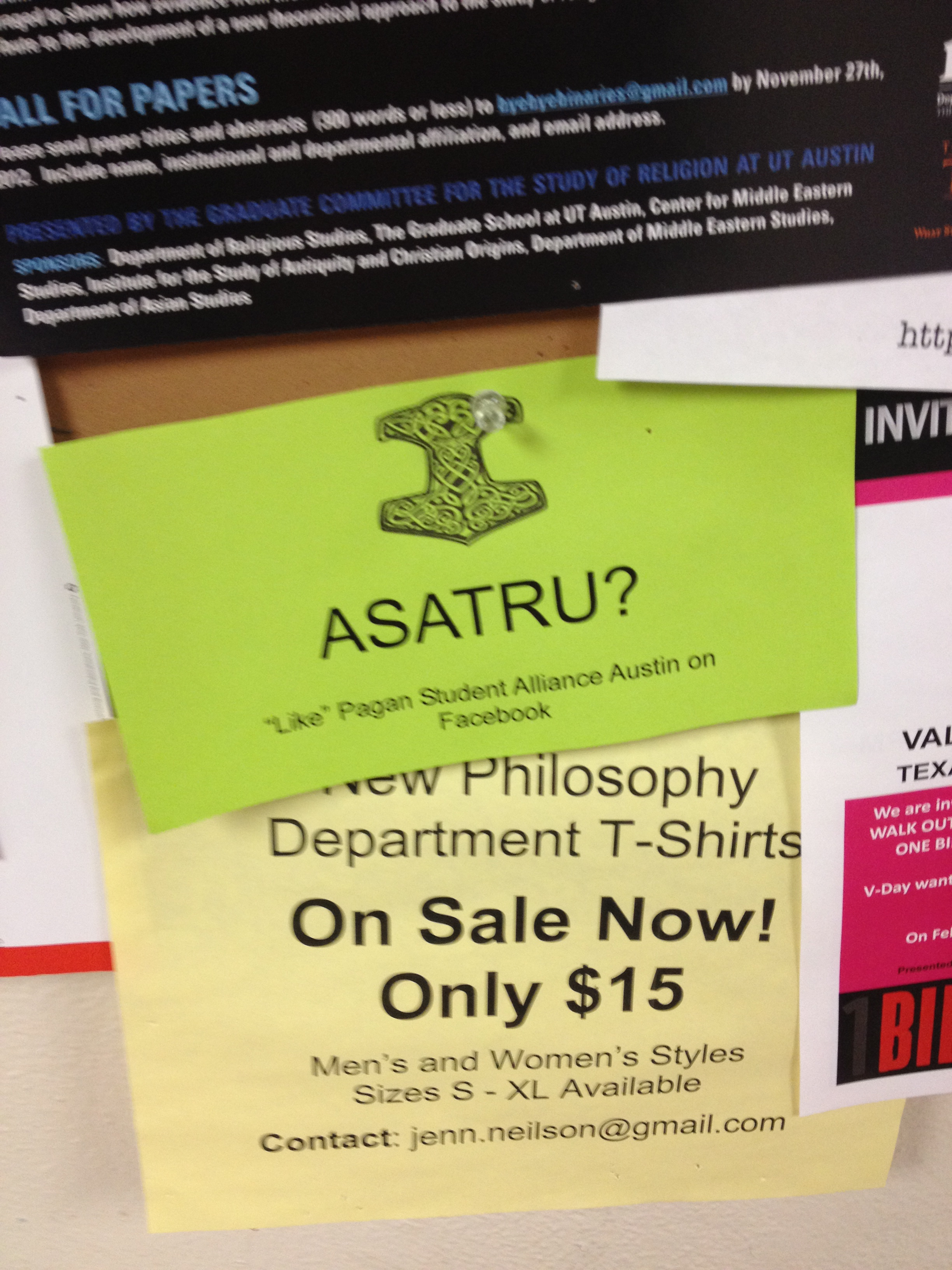
On a bulletin board I saw a notice for Asatru, the Pagan Student Alliance. If any religious group is misunderstood, surely it is Pagans. Christian missionaries liberally used “pagan” to denigrate the old religions they encountered throughout the world. Often attempts were made to eradicate such beliefs completely. With some success. Many forms of paganism today are revivals of the old religions, and a few are actual survivals. The Pagans I know are moral, peace-loving people as well. Claims of human sacrifice (often fabricated) aside, paganism was, and is, an attempt to make peace with the planet upon which we find ourselves. Peace, it seems, is a desideratum of many religions. If we studied college campuses, where such beliefs are encouraged to coexist, we might find a model that would work for people in the “real world.” And perhaps peace really would have a chance.


Out with the Old

It’s become a time-honored tradition, as an old, secular year ends and a new one, brimming with potential commences, for various pundits to sum up the past twelve months for us. And since there hasn’t been a year without religion since Adam and Eve were created, it stands to reason that the religious year in review is yet another perspective to take on this mid-winter’s day. The New Jersey Star-Ledger, my state’s answer to the New York Times, ran a 2012 top stories in religion feature on Sunday, the one day that anyone might be tempted to pay attention to things spiritual. The list reflects the view of A. James Rudin and it features several stories, most of which tend to show the embarrassing side of belief. Rudin begins his list with an amorphous Islam as reflected at unrest in the Middle East. One of the misfortunes I often deal with in my editorial role is this association of Islam with violence. There are deep roots to the trouble in the Middle East, many of them planted and watered by Christians. Religious extremists, however, are the more sexy side of the story and they always abscond with the headlines.

I should take care with my word choice, however, because yet another of the stories—dominated as they are by Christians—concerns the Catholic Church’s continuing troubles with hiding away child molesters (number five). The number two story, also about Christians, is also about sex as well. That story highlights the chagrin of the Religious Right at the recognition, long overdue, of same-sex marriages in three states. Gender plays a role in story four, the succession of Rowan Williams as Archbishop of Canterbury, but also the related story of how the Church of England still refuses to recognize women as bishops. A deity who can’t see past genitalia should be troubling to any believer. Yet a full quarter of one commentator’s top religious stories are concerned with sex. That’s how the world sees the issue.

The remaining stories Rudin points out have to do with Jewish-Christian relations, aging pontiffs, and the growth of Nones in the US religious marketplace. Anyone who spends time reading contemporary accounts of religion will be familiar with the Nones—that increasing number of people who declare no religious affiliation. Ironically, those involved in such scandals as we often see in the headlines are troubled by the number of people opting out of traditional religions. I almost wrote “opting out of faith” there, but that’s not really the issue. The Nones I know, and there are many, don’t necessarily not have faith. They have lost confidence (if they ever had it) in religious institutions. Interestingly, Rudin concludes his list with the tragedy in Newtown, Connecticut, along with the death of Sun Myung Moon and a few others. The Newtown tragedy remains the least and most religious event in the past year. And unless those of us who survive do something about it, these dead will have died in vain. Let’s hope 2013 has something better on offer.

Father_time


Bart’s Gospel

One of the near constants of the entertainment world is the social commentary on The Simpsons. The morality issues that get frequent play had led to a book entitled The Gospel According to the Simpsons some years back. And since Americans like their morality straight from the popular media, The Simpsons is not a bad place to look. The episode “My-Pods and Boomsticks,” although a few years old now, raises issues that are still current in our culture. I watched it with my daughter recently and she commented, “It’s just like Zeitoun.” My family read Zeitoun this summer (some high school reading programs have a way of involving more than just the student) and the revelation of just how deeply suspicious the nation is of Muslims disturbed us all. This particular Simpsons episode involves a Muslim family from Jordan moving into Springfield. Although Bart befriends their son, Homer just can’t get over the assumption that Muslim equals terrorist. In the end, however, it is Homer who ends up dynamiting a bridge rather than believing Muslims can be good citizens.

Apart from being the longest running primetime animated feature in history, The Simpsons bucks the convention of veering away from religious topics. Indeed, many episodes foreground religion and feature Hinduism, Judaism, and Buddhism as well as Christianity and now Islam. The religions may be gently chided, but they are not mocked, and we are given a glimpse into our own religious biases. Islam, as a religion, is not evil or bent on destruction. Like Christianity, it has many varieties and believers range from the sacred to the profane. It is not the religion that is a problem, but the society that gives the lie to true equality. Believe what you will; harm no one.

At work the other day I received an office memo about lunchtime Yoga. Whenever I see such notices I consider how this religious practice, in American minds, has become completely secular. The same may be said of some of the martial arts which, in original contexts, have a deep base in eastern spiritualities. These things do not bother us because we do not bother to learn about them as religious activities. Even Kung Fu Panda has a spiritual undertone. Religions display a wide variety of expressions throughout the world. Going to church one day a week and condemning those who believe differently all seven, many people do not stop to think of the contributions that other religions have made to our society as it exists today. American culture, while predominantly evolving from a Christian base, has strong elements of most of the major religions that go unrecognized or packaged as secular self-helps. We could still stand to learn a thing or two from Springfield.


Five Century Hypothesis

More than likely it is simply an oddity of history, but roughly every five hundred years a new major religion appears.  The newcomers sometimes grow into a serious concern for conservatives in the older traditions, but at other times they are simply ignored until the two (or more) come into inevitable contact.  Peering far back into history, the roots of the earliest religions of lasting durability are sometimes lost.  For a very rough starting point, we can consider Hinduism.  With roots going back to about 1500 BCE in the “Pre-Classical” era of the religion, Hinduism developed independently of the monotheistic traditions that would appear in the western half of Asia.  Although some would credit Judaism with equal (or even greater) antiquity, we get an idea that some of the basic thought that would coalesce into Judaism seems to have, very roughly, begun around 1000 BCE.  About five centuries later, Buddhism appeared.  At the turn of the era, Christianity had emerged from Judaism.  About five centuries later, Islam appeared.  Countless other religions, of course, existed concurrently with these early exemplars, but each of these has grown into a major world religion. 

Around about 1000 of the Common Era, Christianity began to fragment.  The first major, official split was between Orthodoxy and Catholicism. Christianity’s penchant for fragmentation would eventually lead to Protestantism—a religious form quite distinct in many ways from traditional Christianity—and that happened roughly five centuries later.  The most obvious split took place around 1500 with the Reformation, but it was also around that time that Sikhism appeared.  The new religions of the common era often involve irreconcilable differences within an established religion. In the western world we tend to overlook Sikhism, but in sheer numbers it is one of the largest religious traditions. And of course, there are many, many others.

As with any over-simplified scheme that tries to make sense of history, I am certain that no historian will be convinced. To me it seems obvious. Once every five centuries or so, some new religion will be born and will flourish. Perhaps it is already among us. We are about due. Like the evolution of new species, some new religions are poorly adapted to survival: one thinks of Branch Davidians or Heaven’s Gate, or Jonestown. Others, however, quietly thrive until someone looks around and says, “Where did Mormonism come from anyway?” Some will argue that it is just another sect of Christianity. Those who study its theology will realize that its conceptual world is vastly different. But anyone with a long enough calendar can see that it began about five centuries after Sikhism and the Protestant Reformation occurred. And anyone with two cents can sense its enormous bankroll—no surer sign of a religion’s viability can be offered.


Symbolic Confusion

While on a drive through New England, we were discussing Islam with our daughter. Now I’m no expert on Islam, but I have covered it in a few classes. It has had a presence in America for a couple of centuries at least, probably first arriving with slaves from Africa. As we drove into Springfield, Massachusetts, I saw four slender towers rising into the sky off the highway and said, “Look, it’s a mosque,” supposing the towers to be minarets. When we drew closer, it was clear that these were really just the decorated finials of a quite secular bridge. Embarrassed at my mistake, my family was kind enough to console me with the suggestion that the four towers from that angle did look like the accoutrements of a mosque. (Earlier in the day I had seen my first Sikh temple in Connecticut, so the mistake might be at least slightly justified.) My wife mentioned how misidentified symbolism could be confusing. This spurred me to consider how symbolism frequently becomes a stand-in for reality.

I’ve been reading about witches lately. Like many legendary fears, witches can be interpreted in many ways. They have their origins in the belief that nature may be manipulated by will over a distance and had been feared for the effectiveness of their powerful spells. After the tragic witch-hunts of the Middle Ages ran their horrible course, witches came to be seen as the result of overactive imaginations and rampant superstition. The modern Pagan movement has revitalized the witch in a somewhat safer environment, and has applied various symbols to it. Thor’s hammer, the ankh, and the pentacle are considered the symbols of modern witches by various covens and practitioners. While passing by a department store on East 43rd Street, I noticed apparel decorated with pentacles—the symbolism adopted by some witches.

This reminded me of a fracas that erupted some years back when a fashion designer incorporated the ornate letters of the Arabic script into the design of a sleek dress that left less to the imagination than a traditional burka. The designer expressed surprise when Muslims objected to words from the Quran being used to decorate immodestly covered women’s bodies. In both these scenarios symbolism has demonstrated its power for being what philosophers call the Ding an sich, the thing itself. Symbols are often that way, bridging as they do the worlds of religious thought and secular existence. I wonder how much we as a society would gain from letting bridges be symbols that participate in the reality they represent.


Beyond Measure

Thinking back to my first course in World Religions, I recollect learning about Hinduism, Buddhism, Islam, and Confucianism for the first time. It is likely that Taoism was also mentioned, but I had to do a ton of research before I taught the course for the first time at Oshkosh. I remembered learning nothing about Sikhism or Shinto, not to mention Jainism or any host of religions boasting smaller numbers, by gosh. Now that I’m in the business of commissioning books on world religions, I have come into a quandary. As I know from experience, those who teach world religions are faced with a classic case of TMI: too much information. These religions I’ve mentioned only begin to scratch the vast surface of human religious expression, while your typical semester is only 14 weeks in duration. How do we cover all the smaller religions, some of which may have even a million or more adherents, and may be, at times, geared toward violent behavior? There’s simply no way.

This is where the quagmire grows thickest—are “major religions” quantified by numbers alone? From comments of readers of this blog it is quite clear that Christianity is no uniform religion. The differences go deeper than Protestant or Catholic or Orthodox. Most of us follow rather idiosyncratic blends of various religions we’ve experienced. It is not unusual for a Christian to practice yoga or to engage in meditation. And there are thousands of smaller religions as well, and the beliefs are deeply embedded in the lives of those who hold them. A good example would be Native American religions. There isn’t just one. Various tribes held their own beliefs and yet try to find a textbook that covers the differences between them. (Ah, but publishers are bound by the need to sell many copies to make such books profitable, and what professor is going to have the time to parse out different belief systems of these small, sometimes powerless groups?)

It is the curse of categorization. In our free market economy bigger is always better. Religions, on the other hand, do not always concern themselves with winning the most tricks. The Zoroastrians, who gave us the concepts of Heaven and Hell and much else that became standard theology in the monotheistic religions, continue to exist. In small numbers. So small that, as a religion major, I didn’t really learn about them until I began teaching classes exploring the origins of our modern religious concepts. When the modern eye assesses the importance of something, it does so by crunching the numbers. Religions have been our human means of seeking the truth since civilization began, perhaps even before. Often numbers and truth just don’t align.


Abbey Rood

On the long flight home from London, experiences during my brief free time play back in my head in a continuous loop. One monument to civilization I wanted my daughter to experience was Westminster Abbey. I would liked to have taken her to St. Paul’s as well, but churches are just too expensive to visit. I’ve written before about our drive to visit places of significance, the urge toward pilgrimage that is as old as humanity itself. (Perhaps even earlier.) Because of the reach of the British Empire, events that have taken place in Westminster have affected people all over the world. The cream of the British crop is buried there. To see them, however, you need to pay an unhealthy sum of money. “Money changers in the temple,” as my wife aptly observed. And once inside photography is prohibited. How easy simply to become a slab of marble hazily remembered in the mind of an overstimulated tourist. There is no way to absorb it all.

The church has fallen on hard times in much of Europe. Speaking to several Brits the real interest seems to be in Islam, a religion clearly on the rise in the United Kingdom. During a brief respite from work, during which I ducked into the British Museum, the queues were out the door for an exhibit on the hajj. Tickets for the exhibit were sold out. Meanwhile, across town, the Church of England charges a visitor 16 pounds even to enter the great minster with roots in the eleventh century. Christianity and capitalism have become inextricably intertwined. A building as massive as Westminster, let alone St. Paul’s, must be costly indeed to maintain. These have become, however, icons to culture rather than religion. Their value in that regard cannot be questioned.

Standing beside Isaac Newton, Charles Darwin, Charles Dickens, and T. S. Eliot, it is noteworthy how few clerics buried in the Abbey maintain such a draw. Kings, queens, knaves and aces of many suits may abound, but apart from the eponymous Archbishop of Canterbury, few men and women of the cloth stand to gain our attention. The nave soars high overhead and the crowds of sightseers jostle one another to get a view of the sarcophagus that now houses the dusty bones of those whose names endlessly referenced from our childhoods vie for admiration. The sign says “no photography,” and the docents throughout the building cast a suspicious eye on anyone holding a camera. How jealous Christendom has become in a land of secular advance. I stand next to Sir Isaac Newton and contemplate how the seeds of destruction are often planted within the very soil that surrounds the foundations of mighty edifices of yore.


And Lowe

Hate is harder to muster for people just like us. I mean, if they live like us and look like us, what grounds do we have to distrust and fear them? This appears to be one of the premises behind the TLC show “All-American Muslim.” Many people know Muslims without knowing it and fear them without being aware of whom they fear. With this insidious kind of fear and hatred, religion must be involved.

Over the weekend, CNN online ran an article noting how Lowe’s is pulling advertising from the program. It seems that conservative Christian outcry is rising like the children of Israel in Egypt; the Muslims aren’t shown as bad guys—they’re like your next-door neighbor! Fear of takeovers has long been on the Neo-conservative agenda. If Romney is elected we will by overrun by Mormons. If we sleep, we’ll awake to Muslim neighbors. And we certainly can’t expect to all get along. If it weren’t for the media, we would probably never even know they held a different religion.

I’ve lived lots of places. With the exception of Grove City College and Nashotah House, I never once was aware of the religion (if any) of my neighbors. If they are civil and respect my right to believe what I will, they are entitled to the same. Religious supersessionism and maybe a pinch of jealousy play into this attitude of keeping others a minority. Is it because Muslims and Mormons are more effective at winning converts? The modern evangelicals have been relying on political bullying to get their way. Why not learn to appreciate your neighbor’s religion instead?

Religious freedom is a two-edged sword. Many of those who are worried now were quite happy when they were in the clear majority. When the lines get blurry the trigger finger gets itchy. Come on, Lowe’s! Educating ourselves about other religions is the best home-building project out there.


Tolerance, Princeton Style

Princeton is an idealistic kind of town. A seat of great wealth, the town is dominated by the university and yet it manages to retain a sense of genteel quaintness that so often accompanies the aura of financial security. Even with my distrust of money, I love to wander its streets and imagine what the world could be like. My ideal world has bookstores, and so I always stop at the Labyrinth, the current incarnation of the university bookstore in town. Last time I was there I found an overstock sale copy of Ian Buruma’s Taming the Gods: Religion and Democracy on Three Continents. Well, both the price and the topic were right, so I read it this week. Buruma is actually a scholar of democracy, human rights, and journalism, not religion. One of the key identifiers of religion is that there is no central, unifying topic that ties all religions together, and therefore scholars of many disciplines have much to say about it. Buruma offers three chapters illustrating the way that religions interact with society, often violently. He then tenders suggestions for how this violence might be curbed.

Commenting on tensions of Islamic growth in a nominally Christian Europe, Buruma notes that one of the Enlightenment core values is a belief in universals. If truth is truth it is universal. This, he notes, often conflicts with religions since most religions also tend to make universal, often exclusive, claims. Here is precisely where human culture is brought to its knees by religion. Due to their revealed nature, western religions cannot be challenged on any rational grounds. This is as true of Mormonism as it is of Judaism. If God said it, and there is no empirical proof, people have no choice but to obey. Problem is, God can’t make up “his” mind about the final word on the subject. New religions sprout constantly, growing into inevitable conflict with their neighbors. Not to mention those who have reasoned their way out of religion.

What is the limit of religious tolerance? As Buruma notes, tolerance necessarily includes tolerating intolerance. Some religions are constrained to be intolerant of others, and how do we allow them to be part of our little tea party? (The metaphor is intentional. Think about it.) Buruma suggests, as many have, that the rule of law should settle the situation. People must learn to separate civil law from religion. But can it be done? I have serious doubts. I’ve heard this suggested before, by minds far greater than mine. Having grown up as a religious kid, however, I know that rule of law has its limits. It stops once God opens the door to direct revelation, whether to people today or thousands of years ago. Religion is not bound by the rule of law. It is its own highest authority. Many, many people throughout the world believe that. Moses, Jesus, Mohammad, all are noted to have had clashes with civil authorities of one sort or another during their lifetimes. The pattern is set. So even here in Princeton, with an engaging, thoughtful book in my greedy little hands, surrounded by great wealth, I realize just how idealistic all of it can be.


Lamp of the Gods

Long venerated as a god, the moon has fallen to such a declination that it scarcely attracts the notice of most people anymore. While some governments are busy making plans to reach the moon—notably those with the largest populations—the rest of the developed world looks to the nighttime sky and lets out a yawn. The poignant little book called Moon: A Brief History, by Bernd Brunner, offers a moving tribute that is part science, part history, and part whimsy. Very few heavenly bodies have undergone the dramatic plummet in interest as our familiar old moon. It remains the proximate cause for werewolves and the occasional harvest-season horror movie, but since the Cold War has ended and we no longer need to prove ourselves to anybody, attention has shifted toward more distant and abstract targets. Maybe Mars, or one of Jupiter’s moons holds the fascination we so long for. The moon, apart from a brief flare of interest when water was discovered there, has died a slow death in the human imagination.

In ancient times, the moon was often considered superior to the sun. Sure, it’s not as warm—downright cold at times—but its light is more gentle, more forgiving. The traveler’s companion, the moon illuminated the way before headlights were invented. The god of the moon (its gender was slippery in parts of the ancient Near East) sometimes topped the pantheon. Even today in Islam, the memory of the high god’s crescent moon can be found atop mosques throughout the world.

What happened to the moon? Famously Carl Sagan, himself an astronomer, wrote about The Demon-Haunted World. In this book he decried the human tendency to look for supernatural causation; the universe is entirely natural. Many have used his reasoning as a nail in the coffin of God. Clearly he was right in many cases, but, as Brunner shows, science can rob even a deity of its shine. Writes Brunner: “Its significance and roles have always varied across cultures and eras—from heavenly god to symbolic guardian or judge, to the scene or stage of spectacular visions and visits, to being ‘just’ and object of scientific investigation.” Once we’ve been to bed with the moon and look at it scientifically, its luster is lost. “Maybe we should try sometimes to un-think our scientific knowledge of the moon,” Brunner opines.

I was one of those thousands planted before the television on 21 June 1969 to watch the first men on the moon. Amid the turmoil of earth, it was a sublime, even a religious moment. In the end a dozen men walked on the moon before it was forgotten. Like the dozen disciples, they alone have been near the truly sublime. With Brunner I too would suggest that we not be too quick to forget our constant companion.