

Photo by Lorenzo Lamonica on Unsplash
J-Horror better move over. There’s a new kid on the block.
For many years those of us strange fans of horror have used “J-Horror” as shorthand for Japanese Horror. With two highly successful films (eventually series) of the mid-nineties (Ju-On and Ringu) the Japanese contribution stormed back into American consciousness. Those of us who grew up on Godzilla knew that J-Horror had been around for decades already, but these new movies were distinctly creepy. So much so that English-language versions were remade for both original films (The Grudge and The Ring, respectively—rather like Let the Right One In and Let Me In). So far, so good. So why does J-Horror need to move over?
At least three separate friends have pointed me to another emerging J-Horror trend: Jewish horror movies. These used to be rare. With cases of early antisemitic themes in horror, and the real life horror of the Holocaust, this is certainly understandable. “Christian” producers or directors delving into Jewish themes would seem to be in bad taste. Still, some notable Jewish-themed horror has begun to emerge. (I addressed one such film in my recent Horror Homeroom piece.) The Possession (discussed in both of my most recent books) centers around the need for a Jewish exorcist in the case of a dybbuk problem. For more information, you know where to look! It seemed to me that the dybbuk box contents were reminiscent of the Holocaust, but that may not have been intentional.
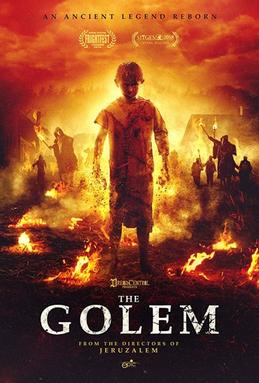
I recently wrote a post about The Golem. This is a recent Israeli movie that builds on the traditional Jewish monster. Although set before the Holocaust, the fact that there’s a pogrom in the film shows that the concept is not far off. The movie that people have recently been pointing me toward is The Vigil. I’ve not had an opportunity to see it yet, but the press it’s received suggests it too will be another classic based on lived experience in Judaism. I’m not sure if Jewish horror will eventually rival the numbers of Japanese horror films, but the offerings thus far have been noteworthy. Horror often addresses the problem of human suffering. With all the oppressions in “white” society, it’s no wonder that, along with Black horror, Jewish horror is beginning to garner attention. Although it’s clearly not to everyone’s taste, horror is often a genre with a conscience. It becomes a screen on which we can see our worst behaviors projected. And if we’re wise, we’ll take steps to make such suffering become merely an unfortunate memory.
 Steve A. Wiggins