Fracking Insane

Do yourself a favor. Watch this video:

I have spent most of my lifetime living the fantasy of the helpless victim. Raised in a faith that insisted I really deserve Hell, and that if I manage to escape it will literally be a miracle, I guess I just internalized it. That kind of “Christian” thinking gets reflected and refracted through the lens of experience, and soon I was reading everything in its light. My parents’ divorce? Deserved. That move at the vulnerable early teen years? Inevitable. The verbal abuse of an overly stressed step-father? It should’ve been worse. Add to that the numerous rejections after professions of true love, and being fired from two jobs for no discernible cause—you start to get the picture. So when I learn that fracking is going on all around me, it seems like this is the fate of the perpetually sinful. Destroy the planet. Do you think you deserve better?

Life-denying religions walk a very thin line. When, like Siddhartha Gautama or Rishabha, the denial is a decision made after serious, personal reflection, this may be called enlightenment. When it is cast at you by a non-negotiable, self-despising cleric freely dispensing divine damnation to those incapable of much reflection, it is quite another beast. Children, although possessing freer minds, are easily impressed by authoritative adults. If that adult talks to God, you’d better sit up at the table and listen. So it is that generations are taught that “God” gave humans—let’s be literal here—man dominion over the earth. Pillage and plunder are part of the fracking package. If it’s down here below heaven, God wants you to use it up. After all, the sign on the door says “Back in Five Minutes.” (Dated 33 C.E.)

In a moment of weakness, I must confess (and I am told by religious experts that it is good for the soul), a few weekends ago I found Jesse Ventura’s Conspiracy Theory on YouTube. It was like eating Lays; you can’t stop at one. By the end of the afternoon, besides a nasty headache, I had a noggin full of improbable scenarios, courtesy of Jesse, “the Body,” Politic. Although a good night’s sleep at the rationality of another unapocalyptic dawn washed away his most outlandish claims, fracking is more frightening than a conspiracy. It is legal, it effects everyone who lives on earth where it is being done, and its record speaks for itself. I’m not proud of having wasted a few hours on humanzees and Bilderbergers reducing the world population to 500 million. But I am afraid that, if left to its own devices, however, “dominion over the earth” may be more than even the literalists bargained for.
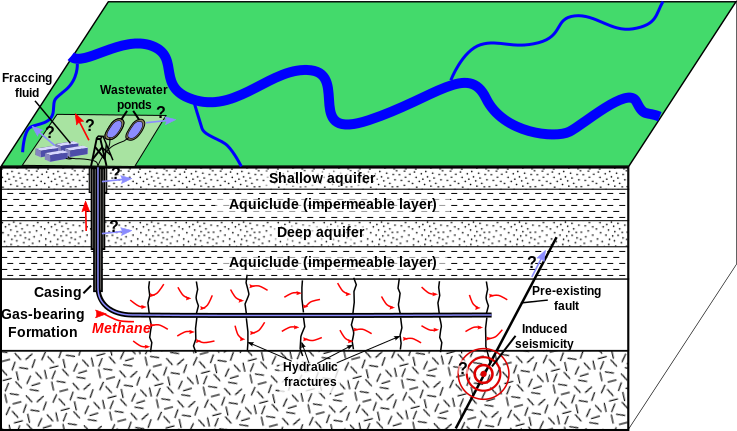
Yes, that looks like a good idea...

Yes, that looks like a good idea…


Beyond Measure

Thinking back to my first course in World Religions, I recollect learning about Hinduism, Buddhism, Islam, and Confucianism for the first time. It is likely that Taoism was also mentioned, but I had to do a ton of research before I taught the course for the first time at Oshkosh. I remembered learning nothing about Sikhism or Shinto, not to mention Jainism or any host of religions boasting smaller numbers, by gosh. Now that I’m in the business of commissioning books on world religions, I have come into a quandary. As I know from experience, those who teach world religions are faced with a classic case of TMI: too much information. These religions I’ve mentioned only begin to scratch the vast surface of human religious expression, while your typical semester is only 14 weeks in duration. How do we cover all the smaller religions, some of which may have even a million or more adherents, and may be, at times, geared toward violent behavior? There’s simply no way.

This is where the quagmire grows thickest—are “major religions” quantified by numbers alone? From comments of readers of this blog it is quite clear that Christianity is no uniform religion. The differences go deeper than Protestant or Catholic or Orthodox. Most of us follow rather idiosyncratic blends of various religions we’ve experienced. It is not unusual for a Christian to practice yoga or to engage in meditation. And there are thousands of smaller religions as well, and the beliefs are deeply embedded in the lives of those who hold them. A good example would be Native American religions. There isn’t just one. Various tribes held their own beliefs and yet try to find a textbook that covers the differences between them. (Ah, but publishers are bound by the need to sell many copies to make such books profitable, and what professor is going to have the time to parse out different belief systems of these small, sometimes powerless groups?)

It is the curse of categorization. In our free market economy bigger is always better. Religions, on the other hand, do not always concern themselves with winning the most tricks. The Zoroastrians, who gave us the concepts of Heaven and Hell and much else that became standard theology in the monotheistic religions, continue to exist. In small numbers. So small that, as a religion major, I didn’t really learn about them until I began teaching classes exploring the origins of our modern religious concepts. When the modern eye assesses the importance of something, it does so by crunching the numbers. Religions have been our human means of seeking the truth since civilization began, perhaps even before. Often numbers and truth just don’t align.