Asking Questions

Strangely appropriate pareidolia is one of those oddly specific things that generates a lot of internet interest.  I was late to find out about the “question mark” in space photographed by the James Webb Space Telescope.  Okay, a couple of things: photographs, like the one below, taken by U.S. Government agencies are in the public domain (thanks, NASA!).  This one can be easily enlarged on the James Webb Space Telescope webpage.  To see the “question mark” you need to start from the center red star and look down to the two bright blue stars just to the left of center.  The image I’m using has been enlarged so that it’s obvious.  Serious news outlets have discussed this, but it’s clearly a case of pareidolia, or the human ability to attribute specific meaning, or design, to something that’s random.  We see faces everywhere, but question marks are somewhat less common.
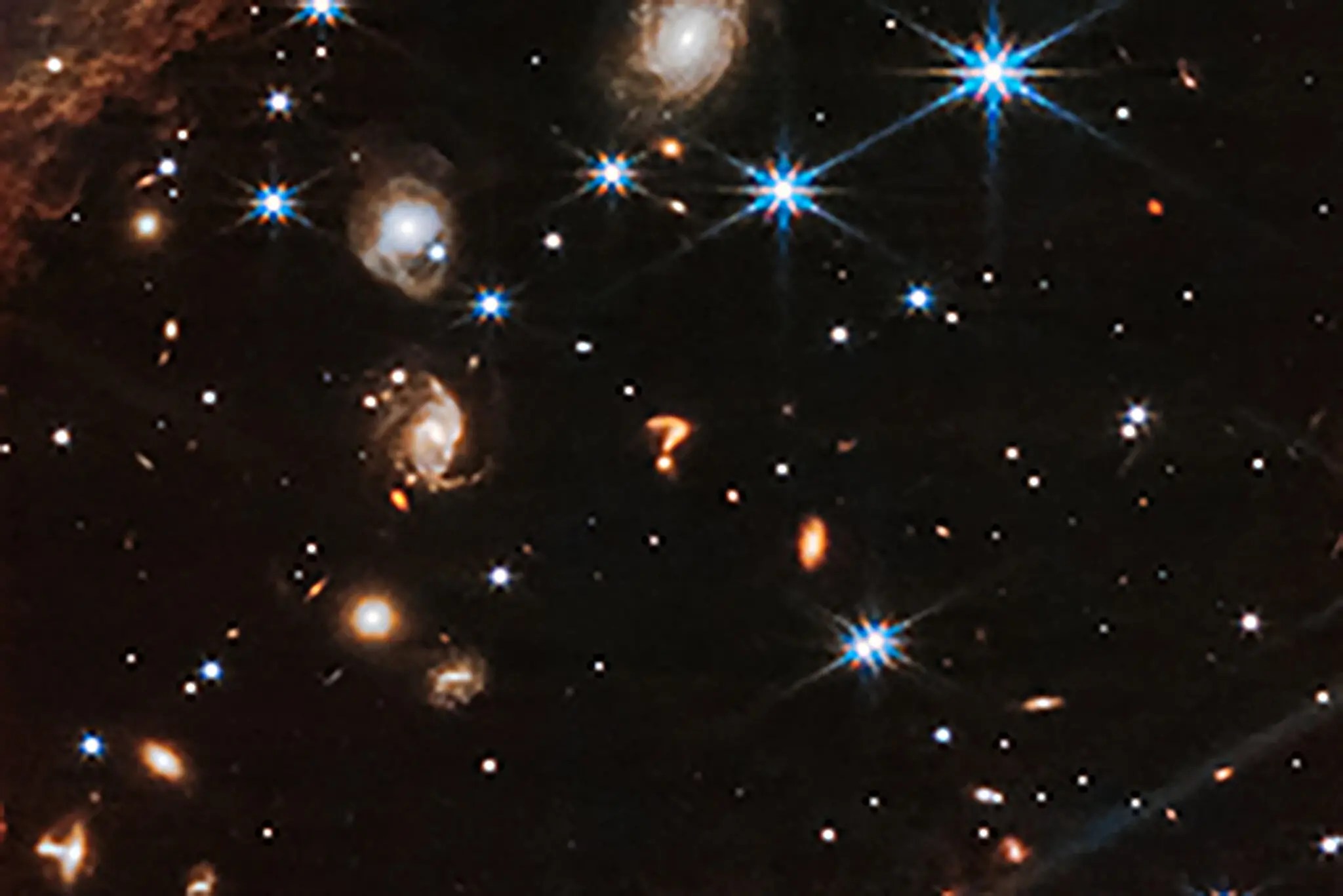
Photo credit NASA: public domain

Given the state of the world—people like Trump able to continue scamming millions of willing believers for his own benefit, hurricanes hitting California, Putin going to war against the rest of the world, capitalism, war in the Holy Land—it’s no wonder that people like to think a big question mark is hanging over everything.  Looking into the sky we expect to see God.  Isn’t it a little disconcerting to see a huge query instead?  I, for one, think it might be best if we learn to recognize false signals rather than seeing some giant message tucked away in some small corner of the universe in the hopes that we’ll turn our seeing-eye telescope that way.  What font is it anyway?  Does it violate some cosmic copyright?

Some signs are, I’m convinced, for real.  I think they tend to be on a much smaller scale.  Way down here where  we can see them.  What appears to be, from our viewpoint, a question mark may be seen as an exclamation point from a different angle.  It’s all a matter of how we look at things.  One of the most important lessons of life is that people see the same thing from different points of view.  If we can accept that, others don’t seem so threatening and strange.  In a small planet plagued with xenophobia, it’s important to discover strangely appropriate pareidolia every now and again to get us thinking about the deeper issues.  We may not find the answers, but often asking the question is the more important thing to do.

Little Bang

I’ve always been interested in the sky.  At times it feels like I’m in love with it.  Having attended a Sputnik-era high school—a rural high school with an actual planetarium!—I took the offered astronomy course.  Buoyed up by this, I also enrolled in a college astronomy class only to discover that that career track involved far too much math for my humble abilities.  Still, I learned a lot about the nighttime sky.  I’ve also been a lifelong reader of lay science.  I very much appreciate scientists who write so that nonspecialists can understand them.  So it was that I was glad to see a New York Times letter by Adam Frank and Marcelo Gleiser titled “The Story of Our Universe May Be Starting to Unravel.”  I’ve mentioned Gleiser here before because I’ve read a couple of his wonderful books.  But this article was mind-expanding.

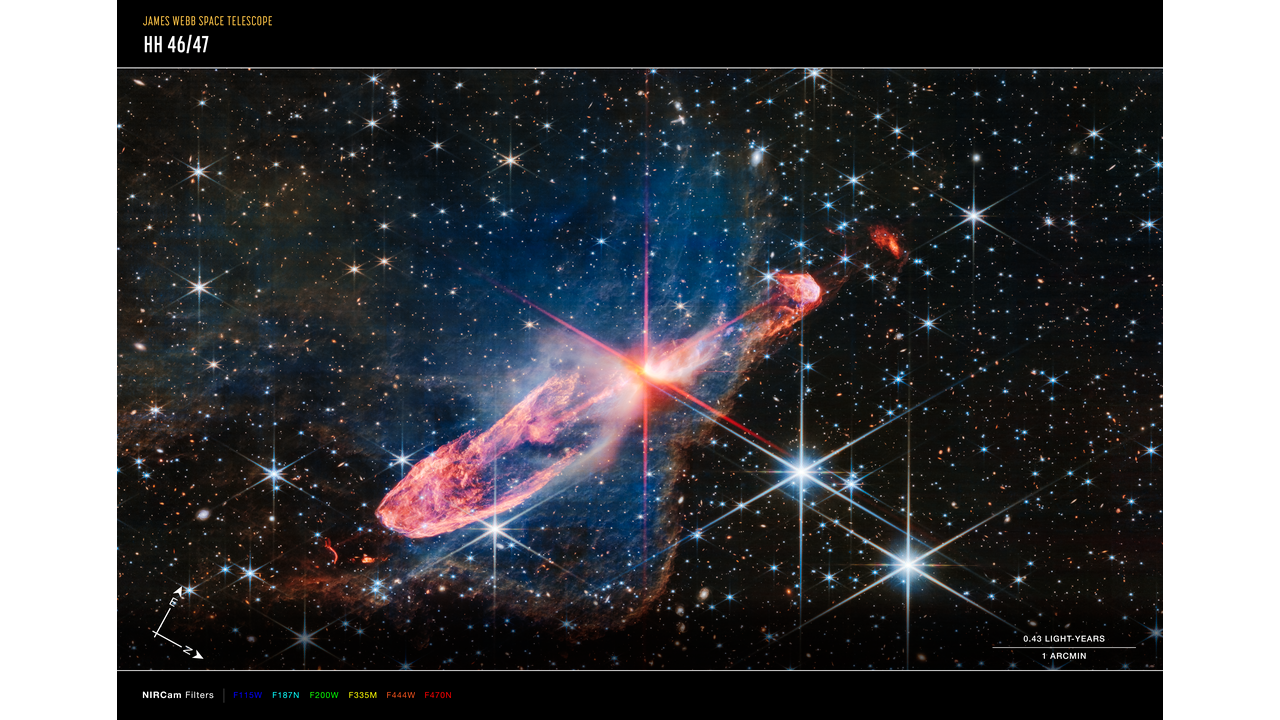
Frank and Gleiser suggest that the Big Bang Theory may, eventually, need to be replaced.  They point out that small inconsistencies have crept into it over the years (keep in mind that it was really only “confirmed” within my lifetime, back in the sixties).  Most of these have been patched up with quilt-work astrophysics, but the James Webb Space Telescope is making some of those past patches strain a bit at the seams.  Fully formed galaxies are being spied too far back in time (for stargazing is looking into the deep past) for the standard model.  They shouldn’t be there, but they are.  The letter interestingly raises the point that the scientific study of quantum physics, as well as that of consciousness, also strain the standard models.  Perhaps it’s time for a rethinking of reality?

Image credit: NASA, public domain

Isn’t this breathtakingly exciting?  To be alive when a major leap of understanding the universe we call home may be discovered?  The authors point out that cosmology and philosophy often have to interact.  Our understanding of the universe is a human understanding, not sacred writ.  The scientific method is built to be falsifiable.  If it’s not, it’s not science.  (This often separates it from some religions which declare themselves unfalsifiable, and therefore likely wrong.)  New scientific discoveries are made daily, of course, but new paradigms only tend to come on the scale of lifetimes, or several generations.  We don’t see them all the time.  I guess it’s heartening to see that the system works.  When science becomes orthodoxy, we run into similar problems that we encounter with religions.  A bit of humility and a ship-load of wonder can go a long, long way.


First Images

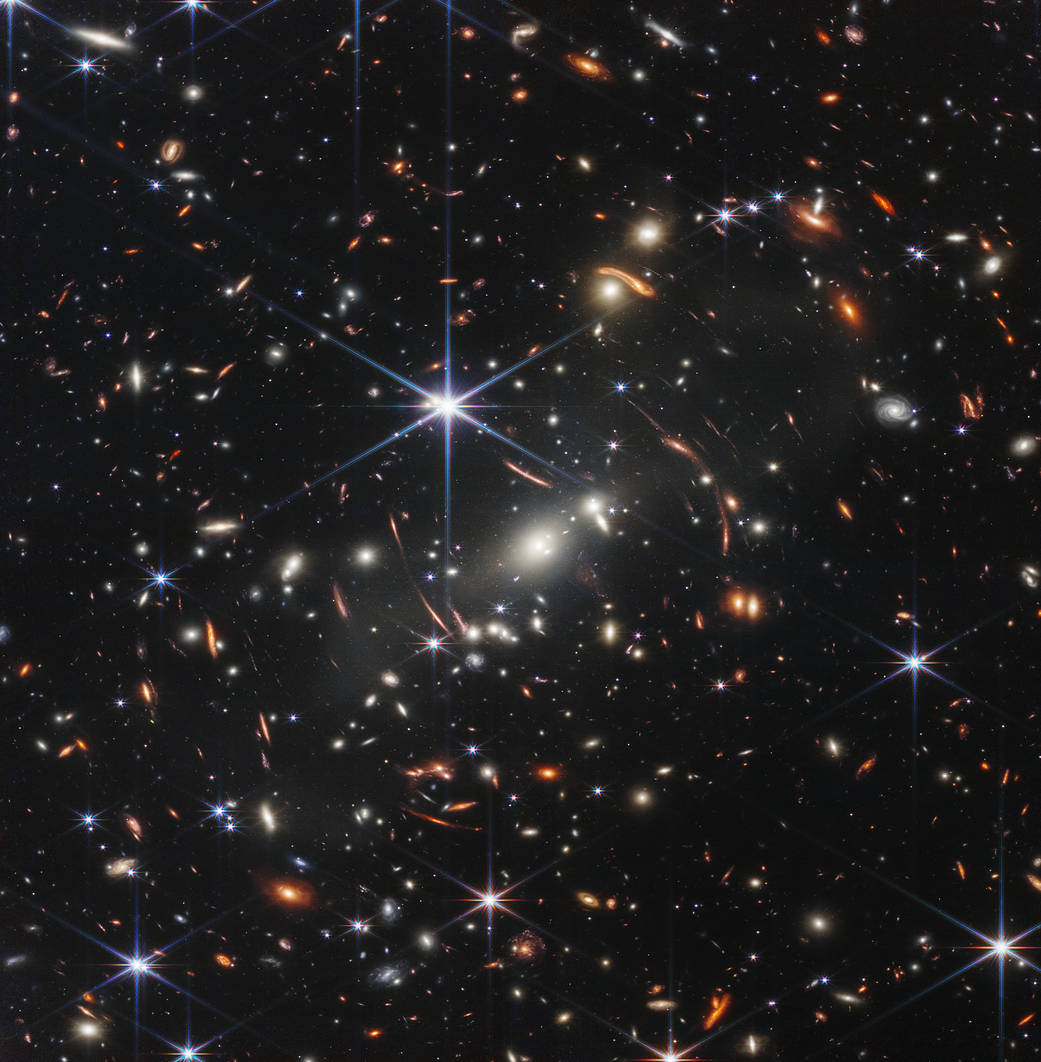
I awoke to an image from the James Webb Space Telescope.  Looking at the universe at it was 4.6 billion years ago is a humble and terrifying experience.  Our universe is so incredibly vast and we are tiny.  As we on this planet bicker and kill and destroy, out there something truly wondrous looms.  Those tiny pinpricks of galaxies.  Our own galaxy so massive that we can’t comprehend it.  Our own midsize star large enough to hold more than a million earths.  Our own planet big enough that no human being can see it all in a lifetime.  What in the world are we fighting for?  This image is just a patch of sky about the size of a grain of sand held at arm’s length.  How many grains of sand would it take to fill the visible sky?

Many people argue that such things are a waste of money.  Yes, there are very real, human-created problems right here on earth.  The siren call of space, however, has the potential to save us.  If we look into that immense universe just out there and realize that we are part of something larger than ourselves, we can stop fighting and hating and electioneering.  Keep looking up instead.  Costs, after all, are relative.  Our entire economic system is arbitrary.  We decide what’s valuable and what’s not.  We make rules that allow individual human beings to control the lives of countless others based on nothing more than agreed-upon principles.  Food could be freely distributed.  Medicine could be given to the sick.  What’s required is perspective.  If looking at the universe doesn’t provide perspective, what can?

I often wonder about life in those distant galaxies.  Given the sheer numbers it’s practically impossible that life evolved only here.  We’re told that teleological thinking is wishful and naive, but looking at the way life behaves I have to wonder if that’s true.  Life may be seeking goals.  If it is, than intelligence may be among them.  We’ve got billions of years and billions of lightyears to work with.  And when I look at the headlines I find those of the James Webb Space Telescope to be the most hopeful of all.  Galaxies are all about possibilities.  Stars being born where the outcomes may be better than one gender assuming it’s better than another.  Or that the “right to bear arms” means  stockpiling assault rifles to kill others in a fit of pique.  No, this money’s not wasted if only people might listen and pay attention to the stars.