Horror Story

Last week, according to an article a friend sent, Ronald DeFeo died in prison.  DeFeo was made infamous by the Amityville murders in 1974 that led to the Amityville Horror franchise, a series that I covered in Nightmares with the Bible.  Many of the other individuals in that famous haunting/possession have also passed away, including both George and Kathy Lutz, the owners who bought the house and brought it to the public notice.  Controversy still surrounds the story with some claiming it was all a hoax and others suggesting that the hoax doesn’t add up to the sum of what happened there.  DeFeo and the Lutzes were all considered unreliable narrators—DeFeo because he was mentally unstable and the Lutzes because they made money out of their misfortune.  If anything can complicate truth, it’s money.

Academics, of course, won’t touch the story.  Claims and counterclaims, all swirling around lucre, fog one’s vision.  The story illustrates just how difficult it can be to get at the truth.  Even allowing for exaggeration, it seems something happened there.  A worldview that dismisses any possibility of spiritual entities—however defined—will necessarily come up negative.  No doubt, considerable money changed hands.  The franchise is still going with no less than four movies being released last year with Amityville in their titles.  Getting at the truth involves decided which human beings you trust.  The one Lutz child that has been willing to talk, Daniel, has continued the claims.  How can we ever know?

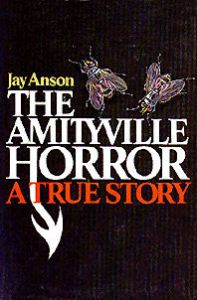
I object to those who claim that such inquiry is a waste of time.  If such things as claimed in Jay Anson’s book do happen (even if exaggerated), it may be that they’re exceptionally rare.  Rarity of objects in the physical world is seldom in doubt.  Ask any auctioneer.  Getting into the accounts around the events, however, betrays a list of money-seeking individuals.  Just about anyone making a counter-claim had a book deal in mind, and given the phenomenal success of Anson’s original the possibility of getting to the truth after that would always involve wading through greed.  No wonder politicians so easily become crooked!  Money makes people do strange things.  Not surprisingly, those left with questions regarding the truth of the matter are left hungry.  It’s clear that Ronald DeFeo killed his family.  It’s a matter of record that the Lutz family moved into the house just over a year later and moved out without their belongings less than a month after that.  Beyond this what happened is less and less likely ever to be known.

Ambling through Amityville

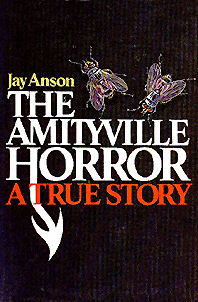
I may be a week too late for Friday the 13th, but I just finished rereading The Amityville Horror.  One of my current projects required my paying close attention to what was and was not claimed, and although it doesn’t count towards my Goodreads goal, I just had to do it.  I noticed, as also occurred to me when rereading Gerald Brittle’s The Demonologist earlier, that the second time through raises more questions than the first.  The book has been demoted from nonfiction to novel over the years, but it seems pretty clear that Jay Anson believed it to be based on actual events.  He could’ve been wrong, of course, but with a long list of documentary writing credits to his name one does have to wonder.  Anson died just a year after the film came out.

When the movie was released I was still in high school and what everyone was saying about how scary it was kept me out of theaters.  (That, and lack of funds.)  It’s hard to imagine now, but there weren’t even VHS options in those days, especially for those of humble circumstances.  As a result, I was well into adulthood before I saw the cinematic version.  Reading the book, however, is an attempt to pry open the question of what might’ve happened at one of the most famous “haunted houses” this side of the Atlantic.  I’d just read a headline that the house had been sold again, and such was the impact of this story that a simple property transaction is now considered news in some circles.

Controversy permeates this tale.  I suspect that’s because it made a lot of money.  The search for the truth is often compromised by lucre—just look at the White House and try to disagree.  The usual rendering is that the Lutz family, in financial trouble, concocted a story that would bring in big bucks.  Such accusations came, of course, once the story did indeed prove valuable.  The second highest grossing film of 1979, The Amityville Horror held records for the highest grossing independent film for a decade.  Add to that the estimated book sales of 10 million copies and you have a nice retirement account laid up.  Those levels of remuneration are enough to corrupt any narrative.  Still, it’s clear that many people wonder what really went on at the house on Ocean Avenue.  I sat down with the book again and I have to admit that I’m no wiser on the question for having read it again.


Amityville Revisited

Remakes, standard wisdom holds, are seldom as good as the originals. When the original wasn’t great to begin with, the bar should be lower. Should be. I’ve been curious about the Lutz haunting in Amityville, having just read the book that started the phenomenon back in the late 1970s. I saw the movie first. That was several years ago now, but I do recall that even as horror movies go it had its failings. Some of that goes back to the book (presuming that anything happened)—nobody had a solid grip on whether this was a ghostly haunting or a demonic infestation. What the movie did do well is show how fragile family relationships can be, especially when under the pressures of supernatural supervision, not of the positive kind. Although, as is to be expected, the book was scarier.

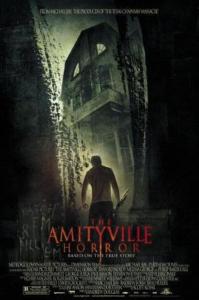
Overcome by curiosity I finally watched the remake from 2005. Clearly I’m not the only one still curious about this alleged haunting, alleged hoax. I also have the alleged burden of looking for religion in horror. Only on this final count was it not disappointing. Well, that and in featuring burgeoning scream queen Chloë Grace Moretz. Although Father Callaway’s role is late in the film and brief, early on religious ideas are implicated. If the movie hadn’t tried so hard to be The Shining these themes might’ve been developed to good advantage. Instead it introduces Rev. Jeremiah Ketcham (also late in the film) as the first owner of the house in 1692 (did the real-estate agent’s mention of that date make you shiver?). Ketcham was a sadist to the Indians under his care, torturing them to death in the house. No time is left to explore the sinister minister’s motivation as the family implodes in its attempt to escape the house by boat.

As is frequently the case with the supernatural, we’ll likely never know what happened at the Amityville house. The story Jay Anson told is now generally classified as a novel. The preternatural can be judged neither in the courtroom nor the laboratory. The best that we can do is make celluloid adaptations to make some money on the deal. The DeFeo murders happened in living memory. The Lutzes left the house in a hurry shortly after purchasing it. Anson’s Indian “asylum” was never really there—and there were no such Native American practices in any case. What the remake left out was demons. Although the movie attempted other religious scares, the house just isn’t the same without them.


Amityville

Surely one of the most controversial haunting stories of my own lifetime was that which came to be known as The Amityville Horror. After the tragic deaths of the DeFeo family in 1974, the next occupants of the fatal house, the Lutz family, claimed to have experienced 28 days of terror before moving out in the middle of winter and taking no belongings with them. Their story, written by Jay Anson, became a sensational bestseller. Published just four years after the unexpected cinematic success of The Exorcist, a movie was quickly signed and it was all the talk of my high school before I was quite at the stage of watching real horror films. By the time I got around to seeing the DVD, the tropes were so well known that it wasn’t really that scary. I realized that I had never read the book.

Whether you find Anson’s account scary or not probably depends on your level of belief in demons. Although he concludes his book with the suggestion that a combination of ghosts and a demon plagued the Lutzes and their priest, the focus of the narrative is clearly on the demonic. Fr. Mancuso suffers because the demon wants to keep him out of the house. The multiplication of flies, the constant waking up just after 3:00 a.m., and the smell of excrement all point to demonic activity. The book does have its share of historical inaccuracies and embellishments. It has been declared a complete hoax by some while others claim that at least some of what was described in the book happened to the blended family that called it home for less than a month. If you don’t accept demons, there’s little here to frighten you beyond a couple of benign ghosts.

As with any story claiming supernatural activity, we’ll never really know what happened. The Amityville Horror is often classified as a novel now. Our minds are conditioned to reject anything so terribly out of the ordinary that it is difficult to accept what you’re reading. The DeFeo family was undoubtedly murdered in the house by one of their own. The Lutz family did buy and then abandon the house in fairly short order for such an expensive purchase. There was a priest involved. The question marks hover about the supernatural elements, as they generally do. These are the ghosts and demons of the rational world which we inhabit. We safely confine them to fiction. Then we sleep at night with the lights left on.