Literate Madmen

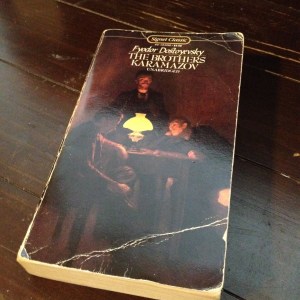
My experience of paternal parents growing up never led me to think Father’s Day was a holiday particularly worth celebrating. (Don’t panic—today’s not Father’s Day!) I do have an ironical sense of humor about the commemoration, though. So the other day when I clicked through one of Amazon’s many daily ads to my email account, I noticed it was for Father’s Day gifts. The first item listed was Fyodor Dostoyevsky’s The Brothers Karamazov. Probably based on my browsing history, I thought. But no, I’ve been looking at non-fiction lately and I bought my well-worn copy of Dostoyevsky before Amazon was a gigabyte in Jeff Bezos’ eye, back when I was in seminary. Then it dawned on me: this is perhaps the most famous patricide novel ever written. Had the Amazon advertisers really thought about what they were recommending? “Here, Dad. It’s a book about sons killing their father.” If marketing is driving America, it may be time to pull over at a rest stop for a coffee break. Or at least read the book first.
IMG_2796

I don’t pay attention to when Father’s Day is. It comes somewhere in that complex of spring holidays that include Passover, Easter, Mother’s Day, and Memorial Day. When my father was alive I sent him a card. It was a card to a stranger, but as Episcopalians know, it’s the done thing. I loved him, but I didn’t know him. Not that I’ve been a parent that deserves a holiday dedicated to my skill either. I confess my fair share of parental failures. They play and replay in my head, in the way the Protestant brain can never quite clear itself of guilt. We, as people, I believe, generally try our best to be good parents. It can be difficult, though. Nothing really prepares you for it.

One of my brothers once told me that, after having a girlfriend with kids from a previous marriage, he better understood how our stepfather viewed us as inherited children. Although I always want to claim the victim role in that scenario (I was only ten, what could I do?, etc.) his insight has stayed with me. It can’t be easy to inherit someone else’s progeny. It’s tricky raising your own child—that new person you want never to experience your own disappointments in life. Even cynics can be sentimental. But then again, I’ve been plowing through The Brothers Karamazov again since January, frequently laying it aside for weeks at a time. It’s not the kind of book I’d give a father on the edge. It’s okay, I think I’m good to drive again. I just won’t pay any attention to the ads I see beside the road.
Long Distance Commute

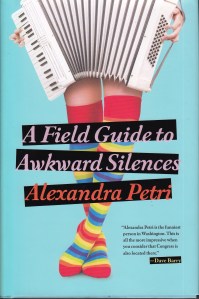
AwkwardSilencesWhat should my next book be? This is the perpetual question of the long-distance commuter for whom electronic devices are mere distractions. If that commuter is socially awkward and believes that only books truly understand them, that is. I’m as eclectic a reader as I am a voracious one. Each book suggests, in some measure, the next one. I always have to keep an eye ahead. Then I read (present tense) a book without peer. I feel lost because what will replace that experience I’ve had for the past few days of looking up and finding myself at my destination? Of actually looking forward to getting on the bus so I can read? I’ve been doing this commute for over 400 books now, and I’m at a loss for what to read next. I blame it on Amazon.

In the publishing world we use Amazon to purchase competitor’s books. Then Jeff Bezos decides to buy the Washington Post, you know, the way people do. Since my email address is on their list I get sent a daily invitation to read the most read stories on said Post. I read a story by Alexandra Petri and I was hooked. Where could I get more? A Field Guide to Awkward Silences is the rare kind of book that makes you laugh out loud on the bus, which, at six in the morning, generates its own kind of awkward silence.  Petri makes you feel like it was actually okay to be that dorky kid who read all the time.  Like there’s a world out there that responds to your longings, somehow.  A world of possibilities.

Now here I am about to climb on the bus without Petri. I’m like a kid staring disconsolately at an empty candy wrapper. “That was so good!” you think. “I wish there was more.” Petri writes as if she’s achieved Bob Dylan’s blessing and has stayed forever young. The time of life when the future seems so full of possibilities. Hers is writing that reminds you of a time when you didn’t spend hours a day nursing hemorrhoids, sitting on a hard bus seat. That reminds you it was possible, unlike your own experience of it, to be cool as an Episcopalian in Wisconsin. That reminds you of the time when you had A Field Guide to Awkward Silences to look forward to reading. No, this book didn’t make that choice of next book any easier at all.


Daydream Believer

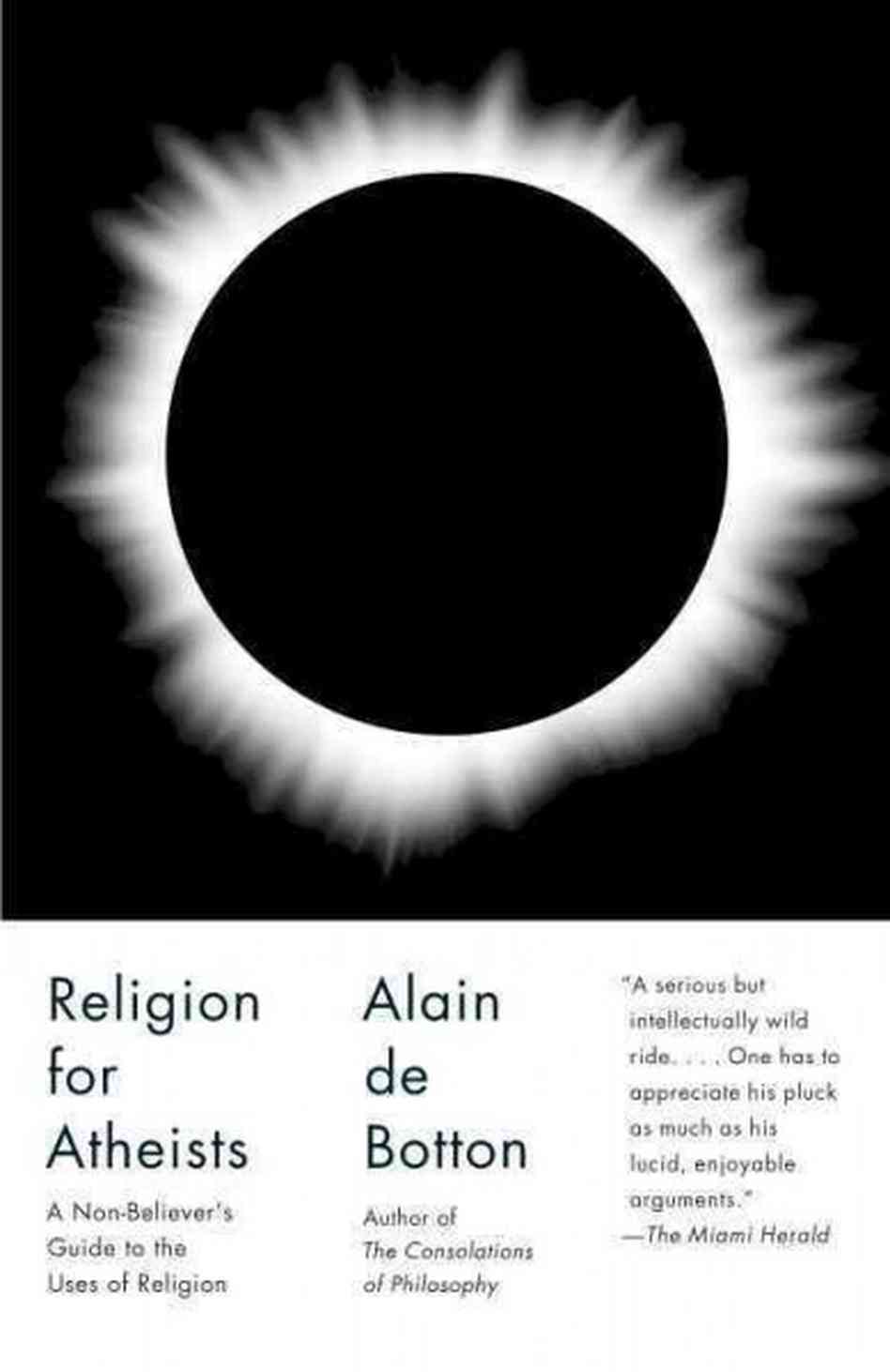
ReligionForAtheistsI have finally found a book that will sit next to my copy of Marcus Aurelius’s Meditations. In this disjointed age of angry Fundamentalists and even angrier atheists, where people bowl alone and don’t sleep well, Alain de Botton has shined a ray of hope. Well, pessimistic hope, but still, I felt more invigorated by Religion for Atheists than I have by a book for a long time (search my category “books” and you’ll see what I mean). Raised as an atheist, de Botton doesn’t share the rabid fury that converted atheists often exhibit. More importantly, he recognizes that, despite its supernatural teachings, religion got a lot of things right. Basic issues such as kindness and compassion have little place in a society that is built around acquiring as much for yourself as you can. Even his chapter on pessimism rang true.

Subtitled A Non-Believer’s Guide to the Uses of Religion, some might consider the book opportunistic, but de Botton approaches religion from a purely practical and openminded angle: it often works. Religion supports (or supported) education. Numerically most of our colleges and universities in the United States have (or had) religious beginnings or affiliations. Religions also supported beauty in art, architecture, and liturgy. The religious culture provided places to meet others who thought like you, and where you felt safe. It was not afraid to be blunt about values. Many would dispute these positives, tending instead to focus on suicide bombers and child abusers. No doubt these evils also exist, and probably draw their inspiration from skewed religious views. Still, as a sincere outsider can see, religion offers much that society has no backups in mind to replace in this secular age.

In a pointed discussion of influence, de Botton mentions the power of institutions. Secular society has demonstrated repeatedly that it lacks the will to finance higher education. Secularists are terrible at organizing themselves. Reading de Botton’s suggestions for secular institutions, I almost rose from my bus seat and applauded. If Bill Gates or Jeff Bezos would put up the money for an institution on de Botton’s model, I’d be first in line to apply for a place in the Non-Religion Department. (A disclaimer here—although I met Jeff Bazos once, I can’t pretend to know his or Bill Gates’s religious outlooks; I only recognize success when I see it.) In any case, until we learn that one voice alone—no matter how many books s/he sells—cannot change anything substantial, we will be mired in impotence. To influence social change you need the combined resources of an institution. And, choose to like it or not, history tells us that in the long run the most successful institutions have been formed by religions. Alain de Botton has, I believe, given us something to believe.