Help from the Friend

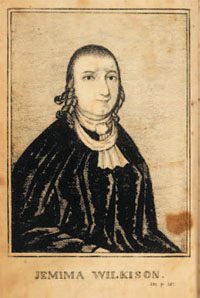
Being unconventional does carry certain risks. I first learned of the Publick Universal Friend, born Jemima Wilkinson, from Mitch Horowitz’s Occult America. There are many things, I imagine, worse in life than being labeled “occult,” but the Publick Universal Friend seems to have been more eccentric than occult. The “Friend” of her chosen moniker was a mark of her Quaker roots. The Quakers, while never among the most numerous of Christian sects, are infrequently considered occult. Two U.S. Presidents were Quakers, as is that friendly face smiling at you from your breakfast cereal box. What Jemima Wilkinson did that pushed her over the edge into the unconventional was actually the fault of her father: she was born female. In the 1770s religious leadership was nearly unanimously male. 

Wilkinson underwent a near-death experience that, like John Wesley some 70 years earlier, led her to believe that she was born to some higher purpose. Quakers, or Friends, generally eschewed excess showiness and the Publick Univeral Friend liked to make her presence known. She rode a white horse into Philadelphia and rode around in a carriage with her own logo, a kind of evangelical branding, if you will. Eventually tiring of the criticism of city folk (Publick Universal Friend was strictly platonic, advocating absolute celibacy), she moved to a region of New York that would eventually become the birthplace of several distinctive American religions. She settled near Keuka Lake and formed a community called Jerusalem.  New York and Pennsylvania would eventually harbor many utopian groups.  Both states were (and are, to a large extent) rural and it was a fairly easy matter to locate unclaimed real estate and establish a little bit of heaven here on earth. 

The message of Publick Universal Friend was peace and friendship, nothing too radical.  If preached by a male it would have been considered gospel. In fact, in a less darwinian world it might actually work.  The pull of nature on some people is too strong.  On others it is too weak. Maybe it is the legacy of having been born in a state that began as a “holy experiment” by William Penn, but I find it sad that the Publick Universal Friend has been nearly forgotten. Perhaps the Friend will have the final laugh. It seems that a young man named Joseph Smith might have been influenced by her in the days before writing up the Book of Mormon. As I’m sure Joseph Smith learned in the town of Carthage, we can all use a Friend who encourages us all to get along.
Sleeping with Darwin

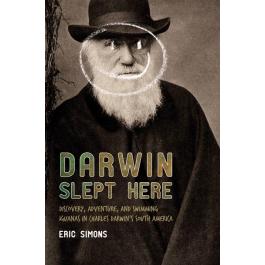
Although I’m hardly capitalism’s biggest fan, it would be difficult to overestimate how much the closing of Borders last year has affected my life. It is formidable to explain, as I sometimes must, to friends who don’t find books as irresistible as I do, how the simple pleasures of knowing a friendly bookstore was in town could make the world seem a little less cruel. There were towns that I instantly identified with the Borders located within their borders. Towns I rarely visit any more. All of this is by way of preface to explain the book I just finished. As the last desultory books lugubriously lined the shelves, my wife and I went through picking up titles we supposed we might have not found any other way. One of those titles was the little travelogue Darwin Slept Here by Eric Simons.

My admiration for Charles Darwin began when I realized that the Creationist venom I’d been bloated with from early days had been misguided. There was a fascination with this “evil” of evolution I’d been taught to shun. As I began to read more objective accounts, I realized Darwin possessed a keen, if tortured, mind that could not rest with half-truths and theological figure-fudging. In his account of following Darwin’s tracks in South America, Simons’ narrative not so much takes evolution any further, but presents a portrait of a world that has continued to evolve. In lives filled with uber-capitalism, where would a young person find five years to sail off on a voyage of discovery? Where would the health insurance come from? The 401K? The dental? As a species, humanity has been utterly domesticated.

Once in a while I dream of the Galapagos. I think of Easter Island and smile. So many places I will never be able to go. I spent three years specializing in Ugaritic studies and I will never make it to Syria—not on an editor’s salary. Not as an American. The world that we’ve constructed opens travel to the young who rarely have the resources to enjoy it. After seminary I spent six weeks in Israel. Young and healthy and heavily in debt, I at least glimpsed the sun setting over Jerusalem before getting hog-tied into the economy. Simons’ little book will not make him a millionaire, but as I read his reflections of rainforests, youth hostels, and rental cars on the Pampas, I thought where our world would be now had Darwin not been of a family of means. So much of our health care is based on understanding evolution. We would not be chained to our desks by threats of a slow, painful, and perfectly legal death without health insurance. We would be subject to biblical literalists who rejected the tenets of science— Come to think of it, perhaps we’d all better make tracks while we still can.


Disputed Territory

Revisiting a childhood home can be a bittersweet experience. As my wife reflects on the first house she remembers going up for sale, we are glad that we spent the holidays there one last time a few months back. In my case sentiment is a little harder to find. The three residences I recall from a fractured childhood all bear the same distinction: they were torn down after we left. All that remains of my youth is three parking lots. Things are a lot more level now than they were back then. Whenever I visit the area, however, I still slow down the car and remember. Memory, whether singular or collective, makes a geographic location a sacred space. We rented when I was growing up, so those spaces that I think of as mine were occupied by others before and after us. (The razing did not take place immediately after we closed the door for the last time.) Whether those others—strangers to me—consider the place special I have no way of knowing.

Holy, holy, holy?

In other cases the sacral nature of a place is hallowed by tradition. Say “the Holy Land” and most people will know that you’re referring to what is now Israel/Palestine. I only traveled there once, but was privileged to stay for about six weeks. Working on an archaeological dig is a rite of passage for young biblical scholars (for such I was at the time), and weekends were spent visiting the places I’d read about since I could first remember. One of the most jarring aspects of the holiness was the evidence of violence. Cars burning by the roadside. Bombs going off in a post office in Jerusalem. Sounds of heavy artillery lobbing explosives through a blue sky during the sunny afternoon. A place so sacred as to be continually baptized in blood. Humans, human memory, are what make a place sacred.

All of this comes to mind with the political posturing of New Jersey governor Chris Christie visiting Israel. God knows New Jersey has enough problems of its own, but it is a relief not to have him hanging around for a while. Nevertheless, what has Trenton to do with Jerusalem? One thing the Middle East doesn’t need is one more bully. Pushing, shoving, crusading, shooting, and bombing haven’t worked for that elusive peace. What value can our dauntless leader add to this unholy mess? Maybe I’m just old fashioned, but I thought governors were supposed to take care of their own problems at home and leave international schmoozing until they got to the big offices. Maybe the race for a GOP nomination isn’t over yet. The most sacred space in this country is a white house that gets sold to the highest bidder every four years. At times there is more wisdom to be found in a parking lot.


Worshipping Religion

When does religion itself cross that invisible line into becoming the object of idolatry? In a world of an entire marketplace (“bazaar” might be a better word-choice) of religions, where each consumer selects his or her product, some take that choice with such conviction that the religion itself becomes their god. In ancient times religion was often a matter of ensuring that the gods were not angry. The average citizen had little control over this since the religious life of city-states and nations was the responsibility of the priesthood. Just pay your temple taxes and shut up. A religion anyone can live with. Last night as we discussed Jeremiah’s temple sermon in class the point became clear: even the God-chosen, fully approved temple in Jerusalem could become an idol.

Watching political candidates and parties and factions of parties posturing (apart from reminding one of peacocks and other showy birds) for possible election, they fly high the flags of their faith and hope that the market favors their brand. It is clear among many of their constituencies that the religions themselves have become objects of worship. How else can the rancor among a deeply divided Christianity (as only one example) be explained? Families and friends are torn apart by a common faith while ministers with the dubious benefit of seminary egg them on. Having been subjected to seminary as both student and instructor, I tremble when I think how clergy are trained. A holy nationalism pervades religions, transforming the faithful into armies that some, unfortunately, end up taking literally.

All the endless debates about religious violence and evolution and abortion should have taught us by now: no one has God in the witness stand. Our religions are our best guesses, no more, no less. In the face of great uncertainty many turn to the bravado of a faith that is willing to murder in order to prove its point. If God is really watching all this, perhaps a humble acceptance might be more appropriate? I think old Jeremiah might have agreed. Of course, he likely died at the hands of his own people who didn’t like his version of religion. That’s where the prophets have gone.


Myth of Jerusalem

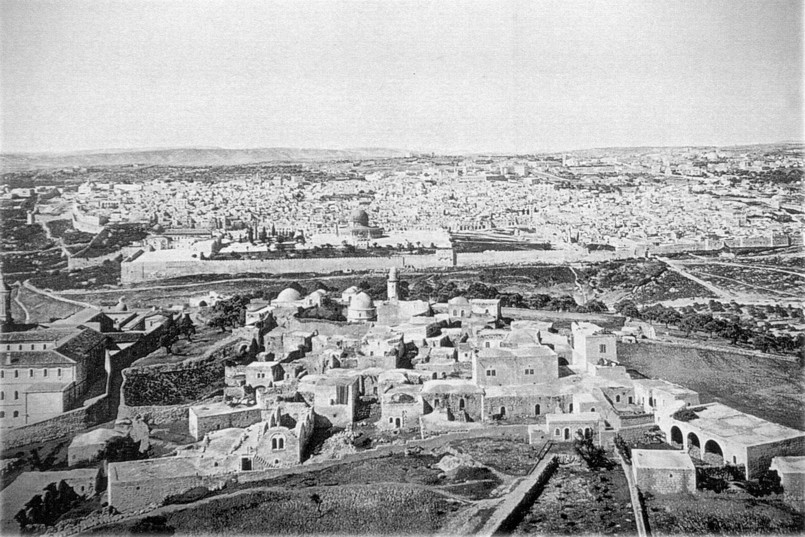
As I stood atop the Mount of Olives watching the sun set over Jerusalem several years ago, I had difficulty believing I was actually there. For a working class kid who’d only ever been to Canada before (and only because we lived not too far from Niagara Falls), this was a moment like a scene from the Bible itself. Jerusalem is a city of myth and dream, and it represents just how seriously mythology may be taken. A new book, Jerusalem, Jerusalem: How the Ancient City Ignited Our Modern World, by James Carroll, was reviewed in Sunday’s newspaper. I have not yet read the book myself, but a couple of lines from Tom Mackin’s review leapt out at me: “Jerusalem is as much a symbol as a reality. Because most Orthodox males spend their time studying the Torah, they are unemployed. Piety brings poverty.” This is editorializing with parsimony.

Those of us raised to believe that pursuit of the highest calling of humankind is that of seeking the divine often end up forced to live the consequences. This pursuit does not pay, unless one is willing to sell one’s soul to become a televangelist. Unemployment has a way of sharpening one’s focus. The message repeatedly heaped upon you by society is that you have nothing of value to contribute. True, religious founders often declare the ineffectual satisfaction of lucre, but then, most of them didn’t have a child to put through college. Having spent nine years after high school studying the Torah (and Prophets and Writings and documents written long before any of this), I see now what could not be seen then.

When I watched the sun set over Jerusalem with some friends, a stray cat wandered over, looking for affection. Or, more likely, food. I had some scraps that I shared with the hungry kitten when it unexpectedly bit my finger and scampered away. My friends, concerned for rabies or some other infection, rushed me down the Mount of Olives and into the Holy City seeking a holy pharmacy. Little did I know at the time that a myth was being enacted at the expense of my aching finger. Acts of kindness are rewarded with the hand that feeds being bitten. I had to come down from the mountain, earn a doctorate, and be dismissed by well-groomed evangelicals before I could finally see that the symbol was the same as reality. I need to read this book to restore my faith in mythology.

More and less than it seems


Where Would Jesus Park?

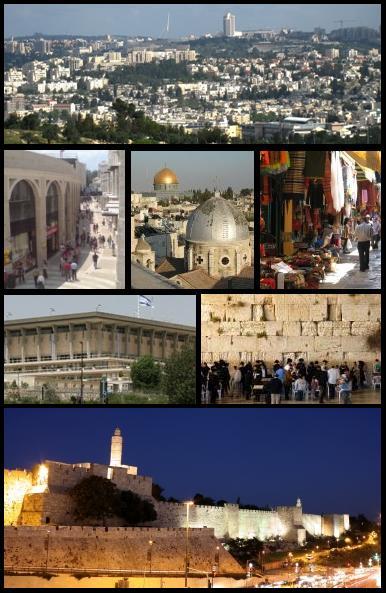
The walls of the Old City of Jerusalem may not go back to the time of King David, or even Jesus, but they have become one of the iconic symbols of a legitimate site of world culture. As a young man my first sight of those walls was almost enough to bring me to tears. I had read about Jerusalem since my earliest days after graduating from Dick and Jane, and to see the Holy City firsthand was the experience of a lifetime. Too bad it is some of the most hotly disputed real estate in the known universe. Sacred to the three major monotheistic faiths that seem dead set on destroying this or that portion of it, Jerusalem is unlike any other city on earth.

The problem, as any urbanite knows, is where to park. According to Matt Beynon Rees of the Global Post, Jerusalem’s city planning committee is considering literally undermining the sixteenth-century walls of the Old City to construct a parking lot. Just a few short years after U.S. troops drove heavy military machinery atop Nebuchadrezzar’s Babylon in order to satisfy Bush-family oil lust and personal revenge, once again one of the irreplaceable monuments of the past may come under the contractor’s gaze. I teach at Montclair State part-time, so, believe me, I know about parking headaches! There have been times when I thought I’d have to drive the fifty miles back home without stopping for class since every space on campus was full. Yet I wouldn’t suggest tugging down historic University Hall to make room for more cars.

The problem seems to be that in our disposable culture we’ve lost sight of what can never be replaced. Immediate urge takes precedence over what our ancestors left for us to ponder and marvel over. A great hue and cry went up when Yellowstone burned in 1988, a lament that the former beauty would never be restored in a lifetime. Damage to structures from centuries past may be repaired, but the wonder of their staying power will forever be lost. It cannot grow back like Yellowstone, no matter how long we wait. Yet, parking meters under the Wailing Wall might save locals from having to take a bus. Regardless of theological conviction or absence thereof, some sites are simply sacred to the human story. The human story, however, has become one of convenience. Where else might Jesus park his Holy Esprit without having to walk (not on water) to get to the temple?

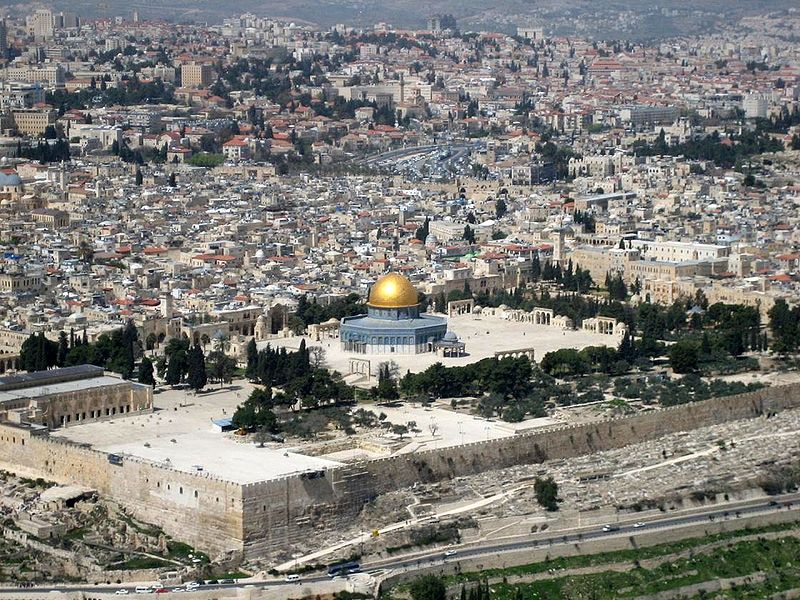
Sure, it's a nice view, but where do we leave the car?


Archaeology in the Service of Politics

People are political creatures. Unfortunately. Politics, as most honest observers of society admit, serve the interest of the ruling party over the good of the whole. This is a nearly universal human flaw; a glance at any newspaper will demonstrate its prevalence. Those who practice politics can hardly be blamed for using the system they’ve inherited, but the system leads to many instances of unfortunate posturing and suffering. Clearly seen in Middle Eastern current events, it is nonetheless no less so in the “western world.” Often in both political arenas the Bible is invoked.

An article in this morning’s New Jersey Star-Ledger bears the headline “Archaeologist links ancient wall to Bible and King Solomon.” The story goes on to describe how excavations in Jerusalem outside the Temple Mount have unearthed a stone wall that might have been part of the legendary temple of Solomon. Of course, putting biblical names to mute structures amounts to voicing ownership claims. Solomon is not a historically attested individual yet – the only source referencing him is the Bible – and claims to have found his temple are premature. As the story states, “Palestinian archaeologists have criticized their Israeli counterparts’ rush to link finds to the Bible.” Amen. So they have; the structure itself is used as a form of dominance. Eilat Mazar, the archaeologist named in the article, is quoted as having said that this wall, “testifies to a ruling presence.”

The Haram es-Sharif, or Temple Mount, is one of the most hotly contested pieces of real estate on the planet. Embedded within these claims are acclamations of ownership. This brief post does not offer the space to unfold the complex issues in any substantial way, but it is an opportunity to note how archaeology is often used to establish tenuous holds on a past that is too foggy to penetrate. Like the classic dystopias of the twentieth century, politically oriented individuals use the evidence to write their own versions of the past. Pasting the name of an uncertain Solomon on a building that the Bible states was built by Phoenicians is an ironic historical twist indeed.

Gnu Jerusalem from WikiCommons


Smiling Goddess

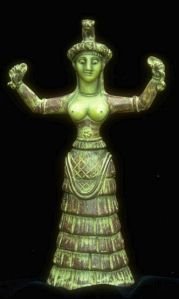
One of the enduring myths of the Victorian Age is that of the benevolent “mother goddess.” Amorphous, unnamed, this protective goddess of archaeological imagination was used to explain unlabeled figurines and frescos of the peaceful feminine archetype. As real goddesses were discovered and catalogued, they were frequently discovered to have a violent and fierce aspect, one feared and revered by ancient worshipers. Even today, however, some persist in this blissful pre-conflict image of the mother goddess.

This morning I was sorry I even glanced at the paper. The reality of the violence in the name of religion was everywhere. In Kabul a mob of angry protesters, fueled on by rumors that American troops had desecrated the Quran, burned an effigy of the President Obama. In Jerusalem Israeli police stormed the Al-Aqsa mosque on the Temple Mount to subdue angry mobs in tensions over one of the world’s great holy cities. Even in England, metaphorically, Pope Benedict XVI “has parked his tanks on the Church of England’s lawn” in the words of A. N. Wilson in the New York Times. Three clashes: Muslim on Christian, Jewish on Muslim, and Christian on Christian. Where is Mother Mary speaking her famed words of wisdom?

As even the ancients knew, religion was prone to violent outbreaks. In a polytheistic world the accounting was perhaps simpler: one god or goddess was upset. Here in the monotheistic world, we have either an angry God or a bevy of intolerant interpreters of that single God. There is no mother goddess whispering words of calm to the world’s religions. When opening the papers brings such a jolt to weary, Monday-morning eyes, the appeal of a smiling mother goddess is all too apparent.

The myth of the smiling mother

The myth of the smiling mother