
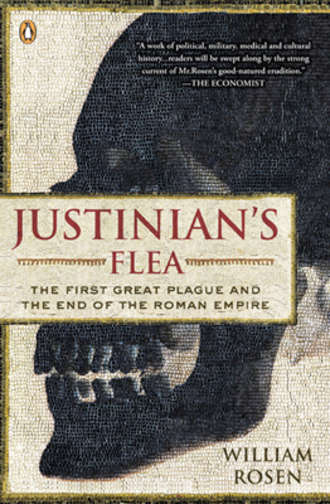
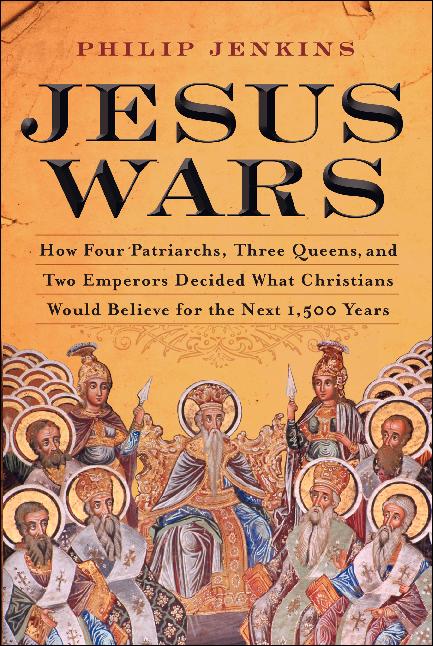
 In one of my personal ironies of history, the period of ancient times that I find least interesting is the one I’ve been reading most about. Part of that is based on my lack of coherence when it comes to selecting reading material. I take recommendations seriously, so when a friend suggested Justinian’s Flea by William Rosen, I figured I’d better read it. I had fairly recently read Philip Jenkins’ Jesus Wars, about the nearly unbelievable shenanigans of post-apostolic Christendom, and so I felt up to taking on the Plague. Justinian’s Flea is about the fall of the Roman Empire. At Gorgias Press, where Justinian’s former prostitute wife Theodora was subjected to revisionist history that made her a lifelong saint, I learned to discount most of what went on during this time period. I was, it seems, a bit too hasty. Justinian and Theodora’s reign is quite interesting, and it is, as intimated, largely because of ecclesiastical politics.
Rosen begins his study by laying out the background to Justinian’s imperial days in Constantinople. In describing the disputes between what specialists now call various Christianities (formerly true believers versus heretics), Rosen notes that Christians had particular disdain for Gnostics, largely based on interpretations of what Jesus’ death might mean. At one point he writes, “Monotheistic religions are famously intolerant of apostasy, even when they disagree about what constitutes it.” Here he hit the flea on the head. “I doesn’t know what it be, but I’m ag’in it.” This attitude of religions has long been the motivation behind massive campaigns of bloodshed and intolerance. Often in the name of religions that claim peace and tolerance as the highest goods. So it was in the early church; heretics were routinely martyred for their “wrong” belief.
Not to throw in a spoiler, but the first great wave of the Plague does nearly draw an end to the ailing Roman Empire. Justinian’s expansions were mere band-aids trying to hold together a Frankenstein’s monster of many nationalities. So riding home on the bus I was surprised first of all that the driver engaged a passenger in conversation (generally frowned upon) and second of all, that he ranted for many miles about politics. It isn’t very comforting in the stressful traffic around New York City to hear your bus driver cry out, “the Roman Empire collapsed—maybe it’s time America did as well!” The prospects of getting home seldom looked dimmer. And I had just been reading about that very empire’s last days. I try to stay away from predictions because I dislike being proven wrong—the end of the story hasn’t been written yet. Rosen, however, has given us a great cautionary tale; if the humble flea can help bring down the world’s mightiest empire—one ruled by a leader overwhelmingly concerned with religion—maybe it’s time to canvass what the infidels like to take in their coffee.
 Steve A. Wiggins