
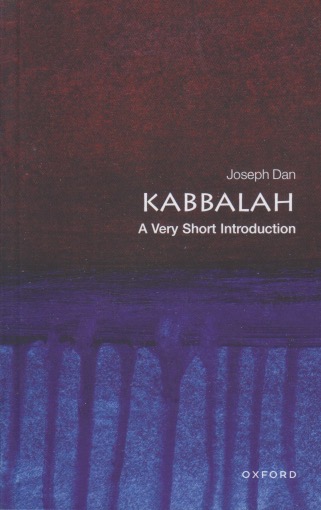
One of the most fascinating mystical concepts is the idea that words and individual letters have some kind of magical power. This is perhaps illustrated by the way certain words gather an aura of mystery that can be quite unlike their original denotation. “Kabbalah” is one such word. The reason I read Joseph Dan’s Kabbalah: A Very Short Introduction is that I’d found myself growing increasingly confused by the usage of the word. Given that this is me writing, it was a horror movie that got me wondering. In one of the movies discussed on this blog (happy hunting and viewing!) one character tells another something like, “It’s the Kabbalah.” This is said in reference to an ancient and mysterious book. There is not ancient and mysterious book called The Kabbalah. So what is it?
I’m not going to be able to give a satisfactory answer to that here. Dan has about 30,000 words to describe it and he admits that’s not really sufficient. Sometimes I think, if one could make a living doing it, I’d have been content to sit at the feet of rabbis to learn the depths of the many ancient books Judaism has given the world. I first became aware of some of them in college, majoring in religion. At each step of my education and career I’ve uncovered more and more. Reading this little book added yet further examples. Judaism, and its direct descendant Christianity, were full of books. They still are. And books are full of words and perhaps these words have some kind of mystical power. But wait, the point of this brief tome is to suggest the word itself isn’t just about mysticism.
Kabbalah can refer to many different things, some of them hardly mystical at all. For the modern usage of the word, which includes Christian as well as Jewish Kabbalah, we have to get to, well, modernity. The concept stretches far back in Judaism and means basically, “what is received.” The initial reference is to Moses on Mount Sinai. Then there’s the oral Torah, codified in Mishnah and Talmud. And books, so very many books! The rabbi is one of those permitted to, and sometimes expected to, come to know these ancient texts and their modern applications. That’s not to suggest Judaism is particularly mystical. It can be, just as Christianity can be, but isn’t necessarily so. It’s complicated. If you’re curious, whether because of a horror movie or not, I can recommend this book. It’ll give you plenty to think about, and even more to read and learn.

 Steve A. Wiggins