
 As a child just discovering the joys of reading in the early 1970s, I found science fiction captivating. We were poor, and our town had no library, so I’d buy my books on Saturday trips to Goodwill. In other words, you take what you can get. I recall buying a book by a guy named L. Ron Hubbard. I don’t remember the title or the story, but I recall my surprise when, as a religion major some years later, I learned that this same sci-fi author had started a new religion. Scientology was not something you’d likely encounter in a poverty-stricken, sub-Appalachian town in rural Pennsylvania, and with no Internet it wasn’t so easy to learn about such things even if you had. We did have TV, though, and we watched Welcome Back Kotter (Risky Business was a little too risky). When I discovered that John Travolta (“Vinnie” as we thought of him) was a Scientologist, I was curious. But only to a degree. When I first taught World Religions and spent a few years researching the Scopes Trial for a book I never had the chance to write, I became very interested in American religions. They don’t come much more American than Scientology (and Latter-Day Saints).
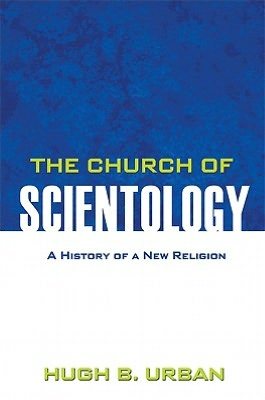
As soon as Hugh B. Urban’s book The Church of Scientology: A History of a New Religion appeared, it immediately went onto my reading list. Like most interested laity, I’d found it difficult to trust much of what I’d read on the Church of Scientology from media sources. Now I had a reliable guide! Even better, Urban frames his study around a question that pervades this blog: who gets to decide what is a religion? As Urban deftly points out, it is odd that government agencies are often those tasked with a job more fitting for those of us who’ve studied religion with the rigor that a physicist devotes to quarks and neutrinos. Some of us have parsed religious texts to bare bones and then dug up the skeletons beneath and examined their ossified remains as well. The world doesn’t take religion studies too seriously, however.
Urban’s book, well written and solidly researched, maintains that rarest of academic feats: objectivity. When approaching a religion, particularly a controversial one, emotions are easily engaged and objectivity is challenged. While confessing that he isn’t a Scientologist, Urban lets the historical facts speak for themselves. He doesn’t try to belittle those he studies, but he doesn’t coddle either. Reading his fascinating account, many questions are raised about the rights of religions and the role that secrecy plays. And we know that Urban is only skating across the surface of a deep and mysterious pond here. Sitting in my room with a yellowed, used copy of some L. Ron Hubbard pulp fiction story in my hands, I would’ve never guessed, as a child, what I was really holding.
 Steve A. Wiggins