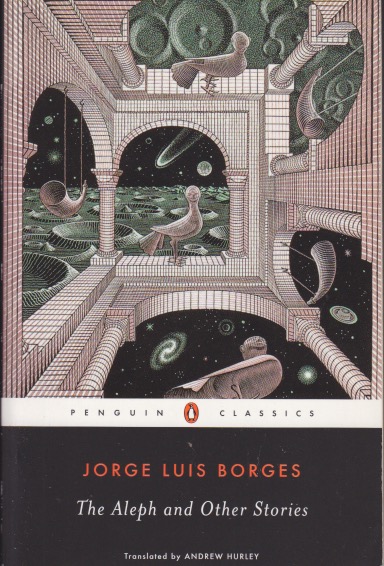
Aleph, Borges

I’m never quite sure how I’m supposed to approach books of short stories.  Some of them are truly massive and contain only a handful of tales I wish to read.  Others are governed by a dedication to the author that compels me to read from cover to cover.  Some are by differing authors, among whom some appeal more than others.  I wasn’t sure where to begin with Jorge Luis Borges.  Not having been raised in a literary family, and having never formally studied literature, I found Borges through a friend and co-worker.  After my academic career crashed and burned, I started reading more literary writers and discovered Borges again and again.  I knew the basics of his story—he was perhaps the most famous Argentine writer, he had gone blind, and he had written probing, unusual stories.

I picked up this collection because of the title.  “The Aleph” is included here.  It was also the title of a collection of Borges’ stories, which make up the basis of this book.  To that collection are added some other pieces, and these last become a mix of poetry and philosophy more than a simple narrative.  Of course, Borges didn’t write simple narratives.  His stories are layered labyrinths.  A complex person doesn’t write simple stories.  Often they reflect on religion.  Some of them explicitly so.  They aren’t, however, religious stories.  Indeed, I was drawn to “The Aleph” because of my own experience of Hebrew and the sense that it is a sacred language.  Borges also puts this into the mix here.

So what kind of collection is this?  I’m still not certain.  This time I did read it cover to cover and at several places I became uncomfortable.  Borges doesn’t shy away from the harsh realities of life.  What people are capable of doing to each other, and what they in fact do.  Some of the pieces just under a page long stopped me in my metaphorical tracks.  Was I reading fiction or some kind of history?  Was philosophy secretly being fed to me by being left right out in the open?  This isn’t weird fiction, although it’s clear that some of it could be taken that way.  It is the work of a mind that operated on a plane different from that of many others.  There’s an uncertainty, a tentativeness here that is very becoming, and even beguiling.  Having read the book I’m not sure what it was.  It will, however, lead to yet more reading.  Of this I am certain.

Places and Books

I recently had the opportunity to travel to a new town and spend the night there.  This is a rarity in the days of pandemic and I’d forgotten the magic of waking early in a new place and looking out the windows at the deserted, artificially lit streets.  It’s so peaceful and full of wonder.  The place we were staying was next to a public library and I noticed that there was a light on in the cupola in the pre-dawn hours.  I like the idea of books watching over us in the night.  Often when I’ve traveled to conferences I’ll arise early and look out on that orangey, artificial light while most other people are still asleep.  Even the city in pre-dawn can be a peaceful place.  This is a pleasant displacement since it’s only temporary.

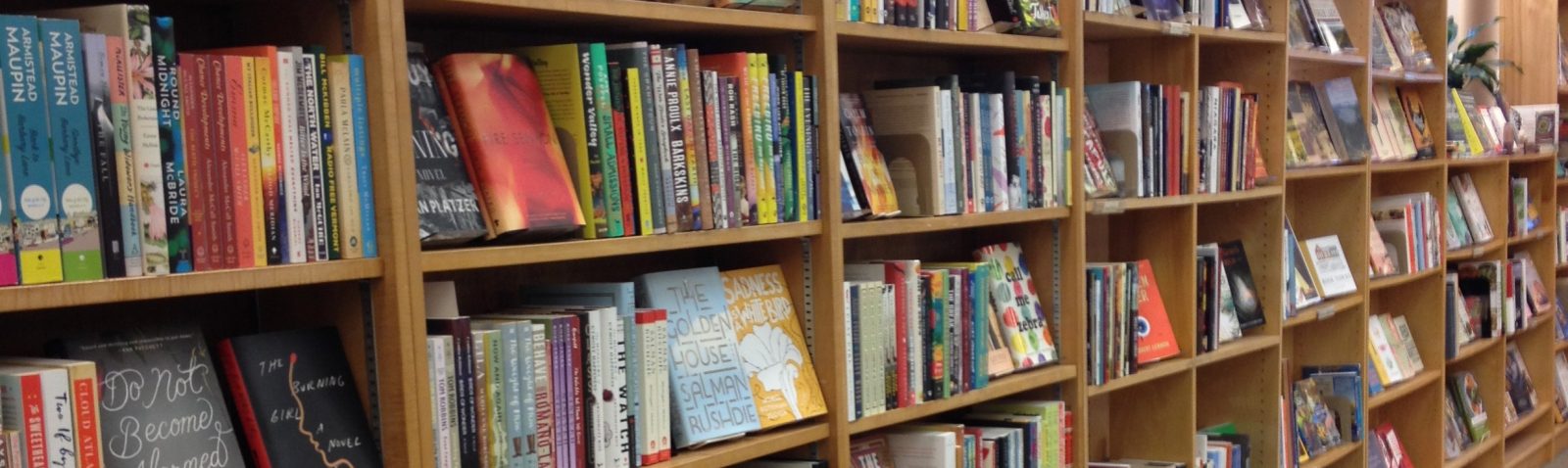
One of the things about the pandemic is that it has accustomed us to life just so.  The controlled environment of home.  There’s a comfort to routine, but there’s wonder in breaking it as well.  When it’s not a conference and still a new city, I begin to look for a bookstore.  One of the common misconceptions—perhaps bolstered by the cookie-cutter experience that has been Barnes and Noble—is that bookstores are all the same.  They aren’t.  Each reflects the minds of the owners.  They reflect their knowledge of their public.  New ways of looking at things.  I suppose this fascination with books has been enhanced by my starting to read some Jorge Luis Borges again.  Those of us who read for pleasure are in the minority and we find the open book to be open arms welcoming us in.  Welcoming us home.

I always travel with books.  My travel bag carries my laptop and my reading.  New technology having to learn to adjust to the old.  I’m not a particular fan of technocracy.  I’ve always preferred paper to plastic.  In a new town I look for authenticity.  We lived for many years in Somerville, New Jersey and one of my concerns was that it couldn’t seem able to support a bookstore in the shadow of that equalizing Barnes and Noble.  The new owner, James Daunt, believes that bookstores should reflect local interests.  His own stores in Britain are cathedrals to books.  Unlike other industries, bookselling isn’t all about the business.  Much of it is about the place.  We travel to see new places, and we read to visit them as well.  And perhaps to reflect in the artificial orange glow before the city awakes.


Trending Horror

It’s not often that I can claim to be ahead of the curve.  A “late bloomer,” I was a timid child whose reaction to most of the world was a species of phobia.  It probably didn’t help that I watched monster movies and was an early fan of the original Dark Shadows.  As I learned to relate to others and take consolation in religion, these more macabre interests became latent rather than obvious, only to come out into the open when working at a Gothic seminary in the woods of Wisconsin and then being fired from said seminary, casting me into the outer darkness.  I found myself being interested in horror again although I’d put it aside from bachelor’s to doctorate.  Now it started to feel therapeutic.

My wife sent me an NPR story by Ruthanna Emrys titled “Reading Horror Can Arm Us Against A Horrifying World.”  The premise is one I’d read before—we find horror compelling because it gives us skills that we need to survive.  It teaches us how to separate evil from mere shadow and how to (or not to) fight such evil.  In other words, horror can be heuristic.  Those who know me as a generally calm, quiet—shy even—individual express surprise when I confess to my secret fascination.  One of the most common responses is the question of “why?”  Why would anyone want to watch such stuff?  My observation is that those who ask haven’t tried.  Horror is not often what it seems.  Or perhaps they have better coping mechanisms than I have already in place.

The names of many writers of what might be considered horror have gained mainstream respectability.  Stephen King’s name alone is enough to assure the success of a novel.  These days you can mention the name Lovecraft and a fair number of people will have at least heard of it (him) before.  Jorge Luis Borges has respectability for having been Argentine.  Joyce Carol Oates for being both an academic and a woman.  If you’ve read their works, however, there’s no doubt that something scary is going on here.  As Emrys points out, with our world becoming a more polarized and frightened place, horror may be ready to hang out its shingle saying “the mad doctor is in.”  In fact, it may become even more popular than it is already.  We human beings set ourselves up for horror constantly and repeatedly.  I’m seldom ahead of the curve.  I hang back to see what might happen to those out in front.  Call it a survival technique.


An Odyssey

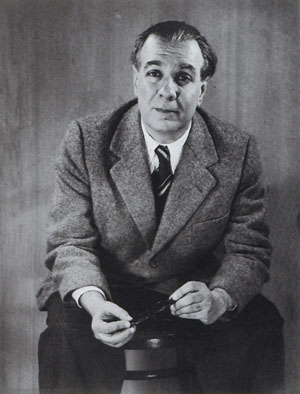
Jorge_Luis_Borges_1951,_by_Grete_Stern

I learned of Jorge Luis Borges through the recommendation of a friend some years back. Of course, knowing about a writer is never quite the same thing as reading what s/he has written. So it was that I recently picked up an edition of Borges’ short stories entitled, biblically enough, “The Aleph.” I find that these stories require slow reading, chewing over rather than swift gobbling down, like so much of what ends up on the mass market shelf. In lives squeezed for time between the incessant demands of cell phones, social media, and plan old television (satellite or cable), spending unrushed minutes with a thoughtful story can seem a waste of time. I suppose that’s the sole benefit to a long commute on public transit—reading is always an option (although, sadly, not one frequently utilized, to guess from all the electronic farts emitted by computerized devices all the way home).

The first tale in my volume is “The Immortal.” Perhaps it is the hand of the translator, but the sensibilities of Borges are not unlike H. P. Lovecraft. Borge was influenced by Poe as well, and as the narrator of this tale encounters Homer in the land of the immortals, it is only fitting that the question of mortality should arise. Joseph Cartaphilus, the narrator, notes that the three western religions all claim to offer immortality, but in reality focus on the only part we intimately know, the part we call being alive. Often this idea has come to me as well when encountering one so sure of an afterlife but so fearful of death. If immortality does not banish terror of the grave, what use is it?

Indeed, as Cartaphilus realizes that he has drunk from the river of immorality, even the company of a devolved Homer can not entice him to live forever. Off he rides in search of death, a solace that comes only once he has sold his story in the form of a used book dealer, within the back cover of the Iliad. Once the story takes on the life of the teller, he is free to die. There is so much going on in this brief tale that two readings have only begun to scratch the surface. Borges lays religion’s follies at its feet, but shows that there is still much more to fear. I can see the draw, and as a new year dawns, I can see myself becoming more acquainted with Borges and gaining the insight that only thoughtful fiction can bring.