The Weather in Kansas

In a move that threatens intellectual whiplash, the Kansas State Board of Education has backed the Next Generation Science Standards. For a state historically at war with evolution, adopting a curriculum that (rightly) presents evolution and global warming as facts, there is cause for hope. As an average citizen sometimes just struggling to get by, I watch in stunned horror as our elected officials try to repeal Obamacare without touching their own health plans paid for by yours truly (and mine truly). I see them vote themselves pay raises while pension plans and salaries of ordinary citizens are frozen. I know where the buck actually does stop. So it is strangely encouraging to see a state that has declared war on science beginning to realize that yes, the truth does have consequences.

Science does not necessarily have all the answers, but it is the best that we know. The empirical method works, and our healthcare, transportation, and communication have all benefited enormously by it. Our way of life has grown easier because of our application of evolution and its ways to our understanding of microbes and the ways to hold off their attacks. Science has been warning us since I was a high schooler, over three decades ago, that our industrialization has been causing grave changes to our ecosystem. Unfortunately, those with money to make from it can simply afford to move to higher ground. Kansas is among the Great Plains states. It is wise to recognize that global warming threatens those who live close to the earth most of all.

The intolerance to science is not simply a religious reaction, as some would characterize it. Religion may be used in the interest of business. And any savvy entrepreneur knows, and exploits that fact. It matters not a jot or tittle if you evolved from a common ancestor with the apes, as long as you can climb, like King Kong, to the highest towers and look down on all the rest of humanity. The water from melting ice caps may be rising below, but the Great Ape need not worry. Until it becomes clear that without the little guys down below, even the top monkey is nobody.


NotInKansas


The Skinny on Kansas

Perhaps it was just a slow news day, but Monday the Associated Press ran a story about a year-old skinny-dipping episode involving Kevin Yoder, US Representative from Kansas, and, by extension, Jesus.  Given that I’ve just posted on the skinny-dipping priest in A Room with a View, this seemed an apt place to consider what is being shown to the public. First of all, Yoder did not go au naturel in the swimming hole behind his house. The incident took place last August in the Sea of Galilee, the very body of water Jesus putatively walked upon.  Here’s the rub: with or without a boat, because of the association of Jesus of Nazareth with the Sea of Galilee, many people consider it a holy site. Even an Israeli police spokesman seemed a little put off by the mental image that, even if a year old, is a bit disturbing.  (The thought of any politician undressed is a bit jarring to the puritan imagination of the United States, and, one imagines, in many cases it is a reasonable phobia.) Yoder was reportedly in Israel for a trip funded by the American Israel Education Foundation. They were traveling to discuss international relationships, apparently.

As much fun as it is to catch a big player with his (less often her) pants down, I do wonder at the fuss. During my time in Israel—granted, many years ago and fully clothed except when in the shower—I noticed that American standards were not completely in force. A stroll down the beach in Natanya would easily prove my point. We like to hold our public officials to a higher standard that the average citizen, and given what they take from the system, rightfully so. Nevertheless, I wonder what harm is really done by a bit of juvenile fun. Obviously I wasn’t there, and I don’t have the context with which to judge such behavior accurately.  The Israeli police representative stated that public nudity is forbidden at the Sea of Galilee, so I suppose the legality of the act was an issue. American sexual mores, in addition to having been tempered by Victorian attitudes, are largely based on religious prejudices. The Bible is not shy on nudity, however, and people in the early Christian centuries participated in that world.  According to the Gospels, Saint Peter went fishing naked on that very same lake.  Progress obviously involves putting a cover on it.

Ironically, in trying to explain himself, Yoder said that the jump in the lake was spontaneous, a moment of joie de vivre, “just to have the experience.” He conceded that the Sea of Galilee is a special place.  And, he avers, drunk diving was not involved in the incident. No matter your level of tolerance, the emerging picture is an odd one. A group of government officials, one of them naked, standing around the Sea of Galilee at night.  A 30-something from Kansas jumps in for 10 seconds and it seems as if a storm arose over the feted Sea of Galilee just like New Testament times. One wonders how well our government represents the puritanical interests of their constituency.  Kansas, as we all know, is immune from evolution and provides a home for Fred Phelps and company. And it’s also a land-locked state. If you want to run around naked, and you’re a public official, it looks like you—like Dorothy—have to get out of Kansas.  Even then you might find yourself rocking the boat. Let’s just hope that if Peter’s inside he has the sense to pull on at least the girdle of righteousness before company comes.


Frankenstein’s Monster

“We are about to unfold the story of Frankenstein, a man of science who sought to create a man after his own image without reckoning upon God. It is one of the strangest tales ever told. It deals with the two great mysteries of creation – life and death.” So begins Universal’s 1931 classic Frankenstein (a movie that my wife kindly indulged me with for Christmas). Watching the film as an adult highlights many nuances unnoticed by even many a childhood viewing. The theatrical introduction of creating a man “without reckoning upon God” was heady stuff in the pre-atomic world. It was a simpler time before men had embraced god-like power (I use “men” intentionally here; even the credits for the movie ironically cite the noted feminist author as “Mrs. Percy B. Shelley”), and audiences were indeed shocked in theatres just 80 years ago.

The now tame movie was originally subjected to heavy censorship. Even the liberal states of Massachusetts, New York, and Pennsylvania censored the line where Dr. Frankenstein cries out, “Now I know what it feels like to be God!” A divine thunderclap was dubbed over the words to obliterate the blasphemous line. In Kansas (perhaps not surprisingly, given recent political developments) 32 scenes were cut, paring the movie down to half of its original 70 minutes. I suppose all that would have been left would have been the scenes of dancing Germans; the Lederhosen would have been frightening enough. The accidental drowning scene was overwhelming for many sensibilities in a pre-concentration-camp footage world.

I read Mary Wollstonecraft’s novel long before I ever saw the movie, and I was struck at how sad the story was. Of all the classic monsters, Frankenstein’s creation easily garners the most sympathy. A creature that did not seek to be brought to life, forced into destitute and desperate circumstances by a population who could not, or would not try to understand, Frankenstein’s monster retains the potential to be any one of us. Although audiences today rarely blanch at blasphemous words, we still permit a society that creates Frankenstein’s monsters through crafty politics and tax breaks. Perhaps when taking authority public officials should add a line from the movie to their oaths of office, only it could be demurely obscured by a well-timed thunderclap.


Lions, and Politicians, and Bears


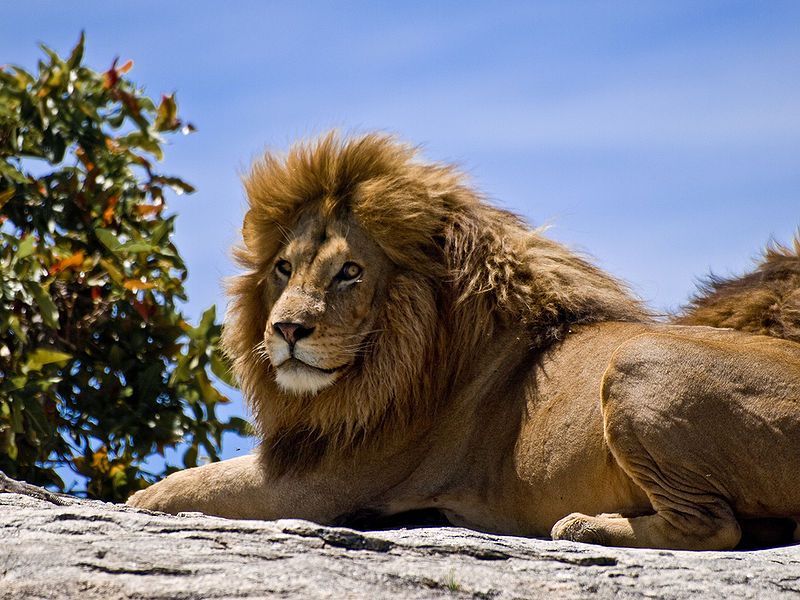
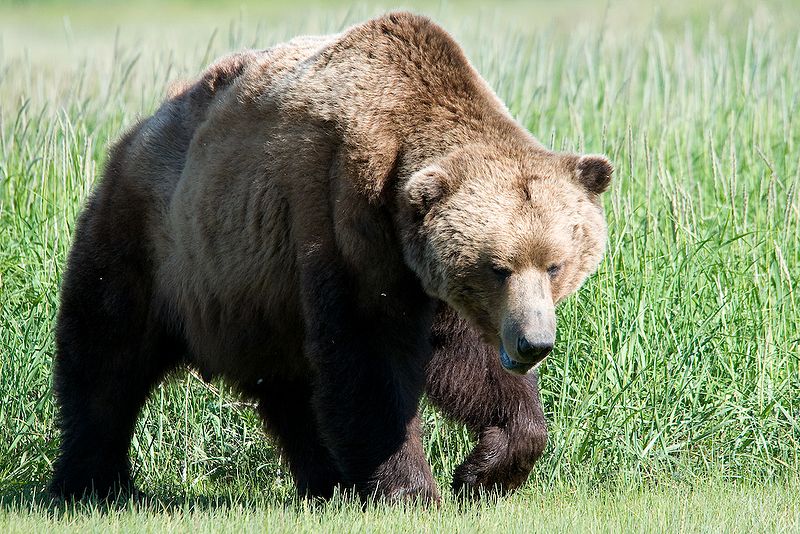
A man was eaten by a lion in Zimbabwe yesterday. A boy on his way to school in Alaska was attacked but relatively unharmed by a brown bear. Predation. Much of the way humans act is based on our long history as both predators and prey. Evolution (may not apply in Kansas or Texas) has designed us to cope with these constant stresses of finding enough food and avoiding becoming food. A great deal of religious behavior can be traced back to avoidance of predation and success in the hunt. We like to think that we are somehow not animals, but animals are smart enough to disagree. Just ask that cheeky squirrel that finds ingenious ways to circumvent all the deterrents you put in place to assure that those seeds go to needy birds, not fat rodents. We are part of the mix. Our opposable thumbs help immensely; we build our own ecosystems to keep lions and bears out.

Yesterday was a day of predation. Even within the human sphere we find that killing others is permissible, as long as it is done slowly by those in fine clothes and fancy automobiles. Depriving the less deserving is a time-honored human behavior, after all, survival of the fittest only applies to animals, not us. Right? By backing policies that protect the wealthy in their lofty sanctuaries while others shiver in November’s Tuesday chill we show human nature. Humans are predators as well as prey.

Intriguingly, many politicians who support laissez faire economics deny evolution exists. Instituting policies that ensure survival of the wealthiest, they deny up and down that evolution has anything to do with the way that we are. It’s all in the nature of the evidence. And nature itself is evidence. We may be the smartest, most well adapted of the mammal class, and yet we can be eaten. What does the evidence suggest? From the point-of-view of a lifelong observer of religion, it suggests we are still the prey. When religion stealthily crawls into bed with politics, it is evident that even religion itself may be a deadly predator.