
Dog Daze

I read quite a bit about animals. One reason is that when you’re counting all the species on the planet we’re pretty clearly among the animal part. Having grown up with many pets, the dogs particularly stand out. We tended to have only one dog at a time and they were so full of personality that it obviously wasn’t a matter of projecting to understand that one was more or less optimistic or joyful than another. Some could be mean while others were loving. There was quite a bit of buzz about W. Bruce Cameron’s A Dog’s Purpose back in January. For Modern Mrs. Darcy’s 2017 Reading Challenge the book fit one of the categories for me, and so I found myself reading about animals again. The thing about buzz is that I listen with only half an ear. I didn’t know much about the book except that it was a novel narrated from a dog’s point of view.

A couple of things struck me as I got into the story. One was that the protagonist ended up still believing that humans were more important than dogs. I suppose there’s some kind of evidence for that, from a dog’s viewpoint, but it doesn’t seem very strong to me. After all, we’ve bred wolves into pugs and cockapoos with an intentionality that even Mr. Darwin would’ve recognized as unnatural selection. Left to their own wolves would’ve adapted, but they’re pack animals and while dogs may think us the alphas, they’re each an important part of the group. They are giving, but that’s the nature of being in a pack. It’s also something that elected officials in Washington could stand to learn. When there aren’t rifles and traps, pack animals prosper.

The second thing that stood out about A Dog’s Purpose was reincarnation. The idea scares me. Life’s been a long challenge this time around and, unlike Nietzsche I’m not sure I could face it this exact way again. In any case, reincarnation only works if there are souls to pull it off. Cameron posits that for Toby to become a fully developed Buddy four cycles of reincarnation are needed. Like a good Platonist, our protagonist recalls the important lessons from each previous life and is able to develop into a more fulfilled dog each time around. The karma here is good. Cameron does seem to “get it” from a human-projected dog’s point of view. It can be fun, and it can be sad. The important lesson, for me, is that animals are who we are and to be a successful pack we need to look out for the good of each other.

Call it Civilization

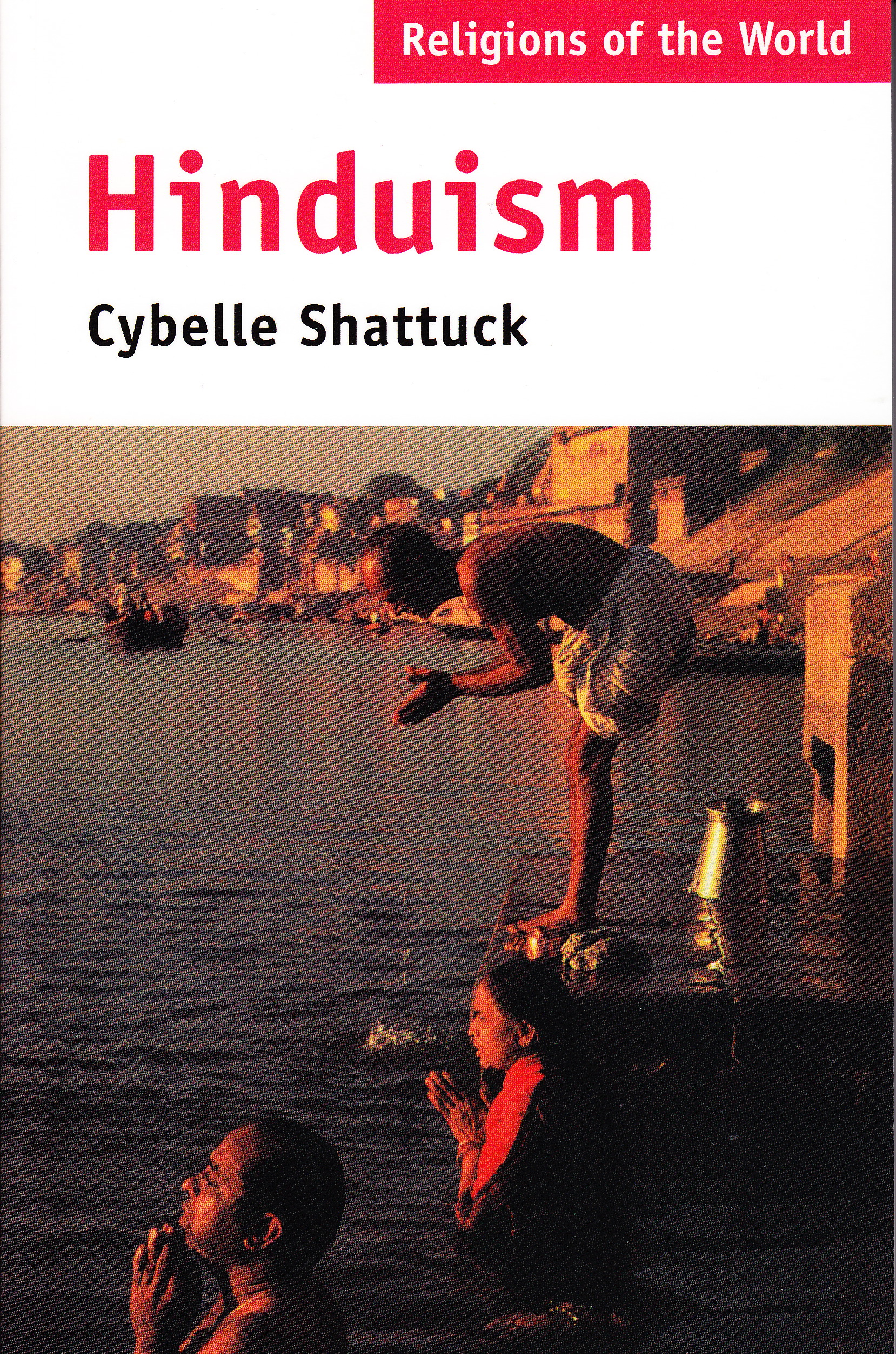
HinduismWhile brushing up on Hinduism by reading the book of that title by Cybelle Shattuck, it once again occurred to me how the concept of religion distorts itself. Prior to the Roman Period, the concept of religion really had no name. In fact, religions were sets of folk beliefs held in common by people of a single culture. These beliefs had many functions: keeping social order, establishing common practice, undergirding a kind of optimism in the face of inevitable death. Since long-distance communication was rare and unreliable, communities separated by more than a few miles soon developed details that fit their own situation and would hardly apply universally. Until they were written down, anyway. In Hinduism—which is in no sense a unified religion—even the “sacred writings” were not held to be authoritative for all people across all places and times. That concept would emerge with Christianity, a religion that would define the term and try to make it stable.

Hinduism is the oldest continually practiced “religion” in the world, as far as we can tell. The religions of the Mesopotamians and Egyptians eventually died out (although they have been revived by some in recent times) but the folk belief—or better, folk practice, of ancient India has continued relatively uninterrupted while new religions from Israel and Arabia changed the rules of the game. Monotheisms quickly demand heresies. A single God would not tell people different truths. Something upon which Shiite and Sunni, Catholic and Protestant, Pharisee and Sadducee all agree. One Lord, one faith, one baptism. By fire.

Meanwhile, even with Muslim and Christian missionaries afoot, Hinduism continued its accustomed continuity. To be a Hindu doesn’t mean worshipping the same god with the same ritual as everybody else. It is a way of living intended to keep dharma and avoid bad karma. And even as trendy westerners stretch themselves into impossible yoga postures, they are participating, at some level, in ancient practices that we call the religion of Hinduism. Shattuck’s brief introduction is a nice little primer that explains this time-honored folk tradition in a way even a believer in religion can understand. There are, it turns out, more things in this philosophy than our universe has ever dreamt of. Or perhaps the one dreaming is really Vishnu after all.


Ring

Absence of evidence is not evidence of absence. So goes a trite little statement meant to calm the fears of new students of biblical studies who worry that the historical record for biblical events is so sparse. The professor can head off many confrontations by declaring that such-and-such an event could have happened, but if it did it left no mark on the historical record. As I was watching the Japanese movie Ringu last night, I wondered about the apparent absence of religious imagery or themes. I am fully aware that not all horror movies have religious components, but the juxtaposition of religion and fear is so common in the western world that it often shows up in scary movies. I wondered if this translated to other cultures or not. Ringu is a decidedly creepy ghost story that creates considerable tension with little gore and not much in the way of special effects. The social commentary is evident even without the benefit of first-hand knowledge of the culture. The paranormal pervades the film.

Christianity is the matrix of many scary movies made in a North American, or even European, context. Although I have read about Buddhism and Shinto, and even occasionally taught courses on “World Religions,” my knowledge of eastern religious traditions is admittedly still quite basic. I can usually spot a biblical allusion a country mile away, but subtleties of foreign religions are harder to discern. Although many religions coexist in the United States the overall context is still Christian—there can be no doubt for anyone who follows politics. Japan is, like America, largely secular. The religious base, however, tends to involve both Shinto and Buddhism and I’m not sure which, if either, forms the recognizable “religious” basis of the collective consciousness. In many ways “religion” only applies to the Judeo-Christo-Islamic model. Much could have been transpiring in Ringu that I simply missed.

After the first mysterious death in the film a short sequence of a family in mourning is shown. Clearly this is what we in the western world would consider a religious context. The decision to try to calm the avenging ghost by uncovering her murdered corpse also conforms to what we might term religion. The fact is, these are very human concerns. Religions throughout the world treat death with a religious reverence since it is the great mystery of the living. Religion frustrates many scientists just for the fact of its mysteriousness. So, does Ringu revolve around religious fear? I don’t know. With the karmic implications of the story-line I would suggest that maybe it does. I’ll remain agnostic on the point, however. The same goes for the absence of evidence is not evidence of absence. Is it or isn’t it?