
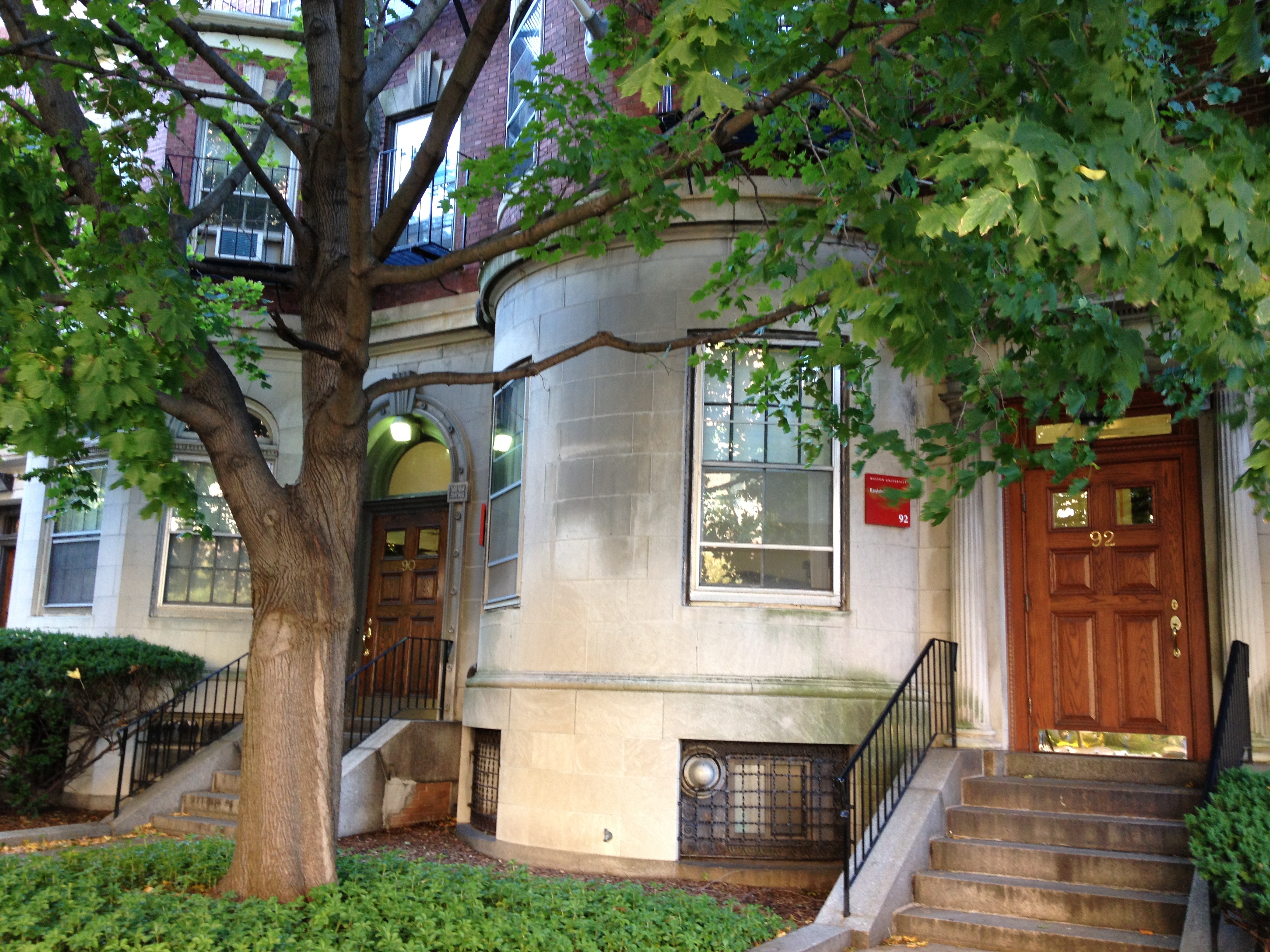
It is almost like stepping into a time warp. To be honest, it is difficult for me to admit that I graduated from Boston University School of Theology a quarter of a century ago. Standing here outside 90-92 Bay State Road, where I once lived, is like looking into a shattered mirror. Behind those doors much of what made me who I am took place. Perhaps I left some of myself there. I don’t even know if the property is still the single student “dorm” for the school of theology or not. Kenmore Square has transmogrified from an area that felt like Times Square in the ’80’s to an upscale dogtown. When I stepped into 745 Commonwealth Avenue, it was like being hit in the face with a combination of nerve gas and roses. The hallways look wider now then they did back then. The hallways where so many of my assumptions curled up and died. They still have chapel and community lunches. The Boston Book Annex is closed.
Boston University has sure poured a lot of money into the Back Bay redevelopment. Whence that sense of personal offense when I see a multimillion dollar new building there and recall the financial aid interviews where I was told, like in a Bruce Springsteen song, “we’d like to help you out, but we just can’t”? Has social justice come to live in these halls? In those days anyone who didn’t have an oppressed status was a minority. And I learned as much about hate as I did about love within these implacable walls. Is it ghosts that I feel rushing through me as i walk down Bay State Road, and stare out over Storrow Drive? I’m not sure of the future of theological education. Until schools of theology can lay down their swords and become truly ecumenical, can any change truly occur?
Theology is an exercise in the unknown. When I donned my red robe and graduated here, the world seemed to be full of possibilities. A lot of erosion can take place in twenty-five years, you know. I thought I was contributing to the future of theological education when I studied the Bible so minutely that no single letter existed that didn’t have a prehistory deep in the realm of pre-Israelite society. I assumed that truth was the end goal of theological inquiry. Problem is, for many, the end goal was written two millennia ago and we of the lost generations ever since have as our task simply to reinforce the crumbling foundations and assure our benefactors that we did have it right, we have had it right, all along. As I write this a very able colleague at another seminary is undergoing what can only be considered heresy trials for teaching the truth. Is theological truth so fragile? Maybe this is why it has taken a quarter century to return. Maybe this is the future of theological education. Those of us who still believe in theological education seem to be a dying breed, along with the ghosts of Bay State Road.
 Steve A. Wiggins