Coming to History

Perhaps because I was a critical thinker at a young age, or maybe because I’ve always been insistent on fairness, I never took an interest in American history.  I cast my eyes back further, wondering how we got to where we are.  Such looking backward would lead to my doctorate.  Now, however, I’m interested.  I’d pay better attention to American history in school, were I now required to attend.  I’ve known about Kenneth C. DavisA Nation Rising since shortly after it was published.  My family listened to part of the recorded version when long car trips were more common.  Remembering what we’d heard, I eventually purchased the print book as well—I’m a fan of print and always will be, I’m afraid.  I only resort to ebooks when there’s no other option.

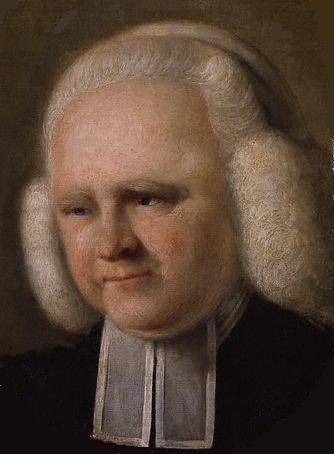
In any case, what drew me to these Untold Tales from America’s Hidden History was the information about early revivals.  Particularly those of George Whitefield.  Now, I’d learned about Whitefield in seminary (it was in United Methodist history, as it happens), but I hadn’t realized that he was America’s first superstar entertainer.  People flocked to hear him preach and he even caught the attention and friendship of Benjamin Franklin.  It’s estimated that Whitefield reached an audience of about 10 million hearers, and this was back in the eighteenth century.  He also preached in England and since the American population was just over 2 million in those days, it means he was enormously popular over here.  It was Davis’ book, not a seminary class, that made me aware of the fact.

Having grown up in one of the original thirteen colonies—Pennsylvania was a state by then; I’m not that old—you’d think I might’ve been more interested.  George Washington was in western Pennsylvania at least a time or two, and I even found a Civil War coat button poking out of the ground in our backyard once.  Nevertheless, it took adulthood, and perhaps the recognition of just how fragile our democracy is, to kickstart my interest.  Davis’ book is good for those who are interested in the lesser-known aspects of American heritage.  We aren’t always the good guys, though.  This isn’t the heavy-duty history that totters with facts and figures.  Really, it’s a set of fascinating vignettes of many people mostly forgotten these days.  And like most American histories, it shows that our political troubles today are nothing new.

Don’t Know Much

Pennsylvania does not come immediately to mind when “big states” are mentioned. When you have to drive the breadth of the state, however, you start to get a sense of the beast. Despite its abundant natural beauty, Interstate 80 manages to keep it to a minimum, so driving home yesterday we listened to the first disc of Kenneth C. Davis’s A Nation Rising in audio-book format. Mostly known for his Don’t Know Much About — books, Davis is a popular historian with a sense of what makes the past interesting. I can’t speak for the entire book yet, but the unabridged reading of A Nation Rising certainly was an educational experience for the first hour or so I’ve heard. The book focuses on the initial fifty years of the nineteenth century (1801-1850) in the United States. Of particular interest to me is the religious angle. In the introduction Davis states that it will become clear how the concept of America as a Christian nation is a myth. Other than my usual objection to “myth” being equated with falsity, this premise does look very interesting.

Stepping back before the nineteenth century, Davis spends several minutes (which I assume translates to several pages) describing the ancestry of Aaron Burr, one of America’s bad-boy politicians of the period. Burr was a grandson of the reformed minister Jonathan Edwards and this circumstance leads Davis to recount a bit about the Great Awakening. The first major religious revival on American soil, the Great Awakening spread throughout the States in the 1730s and ‘40s, setting the reputation of the young nation as a bastion of Reformed Christianity. Although many denominations became involved in the show, the origin and orientation of the Great Awakening was Calvinistic. Reacting against enforced Catholicism in much of Europe, many colonials flocked to America to practice their stripped down, Bible-based, generally intolerant religion in the New World. Particularly interesting in Davis’s rendition is George Whitefield. Viewing the preacher from hindsight that includes a distorted religious view of American history, Davis notes that Whitefield was as much performer as preacher.

Trying to figure out the next hot trend

Whitefield was an Anglican priest who helped set the mold for John Wesley’s success in bringing what would become the Methodist Church to America. “Whitefield pioneered the development of multiplatform marketing strategies,” using the media and staged events to draw attention to his evangelistic efforts, according to Davis. Whitefield knew that religion alone could not sway the masses. They had to be entertained. Davis notes that even the Tea Party has corollaries in early American history. What the mainstream has been slow—perhaps too slow—to realize is that entertainment works. In casting the die for American spirituality, preachers like Edwards and Whitefield knew the value of the gripping sermon vividly illustrated. The antics of many Tea Partiers reveal that they learned the lesson well. Showboating will garner more votes than substance any day. How else can we explain Ronald Reagan, Sonny Bono, Jesse Ventura, and Arnold Schwarzenegger? This is America’s truest legacy: entertaining with religious faith will take you where intellectual depth just can’t go.

I will have to wait for another car trip to hear more of Davis’s interesting perspective on American history, but in the meantime I wonder how long it will take intelligent Americans to catch on. Don’t Know Much About History is a frighteningly prescient title for those who continue to ignore religion as a political force.