
“And if there’s life on other planets, I’m sure that he must know, and has been there once already, and died to save their souls.” Larry Norman, one of the original Jesus Freaks, may not have been the deepest theologian, but his words come to mind as I see scientists reluctantly admitting that maybe life on earth is not so unique after all. It’s been in the news that Kepler Space Telescope’s data have been indicating that other planets like earth may be quite common. It has always amazed me that people have been so reluctant to let go of the notion that we are the only spark of intelligence in this vast, vast, cold, and dark universe. We seem to need to think we’re special. Religions generally indicate that the gods made us for some purpose or another, some love us, some are indifferent, others may be hostile. But generally, we’re unique. The Mormons have for years taught that there is life out there, but mainstream Christianity has generally been agin it, mainly owing to the crucifixion. Larry Norman, the original Christian rock artist, speculated that cosmic history repeated itself: if Jesus died for us, well then, he must’ve done the favor for them too.
Once Edwin Hubble stepped away from the telescope, stuck his famous pipe in his mouth, and said “huh,” I would’ve thought other scientists might’ve considered, like H. G. Wells, that “they” were out there looking back at us. Why this reluctance to suppose that we’re not alone? The story in the Washington Post cites the typical reason: the Goldilocks effect. Scientists, perhaps unwittingly influenced by the anthropic principle, have supposed other planets, if they existed, were either too hot or too cold to support life. We, like Goldilocks, happened to inhabit the only planet among the billions of galaxies of billions of stars, that got it just right. More like God-ilocks. The idea derives from Genesis where, it is strongly implied, we are the only ones. Religion influences culture, whether materialists want to admit it or not. The earth-only bias is inherently religious.
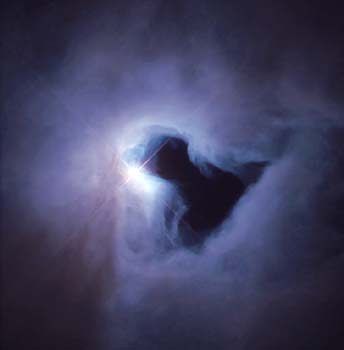
Who’s looking back at Hubble?
Astronomers will gradually come around to the idea that there are other planets like ours. It will likely take decades, perhaps centuries, before they will commonly admit that life forms like ours are out there walking around. Eventually they may decide that there’s something to UFOs after all. Meanwhile, various New Religious Movements have already hitched rides on those flying saucers and they will be laughing once the rest of us catch up. We tend, under the influence of those who claim religion is always Bronze Age drivel, to forget that religion often leads the way to new territory. When the little green men and women land, we’ll find that many religions have beat science to the punchline. I’m not so sure, however, that the aliens will know who Jesus is. After all, this chair’s too hard, and this one’s too soft.

 Steve A. Wiggins