Colorful States

red_state_poster

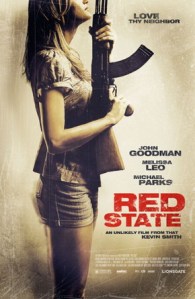
Kevin Smith is one of New Jersey’s own. I’ve always considered it one of life’s great ironies that Loki and Bartleby, the fallen angels in Dogma, move from Wisconsin to New Jersey, the exact same route my career took. (Feel free to read into this.) I was therefore curious when I heard, a few years back now, that Smith had come out with a horror movie. Now I’m not a fan of horror for its own sake as my sensibilities are more towards the ambiguities of gothic, but I finally decided to view Red State. I had no prior idea what the movie was about, but it speaks volumes that the title suggests quite a bit with just a simple adjective and noun. If there’s anyone out there even slower in getting to movies than me, and who is hoping to watch Red State, consider this a spoiler alert. Read further at your own risk.

Red State deals with religious fundamentalists—the Five Points Trinity Church, to be exact. The group is loosely based on the Fred Phelps gang, and the film actually makes reference to Phelps to say that Abin Cooper’s group is even worse. They’re weaponized. You’re probably starting to get the picture already. Cooper’s congregation is his extended family, and they’ve been protesting against homosexuality and other forms of what they consider immorality, but in an extreme way. They lure sinners into one of their sting operations, incapacitate them, and then murder them during church ceremonies. When the Feds discover evidence of a murder, a Waco-like Branch Davidian stand-off occurs with the predictably bloody gun fight that follows. There are moments of humor, but it is a bleak parable—yes, there is a wholesome message here—that speaks loudly about intolerance.

Analysts, well actually just some analysts, have realized that horror movies and religion are very close compatriots indeed. Reading the Bible may be a little easier on the eyes, but even some parts of the Good Book can inspire nightmares. Indeed, as Adin Cooper’s sermon emphasizes, fear of God is very important. As is fear of fear of God. The regression can go back as far as you wish. Religions develop in response to fears. Not only in response to fears, but clearly this is part of the mix. Horror movies show us what we fear the most. Is it any wonder that they cross paths with religion so often? The only unusual aspect for Red State is that it is so explicit about it. It is a traumatizing film in many ways. Maybe because (spoiler alert) the one who concocts the whole religion is alive and well at the end and is the last character that we see. Such are parables.
Personal Dogma

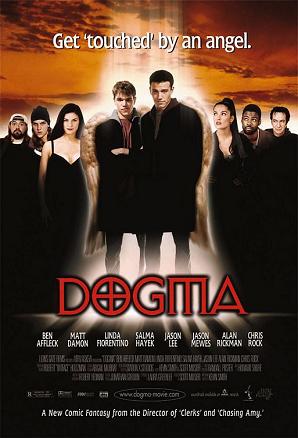
Dogma is a movie that many seminarians discover at some point in their theological education. Smart, funny, and irreverently reverent, the film follows the exploits of a couple of misled angels trying to get back into Heaven and thereby negating all of existence. It is no surprise, given Kevin Smith’s origin myth, that the film opens and closes in New Jersey, but I often ponder the strange coincidence of places in the movie to places I’ve lived since my own seminary career began (and ended, rather like the massacre scene in Red Bank before God cleaned it all up). Nashotah House, where I discovered Dogma, is in Wisconsin. Wisconsin is the state to which Bartleby and Loki, the two angels, have been banished. The means of their escape from this upper-Midwest purgatory is a church in New Jersey. Along their way the angels pass through Illinois and Pittsburgh, before crossing into the very state where God is located throughout the movie (the Garden State, of course!). After having been summarily dismissed from my seminary post in Wisconsin (not for watching Dogma, I’m assured), I too headed for New Jersey. Before that I had lived for a while in Illinois (home of Bethany) and Pittsburgh (home of Moobie). Watching Dogma is in many ways a reflection of a journey that I’ve accidentally undertaken.

YEE.tif

Another kind of dogma seems to be at work in the Eagle Mountain International Church in Newark, Texas. The Associated Press announced that 21 cases of childhood measles had broken out in the church, particularly among the homeschooled and unvaccinated. Fears of inoculating against a pre-medieval faith have led many of those who trust their own knowledge above that of the collective specializations of educators, to put their children at risk for the sake of belief. The belief, perhaps unsurprisingly, is poorly informed. One of the pastors of EMIC (!) has been encouraging vaccination as biblically sanctioned. If not for the sake of your children, for the sake of the scriptures…

Vaccination, in various forms, was developed in both Christian and pagan contexts. The earliest examples come from Asia where the plagues sent by the devil were resisted with human ingenuity. It takes a paranoid twenty-first century, first-world faith to suppose saving our children is some kind of conspiracy. “Let the one without germs,” we can almost hear them say, “throw their tissues away first.” In my Pittsburgh days, I was very much a literalist. How surprised I was to see Lady Aberlin from Mister Roger’s Neighborhood playing an angst-ridden nun, derailed by an exegesis of “The Walrus and the Carpenter” in Dogma. Although the Neighborhood is “anytown” those of us locals knew that Fred Rogers was from Pittsburgh. Lady Betty Aberlin was the niece of King Friday XIII, and only those with no conspiratorial imagination would suggest it is merely coincidence that her cousin is named Kevin. With or without dogma.


Silver Scream

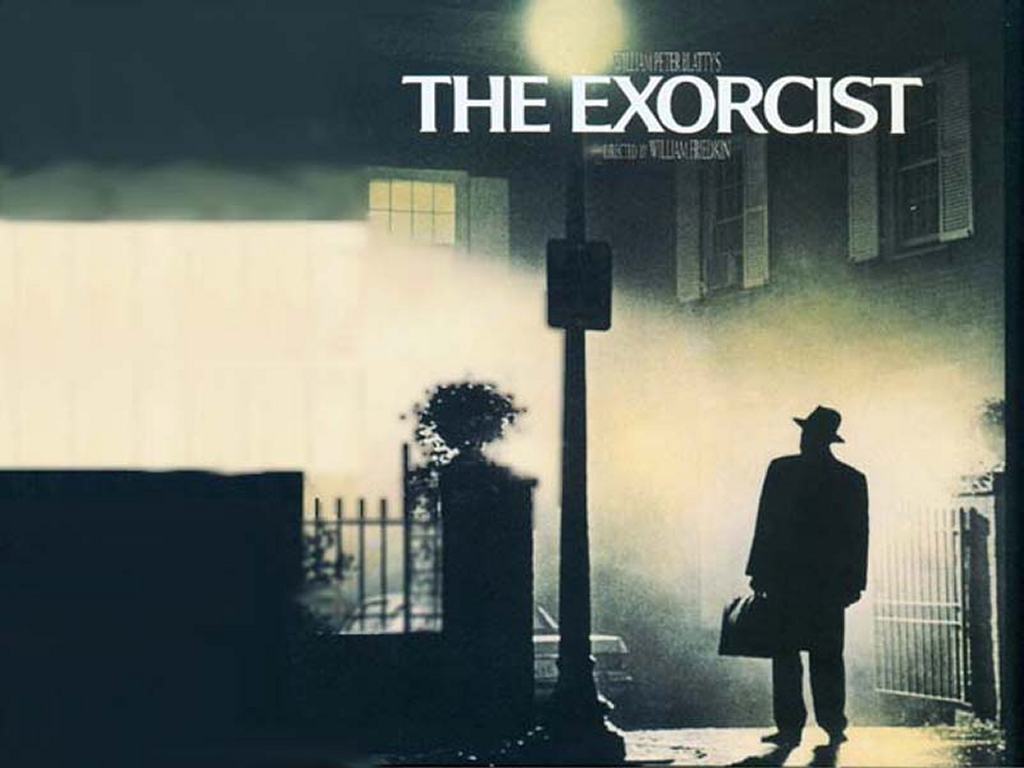
Only within the last couple of decades have movies begun to be taken seriously as expressions of the Zeitgeist. An art form not even 150 years old, commercial movies have been seen primarily as an entrepreneurial exercise—money-making ventures with little serious thought. Now students of society recognize that where our wallets are, there our hearts are also. Even in the depths of recession the entertainment industry maintained its draw. The unemployed could at least watch movies cheaply at home. Yesterday’s newspaper contained an insightful entertainment piece on horror movies by film critic Stephen Whitty. Noting that the film industry began when the Production Code largely mirrored pre-1950’s American cultural values, Whitty observes that clergy were left out of movies, or when they appeared they were strong role-model characters. Then, beginning with The Exorcist, the demonic became a huge theme in movies. As Whitty concludes, “Certainly it’s partly a reflection of a growing fundamentalism” that indicates why such movies are now so popular. Many Americans believe in angels and demons and turn to them to explain the serendipitous or contretemps.

Scary, but not necessary.

Social attitudes help to explain what we see on the big screen. Almost from the beginning religious leaders have castigated the entertainment industry as an unholy counterpart to sanctified living. Theater was earthy and evil, movies immoral, and even the desire to be entertained took away from the struggle for salvation. Ironically, however, movies tend to reflect conservative values. At least when it comes to demons. In the current glut of demonic films—which most Americans rate as the scariest kind of horror movie—the church-sanctioned hero is often the only effective tool against evil. A mythology of a Manichean dimension reigns: good struggles against evil and good will prevail. Unfortunately, this Hollywood scenario falls on the side of simplistic solutions to complex problems. Evil is our own doing—we need no demons to tell us how to be bad. Likewise, help often fails to come from on high.

Over the weekend I watched Dogma once again. Severely criticized as immoral and trashy, the overall message is, however, one of faith and hope. No fundamentalist, Kevin Smith certainly takes his pot-shots at Christianity, particularly Roman Catholicism, but in the end God and angels are real, and demons are defeated. Yes, this comedy is intended to be entertainment, but the audience that views it probably agrees with its core values. As Whitty demonstrates, the past decade has flooded the market with Hell-born foes, and there seems to be no imminent slacking of the pace. People are afraid. Our efforts at free-market Heaven have turned out to benefit too few while too many are still without work or adequate security. No, we need no demons to instruct us in the ways of evil. We are fully capable of initiating our own.