
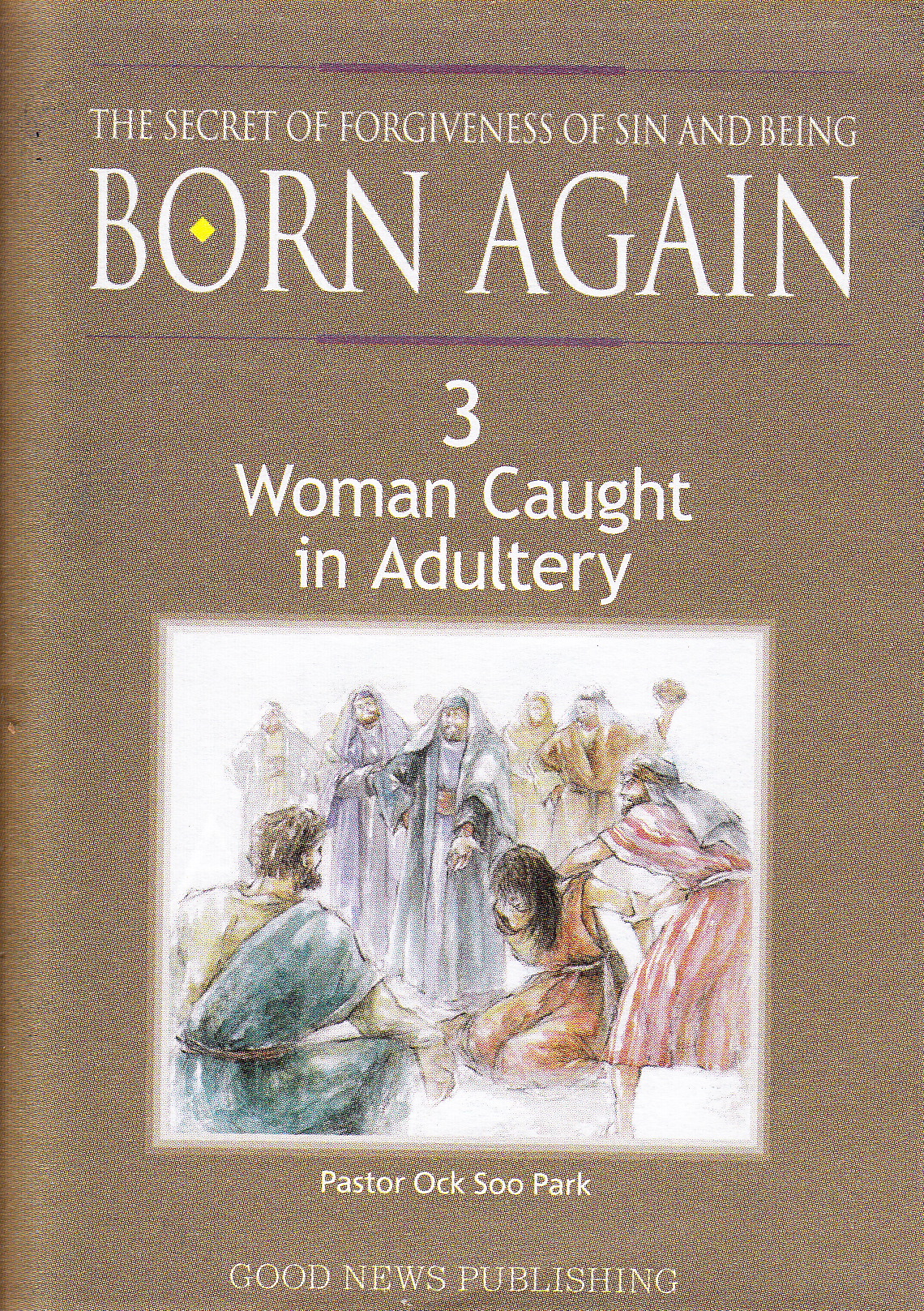
 An invitation to join a crusade is a dicey proposition these days. Perhaps Pastor Ock Soo Park is not aware of the burdensome theological freight the word carries these days. The Bible Crusade is, nevertheless, coming up on April Fool’s Day, and, I’m glad to see, admission is free. The tract I clutch in my gloved hand is more like a pamphlet and it is number 3 in a series, “Woman Caught in Adultery,” causing me to wonder what numbers 1 and 2 might have been. Still, it’s Good News Publishing, so I suppose it can’t be bad, whatever the topic. The young lady on Seventh Avenue seem surprised when I accepted the booklet she held out with a simple “Bible Crusade?” invocation. I often accept what the shills hand out; a more thankless job is difficult to imagine.
The concept of biblical crusades has a strong resonance with my youth. Although I attended the occasional revival at our local church, I never actually went to a crusade. I did watch Billy Graham, however, on television. I would sit glued to the screen, hanging on every word of the sermon, feeling once again the flush of my sin and the urgent necessity of repentance, then and there. I was terrified of never giving enough of my life to the Gospel, of backsliding, of hypocrisy, of Hell itself. As a youth I had no idea of Graham’s political agenda or of the close friendship he had with Richard Nixon. For me, it was purely a matter of what I had witnessed on the screen as Beverly Shea lead the repetitive chorus of “Just As I Am” that reduced me to tears every time. When we were asked to list an important person for history class in high school, I felt compelled to write Billy Graham on my slip of paper, and I wondered why people laughed when no one in the room could manage to guess who it was after 20 hints. As guileless as a dove, but not as wise as a serpent.
Crusades are all about conquering territory. Sometimes, historically, that territory is physical and the violence is palpable. It is charging fully ahead with the conviction that there is no way you could possibly be wrong, even in the face of others from foreign faith traditions willing to fight to the death over the issue. It is invasion. Conquest. In the name of the prince of peace. Evangelistic crusades are not much different. The battlefield may be metaphorical, but it is not less real for all that. The human psyche is not infrequently victimized in the worldview of utter conviction. Often the driving force is the same as the Templar on his steed—control of the infidel. With control, as the Templars soon learned, there is great wealth to be had. As a poor boy in a run-down house, I never questioned that Billy Graham or any other evangelist deserved the money that accompanied such solemn longing of heartsick souls. It was self-evident. Now, standing among the crowds on Seventh Avenue, beneath a huge sculpture of a needle sewing on a gigantic button, I have to wonder about the economics of scale. Reality is seldom what it seems.
 Steve A. Wiggins