More Curtis

Dan Curtis was the mind behind Dark Shadows, an important part of my childhood.  Reading about his work in film and television, I learned that he produced a lot more than Barnabas Collins, and was an influence in horror in his own right.  A friend recommended that I find The Norliss Tapes, which I did.  This made for television movie was cut from the same cloth as The Night Stalker, which Curtis also produced.  The ending of the movie makes clear that The Norliss Tapes was a pilot for an intended series that never materialized and is a good representation of religion and horror, which is likely why it was recommended to me.  Here’s the story.   David Norliss was given a large advance by a publisher to write a book debunking the supernatural.  Before he can, he goes missing, leaving behind a set of tapes explaining what happened.  The first tape is the pilot episode.
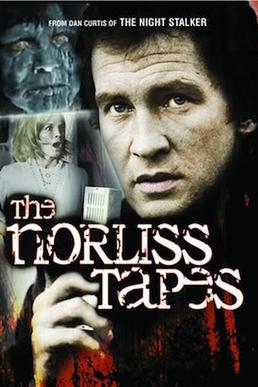
Norliss is contacted by Ellen Sterns Cort, a widow who claims to have had a supernatural episode.  Upon following her dog to her late husband’s studio one night, she encounters her undead husband.  She shoots him, but the police can find no evidence of any body.  It’s revealed that he purchased an occult scarab ring that permits him to return to life to raise a demon who will, in turn, bring him back to real life.  To get the raw materials he needs (such as blood) he has to kill a few people and this again alerts the authorities but they insist on covering it all up.  Removing the ring from his finger will stop him, but that’s easier said than done.  At the end the demon is stopped but this is just the end of the first tape.  His publisher starts to play the second tape.

Dan Curtis productions have a certain feel to them.  I’m not sure how directors and producers do that—I’m not sure of all the tools they have in their box.  What is obvious is that watching The Norliss Tapes brings back echoes of Dark Shadows.  That’s not surprising since Dark Shadows wound down just two years before the Norliss Tapes came out.  The Night Stalker was sandwiched between them, but Kolchak: The Night Stalker was not a Curtis production and doesn’t have a Curtis feel to it.  Even though I’d never seen Norliss before, it was nostalgic watching the movie for the first time.  There’s a trick to it, I just don’t know what it is.

Fun Homework

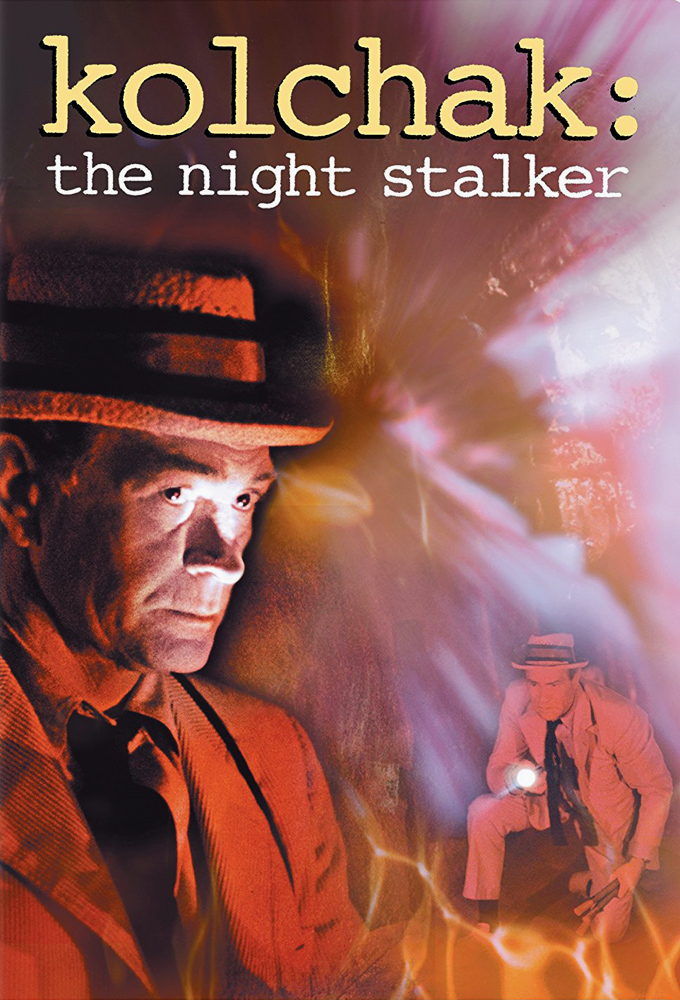
I recently discussed the two Kolchak movies: The Night Stalker and The Night Strangler.  In those posts I noted that I’d not grown up with Kolchak.  My reason for watching them was part of a self-assigned homework project.  You see, I’d begun watching the series online.  I realized backstory was missing, and, despite what literary critics are fond of saying, I like backstory.  After a couple of episodes I decided I needed to see the movies before moving through the rest of the series.  As it turns out, you can do the movies without the series or the series without the movie.  Regardless, I soldiered on through all twenty episodes.  This series was terribly influential for the kinds of things I eventually cottoned onto.  Kolchak was formative for the X-Files and many “monster of the week”-formatted series.  I felt like a poser having never had watched it.  This telinematic experience was good homework.

Originally a television movie produced by Dan Curtis, of Dark Shadows fame, the first film was successful enough (very successful, in fact) to cause a second one.  The second film also performed well, but instead of a planned third, ABC decided on a weekly series instead.  Only twenty episodes were aired and the run was cancelled before all the ordered episodes were filmed, or even scripted.  Still, this small franchise had a solid following and led to a number of other successful franchises in its wake.  The monsters are definitely fun, but Darren McGavin’s Kolchak does tend to get on your nerves after a while.  Even McGavin was reputedly ready to leave the show as things started to get pretty silly near the end—an animated suit of armor, a very cheap humanoid-alligator, and Helen of Troy hardly seemed conventional monsters.  

In fact, the Helen episode (“The Youth Killer”), although it had a solid premise, didn’t convince that Helen was a monster.  She prays to Hecate to steal the youth of “perfect” young people around Chicago and rejuvenates herself as the twenty-somethings age and die in a matter of minutes.  And a Greek cab driver (former Classics teacher) is the one who helps Carl crack the case.  Famous for its quirky humor, this one just seemed to have all engines fail.  Of course, the series lived on as a cult classic and can be found in a variety of media today.  I’m glad to have had this particular homework assignment.  Television had a number of influential shows in the seventies, and it feels like coming home to have caught up on one that I initially missed.  Even with Cathy Lee Crosby and a monster I just couldn’t buy.