Television

Television has lost its prominence in the internet age.  Those of us entering the “senior” category of life’s grades were raised on television.  I know I watched far too much as a kid.  Now I consider the wasted opportunity to grow minds, and sensibilities, through television.  Mostly I blame the sit-com.  There’s not much learning going on when someone else contrives scenarios to make you laugh on a weekly schedule.  They are beguiling and I watched more than my fair share of them when I was younger.  Now, as an adult, I value the more profound examples of early viewing.  We didn’t watch The Twilight Zone with the devotion of Gilligan’s Island, but those episodes I did see had a profound effect.  The same is true of Dark Shadows.  One thing these shows had in common was that they were quite literate, eschewing the mindless competition.

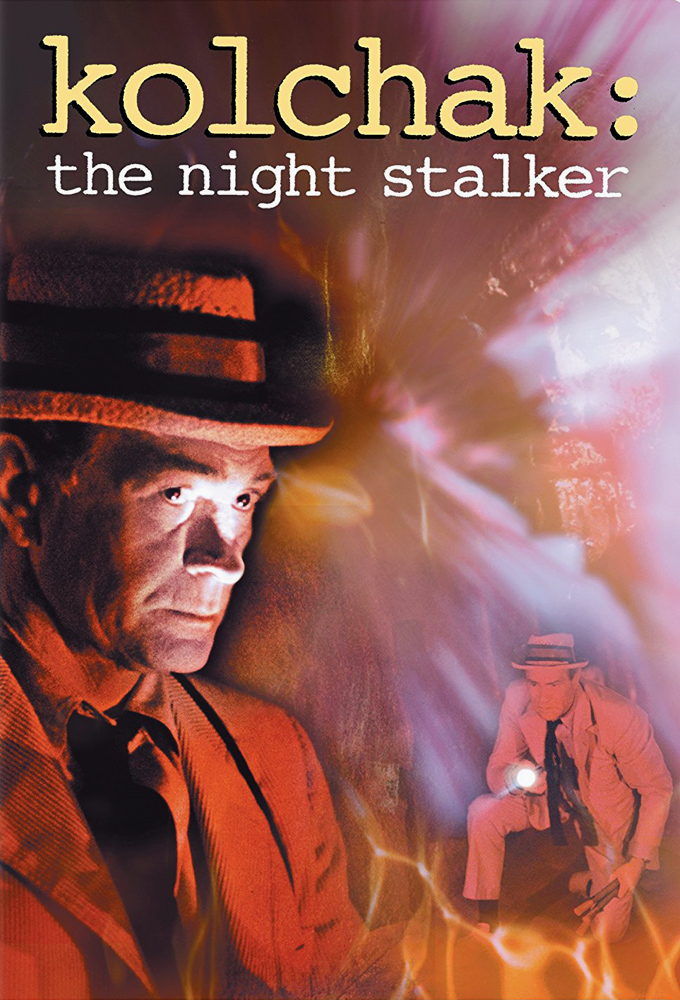
College led to me no longer watching television regularly.  That hiatus lasted until my wife and I began watching a couple of weeklies after I’d return from Nashotah House.  While at the seminary full-time, television reception was quite poor and we tended toward rented movies on VHS.  By the time we moved to New Jersey television had changed so that you needed some kind of magic box to watch even commercial channels.  We relied on DVDs of shows we wanted to see.  That’s how Lost came into our lives.  Now, however, facing senior issues (health, people dying, wondering if retirement might ever happen) I’ve started to revisit television I missed.  The X-Files is pretty prominent.  Being an historian at heart, I’ve been exploring the inspirations for The X-Files, picking up Kolchak: The Night Stalker, and Twin Peaks.  I have to balance this with time for writing since work still claims the lion’s share of my waking hours.
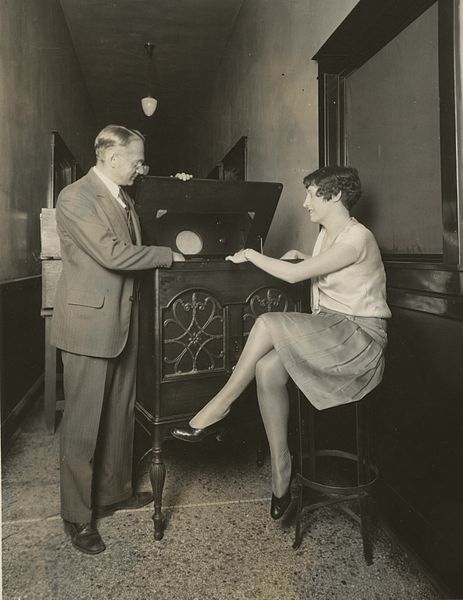
Photo credit: Smithsonian Institution, via Flickr’s The Commons

I’ve lost track of what’s on the tube.  Now we spend workday evening hours watching intelligent television that we missed back when it aired.  We can’t afford it all, of course.  Dark Shadows, for example, has over 1200 episodes and “complete sets” are pricey.  Lost was either a birthday or Christmas present years ago.  I bought The Twilight Zone over a decade ago for a week that I knew I was going to be home alone.  We accumulated The X-Files over a number of years.  Twin Peaks, since it was only two seasons, wasn’t too expensive.  Kolchak is on Amazon Prime.  Many of these shows are a kind of therapeutic watching for me.  Some might call it escapism, but it runs deeper than that.  It becomes part of who we are.

Second Peak

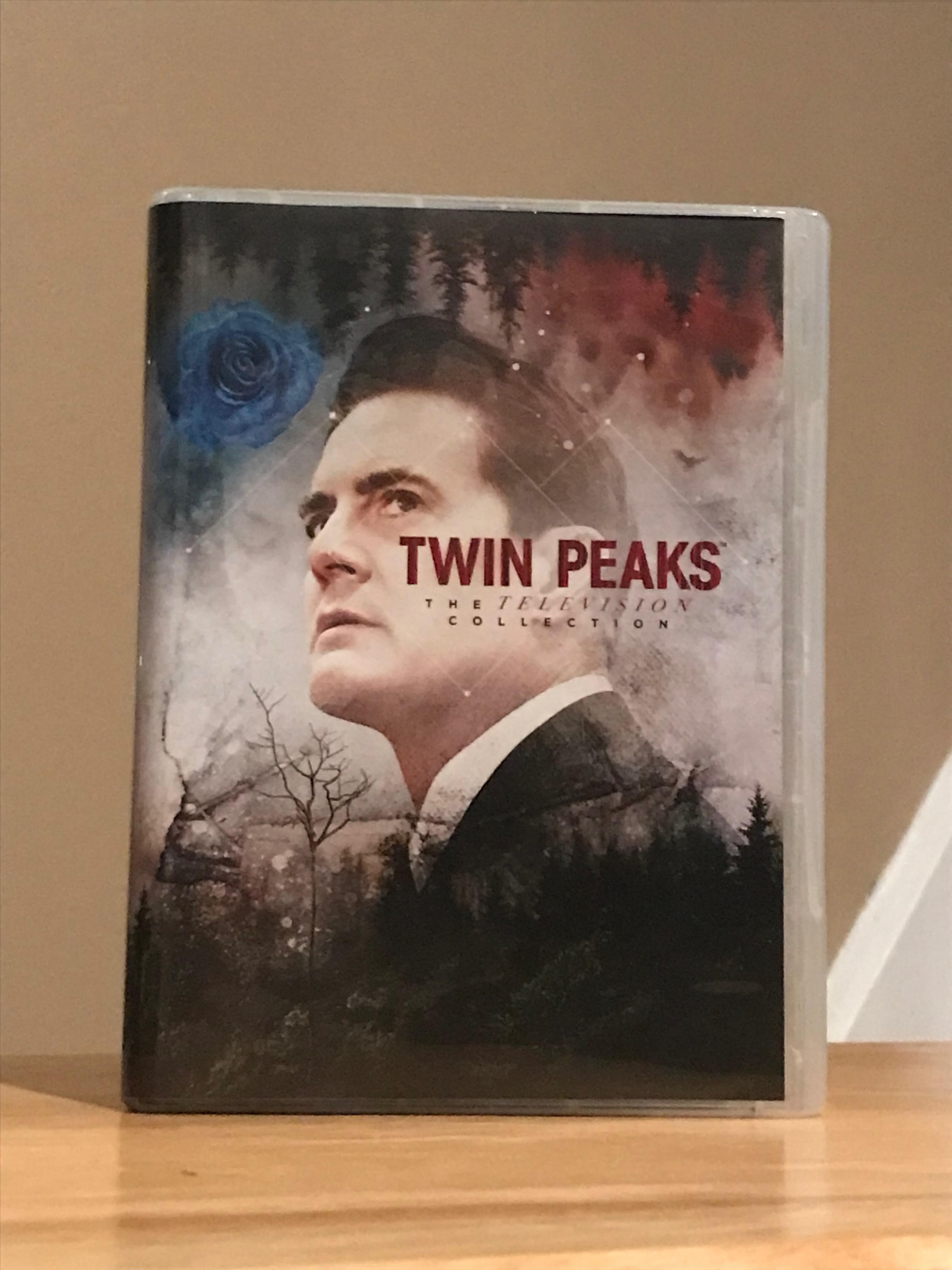
It all started with The X-Files.  You see, we hadn’t watched television since about 1988.  Part of that was practical—we couldn’t afford cable and then when we landed at Nashotah House there was no cable service anyway.  Bouncing from job to job after that, when money was tight, we figured cable was a luxury we weren’t used to anyway.  Then came DVDs.  I should also say that my family heard other people talking about certain shows—some of them quite good—but we hadn’t seen them.  Then we decided to watch The X-Files.  This was followed by Lost.  Then the X-Files again.  On my lonesome I watched Kolchak: The Night Stalker.  But people had talked a lot about Twin Peaks.  Curiosity got the best of me.  We decided to see what it was about.

I knew that Chris Carter had cited various inspirations for The X-FilesKolchak was a major one, but another was Twin Peaks.  It helps to have watched a David Lynch movie or two before jumping into the deep end here, but the first season (it only lasted two) started out like a regular drama.  Like Northern Exposure, it had quirky characters.  Then after a couple episodes paranormal aspects began to appear.  Things were not what they seemed in Washington.  It turned out to be an evil spirit possessing people in the town.  Laura Palmer’s murder was more or less solved.  Dale Cooper, however, had been trapped in the Black Lodge in the cliff-hanging end of the second season.  We then watched Twin Peaks: Fire Walk with Me at the point it settled in the sequence.  Like the aforementioned X-Files, a reboot occurred many years later and the DVD set we had included the renewed season.  Things really get weird there.

It turns out that we had indeed missed some good television during those Nashotah House years and later.  Actually, doctoral years and later—Twin Peaks originally aired when we were living in Edinburgh, so we had a legitimate excuse.  Boomers, particularly late boomers, grew up with television.  As an adult (so I’m told) I can see that television had a big influence on my life, even though I stopped watching in my late twenties.  Do I understand all of what happened in Twin Peaks?  Of course not.  Then again I scratched my head after watching Eraserhead too.  The first of David Lynch’s movies I saw was Dune, which, unfortunately, wasn’t that good.  I’ve come to trust him, however, and I suspect that telinema will lead me to watch more of his films.  And we’ll probably be on the lookout for other television we missed, that, in retrospect, we probably shouldn’t have.


Fun Homework

I recently discussed the two Kolchak movies: The Night Stalker and The Night Strangler.  In those posts I noted that I’d not grown up with Kolchak.  My reason for watching them was part of a self-assigned homework project.  You see, I’d begun watching the series online.  I realized backstory was missing, and, despite what literary critics are fond of saying, I like backstory.  After a couple of episodes I decided I needed to see the movies before moving through the rest of the series.  As it turns out, you can do the movies without the series or the series without the movie.  Regardless, I soldiered on through all twenty episodes.  This series was terribly influential for the kinds of things I eventually cottoned onto.  Kolchak was formative for the X-Files and many “monster of the week”-formatted series.  I felt like a poser having never had watched it.  This telinematic experience was good homework.

Originally a television movie produced by Dan Curtis, of Dark Shadows fame, the first film was successful enough (very successful, in fact) to cause a second one.  The second film also performed well, but instead of a planned third, ABC decided on a weekly series instead.  Only twenty episodes were aired and the run was cancelled before all the ordered episodes were filmed, or even scripted.  Still, this small franchise had a solid following and led to a number of other successful franchises in its wake.  The monsters are definitely fun, but Darren McGavin’s Kolchak does tend to get on your nerves after a while.  Even McGavin was reputedly ready to leave the show as things started to get pretty silly near the end—an animated suit of armor, a very cheap humanoid-alligator, and Helen of Troy hardly seemed conventional monsters.  

In fact, the Helen episode (“The Youth Killer”), although it had a solid premise, didn’t convince that Helen was a monster.  She prays to Hecate to steal the youth of “perfect” young people around Chicago and rejuvenates herself as the twenty-somethings age and die in a matter of minutes.  And a Greek cab driver (former Classics teacher) is the one who helps Carl crack the case.  Famous for its quirky humor, this one just seemed to have all engines fail.  Of course, the series lived on as a cult classic and can be found in a variety of media today.  I’m glad to have had this particular homework assignment.  Television had a number of influential shows in the seventies, and it feels like coming home to have caught up on one that I initially missed.  Even with Cathy Lee Crosby and a monster I just couldn’t buy.


Stalking the Stalker

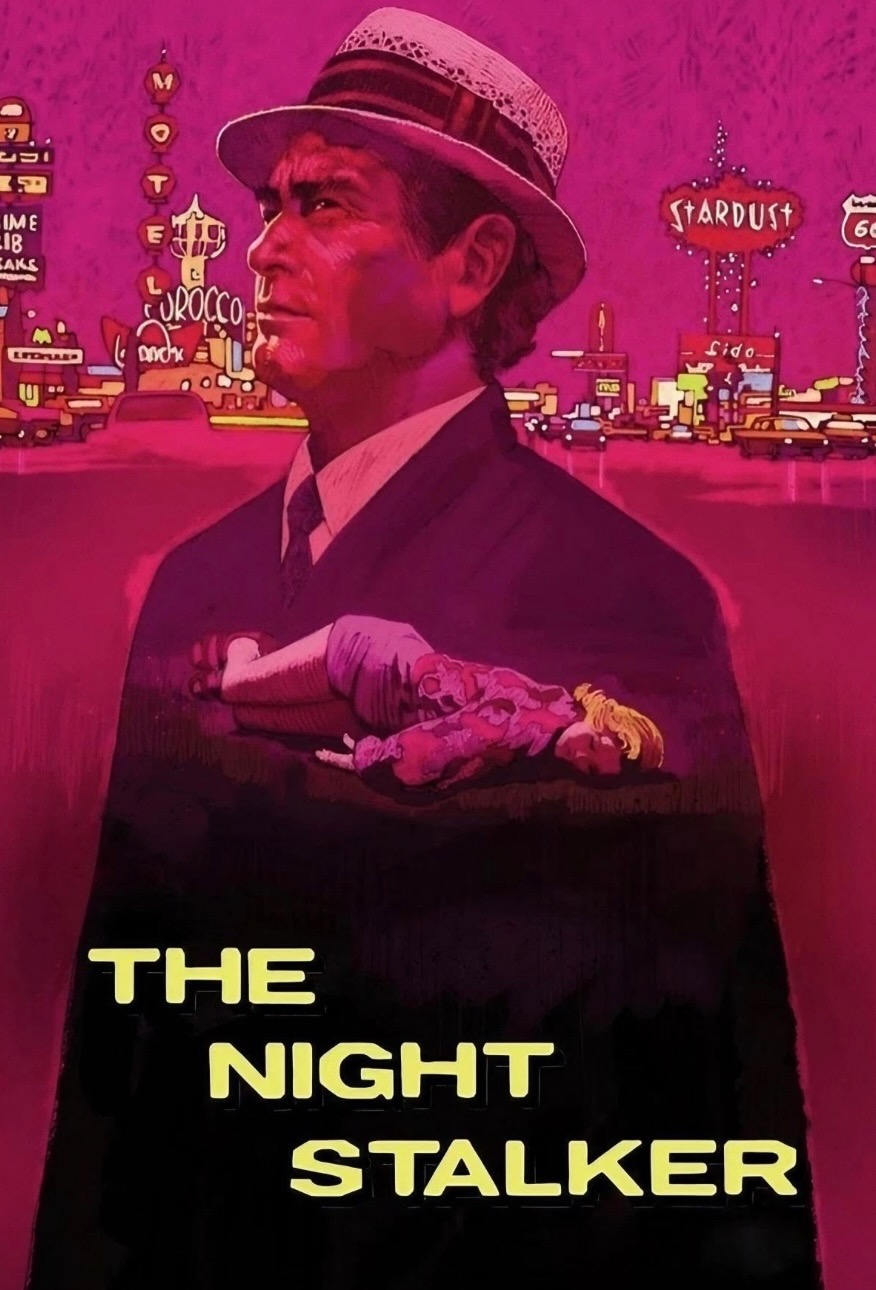
You had to’ve seen this coming.  The Night Stalker introduced how Carl Kolchak, hard-nosed reporter, became a believer in the supernatural.  This highly-rated television film led to a sequel, The Night Strangler, which appeared the following year.  It also did well.  Ditching a third script by Richard Matheson, ABC decided on a series, Kolchak: The Night Stalker.  The subtitle was probably considered a necessary reminder that the movies had done very well.  It also transferred the stalker epithet onto Kolchak.  But I’m getting ahead of myself.  The Night Strangler shifts the action to Seattle where an elixir-of-youth-drinking monster is murdering young women to keep himself alive.  Once again the police and government officials cover up what’s really going on, for fear of losing tourist dollars.  There is a bit of social commentary here.


This movie reminded me of an In Search of… episode on Comte de Saint Germain, who, as a child, I assumed was a Catholic saint.  Saint Germain (just his assumed name) was an alchemist who claimed to be half a millennium old.  He seems to be, guessing from the number of books that treat him as an actual saint, just as popular now as he was in the seventies.  At least among a certain crowd.  And it was in the seventies that this movie was released.  Saint Germain’s enduring popularity all but assures no academic will touch him.  No matter, we have Kolchak to fill in the details.  And Richard Matheson was a smart man.  The Night Strangler does have a few pacing problems, but it certainly is a film worth seeing, even though it exists in that shadowy world of telinema (the combined forms of television and cinema).

Kolchak succeeds by believing in where the facts point, although the conclusions are supernatural.  In fact, watching The Night Stalker I couldn’t help but think of those who claim to have staked the Highgate Vampire.  That’s some strong conviction.  Indeed, the will to believe is more powerful than most people would like to admit.  Our minds contribute to our reality, but we insist that minds = brains, despite our inability to define consciousness.  That’s why I liked shows like In Search of…  As a teenager I couldn’t get enough of it.  I purchased all the accompanying Alan Landsburg books with my hard-earned summer income, skimping, as always, on the school clothes that I had to buy for myself.  Funny, it seems that my mindset hasn’t changed that much since the days of my youth.  Or maybe a sign of maturity is recognizing you were closer to the truth than you realized, back when you started the quest.


Who’s Stalking?

Television is a hungry beast.  Back before the internet it was probably less hungry, but still the desire for content was constant.  A few individuals worked the monster side of the tube, one of them being Dan Curtis.  Dark Shadows was Curtis’ idea, and it was in that context that he began to have an influence over my life.  I wouldn’t have recognized his name in those days, of course—do we ever really recognize those who become part of the arc of life’s direction when we’re kids?  Curtis produced a television movie that I’d never seen, taking on the vampire tale again.  The Night Stalker isn’t a great film—it was produced for television, after all—but it started something.  That something was the weekly series Kolchak: The Night Stalker.

I’ve been watching episodes of Kolchak and realized that I was missing something—the origin story.  As an historian I really like to keep things in order.  Since my research is conducted on my limited free time and limited budget, I still discover things others probably knew long ago.  In any case, I decided to hunt down and watch The Night Stalker.  It introduces, of course, the character of Kolchak.  In a way that seems unnecessary for 1972, it narrates quite a bit of vampire lore.  It even frames some scenes from Bela Lugosi’s 1931 Dracula.  As I watched this period piece for the first time, I realized that the actual night stalker wasn’t originally Kolchak.  In this movie it’s clearly Janos Skorzeny, the vampire.  The movie was based on an (at the time) unpublished novel by Jeff Rice.  And so began a number of cascading things.

I didn’t watch Kolchak as a child.  I do remember other kids talking about it, but it never made its way into our evening television watching.  (My mother was concerned that I had nightmares as a child and didn’t encourage scary things before bed.  Decades on I’m still prone to nightmares, but as I said, arcs get set early on.)  Kolchak is kind of a hapless character, rubbing people the wrong way.  The movie leaves many unanswered questions, but it was good fare for unreflective television monster purposes.  There had been monsters before—I think we all owe a great debt of gratitude to Rod Serling’s Twilight Zone—but Kolchak made the horror element, always laced with comedy, central.  The television movie received the highest ratings of any television movie to that point.  And we all know that such things lead to sequels.  Television is ever hungry.