Breakfast of Champions

In my efforts to become vegan, I’m finding dairy to be the hardest element to replace. I’m reminded of this every morning since the day begins with cereal. Most people don’t realize that cereal for breakfast is largely of religious motivation. The original Kelloggs were Seventh-Day Adventists, and therefore vegetarian. To promote both health and animal-free diets, they gave a big push to the idea the day should start with cereal. It’s a touch dry, however, and water on your flakes leads directly to paste. So I’ve been experimenting with alternate milks. Often I use soy milk, but it has to be the right brand. Some of the offerings on the market have that oily aftertaste characteristic of soy beans. Not sure of the legality of hemp milk these days, I recently tried oat. Oat milk should taste like oats, i.e., it shouldn’t have much taste at all.

The moral crisis came as I poured it into my oatmeal. You see, there’s a biblical injunction to cooking a calf in its mother’s milk. This is the reason meat and dairy can’t be mixed in kosher settings. Scholars debate the basic concept behind this regulation. Like eating a bird and its eggs, some suggest, this depletes nature and should be avoided. At least one generation should have a chance to avoid exploitation. At least until it grows up. But what of the oats and their oat milk? Have I gone too far? What hidden principle am I violating, however unintentional, here? This is the problem with any religious thinking—taken to extremes it begins to break down. Some of the earliest gods, after all, were agricultural deities.
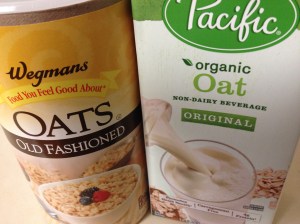
Agribusiness is huge. People gotta eat, right? And it is one of the most massive environmental hazards humans have ever concocted. Industrial farming is the largest producer of methane and the largest user of potable water, by far. Keeping animals for our food is literally destroying our planet. Religions, interestingly, quite often concern themselves with eating habits. It’s strange how most of them in this country are silent regarding what is obviously an ethical issue. After all, we adapted to the cereal for breakfast lifestyle because of religious conviction. It’s difficult to change eating habits. That’s my current struggle. I could pour the oat milk over corn flakes, I suppose. But then again, the Bible forbids mixing fabrics from different plants. What’s an aspiring vegan to do?
Eleventh Commandment

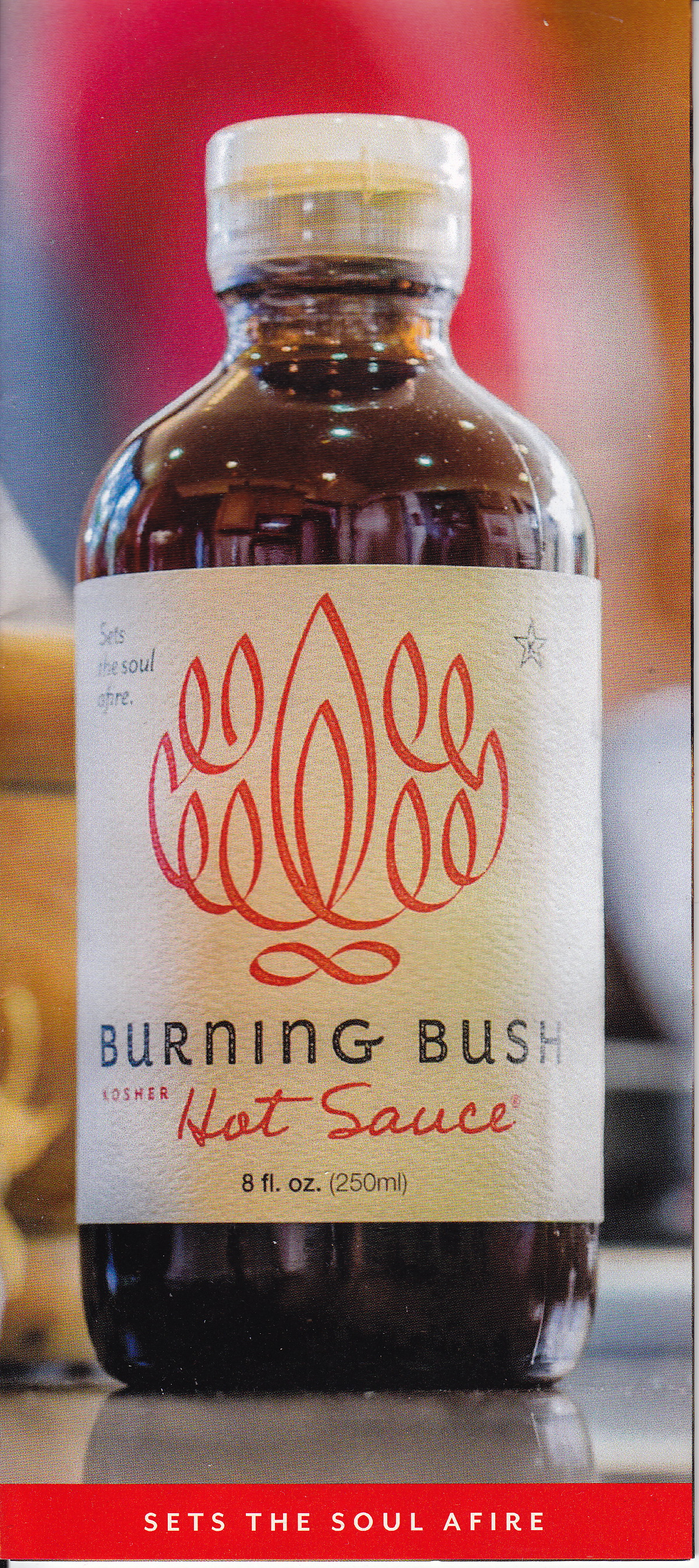
Those who know me are sometimes surprised to learn that one of my favorite quick meals is grits and black-eyed peas. For a northerner that’s a bit strange, perhaps, but my father was from South Carolina and my mother often cooked “soul food” at home. Over the years I’ve experimented with ways of preparing this simple lunch, and I’ve found that with a little cheese and a bit of hot sauce, this makes a filling and tasty dish. A few weeks back I posted on Burning Bush hot sauce. I saw it on a tourist trip to Whole Foods. I was very pleased and quite surprised when the president and chief sauceror of Burning Bush emailed me, thanking me for my post. He even kindly sent me a bottle of Burning Bush hot sauce to try. Well, this was a chilly weekend up here in Jersey, so I splashed some Burning Bush on my grits and had my own kind of down-home religious experience. It sure beats the usual tabasco that, like my father, I usually shake over my grits.

I’m sharing this personal religious experience with you to encourage you to have a religious experience. Try some Burning Bush for yourself. If you look back at my post Mind Your Manna, you’ll find a comment from said president and chief sauceror giving readers of this blog an exclusive discount on web orders. Check out that post for the discount code. Also take a little time to browse around www.burningbushhotsauce.com. Burning Bush is kosher and it doesn’t just spice up grits. My favorite part about it is that it isn’t the product of a large corporation. Being one of the little guys, I prefer to help out others like myself. The one percent already have far more than enough.

Burning Bush

As I’ve confessed before, I’m not really a foodie. Still, sometimes something simple like a new flavor can improve your life. As a matter of fact, when the Burning Bush came to my door on Friday, I planned the coming week’s meals around the fact that I now had something new to try in the kitchen. I suspect I shall be very holy by the end of the week. Just like the Bible, the story of Burning Bush starts in a garden. The best things in life generally do. I’d rather support David than Goliath. Why skimping on the flavor end of things? Why not have a religious experience while you eat? Let Nestle, Unilever, General Mills, and Kellogg hobnob with each other. Remember, when it comes to hot sauce, every drop counts. Why not give Burning Bush a try? And just for reading this blog you get an exclusive discount.


The Cow Jumped

While digging through the attic for some reference material for a colleague this weekend, I came upon a box of Bibles. I actually have many Bibles around the place—often within an arm’s reach—despite the ease of internet biblical access. One thing of which I own few are leather-bound Bibles. Trying to be as vegetarian as I can, I have avoided leather in my apparel as much as possible (sometimes the alternatives are even more expensive), and apart from a rare, old book, I prefer cloth to leather, and, generally, paperback to cloth. Still, working in the Bible industry, I know that among the best selling Bibles are the leather variety—those that involve the ultimate sacrifice, although not of the human kind. Leather as a book-binding material is an early development. Leather is durable, and strong, even if a little kinky. Before synthetics, it was used to protect tomes that had been written by hand, representing hundreds, or thousands, of human-hours of work. You wanted it to last. So kill the fatted calf.

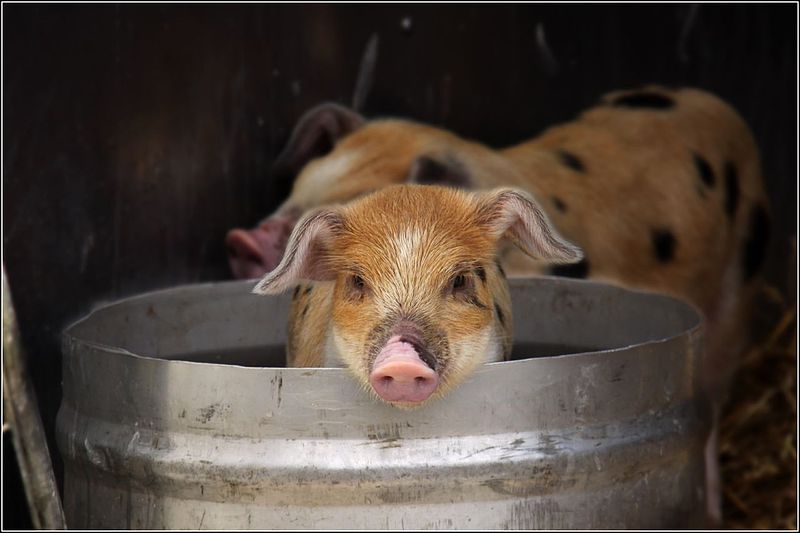
I was amazed, therefore, to discover that most leather Bibles are bound with pigskin. That’s right, the material tossed around the grid-iron Sunday afternoons from September through February is kin to the very binding on your standard Bible. Pig leather (never called that) is cheap and durable and is the routine binding for leather Bibles. You want a kosher holy book, you’ll need to buy calf-skin (one thinks of a savior dying at only 33), and it will cost you. Pigs, generally eaten by Christians, are unclean to Jews and Muslims, and books bound in pig cannot be touched by the most religious of the monotheistic sibling faiths. To me, I just see dead animals all around in any case, and wish we might find some way to protect our pages with something else.

Photo credit: Ben Salter, Wikimedia Commons

Photo credit: Ben Salter, Wikimedia Commons

A larger issue (isn’t there always a larger issue?) is a porcine one. Pigs, we are told, are very similar to humans. We use their organs to transplant for our own, and some scientists think they may have played a role in human evolution (although this is not the conventional view). Although I can’t claim Babe led me to vegetarianism, it certainly didn’t hurt. For that matter, neither did Charlotte’s Web. Still, the idea of swearing atop a deceased pig to tell the truth, or watching a televangelist beat a dead pig, definitely has some theological implications. So as I sit here staring into a Hammermill box full of Bibles, I wonder about the hidden costs. Not just to calves and pigs, but to the species who claim that this box of books contains a truth deeper than the many other tomes all around me. And I wonder just how naive I may have been on the finer points of the religion based on these books as well.