
Happy holidays from a pluralistic world! Whenever I see the “Keep Christ in Christmas” signs that crop up this time of year, I think of the wonderful profusion of holidays that people from most faiths can share without being territorial about it. After all, the Pagans got there first—the Christian Christmas predates Jesus by centuries, it turns out. So when my daughter wished me a happy Chrismahanukwanzadan—from a mix of Christmas, Hanukkah, Kwanzaa, and Ramadan—I had to smile. Seems like some in the younger generation are really starting to get it. It doesn’t matter what you call it, but a holiday that celebrates people getting along is worth the effort. Being possessive of our holidays rings of hollow triumphalism—I feel happy because I have something that you don’t. Is this really the spirit of this secular season of giving wrapped in many confessional names? I’m sure shepherds and Magi didn’t exactly share a Weltanschuung.
Those who despair the lack of Christmas have not spent much time with history. As a cultural holiday the celebration of Christmas is younger than the United States, at least in this context. From the beginning Christmas was a pastiche of traditions from different religions celebrating aspects of Odin, Sol Invictus, Jesus, and Zarathustra, at the very least. Bringing these religious figures together into a season that represents the human need for light amid a dark and cold time of year, who would want to exclude others from their own holiday traditions? Having stood in the bleak fields of the Orkney Islands in a massive stone circle aligned to the winter solstice and constructed over a millennium before the birth of Christianity, I have to believe Christmas is one of the earliest expressions of human desire and certainly not limited to Christians.
What makes a holiday holy? Is it exclusive rights like those slapped on every movie you pop into the DVD player? The trademarking of an idea someone else thought of? Religions have a long history of forsaking the spirit of the law for the letter—its most familiar name is dogma. No matter who came up with the idea of doing what we can to bring a little light back into the dreary world around the time when night seems unending, it is a cause that any person of any religion, or none at all, can fully appreciate. Instead of marking territory, should not those who claim Christmas as their own be glad to share it with all? If the one who’s birth the church proclaims at this time of year in no way improves our outlook to others we might wonder if there should be cause to celebrate at all. My answer, such as it is, is Happy Chrismahanukwanzadan!
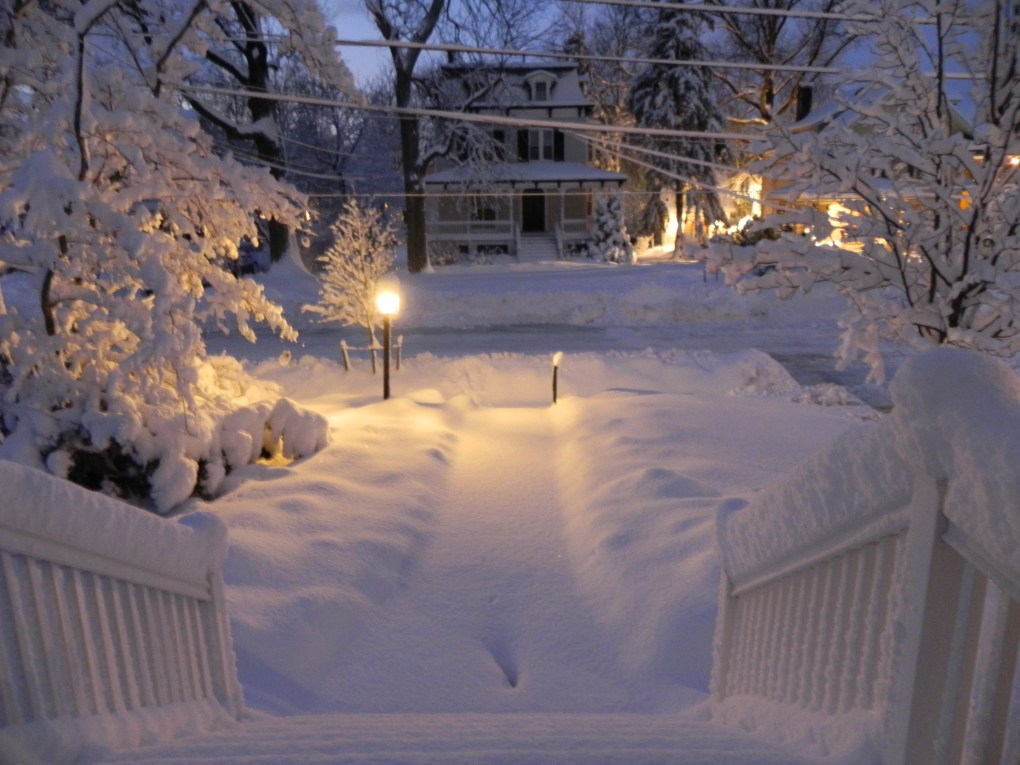
A holiday in anyone’s book
 Steve A. Wiggins