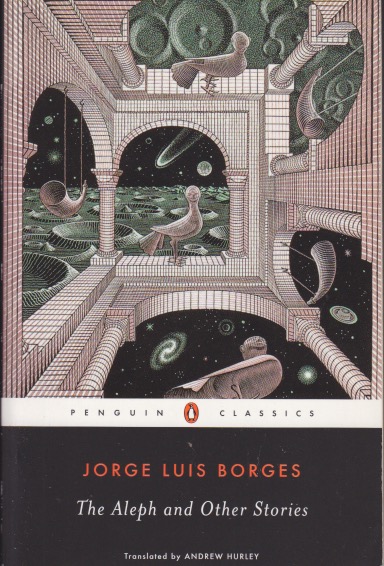
Aleph, Borges

I’m never quite sure how I’m supposed to approach books of short stories.  Some of them are truly massive and contain only a handful of tales I wish to read.  Others are governed by a dedication to the author that compels me to read from cover to cover.  Some are by differing authors, among whom some appeal more than others.  I wasn’t sure where to begin with Jorge Luis Borges.  Not having been raised in a literary family, and having never formally studied literature, I found Borges through a friend and co-worker.  After my academic career crashed and burned, I started reading more literary writers and discovered Borges again and again.  I knew the basics of his story—he was perhaps the most famous Argentine writer, he had gone blind, and he had written probing, unusual stories.

I picked up this collection because of the title.  “The Aleph” is included here.  It was also the title of a collection of Borges’ stories, which make up the basis of this book.  To that collection are added some other pieces, and these last become a mix of poetry and philosophy more than a simple narrative.  Of course, Borges didn’t write simple narratives.  His stories are layered labyrinths.  A complex person doesn’t write simple stories.  Often they reflect on religion.  Some of them explicitly so.  They aren’t, however, religious stories.  Indeed, I was drawn to “The Aleph” because of my own experience of Hebrew and the sense that it is a sacred language.  Borges also puts this into the mix here.

So what kind of collection is this?  I’m still not certain.  This time I did read it cover to cover and at several places I became uncomfortable.  Borges doesn’t shy away from the harsh realities of life.  What people are capable of doing to each other, and what they in fact do.  Some of the pieces just under a page long stopped me in my metaphorical tracks.  Was I reading fiction or some kind of history?  Was philosophy secretly being fed to me by being left right out in the open?  This isn’t weird fiction, although it’s clear that some of it could be taken that way.  It is the work of a mind that operated on a plane different from that of many others.  There’s an uncertainty, a tentativeness here that is very becoming, and even beguiling.  Having read the book I’m not sure what it was.  It will, however, lead to yet more reading.  Of this I am certain.

Welcome to the Labyrinth

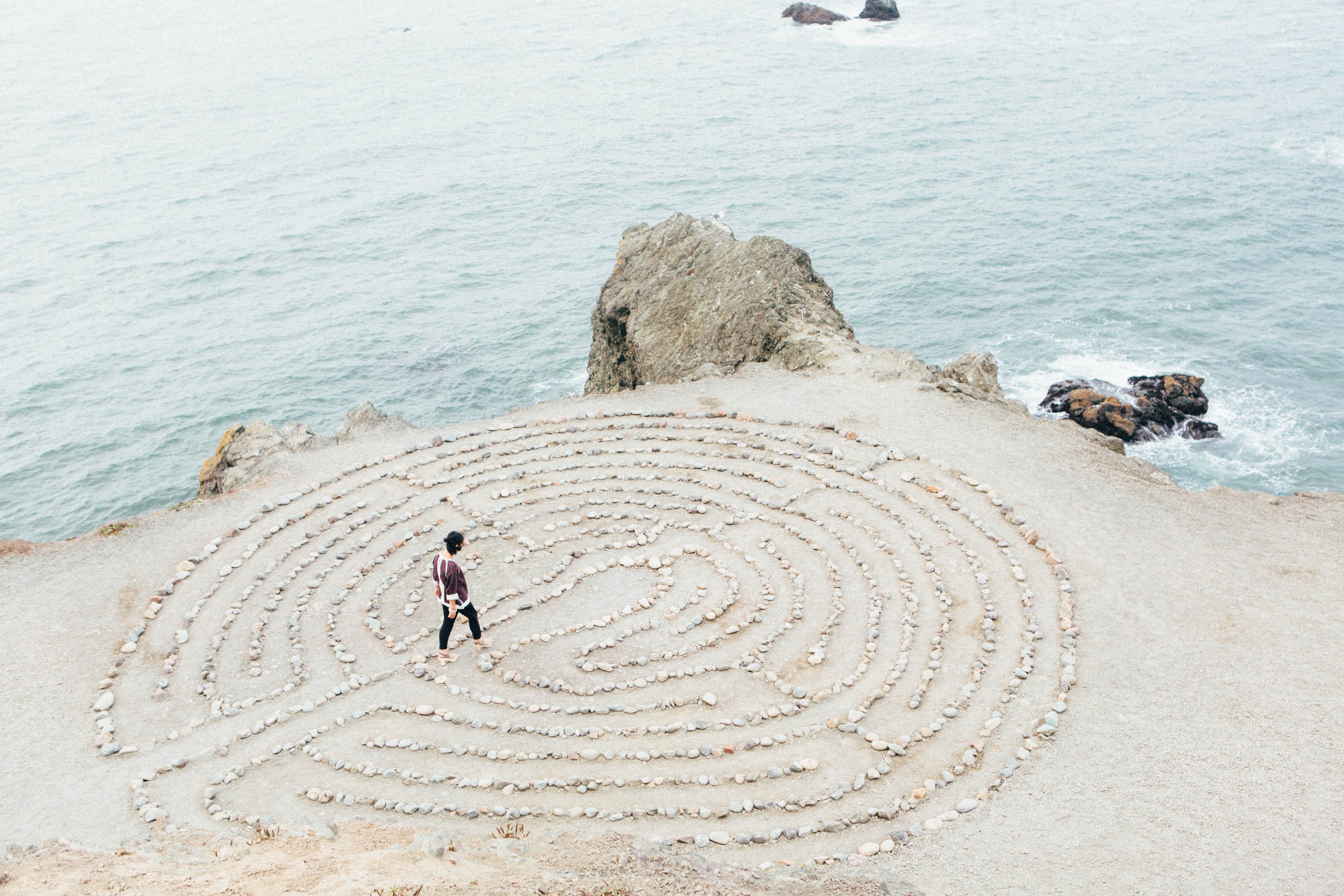
Do anything long enough and you’ll produce a labyrinth.  I started this blog back in 2009 with the idea of perhaps continuing in the biblical studies/ancient Near East (actually west Asia) studies, where I began.  I always knew this would be a place to talk about books and movies and sometimes current events.  Often it would address American religion because, well, it’s so bizarre.  Over the years the blog has ranged pretty widely.  My interests are fairly diverse and I tend to get obsessed with a subject for some time and then move on.  I suspect that’s one reason followers are few.  People want the same thing—should I dedicate the site to horror films, religion, or social justice?  The weather?  Instead, it’s what catches my interest at the moment.  Thus the labyrinth.

On the rare occasion when someone actually comments on an older post this blog (there was a healthy chain about the Highgate Vampire some years back), I often have to ask myself, “Did I write about that?” “What did I say about it?”   The human mind is a labyrinth.  And life is too short to ever stop learning.  Even if it means that few will be interested in what you’re doing.  The few who’ve known me a long time and read this blog (I know who you are), might be surprised at the horror themes that have become pronounced.  These were, however, part of my childhood.  When I tried to get away from them, they pursued me.  Monsters are like that, of course.  They like to hide in labyrinths.

But labyrinths are contemplative spaces.  Contemporary spirituality has rediscovered labyrinths.  You walk them in intentional thought.  In the moment.  We might be able to forget for some time that the original labyrinth was built to house the minotaur.  And without Ariadne Theseus would’ve never survived.  When he left her on Naxos his actions spoke louder, much louder than his fight with the monster.  Labyrinths make you forget where you are.  One saved Danny Torrance.  And perhaps one might save your soul.  Those who make enough chairs, or write enough books, or design enough skyscrapers leave labyrinths behind.  Manhattan may be a grid, but it’s a labyrinth nevertheless.  It seems to be a part of every story.  The thing about labyrinths is that they have no one goal.  There is no single answer to this mystery.  When you begin making one you may not even realize it.  Until you stop to contemplate it.

Photo by Ashley Batz on Unsplash

Enter the Labyrinth

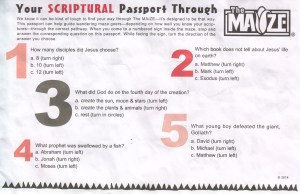
Trying not to think too much about Children of the Corn, I visited a corn maze over the weekend. This particular autumnal activity highlights just how much detail a human mind can pick out in a mass of sameness. You can tell if you’ve been to this particular juncture before—that oddly shaped leaf, or that peculiar stone, or that specific ear with the missing teeth will give you the clues. This particular maze, however, also uses printed clues. Before you enter the labyrinth, you may choose your species of guidance. There were 4-H clues, Girl Scout clues, history clues, and more. One of my companions handed me the scriptural clues. Although it may have been an obvious connection, I thought about it in terms of salvation. A corn maze is not unlike life in the real world; confusion, false leads, and aimless wandering. Having a guide—in my case, knowing the Bible—will lead you out.

corn-maze

Of course, the point of a corn maze is the fun of getting lost. This particular farm had eight acres dedicated to fall fun, and our party did get hopelessly mired in one location and had to ask for help from the corn cop who wanders like a friendly minotaur, or maybe a personal Daedalus or helpful Ariadne, directing those who’ve lost their way. The idea is that once you enter the maze, you look for numbered clues at various junctures—only a few crossroads have them—and answer the question for instructions about which way to go next. Even with the Bible in hand, or in head, we managed to lose our way. Baptized by a sudden cloudburst, we sought shelter in an open field. The only way ahead was to press on.

Those who’ve been with this blog for any length of time know that it is intentionally kind of a labyrinth, often using metaphor. In the case of the literal corn maze and its clues, minimal biblical knowledge was required to figure out the correct way to turn. The trick was even after getting all the hints, there was still some distance to go. Wet, confused, and having only our wits to go on, by trial and error we made it through. Our instructions—for we each had a different set of questions—only got us so far. My biblical guide was damp and see-through with the soaking we received. Metaphors were falling as fast as the rain. After all, the point of a corn maze is that you don’t get your money’s worth unless you get well and truly lost.


California State of Mind

California, it is sometimes said, is a state of mind. I leave today after a few days in Santa Barbara with a bag of mixed impressions of one of our nations great schools. My first impression on the University of California Santa Barbara campus was almost a physical one. Literally. I had no idea of the bicycle culture and nearly stepped into a bike lane with the flow of a New Jersey storm drain during a Nor’easter. California is a culture of wheels. I’d never been to a campus before that has four traffic lanes for non-motorized travel: two bike lanes going opposite directions, a skateboard lane, and the humble pedestrian walkway. There are so many skateboards here that the counter-culture has become conformist. Sorry, Bart, it’s true. And concern for the environment is palpable. Reclaimed rainwater feeds the lush plant life, every possible recycled item is sorted and sent to the correct facility, students bicycle instead of drive, smart cars are very evident for the two-wheel impaired, and almost nobody smokes. And as I ate my supper alone in the student union two separate groups of Christian students were having very vocal conversations about their faith. Free spirits not realizing that they’re trapped.

One conversation with a Native American specialist stayed with me. She spoke of how missionary work has damaged indigenous cultures irreparably. I listened in fascination as she told me about the local history. How an historic Spanish mission was publicly adorned with the skull of a murdered Native American and how it took years of persuading to get them to take it down, even in the late twentieth century. Across campus students are praying to Jesus for the courage to continue witnessing. In Newark, I suspect, a couple of guys are still laughing.

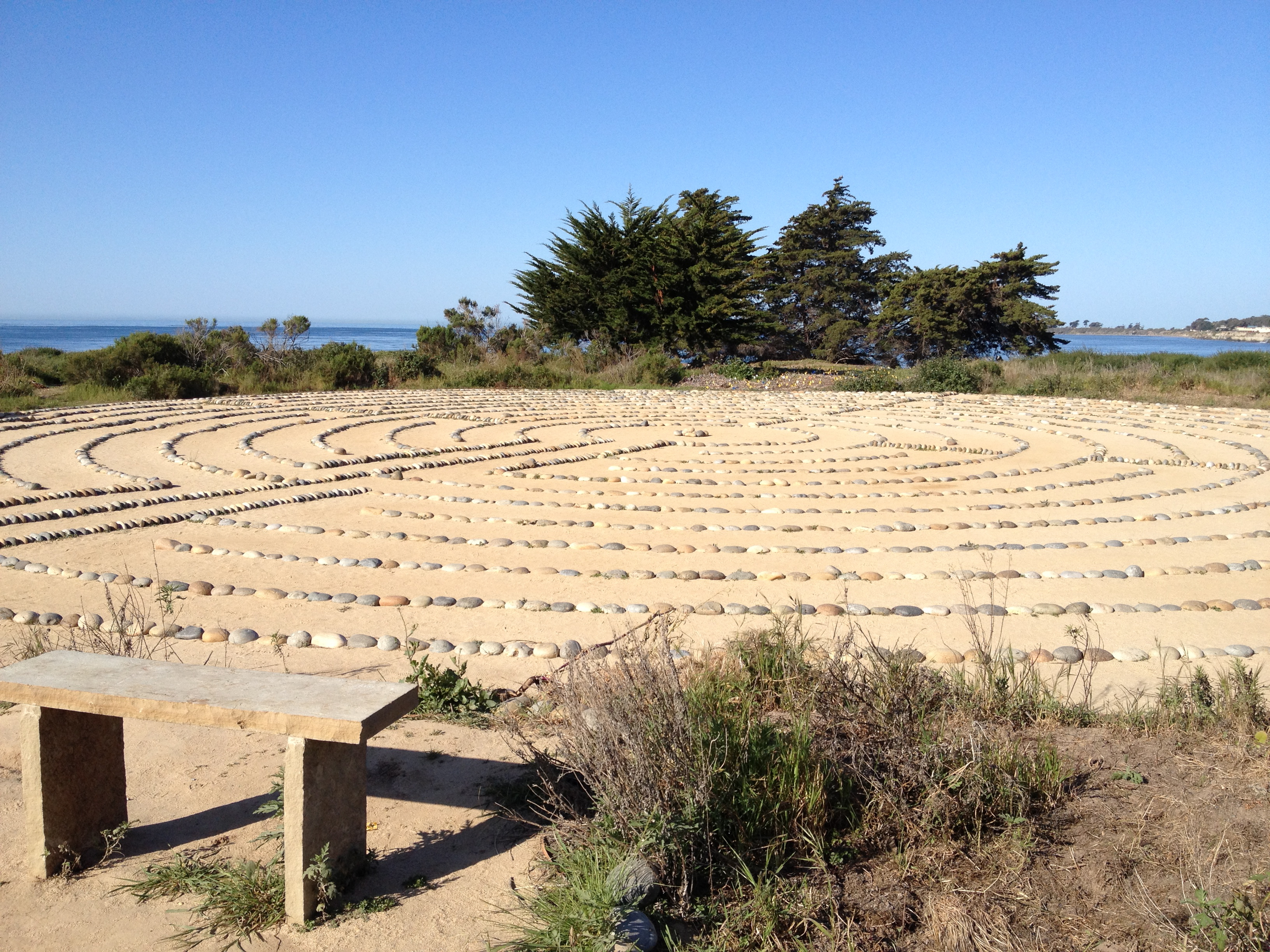
On a brief respite from my busy day of meetings, I walked the Lagoon (sorry, I can never see or say that word without thinking of Gilligan’s Island) Trail. Emphasizing the environmental features of this wetland habitat, the trail leads down to the ocean where flocks of pelicans and egrets fly overhead, unperturbed on the shores of the vast Pacific. In 1969 what had been to date the worst US waters oil spill took place from Platform A, still visible in the distance from the beach. My thoughts turn from Gilligan’s Island to Deepwater Horizon. My laughter to tears. The Lagoon Trail winds through the headland to a labyrinth. In today’s resurgence of interest in the labyrinth, it is viewed as a spiritual journey. Labyrinths appear in churches as early as the Roman Empire, but nobody knows what they mean. I silently stand beside the maze. What does it mean? Platform A leers from the ocean. Christian undergrads look to convert the world. And under the cross is not the skull of Adam, but that of an anonymous Native American. What does it mean?