
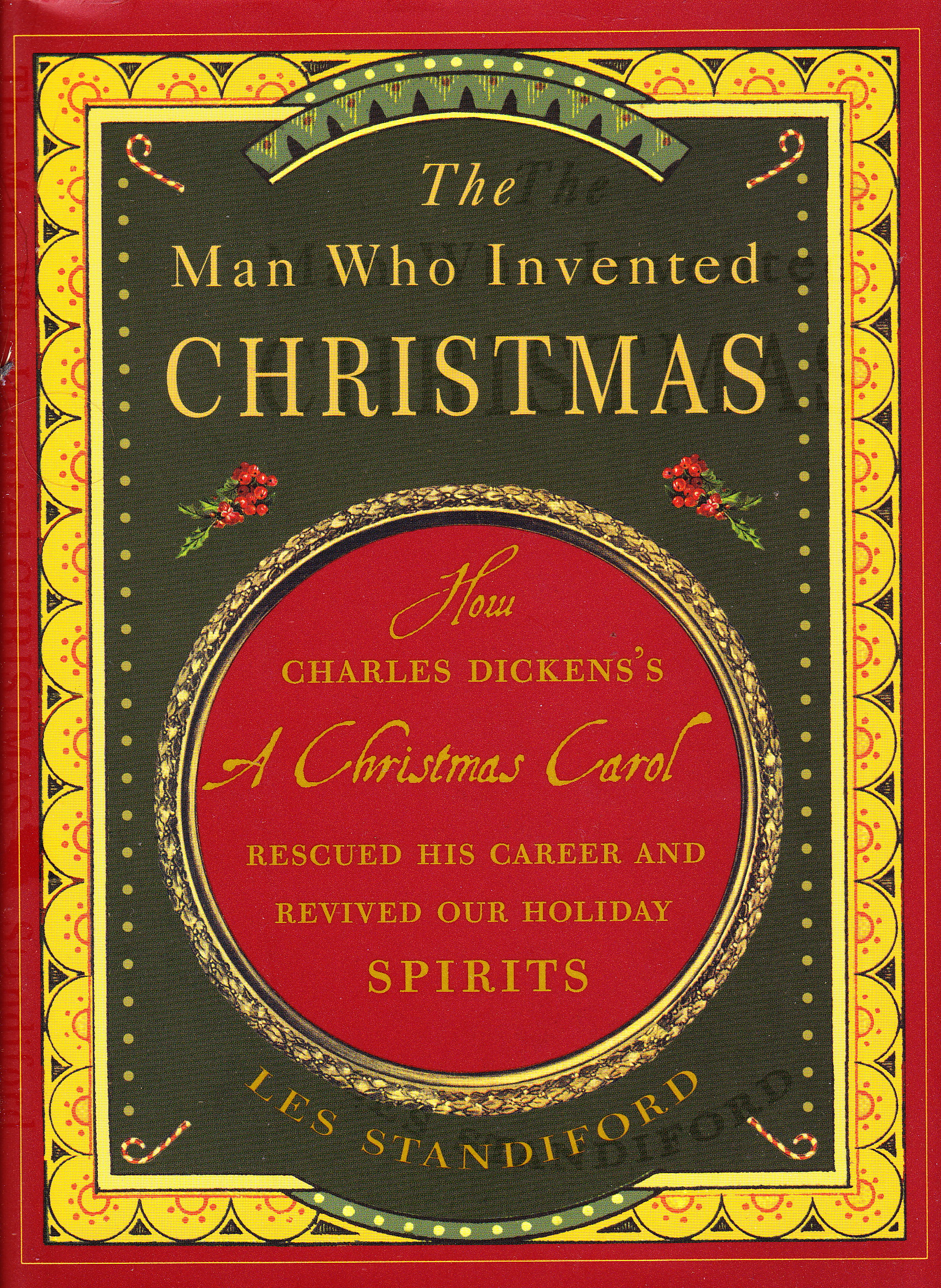
I read Les Standiford’s The Man Who Invented Christmas back in 2017 and learned a lot from it then. Some of what I read on the bus, however, has faded a bit with time and I was curious to read it again in the light of the reading I’ve done about Washington Irving. Irving was a bit older than Charles Dickens and had, it seems, given Dickens the idea of writing, first, a sketch book (Sketches by Boz), and second, writing about Christmas. From what I’ve read about Irving, he had a cautious liking of Dickens but wasn’t terribly impressed. Standiford does note that it was Irving who suggested an American tour to Dickens (it didn’t turn out well) but he (Standiford) indicates that Irving was a staunch fan of his English colleague. Were I able to spare the time, I would follow footnotes and read letters to see if I could get to the heart of the matter. Of course, I’ve become much more interested in the history of modern literature in recent years.
It would be difficult to overestimate the influence of Dickens in English literature. As Standiford points out, he helped to invent novel publication as we know it. Although he took up the gauntlet of international copyright (something Irving had earlier understood as important), he became internationally famous partially through pirated works. We still use the phrase “What the Dickens” to express surprise. (It turns out that the expression predates Charles—now that’s influence!) As Standiford notes, however, we’ve passed the era when a single author can have such great influence. Dickens was a singular talent and read by vast numbers of his compatriots and also grew a respectable readership in the United States. He also had a great deal of influence on how we celebrate Christmas. I was this time looking for Irving lurking in the shadows. And I found him. Dickens was an enthusiastic fan of Irving.
Standiford brings Irving into the discussion often, but also perpetuates the association of “It was a dark and stormy night” with Edward Bulwer-Lytton (who did use it) without mentioning that the phrase originated with Washington Irving. One gets the sense that Irving was completely eclipsed by the work of his young fan, Charles Dickens. Standiford mentions Irving quite a lot in this little book, but it’s about Dickens and not his American colleague, of course. And Standiford also notes that crediting Dickens with the “invention” of Christmas is overstatement. The story is nevertheless fascinating. To me this second reading underscored the importance of Irving for the Christmas holidays, and also how terribly difficult it is to make a living as a writer. I’m glad I came back to it, even when life otherwise threatens to be too busy for re-readings.

 Steve A. Wiggins