To Dracula, a Daughter

Nosferatu, by F. W. Murnau, was deemed in copyright violation of Bram Stoker’s Dracula, and ordered destroyed.  Rights to the novel were properly purchased by Universal and the horror film proper was born.  Other studios wanted to get in on the action, so the rights to the story of the Count’s daughter were bought by MGM.  They then sold the rights to Universal so that the latter could produce a sequel to their earlier hit.  Dracula’s Daughter didn’t do as well as the original, but it kept the vampires coming.  Some years later, Son of Dracula came out, keeping it in the family.  Having watched Abigail, I had to go back to Dracula’s Daughter to remind myself of how the story went.  I recalled, from my previous watching, that it wasn’t exactly action-packed, but beyond that thoughts were hazy.
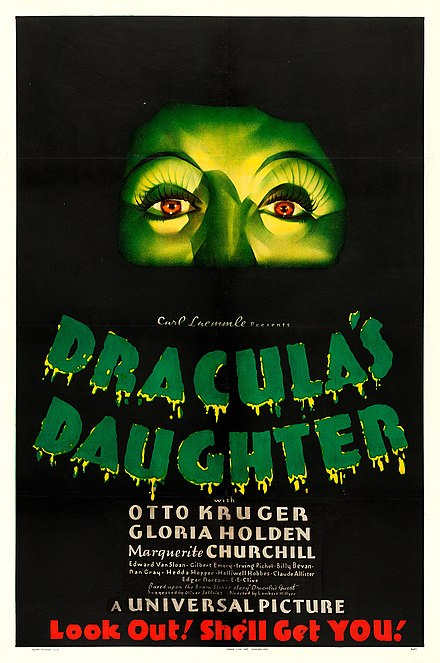
Picking up where Dracula left off, von Helsing (that’s not a typo) is arrested for staking a man.  Then a mysterious woman arrives and steals the body to destroy it in an attempt to rid herself of vampirism.  We see that just five years after Dracula the reluctant vampire was born.  Creating a scandal at the time, Dracula’s daughter also seemed to prefer females.  Apparently the script was rewritten several times to meet the approval of censors during the Code era.  The modern assessment is that this is based more on Sheridan Le Fanu’s Camilla rather than an excised chapter of Bram Stoker’s novel.  Since the world wasn’t ready for lesbian vampires in the thirties, she falls for Dr. Garth, a psychologist that she wants to live with her forever.  Kidnapping his secretary to Transylvania, she draws him to Castle Dracula.  Her jealous servant Sandor, however, shoots her with an arrow.  Von Helsing explains that any wooden shaft through the heart will do.

Already as early as Stoker, at least, Dracula had brides who were vampires.  It makes sense that there might be daughters and sons.  And studios, learning that people would pay to watch vampires on the silver screen, were glad to keep the family dynamics rolling.  Vampires proved extremely popular with viewers—a fascination that has hardly slowed down since the horror genre first began.  Some of the more recent productions explore themes and approaches that simply wouldn’t have been possible in the early days of cinema.  We don’t see Dracula’s daughter actually biting victims—one of the many things the Production Code wouldn’t allow—and there’s no blood.  Nevertheless, the story itself went on to have children and they are still among us.

Le Fanu Fans

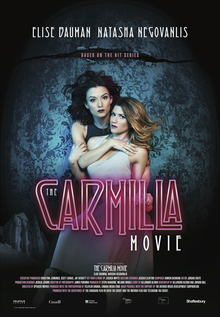
Sheridan Le Fanu is sometimes called “the Irish Poe.”  He was a contemporary of Poe but his name doesn’t bear the same cultural cachet.  He wrote a number of stories that are classified as “horror” in today’s genre settings, and one of the most famous is Carmilla, known as the lesbian vampire story.  Le Fanu didn’t use that terminology himself, that I know of, but Carmilla is a vampire and she does have fondness for other females.  I’ve watched a few lesbian vampire movies (I mentioned Theresa & Allison recently), since they give a distinctive taste to the lore.  I don’t generally research the free movies I watch beforehand, so when I saw The Carmilla Movie, I figured it was likely based on Le Fanu (it is) but I didn’t realize that it was a follow-up to a web series with the same characters.  Nevertheless, it’s a pretty good story.

Set in the modern day, with a cast of young people doing things for a living that weren’t options when I was growing up (internet content provider, starting a paranormal investigation business—I was laughed out of school for admitting I was interested in this stuff before the X-Files made it mainstream), the film updates Le Fanu’s story.   Carmilla has become human and has a girlfriend.  But then Carm starts to revert to vampire status.  (Fortunately there’s soy-based blood for her to drink—did I mention this is comedy horror?)  Although this is comedy horror, it’s not a silly story.  There are plenty of humorous asides, but you still feel for the characters and want them to overcome the evil they face.  Here that evil is a past that has to be rectified.

I found The Carmilla Movie to be intelligent and fun.  There are some genuine horror elements to it, and I suspect that being familiar with the web series might help answer a few head-scratchers for us non-initiated.  In general it seems that such independent films as this serve to raise the bar on movies as a whole.  The flip side is, however, that you can’t easily tell if a movie is a studio release or a television movie, or even a web movie without doing some research ahead of time.  Amazon Prime—my go to service—doesn’t distinguish them.  All I know is that if a movie is one I have on my watch list, I’m going to have to pay for it.  Carmilla was free and worth the time to watch.  And it’s good to see Le Fanu getting some deserved air time.


Loving Vampires

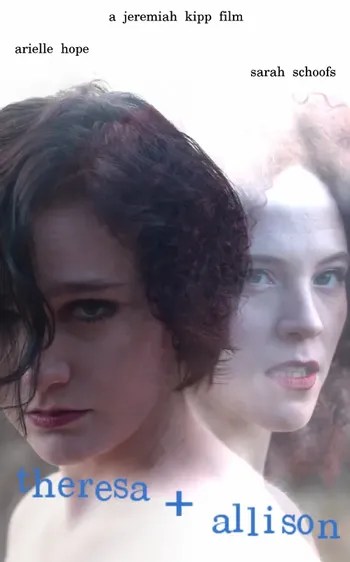
Vampires caught my attention early in life.  I believe, apart from ghosts, that they were the first monsters I learned about.  Apart from the fangs and perhaps an ironically anemic look, they appear to be just like us.  I’ve seen a great number of vampire movies over the years—I can’t seem to resist them.  I don’t care for the blood and gore, but the idea of the conflicted undead is a powerful draw.  It’s this conflicted aspect that brought Theresa & Allison to my vampire radar.  This movie is not for the squeamish, and I have to say up front that it is a lesbian vampire movie, with all that that implies.  You have been warned.  Theresa & Allison is also an indie movie—I’ve been watching quite a few of these lately because they’re often free.  This one is also smart and fairly original and it explores humanitarian concerns as well as vampiric ones.

Said Teresa is “made” when a drunken vampire (they get drunk when their victims are inebriated) decides to turn her (make her into a vampire).  She soon learns that vampires are organized and sanctioned by the government, and there are rules to be followed.  Also, some of the standards for vampire lore, we’re told, are male bovine droppings.   Teresa was lesbian before she was turned, and she’s befriended by fellow vampire Allison.  We learn that two major vampire “families” range about New York City—one graceful and kind, the other brutal and unfeeling.  Teresa has real trouble killing people for blood and she’s confused about what she’s become.  She doesn’t know what to make of it when the kinder vampires offer to let her join.  Instead, she follows Allison and finds herself in a blood-drenched nightmare.

Vampire movies are often full of social commentary.  Especially the spate of movies made available by independent auteurs.  Theresa & Allison asks the question of what makes something right or wrong.  It also explores what it means to accept who or what you are while also having the ability to change some aspects of it.  It reflects, it seems to me, the moral landscape of the young.  In that respect, it makes sense that those of us from older generations (let’s not kid ourselves) may have been raised with very different standards.  Culture, however, has continued to evolve.  The internet sped all of that up immensely.  Still, the acceptance aspect of the young is written all over movies like this.  And the internet means there will undoubtedly be more to come.  Vampires are sure getting interesting.