Wonderful Impossibility

I used to tell my students that a semester break without reading a book that challenged your assumptions was wasted.  I tried to lead by example, but jobs are such fragile things.  Since I have no semester breaks I try to read books that push the limits more frequently.  I’d heard about Carlos Eire’s They Flew before the author had settled on a publisher.  (I don’t know him personally, but would be glad to.)  In case the title doesn’t do enough heavy lifting, the subtitle A History of the Impossible might help.  Yes, we’re stepping into the world of the post-secular here.  It’s a wonderful place.  Although much of the book deals with early modern cases of levitation, the study ranges wider than that.  Written by a respected historian, this is a very important book.  For many reasons.

I am glad to see Yale University Press joining with Chicago and some noted others (Rowman and Littlefield, for instance) in challenging a paradigm that is no longer upheld by science.  I can hear the howling already, but if you read carefully, with an open mind (which is required by science) you’ll quite possibly learn something here.  Our minds do influence our reality.  We haven’t figured out how because secularism ends the discussion with scorn.  That was true of the study of UFOs as well, until the U. S. Navy said, “Nope.  They’re real.”  (It only took about seven decades, so don’t expect instant results.)  We cut off our possibilities when we mock things out of habit.  I remember the Turok comic where one character said to another (give me a break—this has been five decades and I can’t recall all the names) “Fools scoff at what they don’t understand.”  Truer words have never been penned.

The impossible happens when scientists aren’t there to witness it.  It sometimes happens when they are.  Doubt that?  Read about the Pauli Effect.  Or call it gremlins, the choice is yours.  It’s real in either case.  Academics are often among the last, with the exception of Trump supporters, to see what’s been staring them in the face all along.  I’ll say more about this book on Goodreads, but let me float a hope here.  I want to go back to that indefinite article in Eire’s subtitle.  This is A History of the Impossible.  May more follow.  Others, such as Jeff Kripal, have been doing similar work for many years now.  We can ignore it, or scoff at it.  But I think that character in Turok got it right, even if I can’t remember his name.


On the Rocks

This universe is indeed a mysterious place. You don’t have to believe in the paranormal anymore to see it. A look at the headlines makes my point. There are those, however, who do look at the genuinely strange, and once in a while this realm crosses paths with that of religion. A friend pointed me to a story on Mysterious Universe about floating rocks. Apparently this story is going to be on the mainstream Travel Channel, so it’s not completely bonkers. It caught my attention because it’s about rocks. While of decidedly poor qualification to be a rock-hound, I have more than a passing interest in geology. Itinerates shouldn’t collect rocks, but I can’t help myself. Anyway, I’ve been known to go to publicly open mines and tap away with my rock hammer hoping to find some not-so-hidden treasure.

According to the story, there is such a publicly open mine in Arkansas. Crystals (I expect quartz) are available for surface excavation, for a fee. Then the owners, the Murphys, noticed the anomalous rocks. Since they are conservative Christians (this is Arkansas after all) they feared what powers might be behind rocks that don’t obey the laws of gravity. The mine didn’t get closed and hushed up because of an unusual source of inspiration. An article by Billy Graham on divine mysteries led them to keep the mine open and to allow for investigation. Once the Travel Channel comes out with its program Crystal Mine is sure to experience an influx of business. Mainstream scientists, one expects, will not be among them.

The universe is vast. We haven’t explored all of our own planet yet (we’re kind of busy destroying it at the moment, so if you don’t mind…) and yet we gleefully claim what’s impossible. I don’t know if there are levitating rocks in Arkansas, but I do think we’ve been a bit hasty about some of our conclusions. We may yet find things that will force the concepts—the laws—to change. Consider gravity, which seems particularly relevant in the case of floating rocks. Sir Isaac Newton (devout theist that he was) ending up having to relinquish the “correct” explanation to Albert Einstein. Some have been so bold as to suggest that maybe even Einstein might not have gotten the whole skinny on gravity. We continue to learn. Levitating rocks are indeed strange. Not so strange, however, as Billy Graham being the one to rescue an anomaly for the world to see.


Monk over Matter

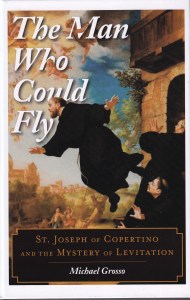
ManWhoCouldFlyPeople can think with their emotions. At a young age we begin formal schooling to teach us the rational ways that we must develop to live in society. Emotions are trained, tamed, and sometimes repressed as we are taught that “higher brain” functions are what make us distinctly human. Even in our supremely rational world, however, we can’t figure out consciousness. It remains elusive, provocatively bordering on the supernatural, and the experience of being human gives the lie to consciousness being emergent from a physical brain. These are the kinds of issues that underlie the strange case of Joseph of Copertino. The subject of Michael Grosso’s recent book, The Man Who Could Fly: St. Joseph of Copertino and the Mystery of Levitation, Joseph may well be off the radar of most people. In fact, in the seventeenth century church in Italy, his presence was downplayed and hushed, almost as an embarrassment to Roman Catholicism of the day. Why? Joseph was known to levitate. In fact, his levitations were often in public and were witnessed by individuals whose credibility was not in doubt. With the Reformation going on, however, the last thing the church needed was a miracle.

The standard historical line of dealing with Joseph is to laugh and wave our hands in the directions of those credulous early moderns. They thought they saw him levitate, but it was all imagination. Even if we have to invoke mass hallucination. People just can’t levitate. Grosso’s book, however, takes a different approach to Joseph. Looking at first-hand accounts, carefully considering the political situation of seventeenth-century Italy, and being open to parapsychology, this book presents a very different portrait of the flying saint. There was nothing to be gained by hiding such a prodigy unless, as Grosso argues, there was actually something to the story. It may come down to a basic misunderstanding of consciousness, his book suggests.

No doubt The Man Who Could Fly will be simply dismissed by many. Those who dare to read it, however, will find a cogently argued, rational exploration of a man who was lifted by spiritual ecstasies in a way we have yet to understand. Grosso demonstrates that, depending on perspective, such events do not violate laws of physics so much as demonstrate that we have much yet to learn about them. Categorizing events as supernatural puts up an artificial barrier to exploring scientifically events that have evidence in the form of multiple witnesses. Obviously we can’t go back to the 1600’s and visit Joseph in some obscure convent where he’d been shuffled by church authorities to keep him out of the public eye. Even if we could there would be no way to prove his extraordinary gifts. When it comes to the life of emotion, the only way to accept the impossible is with belief. And at times belief may be the most rational response at hand.


Flying None?

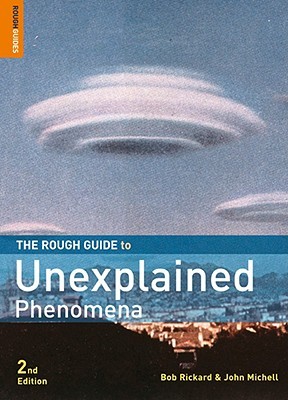
RoughGuidesWhile reading about a saint or two recently, I once again came across the concept of levitation. Long dismissed as overly gullible piety of superstitious pre-moderns, the practice has been relegated to the scratched and damaged basement of religious thought. Or so it would seem. While examining a World Religions textbook at work, I came across a picture of a young person in meditation who was, to all appearances, levitating. The caption simply noted that levitation is a component of some religious practitioners’ discipline and then quietly moved on. No scare quotes or allegedlys to be seen. The publisher of the text was one of the major textbook moguls. Curious, I found a reference to The Rough Guide to Unexplained Phenomena by Bob Rickard and John Michell. This intriguing book, in its second edition, bears the Penguin imprimatur, and therefore should be taken seriously. While I am certain that any number of skeptical readers will declare me hopelessly naive, I found the book full of interesting anomalies, and many of them, as I’ve noted several times on this blog, tied the paranormal to religion.

While I can’t accept everything I read in The Rough Guide, there remain, even after healthy doubt, a number of weird things that persist in our reductionistic world. Strange phenomena do not necessarily validate religion, of course, and many of those “revelations” people claim must be simple pareidolia. These are entertaining, no doubt, but hardly newsworthy. It is rather those phenomena that refuse to play by the rules that raise questions about our demon-haunted world. If even just a handful, or even one of the cases of levitation actually occurred, it would mean some serious rethinking concerning the nature of gravity. Do saints levitate? I’m no saint, so perhaps it’s best not to ask me. If one lies about it, then s/he is hardly a saint.

As uncomfortable as the unexplained may make us, these reports do serve as a reminder that our scientific worldview is, in many ways, still in its infancy. A few years back, sitting in on the lecture of a friend concerning the science of the Mesopotamians, it was clear that rational thought has very early origins in human civilization. At the same time, the Mesopotamians had plenty of room for gods and the supernatural in their worldview as well. Here in our electronic twenty-first century, it might seem that reason will see us through just about any crisis. Even a glance at the headlines reveals we’re not there yet. Some will blame the religious, the “superstitious,” the irrational for our problems. Meanwhile far from the eyes of scientists and authorities of secular power, maybe, just maybe, a religious practitioner may be hovering a few inches off the ground.