Heavenly Questions

A lot can happen when you’re in a coma. Or nothing at all. I haven’t read Kevin and Alex Malarkey’s account of the latter’s trip to Heaven during a coma, and it looks like I never shall. A story by Kyle Swenson in The Washington Post explains how Alex Malarkey, now that he is no longer a minor, is suing Tyndale House over the publication of his Near Death Experience (NDE), penned by his father. The story, according to the Post, was a fabrication. Alex awoke from his coma recalling nothing, but Kevin knew a good thing when he saw it and wrote an account of the young boy going to Heaven. Alex says it never happened. The Boy Who Came Back from Heaven is now being pulled and pulped as a hoax.

NDEs are real (even if one didn’t happen in this case), but what they actually are is a matter of debate. The mainstream interpretation is that they are the last gasps of consciousness before a brain dies, temporarily. These often comforting thoughts can be quite similar in very different contexts and sometimes include the formerly deceased knowing details that they couldn’t possibly have witnessed in real life. Scientists willing to buck convention explore these episodes less with the intention of proving Heaven is true than with probing the idea that souls are real. That consciousness somehow continues. That life may, after all, be eternal. Since there are no scientific apparatus in the afterlife, there’s no way to measure or quantify such events. This leads most scientists to conclude that these are merely dying thoughts, or, as in the Malarkey case, hoaxes.

Ever since Raymond Moody’s Life after Life, confessional publishers—particularly of the evangelical brand—have promoted such stories. Religion and science, while not necessarily the cats and dogs they’re presented as being, don’t often coalesce around a common nucleus. Part of the problem is that spiritual events are beyond the reach of the scientific method since no laboratory conditions exist to test them. A number of scientists and medical doctors attest the reality of NDEs, but these occur in human consciousness—a realm of which we know little. Religious publishers know a good story when they see one since the doubts cast by science have to be regularly dispelled. The problem is the money such stories attracts also allures those seeking the fiduciary comforts of this material world. In this case, it seems, if you didn’t have the experience yourself you could capitalize on someone who did. Or didn’t. Those eager for proof are always willing to buy and sell the story.

Heaven Can Wait

“Like a good neighbor, State Farm is there.” So the jingle goes. Or went. I’ve only met my upstairs neighbors once. Twice now. Apparently last weekend I slept through the fire alarm—one of the dangers of awaking ridiculously early on a daily basis. The neighbors found the source of the smoke and turned off the furnace in the basement, but told me first thing in the morning before the coffee really kicked in. I avoided a close call, perhaps. What if they’d not been home?

I have no delusions about understanding how the Internet works. I’m still trying to figure out the telegraph. Perhaps having this inconsequential blog has put me on somebody’s radar, or maybe it’s just some bored robot that searches for strange combinations of words in the wee hours of the night. In any case, I ended up with an email with the trailer for Heaven Is For Real embedded in it. I recall when the book was on the New York Times bestseller list, and I suppose the Easter weekend release date is no coincidence, but the trailer still bothered me a bit. It’s not the resurrection part—the film industry wouldn’t get very far without that trope—but it is the implications of what heaven would be like. I haven’t read the book, but apparently Colton Burpo had a near-death experience and then for a considerable time afterward began describing things that were impossible for him to know. A miscarriage where his sister died, what his grandfather looked like as a young man, what his parents were doing when he was dead in the hospital. Talk about your spooky effects at a distance!

Despite my penchant for watching scary movies, I don’t think I’ll see Heaven Is For Real. There’s just too much emotional build-up here, and Life After Life traumatized me for weeks a couple decades back. Still, I am very interested in the possible explanations for what might have been going on. Near-death experiences have never been adequately explained. Scientists suggest that a lot can happen in a complex brain in a matter of nano-seconds, and we have no chronograph precise enough to know whether the thoughts and images happened before death, during death, or during resuscitation. Still, how people frequently know precisely where others were, who were not in the room at the time, and how they heard things that, medically speaking, they couldn’t have heard, remains eerie and hopeful at the same time. What does appear to be without question is that consciousness is far from being explained.

Botticini's vision

Botticini’s vision

Heaven is always described as pleasant. That concept differs radically for people, and you have to wonder how it can be one-size-fits-all. Some people prefer to be in crowds, while others like to be alone. Some like it hot. Some like it cold. And those who experience near-death phenomena often report having a body of some sort “up there.” Some people would prefer a different body. According to the trailer, Colton says we’re all young over yonder. For me, such things are far more about questions than answers. We don’t know what goes on after death. Nearly every religion ever invented says that clearly there’s more to the story. Some say we come back, others say we stay away. Maybe it is different for each. Maybe it is just a matter of having good neighbors after all.


NDEs

I love science. Like many young boys, I was probably enticed to science through science fiction. While I didn’t follow science to a career, I used it to study religious texts. Those who’ve never undertaken the challenge of trying to figure out what something written thousands of years ago—on clay!—really says may be surprised to learn just how much science is involved. Nevertheless, as comforting as reductionism may be, something just doesn’t feel right about it. Science is how we explain and understand our world, and it does a spectacular job of it. The problem arises when science becomes what Stephen Jay Gould called a “magisterium.” Magisteria have all the answers. Yes, science explains how matter and energy work and interact, but it has yet to explain satisfactorily what it feels like. Most days I feel like the person I’ve become accustomed to show to the world. That person is very much like every other—being born, eating, breathing, dying. Medical science can explain most of it, but what about the parts it can’t?

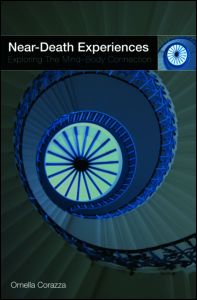
I just finished reading Ornella Corazza’s Near-Death Experiences: Exploring the Mind-Body Connection. I remember when the craze about this hit in 1981 with the release of the movie Life After Life. I was fascinated and terrified by it. Since a materialistic view of science dismisses anything that has the residue of spirits or souls, the phenomenon of the resuscitated dead reporting seeing their bodies from above, shooting through tunnels into the light, and sometimes meeting the dead (or God), were explained as last nano-second hallucinations as the brain prepared to shut down or reboot (upon resuscitation). That’s that. The answer, however, didn’t satisfy everyone. What about those cases where the dead person reported, in detail, what happened in other rooms, or things they couldn’t have seen in their own room, had they been conscious? Corazza takes these considerations seriously and tries to understand what may be going on. Obviously, her explorations will not convince a reductionist, but they may give pause to some of us.

What makes her approach so interesting is that Corazza takes into account an alternative way of looking at consciousness. While the facts of science are, by definition, universal, the contexts within which those facts are viewed are not. Having spent considerable time with Japanese scientists exploring consciousness, eastern ideas of the body inform her research. In the western world we have an easy familiarity with the Cartesian dualism of body and soul that does not fit into other worldviews. Corazza takes the interesting step of asking what if we apply an eastern paradigm of the body (one that understands soul as body, and not just in a materialistic sense) and apply it to the question of Near Death Experiences. The results are mind-stretching. I feel as if my consciousness got up from months of laziness and ran a marathon (or at least a 5-K). It’s a bit winded and parts of it are starting to ache a little. No reductionists need worry, however, because in that worldview none of this exists.