Quarter Day

Some years it sneaks up on you.  The solstice, that is.  The weather remains an area of fascination for me, and not one of infrequent complaint.  The late spring (pretty much all of May and June up until Juneteenth) around here has been rainy and chilly.  Oh, we’ve had hot days sprinkled in, but even this week I had to wear a thermal shirt and fingerless gloves in the morning since there was no sun and the furnace has been off since last month.  The last couple of days, starting, ironically, at Valley Forge, have been getting hot.  And today begins astronomical summer.  I write about the seasons quite a lot.  Having been born and raised in a rainy, temperate zone climate, I grew up accustomed to four distinct seasons.  And we’re now at the longest day of the year.

The quarter days always make me reflective.  Culturally, there’s no real celebration associated with solstices or equinoxes.  The winter solstice falls relatively near Christmas and other winter holidays.  The spring equinox is close to Easter.  The start of summer, which should be ebulliently hopeful with its abundant sunshine, tends to get overlooked.  Some like to say summer is when life is easy.  It does mean mowing the lawn quite a bit.  The grass loves all the rain we’ve had this year.  Waypoints, however, are important.  We divide the year so we might anticipate.  Our agricultural roots focus on planting and harvest.  Even our hunter-gatherer forebears had to follow the food that changed location depending on the prevailing weather.  The seasons are deep within us.

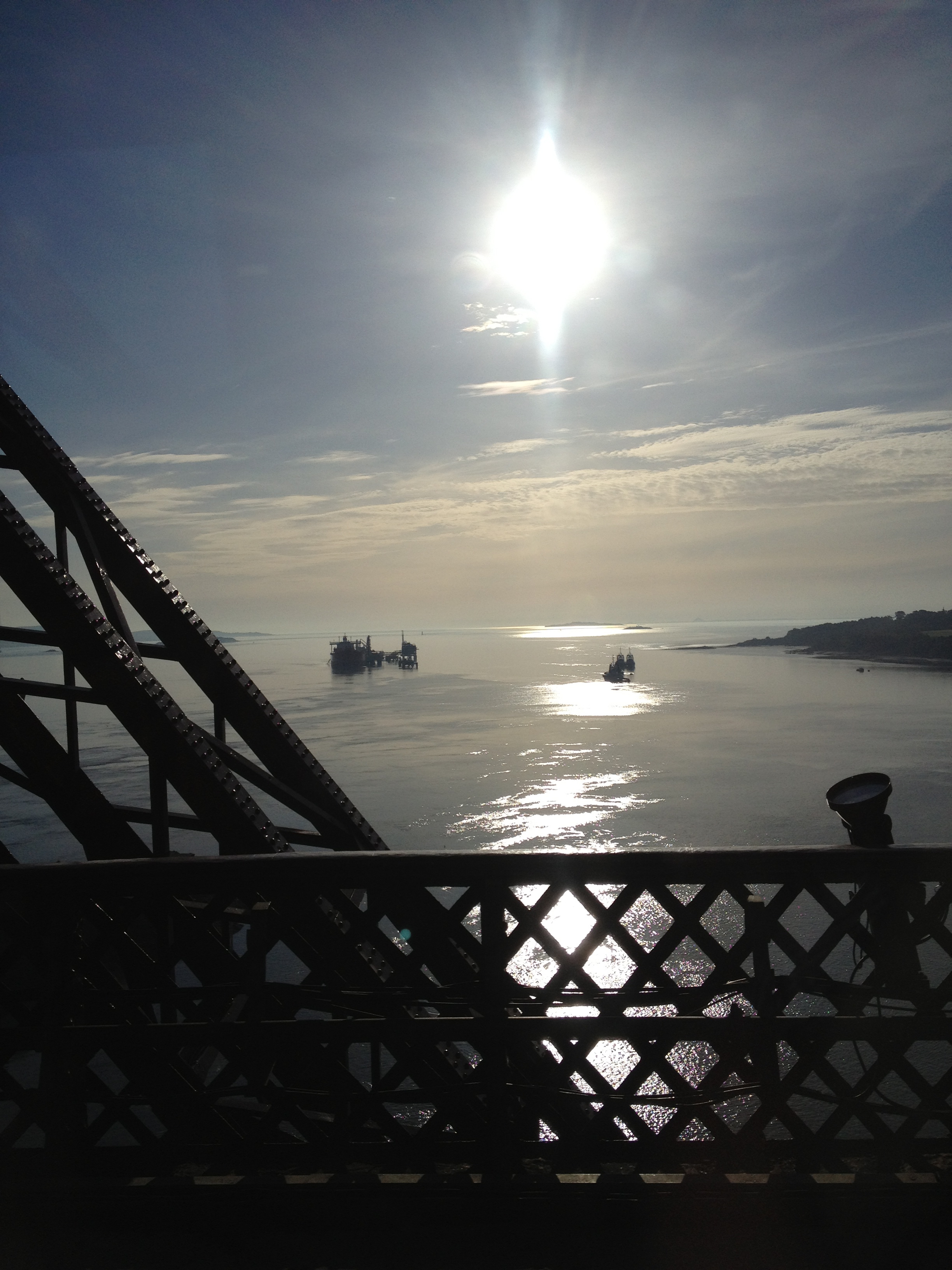
The summer solstice always makes me think of Ari Aster’s Midsommar.  The underlying fear of too much light.  Even here there is a profound message for those able to excavate it.  If things are going well we tend to sabotage them.  Still, I prefer to think of this as a season of hope.  Summer illuminates.  I write this noting the sun’s chasing of twilight outside my window, even before five a.m.  There are still some clouds in the sky because old patterns are difficult to break.  But it is a season of light.  The next quarter day, when we start to realize that the darkness will be increasing until the sister solstice comes to our rescue in winter, is likewise passed over in silence.  By then many will be ready for a respite from the heat that comes with too much light.  Others of us will be thinking of cycles and how they are full of hope and anticipation.


Solstice 2024

We have a small solstice celebration at home.  We’re not pagans, but it seems that the shortest day ought to be observed.  Noted.  Pondered.  You see, this holiday season had its earliest beginnings as solstice celebrations.  Fervently praying for more light, and a bit more warmth, ancient folk of the north knew to propitiate whatever powers that be in the dark.  “Please bring back our sun,” you can almost hear them sigh, in the bleak December.  I’m stunned and stilled by this each year.  The gradual change makes it less of a shock, but we’re living primarily in darkness now.  Until today.  The solstice is a turning point, an axis around which our lives turn.  Forgotten ancients celebrated it and eventually Christian and other holidays gathered around it, as if coming to a campfire on a cold night.  Why not stop a moment and reflect?

I’m a morning person.  More extreme than most other auroraphiliacs, I don’t remember the last time I wasn’t awake for sunrise.  Attempting to stay healthy, I try to get out for a morning jog before work, and that can be challenging for a guy who starts work early.  I sometimes start work even earlier than usual so that I can jog once the sun shyly glances over those eastern hills.  I notice the slow creep of the year.  At the other end of the day, it’s dark by the time work ends.  Mundane tasks such as hauling the garbage can out behind the garage can become tenebrous hikes.  Others who exercise, and work, most go to the gym.  I’ve tried jogging in the dark—it’s full of peril.  Like the ancient pagans, I look forward to a little more light.

Progress, like lasting change, must come slowly.  The earlier sun rises and later sunsets are first measured in matters of seconds, not minutes.  We remain in the dark even as we hope for light.  Hope pervades this time of year.  We anticipate Christmas, yes, but our light-starved eyes look beyond.  Beyond the chill of January into what some Celts marked as the start of spring—February.  Yes, the cold can be very intense then, but rages are always their most furious before they die out.  I suspect Dylan Thomas knew that when advising his dying father on how to approach the end.  I’m writing this post in the dark.  By dinner time the night will have already settled in.  And we’ll light a candle, encouraging more to join in looking for the elusive light.  Dawn always comes.  Eventually it comes.


Creating Light

I spend a lot of time awake when it’s dark out.  I try to limit the number of lights on, both for the environment and not to wake family members who sleep on a more normal timetable.  But this schedule makes me reflect a lot about light.  For example, the other day I glanced at a mirror that happened to be reflecting a light.  By reflecting light you create more light.  Think of the moon.  A full moon on a clear night can make a massive difference in how well you can see.  Farmers used to know this as harvest moons gave the possibilities for longer light-time hours to get seasonal work done.  And that light reflecting in my eye in an early morning mirror made me wonder what would happen if you set up a mirror facing a mirror with a light in the middle.  Wouldn’t you have just created more light in the world?

I’m almost always awake before sunrise.  I don’t recollect the last time I awoke to find the sun in the sky.  There are so many subtleties to morning light.  You can see it coming a long way off.  I try to jog at first light, when it’s just light enough to see where I’m going.  It’s important to seek light in the dark.  There’s a kind of spirituality to it.  Often when I’m jogging I’m amazed at how far even a small light carries.  When I see the stars at night and think how terribly, terribly far away they are, I marvel that their light still reaches us.  Light can be blocked out, but unless it is, it stops at nothing.  Light persists.  

Bioluminescence fascinates me.  We now know that our very genes have the ability to create their own light.  Fireflies and deep-sea creatures have figured out how to do it, and, I suspect, scientists could engineer a glowing person.  We have it within ourselves to create our own light.  Science wouldn’t disagree.  Sometimes such things are best seen by walking around in the dark.  The contrast helps that inner light show through more clearly.  Those who are afraid of the dark haven’t spent the time to truly become acquainted with it.  The dark is a very capable teacher and the rhetoric that it’s evil is based on mistaking, as the Buddha said, the finger pointing at the moon for the moon itself.  But it’s starting to get light out—time for me to go for a jog to seek even more of it in the semi-dark.


Being Equal Again

Things creep up on you.  Like the equinox.  It really should be a holiday, but then again today’s already Saturday.  And from today, for the next six months, there will be more light than darkness.  It was an occasion ancient cultures marked and celebrated.  For us, unless it happens to fall near Easter (it’s still a couple weeks away this year), it’s an item in the news feed and nothing more.  It is, however, an opportunity to celebrate our place in nature.  The temperatures are beginning to warm just a bit around here, despite the flecks of snow in the air just three days ago.  The more tenacious of the spring perennials have already begun to shine green.  Things have begun to come back to life.  That’s why Easter is always in the spring.

Today it will be light as much as it is dark.  Balance.  Our old wobbly earth strikes this metaphorical fulcrum twice a year, giving us a glimpse of what lies ahead.  Birds, those great prognosticators, have been showing up to let us know things are about to change.  Finches, robins, starlings, and mourning doves have been conspicuous the last few days.  Even as the dirty, icy snow piles continue to hold on in their private mountains, they too seem to know time has come to be moving on.  Change is the way of nature.  This just happens to be the half of the year when we can see what we’re doing.  At this great balancing point of the year we should take the opportunity to ask if we like where we’re heading.  Do we welcome the light?

Soon enough we’ll begin to take it for granted.  Life will continue its busy ways even as we tell ourselves summer is the time for vacations.  Perhaps so.  But let’s linger in this moment.  Take a few minutes to ponder what it means to be in balance.  Equality.  It feels like something worth celebrating.  Corporate American parsimoniously counts days that might be considered grudging respites from trying to cop a profit.  Although we’re given Christmas off it can’t abide that moving target called Easter, which always comes on a Sunday anyway.  Here in that calendrical holiday barren zone between Presidents’ and Memorial days, we’ll always find spring, if we look for it.  It’s evident in the changing of the light, even if there’s still a chill in the air.  Even as our bosses ignore it, the red buds begin to appear on the trees.


Symbolic Delays

Weather affects more than the Psalms, of course.  With all the hype of the latest winter storm things were closed or delayed before any accumulation even started.  Now I’ll admit up front that I’m a fan of snow days; we dutifully trudge to our desk jobs as if we’re doing something vital when many of us are really just trying to make money for the man.  A snow day’s a little unplanned levity in our lives when staying off the roads seems like a good idea.  It’s one of life’s guilty pleasures.  Of course, the dreaded delayed opening brings its own set of issues.  You can’t sleep in unless it’s announced the night before, and once you’re up your mind heads to work anyway.  Working remotely, alas, means you have no excuse, no matter what the weather.

Snow is a great symbol.  I don’t mean its whiteness and purity—there are plenty of white things that aren’t pure.  No, I mean it’s a great symbol in its ability to control people.  We don’t like rain, although we understand its necessity.  Snow, however, fills us with a childlike wonder.  Anticipation.  Unlike a winter rain, it can be fun to play in.  It covers everything.  The suggestion of a blanket ironically makes us feel warm, even as the temperature dips below freezing.  But for me the most potent symbol is light.  I awake early, even on snow days.  As I make my way downstairs in the dark, it’s immediately evident when snow covers everything because the sky is lighter than it should be this time of day.  Whatever light’s trapped below the clouds reflects off the snow creating a luminosity that’s almost otherworldly in its calm.  It doesn’t last too long for the sun is rising earlier, at least it is until our pointless time change, but for a few hours we’re in the midst of an unnatural light.

Darkness is far too prevalent.  We know that someday even our mighty sun will use up all its fuel.  We crave the light for it’s limited.  Days are noticeably longer now than they were at the start of December.  Those few moments of serenity before the sun comes up, when the snow produces what seems like its own light, are among the most tranquil of life.  Before the plows begin scraping metal against asphalt, hoping for a snow day while wrapped in a fleece throw, face clouding the chilly window before it.  Yes, it’s a powerful symbol.  Even if the internet means work awaits just as usual.  


Hoping for Light

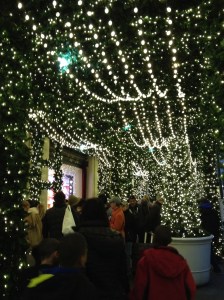
Although the stores have been playing Christmas music for some weeks now, it is technically Advent. I think we could all use a little Advent as days grow shorter and dark nights increase their influence over our lives. As a nation we’ve been brutalized by a minority candidate and this has become a bleak December that Poe would certainly have understood. The spinning mind occasionally falls upon George W. Bush who somehow has begun to look normal. The president who told us when America was under attack we should shop. After all, that’s what people do in December, right? We buy things to make ourselves feel better. It sure is dark outside most of the time. Advent is all about candles and light and hope.

img_2638

One of the more endearing aspects of human beings is our ability to see the positive amid negativity. Darkness is the natural state of the universe. Stars are tiny points of light in an endless cold and dark universe. Most of what’s out there has no light beyond those willing to burn bright enough for others to see. We, however, see the light of daytime as normative, slumbering away the hours of darkness. We thrive in light and the light has to be augmented by candles as we struggle against the natural darkness that would, if it could, encompass the universe. Darkness, despite its emptiness, is endlessly hungry. Advent reminds us that we must be light if we want anyone to see in the growing nighttime.

We miss this important dynamic if we leap straight from Halloween to Christmas, pausing briefly for Thanksgiving. The church has made its fair share of mistakes, but Advent wasn’t one of them. Experts tell us Jesus wan’t born in December. Christmas isn’t really a physical birthday. It’s an ancient rite concerned with the return of light to darkened skies. A fervent appeal for our colorful lights and candles to encourage the light that we know, we believe, is out there to return to us. Scientists tell us that it’s just that the earth lolls at 23 degrees on its axis and all of this is just a balancing act. That may be so. I’ve never been off the earth to check. Down here on the ground, however, the days come only reluctantly and the nights linger longer and longer. And we can choose to see darkness as our natural state, or we can ignite a candle to encourage the light to return.


From Darkness

All things being equal, most religions side with light. Let there be light. Enlightenment. Dewali, the festival of lights. The light of heaven is as much the appeal just as the darkness of hell is its antipode. Today, as the autumnal equinox turns us toward the darker half of the year, many religions mark the occasion with some kind of notice of the fading of the light. In the Celtic calendar, so indicative of the old religions of Europe, the recognition of the triumph of the dark comes at Samhain, or Halloween. It is the realization that darkness always follows light, and even the relative carelessness of summer has its limits. We are, half the year, no matter our location on the globe, in darkness.

Despite the habits of some college-age folk, people are not, by nature, nocturnal. Biology has evolved our sense of daylight, color-rich sight as a main means of our survival. Our religions have taken our fear of the dark and valorized our experience of light. Even as the winter solstice rolls around, festivals of many religions add more and more lights to ward off the encroaching night. The equinox is a moment of stability. It is a tenuous moment, occurring only twice a year, when darkness and light hold an uneasy truce. We are poised to move into shorter days, cooler weather, and the apparent loss of life. There is a melancholy to it, beautiful and compelling, if somewhat sad.

As I reflect on the fading of the light, I realize that the southern hemisphere, whence light seems to be rising, is facing the vernal equinox. Their summer is about to begin. Days will lengthen and light will be abundant. Our religious calendars tend to be keyed to the experience of those in the northern hemisphere. Those in the south, following the dictates of Rome, celebrate Christmas in summer and Easter in the fall. After my rainy visit to Indiana, where, on a rainy Thursday evening I saw a rainbow in the east, I awoke to a rainy Friday and saw a rainbow to the west. Fractured light. The light of a fading day broken into its myriad shades and hues. Light is that way. It is always daylight somewhere in the world, but religions focus on the light where we find ourselves at the moment.

IMG_0744