Books on Wheels

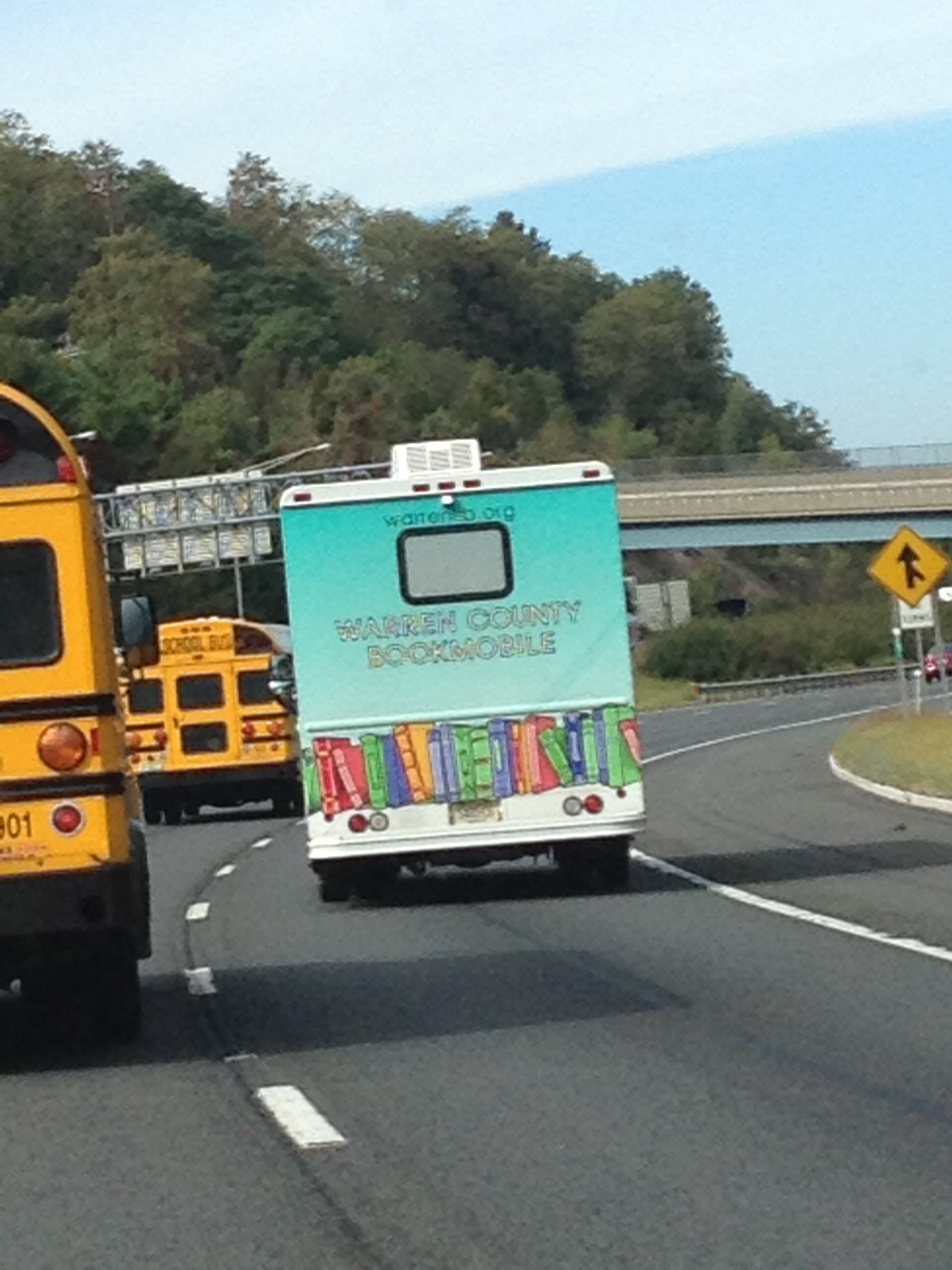
Some unexpected serendipities transport you to childhood. Somewhere on Interstate 80 I passed a bookmobile. The notion felt strangely old-fashioned in this days of Nooks and Kindles. Indeed, a Kindlemobile would have been no less surprising. The idea, I recall, that someone cared enough about my little school to drive a bus full of books right up to it, made me feel special. I mean, these were books—for me! I don’t recollect ever checking any out since it was the ’60’s and everything communal had a strangely communist cast to it. We couldn’t afford many books. Indeed, growing up, we didn’t have a proper bookshelf anywhere in the house. When I began to buy books, I kept them in a cheap suitcase. The only trips I made, really, were in my mind.
IMG_1587

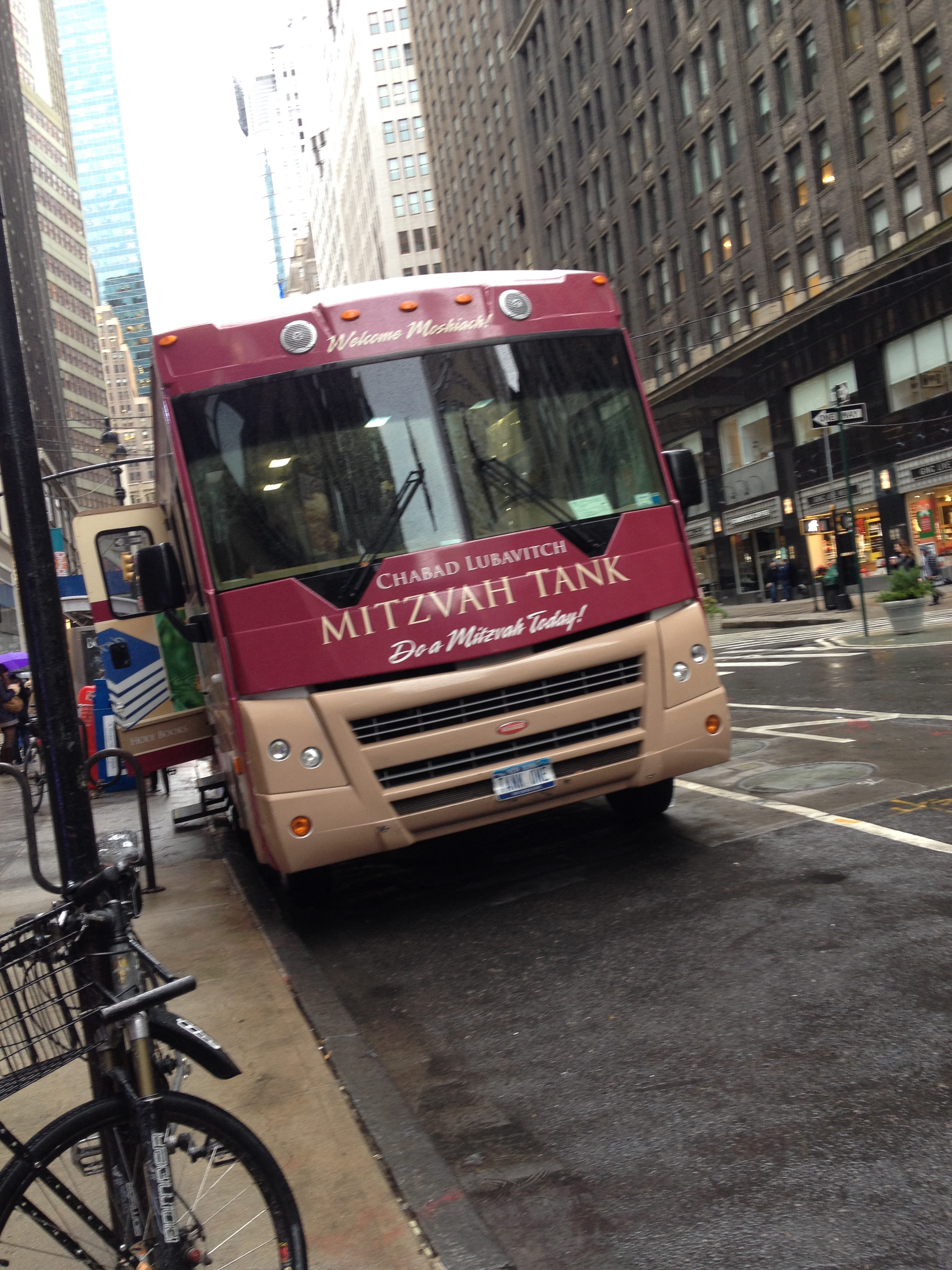
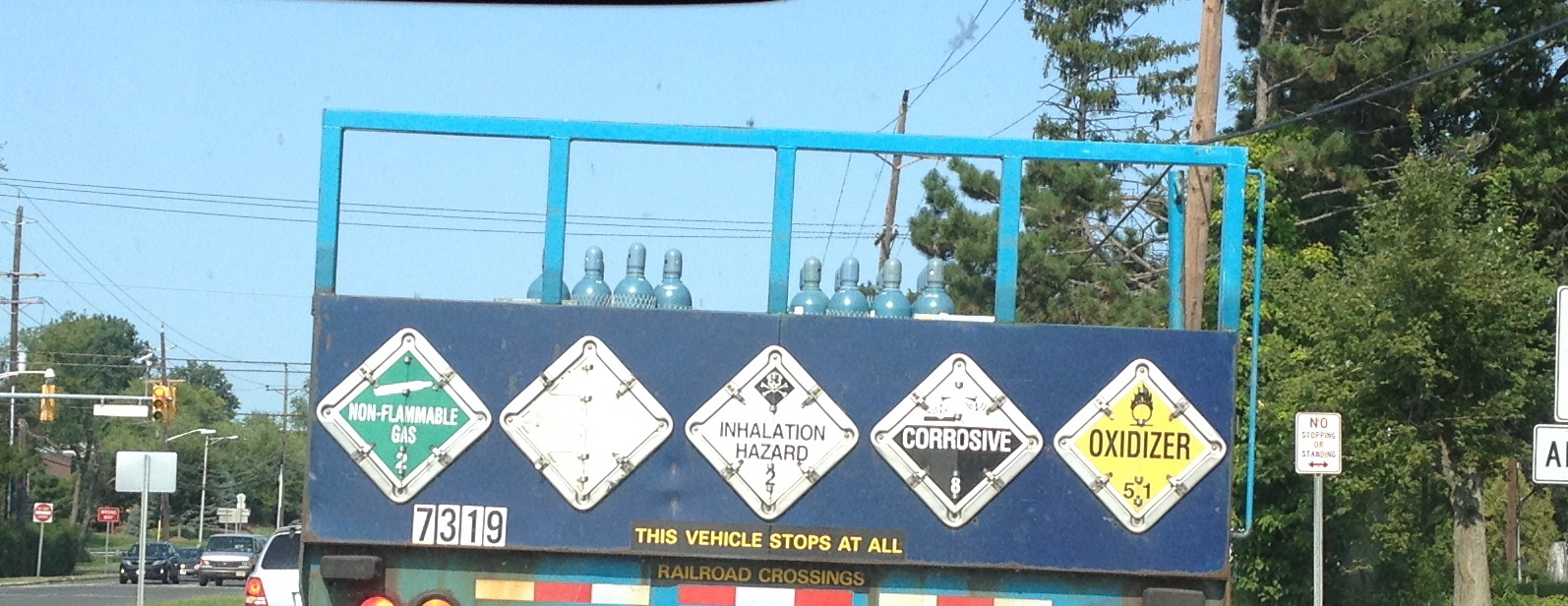
In Manhattan I occasionally see the Mitzvah Tank. New York is often thought of as one of the most literate cities around. Even here, books can come to your door. With chutzpah. Religions, at least many of them, coalesced around books. Sacred writings are among the omnipresent symbols that you’ve come into religious territory. The act of writing itself is somehow holy, even to the most secular, beyond the most cynical. We share our minds through our fingers and others are invited to see, or at least to glimpse, what might be going on inside this three-pound universe locked in our craniums.
IMG_1116

What would I put in a bookmobile? The other day my family began putting together a list of the influential authors in our lives. We all read quite a bit, and the list grew lengthy rather quickly. What would be in the canon of a Bible for the twenty-first century? What books would we want others to share? Ironically, many would find religious books objectionable on some level or another. The armored personnel carrier of Christian soldiers might well set us on the run. Nevertheless, with enough reading even the extremes can be viewed in perspective. On this highway I’ve found a kindred spirit, and when books are coming your way, it is a mitzvah indeed.
Casing the Promised Land

In one of the great ironies of the English language “flammable” and “inflammable” mean the same thing. Sometimes an extra syllable can make all the difference. “Ideas are incombustible,” wrote Ellen Hopkins in the final stanza of “Manifesto.” Unlike inflammable, that which is incombustible can’t be burned away. Most literally expressed in Ray Bradbury’s Fahrenheit 451, ideas are, however, endangered in a culture that claims to support them while secretly allowing them to be banned. Orwell called it doublespeak, and we all owe it to our heirs to fight it wherever we can. Sometimes the promised land may not be all that it seems. Can the brave truly be this afraid? Some politicians think “Born in the USA” is a complimentary song. Never has there been a better case for emphasizing literacy.

We fear the ideas our children might encounter, making them into the people they are meant to be. I’d like to return to an idea I broached at the beginning of this year’s Banned Book Week—the Bible has been a banned book. According to the antics of various preachers and vigilantes, so have been the Quran and the Book of Mormon. Destroying books or their authors, however, only creates martyrs. Until the world begins to understand that memes are more durable than genes we will fight our futile wars to drive the thoughts away. Azar Nafisi in Reading Lolita in Tehran tells of how some regimes want to control even our dreams. As if cutting the wings from angels were even possible. How do you physically cut an incorporeal being? Some may need to look “incorporeal” up in a dictionary.

I can’t remember when I started to read for fun, but I do know I haven’t been able to stop since. I have no idea how many books I’ve read, but it certainly comes out to more than the money I’ve ever been able to save. I write this with not an iota of regret. In my humble opinion people are products of the books they read, the songs they hear, the movies they watch. Ideas. Ideas permeate us and we, like sponges, absorb our nutrients from them. Inevitably we come to resemble the concepts we ingest. Ingesting concepts is perhaps the best way to think of Banned Book Week. Inflammable and flammable mean the same thing. Incombustible, however, is something completely different.

IMG_1497


Real Reading Rainbow

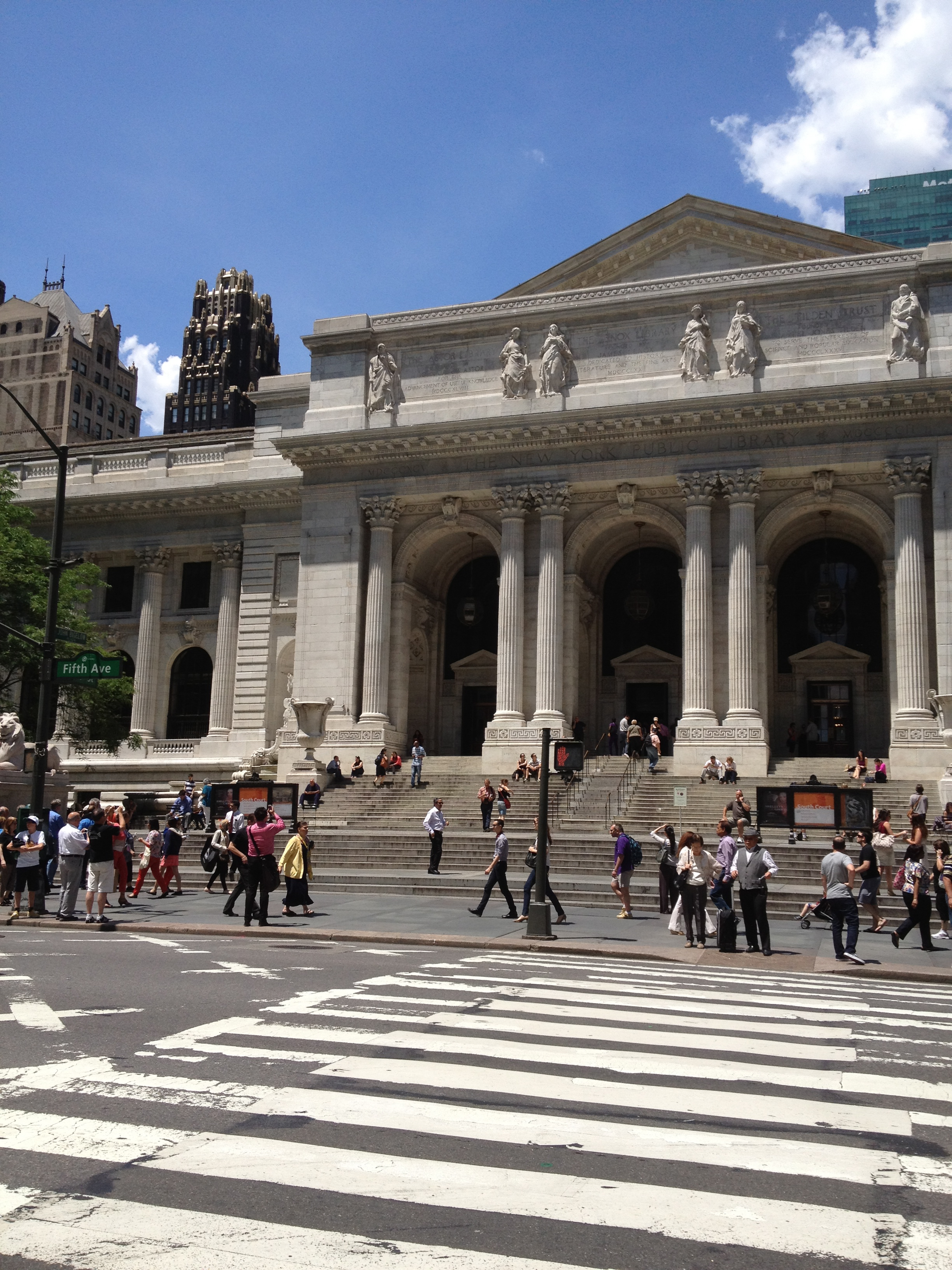
Libraries rule. According to recent studies libraries rate higher than religious institutions, according to public surveys, in their usefulness to society. From the lost library of Alexandria of yore to the local Carnegie, libraries have been the repositories of information almost from the beginning of civilization itself. Last week the American Library Association, according to an article forwarded to me by my wife, and the Banned Books Week planning committee, announced a theme for this year’s recognition of the books various groups (many of them religious) tell us we shouldn’t read. Banned Book Week, of course, falls in September. It might seem strange that planning has to go into this, but the banning of books has never ceased and the list grows year by year. I recently mentioned John Green, one of the authors who frequently appears on banned lists for children. In an age when encouragement to read should be running high, we hide behind platitudes to keep our eyes toward a predetermined prize. Among the reasons frequently given for banning a book: its religious outlook. I.e., the “wrong” one.

IMG_0324

I often wonder why we think sheltering children who are old enough to read from the collective knowledge of the human race does them any favors. Our culture so successfully removes us from nature that we don’t experience the “facts of life” that our ancestors no doubt noticed early and often. Violence, sex, drugs, and death, however, haven’t become any less common. They are only hidden until their knowledge hits with often catastrophic force, leading to neuroses about how unsafe our world really is. A function of story, if neurologists are to be believed, is to help us navigate the many trials we’ll encounter by seeing how others have done it before. I don’t doubt that there is age-appropriate material for children, but they understand a lot more than adults like to think they do. In my teaching days I was always amazed at how much undergraduates knew that I was only beginning to discover as a professor. Books seem a good way to introduce knowledge appropriately.

The internet, of course, gives access to unvetted knowledge to anyone with access to a computer or phone. Published books, it used to be, had the added value of passing through editorial hands on their way to public presentation. A funny thing happened on the way to the library. We’ve democratized the writing of books through self-publishing, but we’ve not yet ceased to ban them. Perhaps the real way to protect our children is to listen to them. We seem to think telling is better than hearing, although the flow of knowledge can go both ways. Instead of banning books for our young we might all benefit from opening of our own minds.


Take Twice Daily

Once in a way, when I feel a dusty archaism settling over me, and I realize my eyes don’t focus as well as they once did and that sedentary life in front of a computer screen is slowly killing me, I betake myself to a book sale. In this particular part of the country the big sales are in the spring. I’m told that the book business is dying, but if I can get out of a book sale with no bruises or scary brushes with over-eager buyers, I count myself lucky. I confess, I’m a bookaholic. I spend too many hours a week on public transit, and I consider it a moral obligation to read in public. Even in a city the size of New York, I’ve had people on the bus plop down next to me and say, “You’re that guy who reads.” Public displays of literacy. While some of the books I read are common enough, others are difficult to find in even university libraries. I know that’s an excuse, but my vice is buying books.

I once read a children’s story about a house actually constructed of books. I want that house. Although new books aren’t cheap, there are ways of making them fit into a modest budget. And although you really can’t build with them, they insulate the soul. Reading is more than fundamental—it is the very essence of learning. When I glance at Publisher’s Weekly and read that print sales aren’t what they used to be, I am buoyed by seeing the strong market in young adult literature. We have at least raised a generation that likes a good story. The earliest literature was religious, and many religions developed around written words. It’s a mistake to take religion for gullible belief. If there weren’t power in these words, why would anyone believe?

photo 2

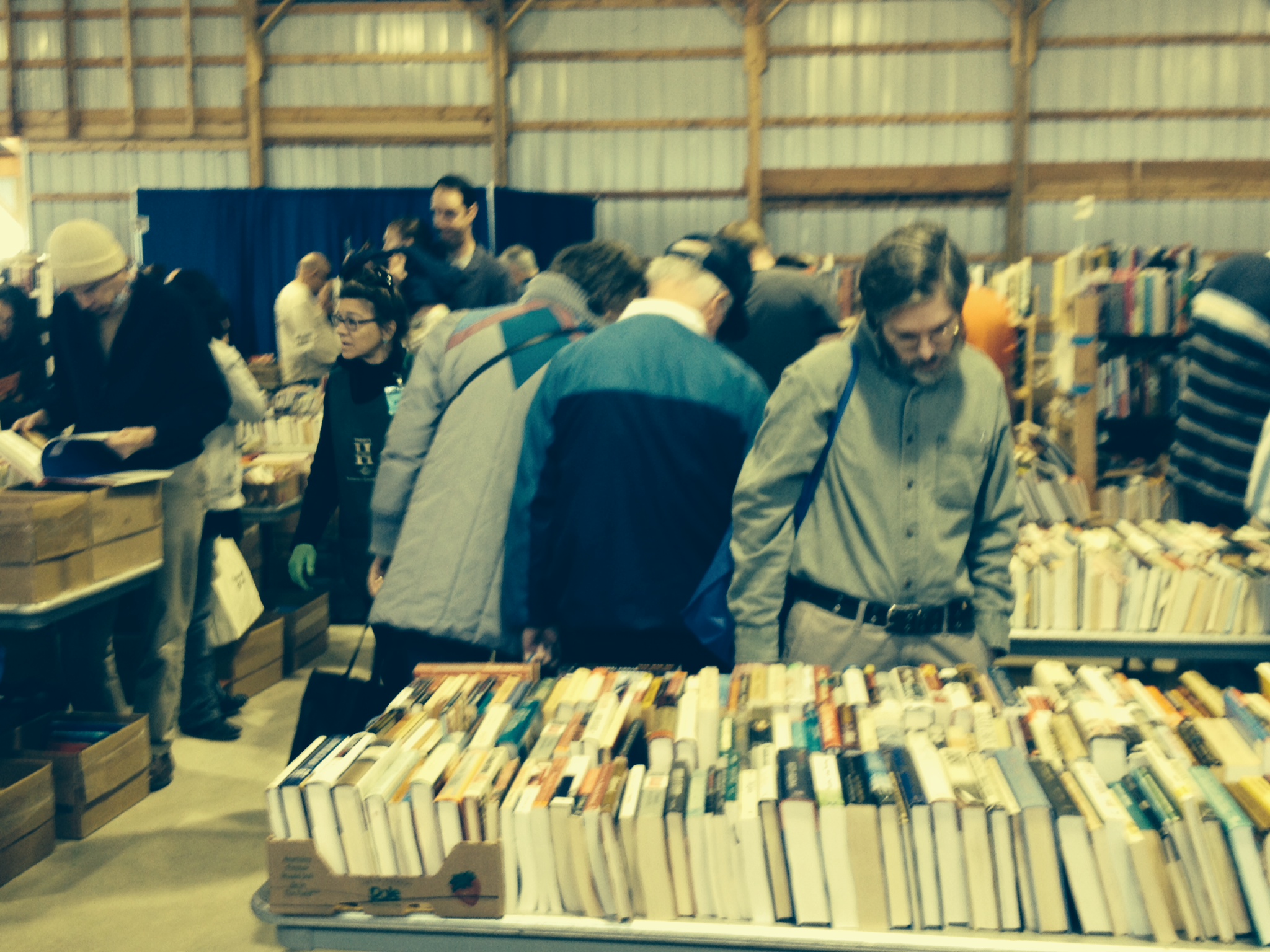
Local book sales can be huge events. Each year Bryn Mawr and Wellesley have a combined book sale in Princeton. If you get there after opening, there will be no place to park. The libraries of Hunterdon County in New Jersey hold a sale that, until this year, required off-site parking and a full three days of hiring a shuttle bus service to get hundreds of buyers back to their cars. And these venues are packed. People do buy books. And many of them are half my age. It is a seed of hope. Some people are surely looking for a quick read, maybe to take on vacation, but you can also see the seasoned, selective literati carefully examining the offers, backs bent, brows furrowed. For twenty dollars you can even get in early, before the goods have been picked over. The man checking me out said the sale gets bigger every year. Looking out over the sea of cars, I feel strangely ebullient, as if I’m atop Nebo looking over the promised land. Although it’s quite a drive, I’m already home.


Instant Education

Among the “non-essentials” upon which I spend my earnings, books hold the top spot, if not in value, certainly in quantity. Reading is more than a pass-time—it is perhaps the most basic aspect of who I am. I love books. While reading a New Jersey Star-Ledger piece by Allan Hoffman entitled “Learning by the book,” however, an uncomfortable truth dawned on me. Hoffman gently laments that the search for information has gone almost wholly electronic. As a person who currently works in the book industry, I know he’s right. More than that, I know it from my own life. I can’t remember the last time I opened a phone book, other than to retrieve a pressed leaf I’d inserted between its pages for pressing. If some bit of information about a religion or a biblical passage escapes my distracted brain, a few keystrokes work better than shuffling to the shelf, pulling off the reference books, and thumbing through until I find the datum. No, we are all addicted to speed.

Despite the best effort of Google books, much material necessary for research in many subjects remains sequestered in actual books. The problem is, for contemporary knowledge, book production is slow. In my editorial work, and as an erstwhile author, I know that the five years I spend researching and writing a book, the submission time to a publisher, the eventual decision, and then the year or longer production time, all equate to immediate obsolescence. Any non-fiction book is outdated by the internet even before it is shipped from the warehouse. New truths are born at the speed of light while books take years to make. I agree, Mr. Hoffman, we’ve lost something in our idolatry of the instant knowledge. If you need urgent info (What do I do about a snake bite? Where is the nearest Starbucks?) the internet is your up-to-date databank.

I have long known that the study of religions is often the study of texts (most of which are online now). Believing some ancients knew more about the ultimate realities of life than we do, either by dint of divinity or enlightenment, we search the texts about them or by them in hopes of joining them in a knowledge beyond knowing. Now in the age of the internet, new messiahs arise almost daily, proclaiming their truths across the world-wide web of wisdom. I have a feeling there is a dissertation or two in there. Of course, it will take a few years before you’ll see them in print.

IMG_0966


Sacred Philadelphia

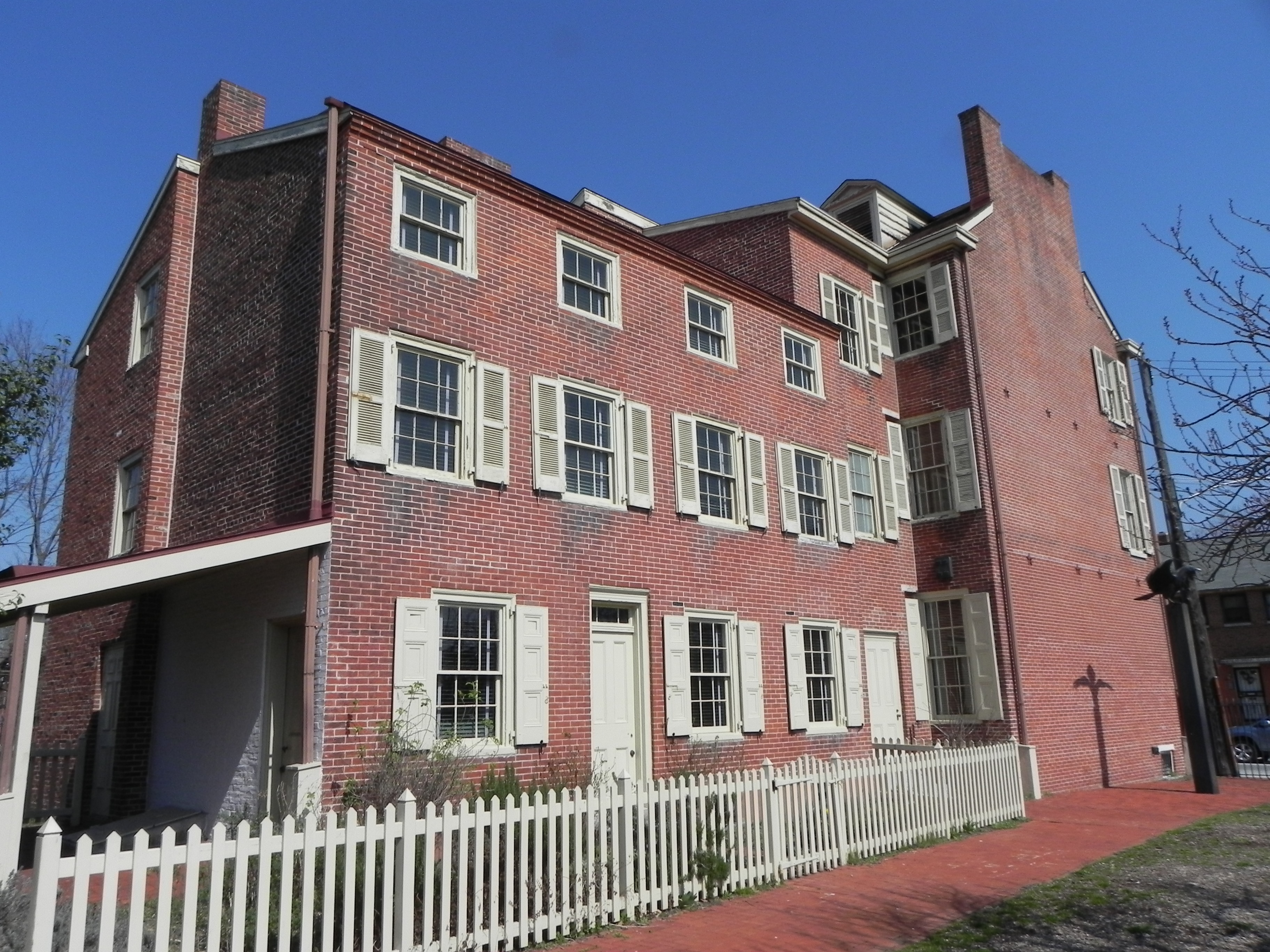
What makes a space sacred? There is no agreement on that issue, but it is clear that considering a specific location numinous, holy, or just special is something that even the most secular do. We trek to the places where something happened, maybe hoping for a personal epiphany or enlightenment. So yesterday I found myself in Philadelphia on the trail of Edgar Allan Poe. Like some other famous figures of the past, Poe was essentially homeless—no place claimed him (though now many do). Several years of his short life were spent in Philadelphia, and only one of his residences still survives there. On a pleasant Saturday it was clear that many others were drawn to this sacred space on pilgrimages motivated by diverse needs and curiosities. My family has gone on literary trips for many years, visiting the places of writers—for, at the end of the day, every piece of sacred writ has a writer.

Poe's house on Spring Garden

I can’t recall a time, after I began to read, when I did not favor Poe. Like some other inspirational figures he lived a short life, frequently rejected by his peers. Sad circumstances haunted him and he expressed them so well. His was a rare gift. Standing in his Philadelphia house, I guess I might have been hoping that, on some level, he might know that his life had touched mine. We all seem to leave an intangible part of ourselves in places we have been. Even the hardest skeptic of the “paranormal” will travel countless miles to come to some location of significance. There is no logical reason to do so. It is perhaps the most human of religious impulses. I saw no specters, heard no ghostly voices. But I saw and listened and wondered.

Writing is among the canon of sacred activities. It is taking what is hidden safely inside the confines of our minds and offering the opportunity to others to read it. Frequently it is ignored, lost in the noise. Life is too busy to sit down and read unless some teacher or professor assigns a task with grade consequences. We miss, however, so many opportunities to explore the legacy bequeathed to us by great minds. Our lives are driven by economics, not enlightenment. Poe died poor and largely unmourned in Baltimore after having called many locations home. Those locations are now shrines. I suspect he may have been very surprised to learn that over a century and a half later some people would attempt to follow in his footsteps for what can only be described as religious reasons.