No Agency

I’ve worked in publishing since 2006.  That seems like a goodly time, but the industry is a complex one.  I started trying to publish again around 2010—losing my job at Nashotah House sent me into a tailspin in that regard, although I wrote a novel or two in the meantime.  My first post-dissertation book was published in 2014.  I soon learned that academic publishers each have their strengths and weaknesses.  Most have trouble with marketing—people just don’t know about your books.  (And can’t afford them if they do.)  If the publisher won’t advertise, well, the voice of one ex-academic isn’t very loud.  So I wrote on.  My sixth book has existed in draft form for a few months now.  I know that to get a publisher who knows how to market you often need an agent.  I also know that as an unknown writer it’s difficult to get an agent’s attention.  I finally found one, however.

Agents change books.  Mine asked me to rewrite yet again.  All of my books have been rewritten multiple times, so this was par for the course.  I had to leave out a lot of the stuff I liked.  Then the agent changed his mind.  Hey, I get it.  Agents live off the advances their authors get so if they don’t see enough zeroes they shy away.  That’s just how it works.  I’ve found what looks like a good publisher (not an academic press) but I couldn’t simply go back to the version I really liked—I’d made improvements for the agent—so I had to blend the two versions together.  The problem is, that’s difficult to do on a computer.  I know from working in publishing that side-by-side comparative screens in word processing programs are difficult to find.  Of course, if you just print both versions out all you need is a table and a red pen.

I wasn’t born into the computer era.  Flipping between two screens doesn’t come easily but printing out two three-hundred-page manuscripts is time and resource consuming.  So I’m flipping screens.  I hope to finish this book soon because the next one is already brewing and I really can’t wait to start getting the ideas out.  And I even have a publisher in mind—one that doesn’t require an agent.  I don’t think agents really get me.  Or maybe I’m just not a “commercial” enough thinker.  There are plenty of presses out there, however, and if you do your research you can find a home for this project that’s taken years of your life.  It’s just difficult to do the screen flipping.  But then, I’ve only been doing this for about a decade.  I’ll get the hang of it soon.

More Proof

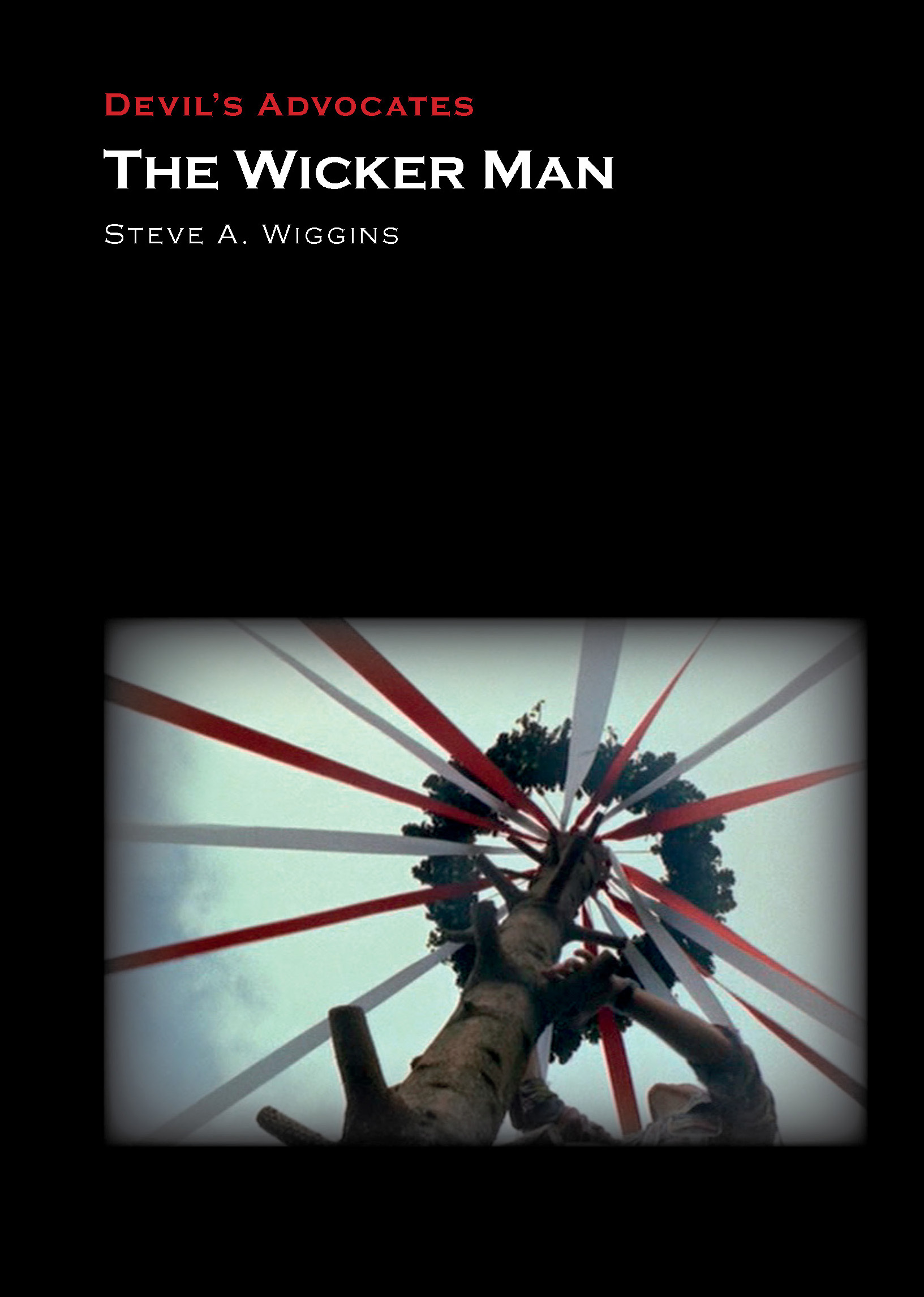
They’re here!  The second proofs for The Wicker Man have arrived.  Nothing makes you feel like a book will actually happen than seeing the stages unfold.  In the meantime I’ve begun seeking an agent for the next book.  This is always a tricky process—work a ton on a pitch, send it, and try to forget about it because most agents simply won’t respond.  If they do it won’t be for a month or two.  And even then they may not like what you’ve written.  It’s a weird system.  Meanwhile at least I’ve got proofs to read.  Proofreading is stressful enough.  I’ve read my new book proposal lots of times.  It was only after I’d sent it to a couple of agents that I found the typos.  You are your own worst editor.  Even if you’re an editor.

Still, you feel like proofs arriving should be occasion for a day off work.  Like your boss would say, “That’s quite an accomplishment!  Why don’t you take a day off to get started with it?”  I live in a fantasy world, I guess.  The proofs arrive with their shot of adrenaline and then you’ve got to read other people’s ideas for less interesting books (or so it seems).  Maybe this is why not so many editors write any more.  It’s exhausting.  Of course, I’m writing this post instead of reading the proofs.  Every diet should have some variety, even the literary kind.

I’m not a fussy author.  Some turns of phrase I will fight over, but I know copyeditors mean well.  I’ve done some copyediting myself, and I meant well.  Authors are people who are in for the long haul.  From the time you start working on a book (and if finding an agent is part of the process, you need to add several more months) to completion is generally measured in years.  It’s not unusual to get no pay at all for this work.  As Ivan Klima wrote: “A truly literary work comes into being as its creator’s cry of protest against the forgetting that looms over him, over his predecessors and his contemporaries alike, and over his time, and the language he speaks.  A literary work is something that defies death.”  If you can forgive the sexist language, there’s a great deal of truth there.  And part of that process is the effort to locate an agent who shares your vision.  And, of course, getting proofs back to the publisher on time.


Irony

It’s a funny old world, as the saying goes.  I don’t deal, as an editor, with many agents.  In fact, having been in publishing for nearly a dozen years it’s only happened three times.  The most recent agent is one to whom I sent a pitch for Holy Horror and from whom I never heard back.  The book he sent me isn’t too different from what I was doing in said volume.  That’s the way it goes, you say.  Indeed, I don’t disagree.  But who doesn’t like a dose of irony in an otherwise stainless steel world?  As I’m reading through the proposal I see that it cites the interest in the subject because of the great popularity of the Religion and Monsters sessions at the American Academy of Religion.  I was responsible for getting those sessions started.

Since irony loves company, none of the people I recruited to get that session rolling read my blog.  I’d been meeting with various scholars over the years and started to notice a common interest in religion and monsters, which I personally share.  I suggested to one of these gainfully employed scholars that we should apply for such a session.  She agreed and we invited another gainfully employed academic to join us.  I wrote the initial proposal.  The session was approved (the proposal being helpfully revised by my colleagues) for three years running.  Now it was being cited as objective proof of an idea that this very agent had dismissed when I presented Holy Horror to him.  Our society very much thinks having a university post means you have something to contribute.  No post?  No interest.

I’ve been working on religion and monsters for (conservatively) a dozen years.  I’ve written two high-priced books on the subject and I’ve received almost no traction in the field because I can’t put a university, or college, or seminary, behind my name.  I was formerly an associate professor, but who you are speaks louder than who you were.  Institutions speak even louder—much louder—than individuals.  The thing about privilege is that it works.  So in this funny old world I’m bemused to be watching my own idea helping propel a colleague’s case for an agent.  I’m working on my fifth book, and I sincerely hope this one will retail for less than thirty dollars.  That’s difficult to do without an agent’s intervention.  I know agents are swamped with proposals.  I know they’re very selective.  And I also know that the irony of being a biblical scholar interested in monsters will catch their attention.  Only, however, if you have an institution behind your name.  Funny, isn’t it?

Even the monster smiles

Price of Learning

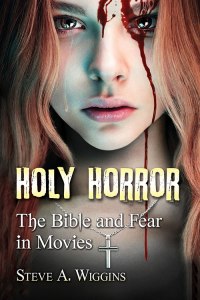
Holy Horror, as some are painfully aware, is priced at $45.  Even those of us in publishing have lessons we must learn, and one of them is that writing a trade book involves more than just a “friendly narrator” style and non-technical language.  It also involves a subject the public finds engaging (or at least what a literary agent thinks the public will find engaging).  Holy Horror throws two apparently disparate topics together: horror films and the Bible.  The fans of each don’t hang out in the same bars—the fans of the latter, in some circles, don’t go anywhere near bars!  My thinking was that this juxtaposition was odd enough to qualify as trade, but I also knew that you have to work your way up to that kind of readership.  That’s why I’m on Goodreads, Twitter, and Facebook (followers and friends welcome!).  It’s not like I’ve got tons of spare time, but platforms must be built.

Book publishers face a dilemma: they have to sell books, but as I’ve noted before, they must do so profitably.  There are people like yours truly who’ll occasionally pay essentially a dollar a page (or at least a two-page spread) for a book that’s essential to their work.  As the capitalists grin, it’s “what the market will bear.”  I never thought of myself as a market.  To me, knowledge is priceless.  The effort that it takes to write a book is truly unimaginable to those who haven’t done it.  Obstacles exist almost from the inception.  Getting the resources you need, unless your employment comes with a free library pass, involves sacrifice.  I still look at other books I must read priced at about $45 and groan—how can I justify the expense?  It’s a strange club to which to belong.

My mother asked about Weathering the Psalms: “Is it the kind of book you get money for?”  In theory, yes.  I’ve yet to see any kind of profit from it since the tax forms you need to file for royalties cost more than the actual checks contain.  At least it’s not vanity publishing.  And you truly learn what it means to rob Peter to pay Paul.  It has nothing to do with gentiles.  Publishing is the price you pay for following your curiosity.  My books are very different from each other, a fact that comes with an invisible price tag that has little to do with money exchanging hands.  Well, maybe it does.  And maybe it does have something to do with gentiles.  Or maybe it’s an appeal to a higher power.  In a capitalist nation we all know what that is; herein lies holy horror.


Title-less

I’ve been offering a few teasers about my forthcoming book. One of the reasons for not making an announcement is that the title hasn’t been settled yet. It’s pretty hard to promote a book without one. I’ve written enough about it that readers can tell it’s about horror movies. The publisher is McFarland, an independent academic publisher that specializes in pop culture and has an impressive list concerning monsters and other frightening things. Once we get a title down, I’ll say more. In the meantime, I can take the opportunity to say a bit more about the publishing industry. Not that people generally ask me about it, but I suspect many authors secretly want to know some insider tips. If not, I suspect there’s one or two other blogs to read today.

I’ll admit up front that I tried unsuccessfully to interest agents in this book. At least four wrote back to tell me it was a great idea, but a writer without a platform is like, well, an editor. I help other people get their ideas published—always a bridesmaid, as they say—physician heal thyself. When I realized I was wasting months trying to find a professional to promote my book, I decided to revert to the tried and true. When you want to know who to approach about your book, look at the spines of the books you read to write yours. Who are the publishers who produce books in this area? Sometimes the interests of a publishing house will change with the editors, so the more recent your comps, the better.

Horror sells. My project wasn’t really mercenary in that way, but rather it was the result of years of watching horror, usually by myself, and finding some commonality in the films. What exactly that commonality is will, I hope, become clear once I can freely write about my book topic. Others, you see, could swoop in and take my thesis—a perpetual fear of someone who barely has time to scribble out a blog post a day. Finding the time to write books in the off-work and off-commute hours is a real juggling act. In my case, perhaps a jugular act. Without an agent, I turned to McFarland. Many of their books helped me form the ideas for my own. Besides, they have a Scottish connection, and that means something to this old Edinburgh alum. If you want to get published, it helps to know the players. That may become even a bit easier once I’ve got a title.