Night Fears

Have you ever had one of those dreams?  The kind where your subconscious turns on you brutally?  I’ve often said I’m my own worst critic but this one took it to a whole new level.  In real life I’m working on novel number eight.  One through seven haven’t been published (and at least two don’t deserve to be).  I’ve kind of been thinking that this one might see the light of day.  I finished a very rough draft about a couple months ago and I’ve been working on revisions since.  Meanwhile I keep reading novels and seeing how well they flow compared to my story.  That must’ve been on my mind because in my dream I was in a room with five or six publishing moguls.  In the way of dreams it seems that perhaps an agent had arranged this.  I was in the room with them and when they finished, each took their turn telling me how awful it was.  Their critique was brutal.  So bad I couldn’t get back to sleep.  I found tears on my cheek.

Of course, my writing time is early morning.  Work is uncompromising.  So I had to get up and work on what my subconscious had just told me was, in the words of Paul, skubalon.  (Look up the commentaries on Philippians 3.8, if you dare.)  Like any writer, I have my doubts about my own work.  This particular novel I’ve been working on, off and on, for almost three decades.  It’s an idea I can’t let go.  Just a couple months back I was proud of myself for finally finishing a draft of it, and this morning I’m tempted to delete all the files.  Why does one’s subconscious do this to a person?  My very first attempt at a novel, as a teen, was torn up by my own hands.
The other dream that has been recurring, in various forms, is where I’ve been hired back by Nashotah House.  I taught there for a decade and a half, and I wasn’t very happy toward the end, but I did my job well.  In real life I wouldn’t go back, but in my dreams I’m always overjoyed.  I wake up happy and optimistic.  Some version of that dream comes to me at least once a year, I suppose.  Sometimes several times.  Dreams are mysterious.  They’re telling us something, but they’re coy about exactly what.  That’s what made last night’s dream so bad.  There was no ambiguity.  This was pure, unadulterated self doubt in the room with me and it gave me no quarter.  I got up and continued work on the revisions anyway.  Who’s afraid of omens?

Literary Criticism

One of the drawbacks to being an editor becomes apparent with much reading.  Some people have writing skills.  Others don’t.  That’s no reflection on intelligence, insight, or even brilliance.  Good writing is part talent and part hard work.  The drawback is when someone thinks they’ve got what it takes, but they don’t.  I’m a gentle guy.  I don’t like to hurt feelings and yet I have a job to do.  You see, good writing involves a few things—writing for your readership, being aware of what that readership likes, and giving new information without being all technical about it.  I’ve read academics who write very high-level monographs, sprinkled with “wells” and “you sees,” which come off like a guy my age trying to impress a twenty-year old by being groovy.  Just admit you’re writing for other scholars and get down to it.

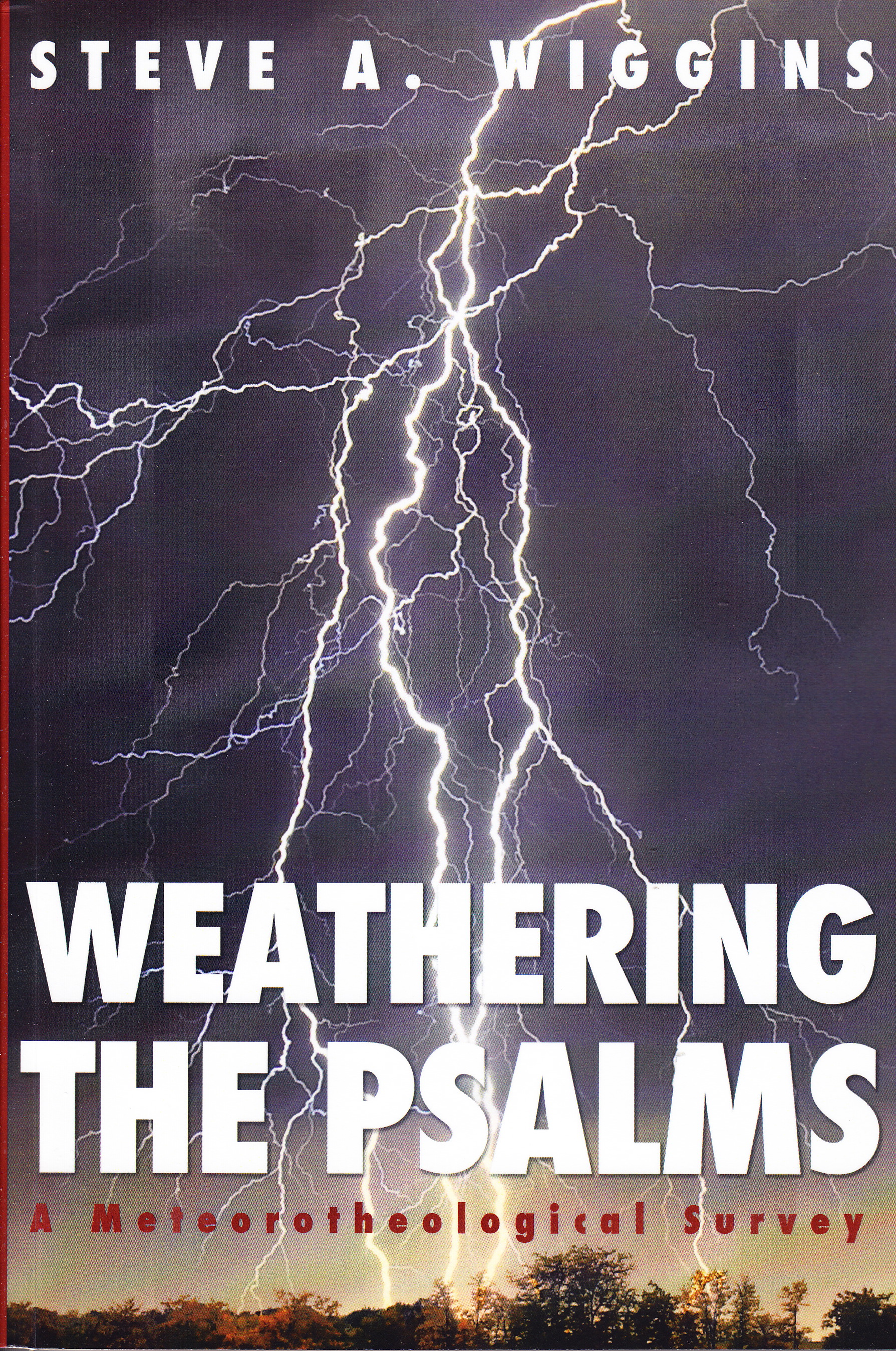
Then there’s the verbless sentence.  You know what I mean—a literary rim-shot, usually at the end of a paragraph, to heighten the drama.  Solid technique.  This only works, however, if you don’t overuse it.  I’ve read books where nearly every paragraph ends with such rim-shots.  Then the author started writing one-liner paragraphs.  This isn’t a Saturday Night Live cold opening.  The writing has to have a certain amount of gravitas.  Especially if you’re wanting to publish with a university press.  I realize that the dream of many academics is to write for a wider readership, but honesty is still a virtue.  When I wrote Weathering the Psalms I pitched it as for general readers.  Ha!  Not even specialized readers have found it that engaging.  It was a book for specialists.  I see that now.

Don’t get me wrong—I read plenty of good writing.  Some of it’s even beautiful.  Editors, however, have to read an awful lot to be able to pick out the gems.  I remember my volunteer experience on the archaeological dig at Tel Dor.  At the pottery reading sessions, a specialist would quickly sort through a box of four-thousand year-old fragments and say within seconds if there was anything interesting (“indicative” was the term she used) or not.  She did this by reading pottery like an editor reads proposals and manuscripts.  You get to a point when you can just tell.  Writing well can be learned.  Some people have an innate talent for it.  Being a gentle guy, it’s hard to be honest sometimes.  I have to keep reminding myself, however, that it’s still a virtue.


Frankenstein, Frankly

The classics.  No matter how much I read more contemporary fiction, the classics keep me coming back.  Mary Shelley’s Frankenstein is a classic in more than a single sense.  It was a novel that had tremendous influence in the nineteenth century and has continued its impact to the present.  Chris Baldick’s In Frankenstein’s Shadow can be considered a classic in its own right.  Although it only dates from the 1980s, it contains exhilarating analysis of Frankenstein in a number of authors and genres of the nineteenth century.  And I’m a fan of literary scholars who write accessibly.  I’ve read modern literary studies that I simply don’t understand and they leave me feeling alienated and cold, as if they were written for a private audience.  One that didn’t include me.  Baldick’s treatment is wide-ranging and full of moments of blinding insight and is open to all.

Often I put the book down thinking that I’d had my world changed.  Baldick’s no hero-worshipper.  He notes the weaknesses in Shelley’s writing (and they are admittedly there), but he does so respectfully.  The astonishing part of this study is the sheer breadth of the influence Baldick finds for Frankenstein.  A word or phrase, a theme here or there, and yet he makes an excellent case that these can be traced back to their monstrous forebear.  His section on Melville made me want to stand up and cheer.  (I have to admit to being more of a hero-worshipper than the author.)  This is literary criticism done right.  It makes you want to read the books you haven’t.

Since the book deals with literature, it doesn’t really address how the creature morphed into something completely different in the twentieth century.  I know I grew up thinking Frankenstein’s monster was part robot.  I suppose it was the bolts in his neck, according to the Universal script, that convinced me.  That, and his stiff-jointed lumbering about.  Shelley’s story is, however, very much a human one.  In many respects the monster is more humane than his creator.  Various aspects of this tale, including that one, are taken up in other classics and turned over, examined, and reapplied.  Suddenly quite a bit of what I’d read elsewhere made immediate sense.  Interestingly, although I grew up not so much a fan of this particular monster, books on him have become among my favorites as an adult, if I am such.  I think Baldick may have had his fingers on that revivified wrist when he wrote this book.  It certainly did for me what literary criticism always should.  At least for the classics.


Literate Monsters

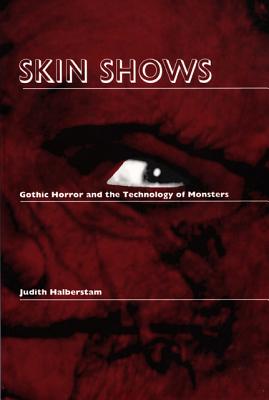
Skin-ShowsLiterary criticism is not for the faint of heart. Biblical scholars long ago adopted the methodologies of literary criticism since it had become clear that an absolute meaning for any biblical text will always end up being a chimera. Many of us are versed in the techniques of structuralism, post-structuralism, deconstructionism, reader-response, post-colonialism, and any number of other means of parsing hidden truths from texts. Since it is October and monsters have a way of creeping into the psyche about now, I read Judith Halberstam’s Skin Shows: Gothic Horror and the Technology of Monsters. Halberstam is using the word “technology” technically here, so this isn’t the easiest of texts to digest. Still, for those of us haunted by monsters this text does tap into one of the main connective tissue between monsters and religion: meaning. As Halberstam notes, the Gothic suffers from a surfeit of meaning. There is just too much meaning bursting out that we have no choice other than to analyze.

Beginning with Mary Wollstonecraft’s Frankenstein, and up through Bram Stoker’s Dracula into the modern horror film, Halberstam probes deeply into the layered meanings offered by the Gothic discourse. The monster is a transgressive creature, one with indistinct boundaries. I couldn’t help but to think how odd it is to suppose that we end at the limits of our bodies. The things that we do influence our environment, and we are capable (often through science) of a kind of spooky action at a distance (think of drones, HAARP, or fracking—I’m talking literally spooky here). As Halberstam points out more than once we don’t make monsters, monsters make us human.

Skin Shows is all about boundaries. Biological, psychological, sexual—we define ourselves by our boundaries. The monster is no respecter of such boundaries, forcing us to face our own definitions with a certain ambivalence. What do our monsters say about us? Do we really want to know? Monsters can be brutally honest. More honest, at times, than religions are willing to be. As views change over time, so do conceptions of the monster. Religions frequently attempt to hold out against inevitable change. Perhaps such stalwart bravado is admirable, at least until we experience a dark and stormy night of the soul. Here be monsters.