Letting Go

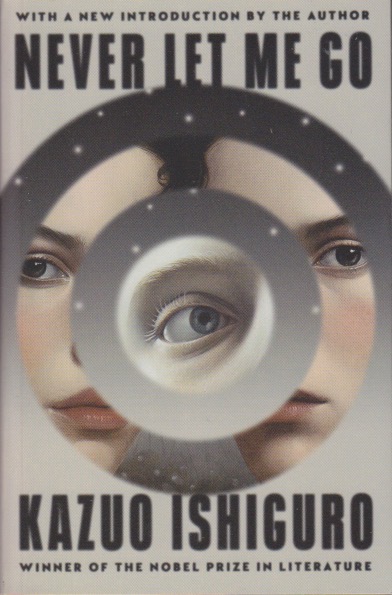
I should’ve known from the title that this would be a sad story.  Kazuo Ishiguro’s Never Let Me Go won the Nobel Prize in Literature, despite being speculative.  It’s only mildly so, but enough that it is sometimes classed as science fiction.  It’s appropriate that a twentieth anniversary edition was released because it is an extended consideration of the price of technology as well as dehumanization.  I’ll need to put in some spoilers, so here’s the usual caveat.  I read this novel because it’s often cited as an example of dark academia and it certainly fits that aesthetic.  It starts out at a private school called Hailsham, in England.  The students are given some privileges but their lives aren’t exactly posh.  Most of their possessions are purchased on days when a truck sells them things they can buy with money they earn by creating art.  They aren’t allowed to leave the school.  Spoilers follow.

The special circumstances of the children are because they’re clones being grown for replacement organs.  The public doesn’t want to know about them or interact with them.  In fact, most people believe they don’t have souls, or aren’t really human.  They’ve been created to be used and exploited until they die, always prematurely.  While this may sound grim, the story is thoughtfully told through the eyes of one of these children, Kathy.  She becomes best friends with Ruth and Tommy, who later become a couple.  Ruth is a difficult personality, but likable.  As they grow they’re slowly given the facts about what their life will be.  They’re raised to comply, never to rebel or question their role.  Most simply accept it.  Kathy, Ruth, and Tommy, in a submissive way, try to get a deferral regarding their “donations.”

I suppose it’s presumptuous to say of a Nobel Prize winner that it’s well written, but I’ll say it anyway.  Ishiguro manages to capture the exploratory friendships of youth and reveals what you need to know in slow doses, all told with a compelling, if sad and accepting voice.  Although the genre could be sci-fi, it’s set in the present, or, more accurately, about twenty years ago.  The technology, apart from the cloning, is about what it was at the turn of the century, or maybe a decade or two before that.  With what we see happening in the world right now, people should be reading books like this that help them understand that people are people, not things to be exploited.  And that Nobel Prizes should be reserved for those that are actually deserving for their contributions to humanity. 

Ending Worlds

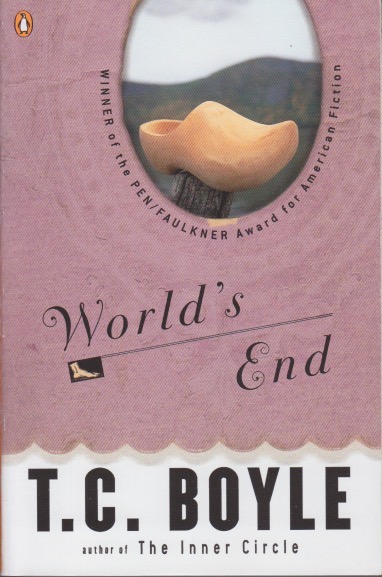
It takes a kind of talent to write a long novel where I don’t have any feelings for any of the characters.  I’ve studied writing enough to know that “Mary Sues”—characters who have no flaws—are to be avoided.  Yet, writing so that no characters over a span of about 300 years seem to be able to garner at least pity (and my therapist tells me I a very sympathetic person) is a feat.  All of which is to say I didn’t much enjoy the award-winning World’s End by T. C. Boyle.  This novel is set in the Hudson Valley, which is one of my current obsessions, and I thought the sense of place would draw me in.  Stories where everyone drinks all the time, and mostly they get high after that, and then wonder why tragic things happen when they drive, really aren’t for me.  I accept and admit that the onus is on me. (I freely confess to preferring speculative fiction.)

Successfully writing a novel that ties several families together over the generations is, however, an achievement of literary architecture.  It’s just that not all novels work for everyone.  There is a sense of maybe a little cosmic justice at the end, but it feels at times almost as if the side that’s being cheered on is the wealthy one.  Maybe it’s reflecting the way life works.  Or maybe I’m not a subtle enough of a reader to understand.  For whatever reason, it really didn’t speak to me.  It could also be that I need to reflect on it more.  Growing up poor with an alcoholic father and seeing firsthand the entrenched ways of the wealthy and how they effectively keep other people down, such tales tend to set me off.  None of this is to gainsay the artistry since it clearly condemns the land theft from American Indians and unrepentant wealth.  

It’s this last point from which the novel really takes its strength—ownership of the land.  As mortal creatures we have a strange idea that we can own something that will outlast us.  In the novel’s resolution that ownership shifts, unbeknownst to the wealthy, back to the original owners through an illegitimate child.  There may be some social commentary intended here and this makes the story less of a justification of white ownership.  I guess many of us are very sensitive to fascist characters since the Trump administration.  Perhaps had I read the novel in the late eighties, when it was first published, this would’ve seemed less troubling because we would’ve thought then that such a thing could never happen.  But three centuries is a long time and we simply can’t tell, although World’s End suggests justice might be served in the long term.


Finding Family

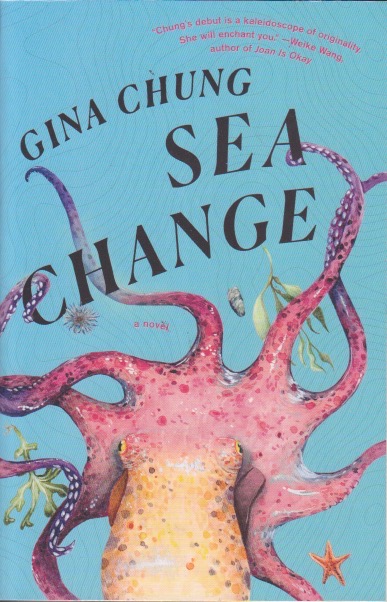
Sea Change is a probing story of learning to live with loss.  Of learning how to say goodbye.  I’m sure that I didn’t catch all that was being offered in this novel, but for those of us who did grow up without a father there’s a kind of therapy here.  I know that I eagerly awaited the end of work each day so that I could pick it up and read a bit more.  Framed as the story of the only child of Korean immigrants, the novel features Aurora (Ro), a young woman who has had to find her way ever since her father has gone missing.  And even before that, actually.  Her father, as a marine biologist, had captured an octopus (Dolores) who now lives in the aquarium where he once worked.  Ro, whose relationship with her mother is strained, takes a job in the aquarium after her father goes missing and befriends the remaining part of him—Dolores.

At the same time Ro’s boyfriend is accepted into a mission being launched to Mars.  (This isn’t science fiction, just to say.)  The loss is another deep cut to a woman who had to deal with the earlier significant loss of her father.  I won’t say much more about the plot since I think you should read the book, but it is a thoughtful, and from my experience, realistic journey through the mental states of those who cope with abandonment issues early in life.  Of course, I can’t speak to the experience of being a child of immigrants, but the novel shows we all deal with the same kinds of issues, no matter where we’re from.  At least we do in modern civilization.

Sea Change made me ponder, however, whether children raised communally would feel the same kind of loss if a parent they didn’t know was theirs left.  The mother-and-child bond is a deep one, so I guess it could be that fathers, after conception, would be expendable in such a situation.  It’s difficult to project how such a society would work.  The family unit is so deeply engrained into our experience that, unless a situation is truly dire, we know we can rely on our parents not to try to harm us, but rather to protect and love us.  Those of us who grew up without fathers (I’m not sure if that’s the case with Gina Chung or not) deal with insecurity issues that never quite go away.  This beautifully written novel was, for me, a healing kind of experience.


Scary Cosmology

In many ways a harrowing book, A Cosmology of Monsters, by Shaun Hamill, is a real achievement.  A monster story, it’s less a story about monsters than it is about people—which, upon thinking it over, is generally the case.  This story is about the suffering people undergo, sometimes simply for being who they are.  Hamill gets his hooks in early and drags you through this wonderful, terrible story.  Even now that I’ve finished it I’m not quite sure what to make of it.  What’s it about?  Maybe I can try to give you a few signposts and pointers.  To find out more you’ll need to read it and check my work.

The Turner family, through no fault of its own, has been living under a strange kind of curse.  It involves monsters, from what is probably another dimension, kidnapping and enslaving them.  The Turners aren’t alone in this.  Others who’ve been suffering from various causes are also targeted and treated.  Perhaps this is partially a parable on suffering and depression.  The Turner family faces death, missing children, forbidden love, and regret.  They run a local haunted house around Halloween, which the father’s regular job finances.  They do it for fun and it’s free.  It keeps them going when a terrible diagnosis is given.  Stressed financially and emotionally, they barely manage to stay together.  Noah, the narrator and only son, checks out the competition, including a Christian Hell House.  There he meets the girl he’ll eventually marry.  But the monsters don’t stop coming.  He befriends one.

An intricately interwoven story, you might call this horror but you would probably be closer to the truth with literary fiction.  There are uncomfortable facts about families.  Things we tend to overlook or ignore in order to keep society running smoothly.  These kinds of issues are brought out into the open here and mixed in with monsters.  On both the human and monster sides, the emotionally wrenching ideas have to do with relationships.  Noah, who was born just as his father was dying, establishes relationships both with his family and a monster.  As the story progresses over the years, his wife is added to this complex of relationships and they all end up, in a way, competing.  Decisions have to be made and someone you love must lose.  This novel makes monsters and humans the objects of the reader’s sympathy.  What’s more, it works.  I hope I haven’t given too many spoilers here, because this is quite an accomplishment, and well worth a reader’s time.


Bibliotherapy

This may sound strange, considering the source, but I fear I don’t read enough. An article by Sarah Begley in a recent issue of Time, reinforces what we’ve known all along—reading is incredibly good for you. Even fiction. Especially fiction. For the most part, as I’m commuting, I read non-fiction. There’s nothing wrong with this, of course, but it doesn’t always help with literacy issues that might call for a bibliotherapist. You see, literacy builds a kind of psychological strength that helps with real-world issues. Part of it is because many books go through a rigorous process of approval. Still, it’s important to realize that this kind of reading may not be the popular fiction that can be found in grocery stores and airports—although even that is fine—but the level of writing that really helps is somewhat mysteriously labeled “literary fiction.” The kind of book an author writes, rewrites, and rewrites. Deep thought and care go into such books, and they can be a help to their readers. Reading isn’t just fundamental, it is transformative.

img_2947

I remember my school years well. Kids are amazing in their level of energy. They crave activity and experience. Getting them to read can be difficult. You need to sit still. And concentrate. Concentration isn’t easy. You have to train a child to read, and, at least where I grew up, that was a struggle. The fact that it’s possible to graduate from high school and be functionally illiterate is one of the signs that learning to enjoy reading doesn’t always take hold. I knew guys in middle school who would rather do just about anything other than read. I often wondered what anyone could do to make them realize what they were missing. I read books and stories that took my breath away. There was something incredible going on between the covers—but how to convince others?

Recently a colleague pointed out to me that those of us in publishing are, statistically speaking, a very small number of people. We work in an industry that serves a small number of people. We are an odd lot. We read books, and some of us write books, and we do so for a small sector of society. Signs are hopeful that interest in reading is growing. Leading by example may help. At any one time I have at least one, generally two or more, fiction books going at the same time. On the bus I read through non-fiction at a faster rate. Maybe the mix is actually right. Fiction reading takes more time. It could be because I’m getting more out of it than I realize. I just wish I had more time to do it. More time for reading health. I may need to see a bibliotherapist.