Beyond Reason

Emotions are tricky.  They’re an essential part of being human, but they don’t function rationally.  At least they don’t do so reliably.  And nobody is emotionally pristine.  People have anger issues (quite a lot of that, I know), insecurities, esteem problems (either too much or too little), abandonment concerns, and the list could go on and on.  The thing about emotions is that they’re difficult to fit with logic.  Sometimes it’s hard to believe that logic is an artificial construct and that emotions are just as important to survival as reason is.  Evolution gave us emotions.  Fight, flight, or freeze still operates in most human beings—I’ve seen all three responses when a threat arises.  Feeling sad when unfortunate events take place is normal and natural.  Dogs and other higher mammals feel it too, as has been amply demonstrated.

It’s easy to let our emotions speak for us, even when doing so causes damage we would never rationally seek to impose.  You push me and I push you back.  Something I realized long ago, and this is just to do with my own situation, is that I can’t easily let go of negative emotions.  I recently learned that a relative I never knew very well had a similar trait.  Such people have invisible scars that they bear their entire lives.  The logical mind says, “Let’s use chemicals to erase them.”  The artistic mind says, “Erase my emotions and you erase me.”  It’s important—vital even—that we don’t question a sincere person’s reasons for their emotional responses.  Most people are just trying to do the best that they can.

Religion is generally based on emotional need.  That’s not to say it’s bad or for “the weak.”  It seems that evolution has deemed it a valuable asset for human beings.  As someone who’s studied religion for many, many years, this aspect has become quite clear to me.  Religion is a coping technique and, in the best of circumstances, it contains some of the truth.  As I used to tell my students, nobody intentionally believes a false religion.  The stakes are far too high.  And we have no rational standards by which to measure which religion is right.  It’s a matter of belief.  Religions have to meet us emotionally where we stand.  During the nineteenth and twentieth centuries a shift took place where religions were supposed to be logically, literally true.  This was believed with intense emotion and it led to a situation we still face.  Emotion and rationality must work together, but some ways seem much more productive than others.

I’m Saying Nothing

It used to be called argumentum e silentio, the argument from silence.  It didn’t take very long into my post-graduate reading to learn that arguments from silence were very rarely admitted in the academy as any kind of evidence at all.  In fact, argumenta e silentio are generally considered a logical fallacy.  The idea is fairly simple: an argument from silence is when a source (often an ancient one) doesn’t mention something.  That lack of mention is sometimes used to argue for the absence of the thing not mentioned.  For example, some first century writers in the region of Roman Palestine did not mention Jesus of Nazareth.  This has led some to suggest that Jesus never existed.  The evidence is an absence of evidence on the part of certain important historical figures.  There are obviously lots of problems with this.  I’m a modern person and there are plenty of people I never write about.  It doesn’t mean that I don’t know who they are (although in my case, it might!).
 
Why am I concerned about arguments from silence?  Lately I’ve noticed quite a few scholarly tomes coming out on the topic of silence.  I’m not referring to Susan Cain’s excellent Quiet, but to scholarly monographs that explore the silence in ancient texts about certain subjects.  In my more curmudgeonly moments, I feel that perhaps when we have nothing left to explore but what a text doesn’t say maybe we’ve explored that text enough.  Younger scholars, casting about for something new to say about the Bible, look to what ancient sources don’t say to give them a research topic.  Back in my own academic days you’d receive a stout scholarly rap upon the pate for even including an argument from silence in your thesis.  Now you can write entire books about what someone didn’t say.  What’s more, you’ll likely find a publisher.
 
I’m at times a bit fearful for the future.  Although my academic work approached the Bible critically it wasn’t because I didn’t like or didn’t respect the Bible.  Hey, it’s far more famous than I’ll ever be, and in fact, more people have heard of it than have even heard of Trump with his endless tweets. No, the Bible is an endlessly fascinating book.  It’s just that if you can’t find something to say about it, why write about what ancients didn’t say?  Maybe it’s time to move on to a sacred text that hasn’t been probed for a couple of millennia.  I have no vested personal interest in this, having been excluded from the academy by biblical literalists and having had the rest assent to that decision by silence.  Ah, but there’s the rub.  That phrase, by the way, doesn’t occur in the Bible.  I wonder if that’s significant.

dscn4370


Nothing Unusual

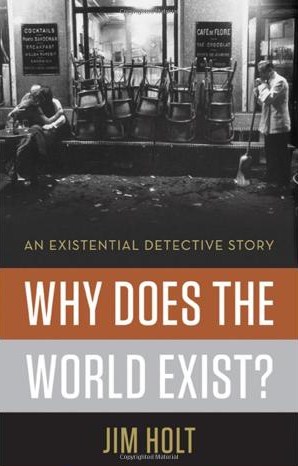
WhyDoestheWorldExist“Is this a world?” Ranger Tom asks seriously, “And if it is, am I in it?” On the lips—or fingertips—of some, this set of questions appears profound. Although I’m not technically a philosopher, I find it impossible to walk by a book with the title Why Does the World Exist? and not pick it up. I am not familiar with Jim Holt’s other work—I engage a little too heavily with books to spend much time with magazines—but the question of the title is one I’ve often pondered. It is right up there with “Why can some people get published and others can’t?” Holt is, however, on a serious quest. Not surprisingly, religion features prominently in the discussion. For the usual existential reasons, including a couple of significant deaths in the family, Holt asks perhaps the most basic of all questions and engages a number of prominent philosophers on the issue. Why is there something rather than nothing? For some in the western world such a question appears a non-starter, because our culture is biblically suffused. Whether we want to admit it or not, our social ocean veritably bobs with the basic belief that God created the world, end of story. We don’t need to ponder it, we just have to accept it. For those who look deeper, however, the answers aren’t that easy.

Holt goes through some serious computation in various forms of logic to try to arrive at a schematic demonstrating that the world is a surprising place. Not trained in such rigorous logic, I was interested to notice how the language occasionally slipped from “world” or “universe” to “reality.” Reality is perhaps the slipperiest concept of them all. Many simply accept their own experience as real, a position known as “naive realism.” Others probe somewhat deeper, seeking to verify reality. How do we know what is really real? It is, however, a different question than the existence of the world. Reality has the distinct ability to haunt with its half-answered questions and surfeit of ambiguity. Every time I wake from a dream I ask myself what is really real.

Once the divine is removed from the equation, why the world is here becomes a much more complex issue. Holt engages the new atheists as well as the neo-orthodox. It turns out that God may not help as much as we generally assume: whence God? Or, in its more childlike version, where did God come from? Once brute fact is ruled out, this becomes a tangled problem indeed. Faced with an endless regression, logic quails. Perhaps, however, we have reached the limits of rationality—even Einsteinian physics breaks down at the Big Bang. No matter what scientists or philosophers may tell us, we will always wonder, “and before that, what?” I put Holt’s book down with a sense that I’d spent a few pleasant hours considering the possibilities, but I still wonder, with Ranger Tom, if this is a world. And if it is, am I in it?