Television

Television has lost its prominence in the internet age.  Those of us entering the “senior” category of life’s grades were raised on television.  I know I watched far too much as a kid.  Now I consider the wasted opportunity to grow minds, and sensibilities, through television.  Mostly I blame the sit-com.  There’s not much learning going on when someone else contrives scenarios to make you laugh on a weekly schedule.  They are beguiling and I watched more than my fair share of them when I was younger.  Now, as an adult, I value the more profound examples of early viewing.  We didn’t watch The Twilight Zone with the devotion of Gilligan’s Island, but those episodes I did see had a profound effect.  The same is true of Dark Shadows.  One thing these shows had in common was that they were quite literate, eschewing the mindless competition.

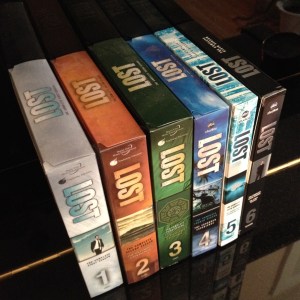
College led to me no longer watching television regularly.  That hiatus lasted until my wife and I began watching a couple of weeklies after I’d return from Nashotah House.  While at the seminary full-time, television reception was quite poor and we tended toward rented movies on VHS.  By the time we moved to New Jersey television had changed so that you needed some kind of magic box to watch even commercial channels.  We relied on DVDs of shows we wanted to see.  That’s how Lost came into our lives.  Now, however, facing senior issues (health, people dying, wondering if retirement might ever happen) I’ve started to revisit television I missed.  The X-Files is pretty prominent.  Being an historian at heart, I’ve been exploring the inspirations for The X-Files, picking up Kolchak: The Night Stalker, and Twin Peaks.  I have to balance this with time for writing since work still claims the lion’s share of my waking hours.
Photo credit: Smithsonian Institution, via Flickr’s The Commons

I’ve lost track of what’s on the tube.  Now we spend workday evening hours watching intelligent television that we missed back when it aired.  We can’t afford it all, of course.  Dark Shadows, for example, has over 1200 episodes and “complete sets” are pricey.  Lost was either a birthday or Christmas present years ago.  I bought The Twilight Zone over a decade ago for a week that I knew I was going to be home alone.  We accumulated The X-Files over a number of years.  Twin Peaks, since it was only two seasons, wasn’t too expensive.  Kolchak is on Amazon Prime.  Many of these shows are a kind of therapeutic watching for me.  Some might call it escapism, but it runs deeper than that.  It becomes part of who we are.

Second Peak

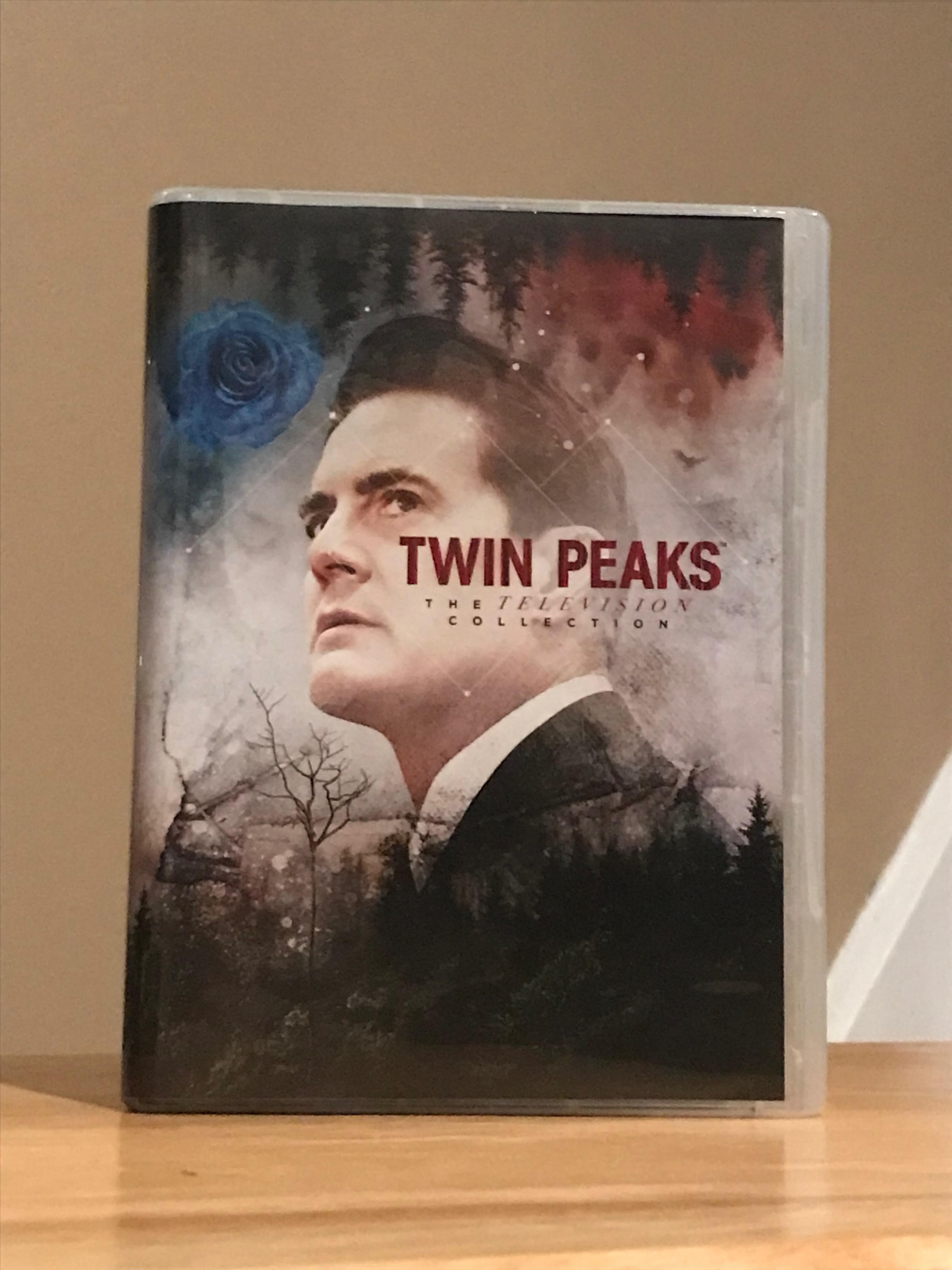
It all started with The X-Files.  You see, we hadn’t watched television since about 1988.  Part of that was practical—we couldn’t afford cable and then when we landed at Nashotah House there was no cable service anyway.  Bouncing from job to job after that, when money was tight, we figured cable was a luxury we weren’t used to anyway.  Then came DVDs.  I should also say that my family heard other people talking about certain shows—some of them quite good—but we hadn’t seen them.  Then we decided to watch The X-Files.  This was followed by Lost.  Then the X-Files again.  On my lonesome I watched Kolchak: The Night Stalker.  But people had talked a lot about Twin Peaks.  Curiosity got the best of me.  We decided to see what it was about.

I knew that Chris Carter had cited various inspirations for The X-FilesKolchak was a major one, but another was Twin Peaks.  It helps to have watched a David Lynch movie or two before jumping into the deep end here, but the first season (it only lasted two) started out like a regular drama.  Like Northern Exposure, it had quirky characters.  Then after a couple episodes paranormal aspects began to appear.  Things were not what they seemed in Washington.  It turned out to be an evil spirit possessing people in the town.  Laura Palmer’s murder was more or less solved.  Dale Cooper, however, had been trapped in the Black Lodge in the cliff-hanging end of the second season.  We then watched Twin Peaks: Fire Walk with Me at the point it settled in the sequence.  Like the aforementioned X-Files, a reboot occurred many years later and the DVD set we had included the renewed season.  Things really get weird there.

It turns out that we had indeed missed some good television during those Nashotah House years and later.  Actually, doctoral years and later—Twin Peaks originally aired when we were living in Edinburgh, so we had a legitimate excuse.  Boomers, particularly late boomers, grew up with television.  As an adult (so I’m told) I can see that television had a big influence on my life, even though I stopped watching in my late twenties.  Do I understand all of what happened in Twin Peaks?  Of course not.  Then again I scratched my head after watching Eraserhead too.  The first of David Lynch’s movies I saw was Dune, which, unfortunately, wasn’t that good.  I’ve come to trust him, however, and I suspect that telinema will lead me to watch more of his films.  And we’ll probably be on the lookout for other television we missed, that, in retrospect, we probably shouldn’t have.


And Found

For a kid who grew up on a steady diet of television, I have to admit being out of practice.  A combination of Gilligan’s Island and Dark Shadows informed much of my young outlook.  Starting all the way back to our days in Edinburgh, my wife and I had stopped watching TV.  We were in our twenties then, and it was a matter of not being able to afford the luxury.  Back in the States, cathode-ray tubes were ubiquitous, but cable was expensive and my employers not generous.  We had a television but only watched very occasionally, and then only what fuzzy programs we could pick up on the aerial.  So it continued.  We’re now at the point of not having had television service for over half of our lives, and we understand from the younger generation that a good internet provider makes cable superfluous anyway.

This prologue is simply a way to introduce the fact that we have finally, after two or three years of watching (we still have little time for it), finished Lost.  Now, I don’t get out much, but I had heard people talking about it when it originally broadcast.  More importantly, I’d read about it in books published by university presses.   I knew going into it—spoiler alert for those even more behind the times than me!—that the castaways were in Purgatory.  That seems to have been the point all along, but when money keeps rolling in because the story is compelling, you don’t want to reveal your hand too quickly.  Last night we watched the final episode where what was suggested back at the beginning was made clear: the passengers of Oceanic flight 815 had died in the crash and were making up for past sins.

The role of Jack’s father (Christian Shephard) as leading the passengers to the light may have been a bit heavy-handed, but the church where they finally meet has the symbols of many world religions, conveying the message that there is more than a single path.  The truly surprising aspect of all this is how popular the series was.  There were religious overtones from the beginning, but since the series wasn’t preachy, viewers apparently didn’t mind.  Yes, as the star character’s surname indicates, people don’t mind being led.  In fact, the names of many of the characters are indicative of some of the paths up that mountain.  I have to wonder if those who vociferate loudly and longly about their religion being the only way might not learn a lesson from television.  Even if the suggestion only comes from someone who grew up watching Gilligan’s Island.